Hiring a paving company in Suffolk County shouldn't feel like a gamble. Here's what to actually look for before signing anything.
Share:
Summary:
You’ve noticed the cracks. Maybe the edges are crumbling, or water is pooling where it shouldn’t after every rainstorm. You know it’s time to call someone — but the moment you start looking at paving companies, you’re staring at a list of options with wildly different prices and no obvious way to tell them apart.
That confusion is normal, and it’s exactly what bad contractors count on. This post is about cutting through it. By the time you’re done reading, you’ll know what to ask, what the right answers sound like, and why those questions matter more than the quote itself.
You might get three quotes for the same driveway and find they’re thousands of dollars apart. That gap isn’t random — it reflects real differences in what each contractor is actually planning to do. Base preparation depth, drainage work, material grade, permit handling, and crew quality all affect cost. A lower number often means something got cut.
The Angi consumer guide puts it plainly: avoid contractors with significantly lower bids, because they tend to cut corners or rush the job. That’s not a warning to spend more than you need to — it’s a reminder that a quote is only meaningful when you understand what’s actually included in it.
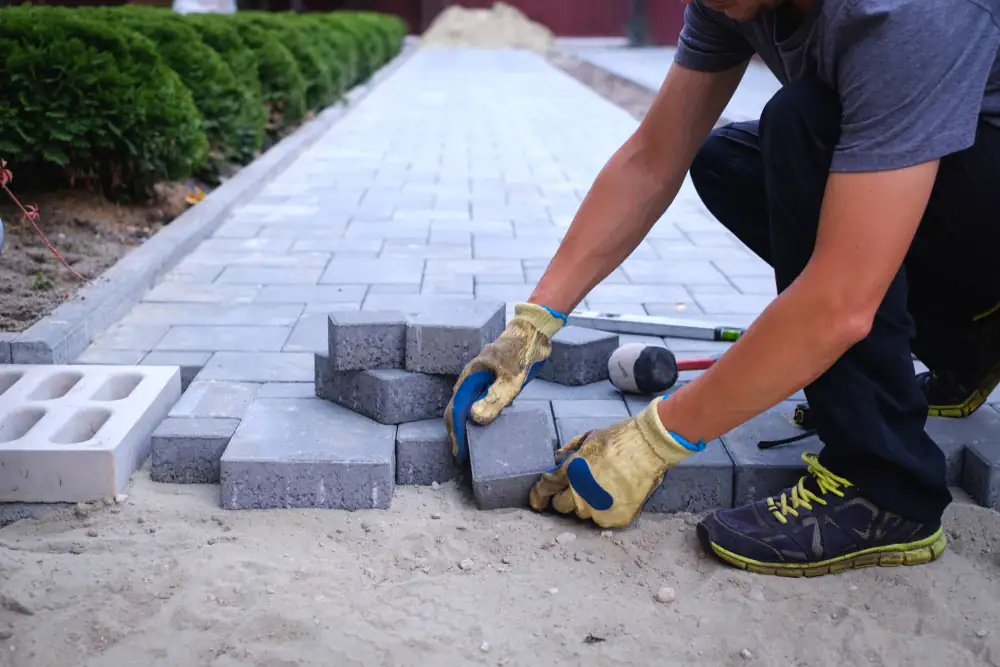
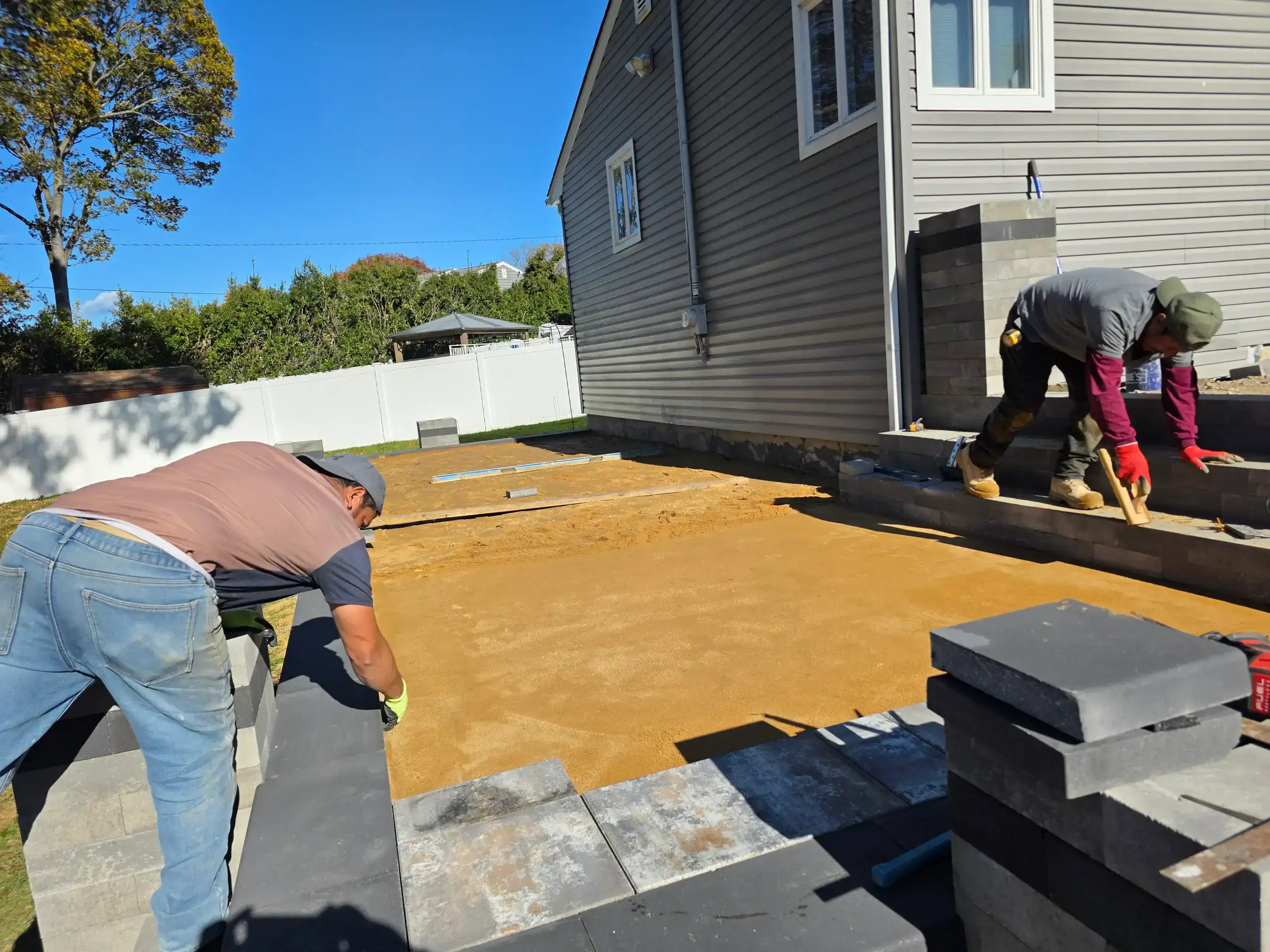
The biggest cost variable most homeowners never see is what happens before the first layer of asphalt or the first paver goes down. Excavation depth, compaction, drainage grading, and base material — these are the steps that determine whether your driveway lasts 20 years or starts cracking after its second winter. They’re also the steps that are easiest to skip when a contractor is moving fast or cutting costs.
In Suffolk County specifically, this matters more than in a lot of other markets. Long Island’s freeze-thaw cycle is relentless. Water gets into small cracks, freezes, expands, and opens those cracks wider — every winter, every year. If the base wasn’t properly compacted and graded for drainage, that process accelerates dramatically. A driveway installed over a poorly prepared base might look fine in October and look like a problem by April.
Coastal moisture adds another layer. Properties near the Long Island Sound or the South Shore face salt air exposure that degrades surface materials faster than inland conditions. The right contractor accounts for that. A contractor who doesn’t know the local environment — or doesn’t ask about your property’s specific drainage situation — is applying a generic solution to a site-specific problem.
Material selection also shifts the price. Asphalt driveways and paver driveways sit at very different price points, and each has real trade-offs worth understanding. Asphalt is durable and handles traffic well, but it needs resealing every two to three years to stay in good shape. Pavers cost more upfront but handle freeze-thaw stress better because individual units can shift slightly with ground movement instead of cracking under it. A quality contractor walks you through those trade-offs based on your property — not just your budget.
When two quotes are far apart, the right move is to ask each contractor exactly what’s included in base preparation, how they handle drainage, what materials they’re specifying, and whether permits are part of the scope. Those answers will tell you a lot more than the number at the bottom of the page.
Installing an impermeable surface — asphalt, concrete, or clay pavers — typically requires a permit in Suffolk County because of how these materials affect stormwater runoff. When water can’t absorb into the ground, it has to go somewhere, and local regulations exist to make sure it doesn’t become a neighbor’s problem or a drainage issue for the municipality.
Some contractors handle this as a matter of course. Others don’t mention it at all, leaving the homeowner to figure it out after the fact — or worse, leaving them with unpermitted work that creates problems at resale or during an inspection.
It’s a straightforward question to ask: do you pull the permits, or is that on me? The answer tells you something important about how the contractor operates. A company that handles permits is operating as a legitimate, code-compliant contractor with a stake in the project being done right from start to finish. A company that waves off the question or says “you probably don’t need one” is worth pressing harder — or reconsidering entirely.
We handle the permit process with Suffolk County on every applicable project. It’s part of what it means to take a job seriously. Homeowners shouldn’t have to become experts in local stormwater regulations to get a driveway replaced — that’s our job.
Beyond permits, ask whether the contractor is familiar with Suffolk County’s building codes and inspection requirements. The county has specific standards, and a contractor who’s been working here for years knows them. One who’s new to the area or operating loosely may not.
Want live answers?
Connect with a Corsino Construction expert for fast, friendly support.
Most people ask about price, timeline, and materials. Those are reasonable starting points. But the questions that actually predict whether a job goes well — and whether you have any recourse if it doesn’t — tend to come later, or not at all.
Two questions in particular get skipped more often than they should. They’re not complicated, but the answers reveal a lot about how a contractor is actually structured and whether the accountability they’re promising is real.
This is the question almost nobody asks, and it might be the most important one on this list. When you hire a paving company, you’re hiring the company — but that doesn’t always mean the company’s people are the ones showing up to do the job. Many contractors across the home improvement industry use subcontractors: independent crews they bring in on a project-by-project basis.
That arrangement isn’t automatically a problem, but it does create an accountability gap. The subcontractor has a relationship with the contractor, not with you. If something goes wrong — a drainage issue, a section that settles wrong, a material question — the path to resolution runs through an intermediary. In the worst cases, disputes between a contractor and their sub leave the homeowner caught in the middle.
The more immediate issue is consistency. When a company uses rotating subcontractors, the crew that shows up may have no familiarity with the standards the company claims to hold. Quality control is harder to maintain when you don’t control who’s doing the work.
We use licensed in-house professionals on every project — no subcontractors. The team that starts your job is the team that finishes it. That’s not just a preference; it’s how we maintain consistent quality and direct accountability from day one through final walkthrough. If you have a question or a concern at any point during the project, you’re talking to the same people who are actually doing the work.
When you’re evaluating paving companies, ask directly: is the crew that shows up your employees, or are you bringing in a subcontractor? Then ask how long that crew has been working together. The answers tell you a lot about what “accountability” actually means in practice for that company.
Surprise charges after a job starts are the single most common complaint in the home improvement space. The pattern is familiar: a homeowner gets a quote, feels good about it, signs off, and then somewhere in the middle of the project, new costs start appearing. “We hit a drainage issue.” “The base needed more material than we expected.” “That wasn’t included in the original scope.” By that point, the driveway is half-excavated and the homeowner doesn’t have much leverage.
Some of those situations are genuinely unpredictable — site conditions can reveal things that weren’t visible at the estimate stage. But a lot of them aren’t. They’re the result of a contractor quoting low to win the job and pricing the rest as they go.
The right question to ask any paving company is simple: if you find something unexpected once the job starts, how do you handle it? A contractor with a clear, principled answer to that question — one that involves coming to you before costs change, not after — is operating transparently. A vague answer, or one that leans heavily on “it depends,” is worth probing further.
Our estimates are detailed and written before any work begins. The price we quote is the price you pay, and if something comes up that would change the scope, we talk to you first. Every time. That’s not a policy we invented — it’s just how honest work gets done. You shouldn’t have to wonder what the final bill looks like when the project wraps up.
Ask to see a sample contract or a past estimate. A legitimate paving company will have no hesitation showing you how they document scope and pricing. If a contractor is reluctant to put things in writing before work starts, that’s a signal worth taking seriously.
The short version: ask who’s doing the work, confirm the price is fixed, make sure permits are handled, and understand what’s actually included in the base preparation. Those four things — plus a written contract before anyone breaks ground — will tell you more about a paving company than their website ever will.
Suffolk County’s climate is hard on paved surfaces. The freeze-thaw cycle, coastal exposure, and variable soil conditions mean the difference between a driveway that holds up for 20 years and one that’s showing problems by spring comes down almost entirely to how well the job was done — not which company had the lowest number on their quote.
If you’re in the process of evaluating your options, we’re happy to walk through what a project on your property would actually involve. Corsino Construction Corp has been working in Suffolk County since 2000, and we’re reachable by phone or text at 516-693-4270, Monday through Friday, 9am to 5pm.
Article details:
Share:
Continue learning: