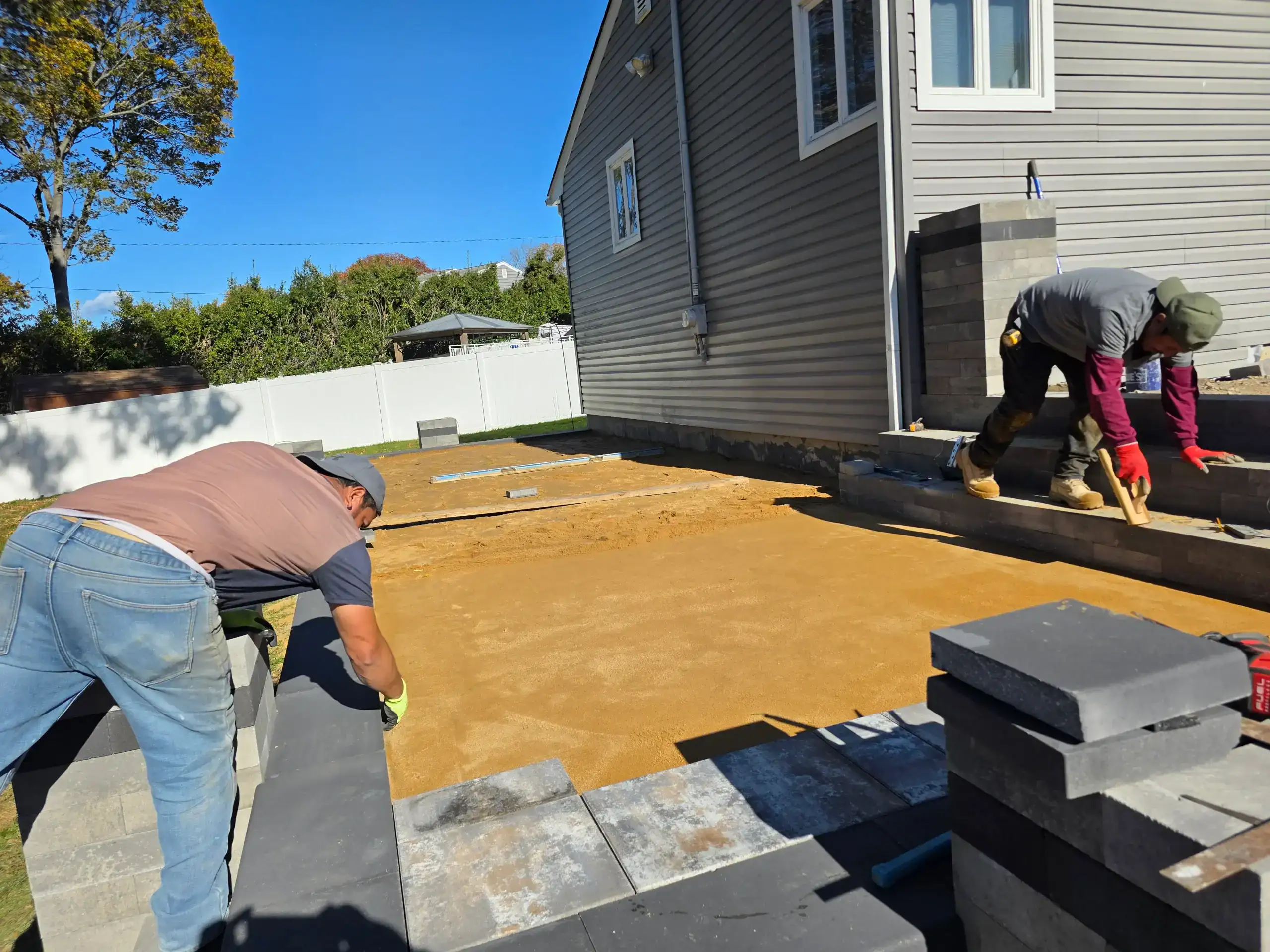
When you hire a contractor, do you know who's actually showing up? Here's what the subcontractor vs. general contractor difference really means for your home.
Share:
Summary:
You found a contractor, got a quote, and signed a contract. Then someone you’ve never met pulls into your driveway on day one. No introduction, no explanation — just a crew you didn’t vet, working on your home.
This happens more often than most homeowners realize. The reason is simple: many general contractors don’t do the work themselves. They hire subcontractors, and those subcontractors may hire others. By the time a hammer hits a nail, you might be three handoffs removed from the person you actually spoke with.
Understanding how this works — and what it means for your project — is one of the most useful things you can do before signing anything.
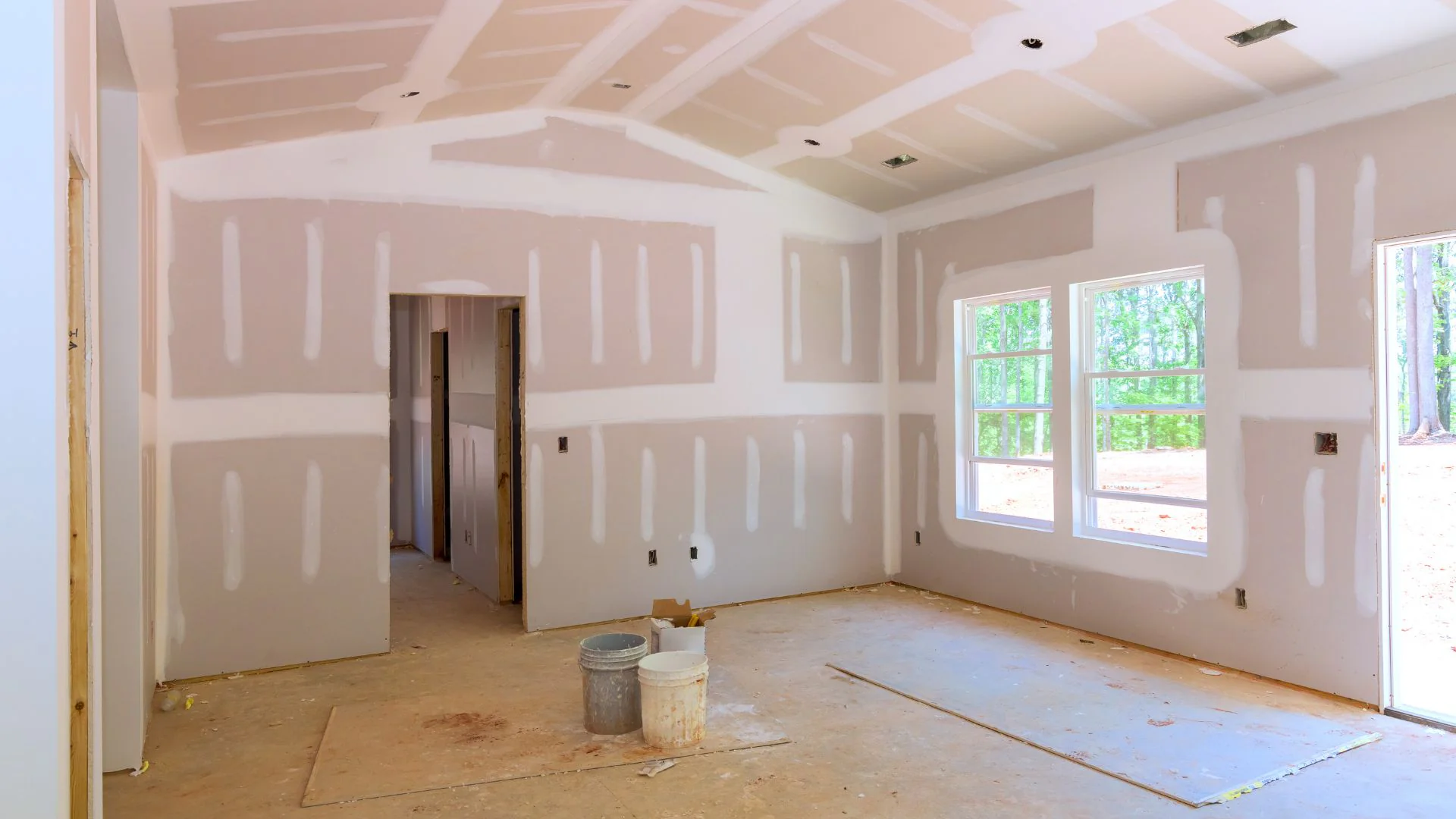
A subcontractor is a trade professional hired by a general contractor to perform a specific portion of a project. Think electricians, plumbers, tile setters, drywall crews, or painters. The general contractor manages the overall job, but the actual hands-on work gets divided out to specialists who are brought in as needed.
This isn’t inherently wrong. For large commercial projects, it’s standard practice. But in residential remodeling — where you’re living in the home, where timelines matter, and where you’re trusting strangers with your family’s space — the subcontractor model introduces complications that most homeowners don’t anticipate until they’re already in the middle of a job gone sideways.
Here’s how it usually works. A homeowner contacts a general contractor, gets a quote, and signs a contract. The GC then reaches out to their network of subcontractors — separate businesses, each with their own schedules, crews, standards, and communication styles — and coordinates them to complete different phases of the project.
The GC acts as a project manager. They’re responsible for the outcome, but they’re not necessarily the ones doing the work. In many cases, they’re not even on-site every day.
This creates a chain of communication that can break down quickly. If the tile subcontractor runs behind, your kitchen remodel stalls while you wait for their schedule to open up. If the drywall crew does something the GC doesn’t catch until later, you’ve got a dispute between two separate businesses — and you’re caught in the middle.
There’s also a financial risk most homeowners don’t know about. In New York, if a subcontractor isn’t paid by the general contractor — even if you paid the GC in full — that subcontractor can file a mechanic’s lien against your property. You paid for the work. You could still end up with a legal claim on your home.
A Consumer Reports survey of over 900 homeowners found that the number one complaint about contractors was simply failing to show up. The subcontractor model makes this worse, because each sub is juggling their own client list. Your project isn’t their only priority — it might not even be their top one on a given week.
None of this means every GC who uses subs is a bad contractor. But it does mean the model itself creates friction — in scheduling, in communication, in accountability — that falls on the homeowner to manage.
Ask directly. It’s that simple, and it’s a question every homeowner should put to any contractor they’re seriously considering. A straightforward answer is a good sign. Hesitation or vagueness is worth paying attention to.
Some specific questions worth asking: Who will actually be on-site every day? Are they your employees or independent contractors? If you use subcontractors, are they licensed in Suffolk County, NY? Can I meet the crew before work starts?
In New York, there’s an important wrinkle that catches a lot of homeowners off guard. New York State does not issue a statewide general contractor license. Licensing is handled at the county level. In Suffolk County, the credential that matters is the Suffolk County Home Improvement Contractor License, issued through the Suffolk County Department of Labor, Licensing & Consumer Affairs. To hold it, a contractor must pass a county-specific exam based on Chapter 563 of the Suffolk County Home Improvement Law and carry a minimum of $500,000 in general liability insurance.
Subcontractors working under a GC are also subject to their own licensing requirements. A general contractor who brings in unlicensed subs isn’t just cutting corners on quality — they’re potentially exposing you to permit failures, code violations, and legal liability. If an unlicensed worker is injured on your property, the consequences can extend well beyond the renovation itself.
Asking who will be doing the work — and verifying that everyone involved holds the right credentials — isn’t being difficult. It’s basic due diligence. Any contractor worth hiring will expect the question and answer it without hesitation.
Want live answers?
Connect with a Corsino Construction expert for fast, friendly support.
Suffolk County has its own set of conditions that make this question more than theoretical. A significant portion of the housing stock here dates from the 1950s through the 1970s — homes that are now 50 to 75 years old, with aging electrical systems, older framing, and materials that can surprise even experienced crews once walls come open.
Add in the coastal climate. Salt air, freeze-thaw cycles, and the moisture that comes with living near the water aren’t abstract concerns — they affect which materials hold up and which ones fail early. A subcontractor brought in from outside the region may not know the difference. A crew that’s been working in Coram, Huntington, Babylon, and Southampton for 25 years does.
Before you commit to any contractor for a renovation in Suffolk County, NY, there are a few things worth getting clear answers on — in writing, before work starts.
First: who is doing the work? Ask for the names of the specific people who will be on your job site, and confirm whether they’re direct employees or subcontractors. If subs are involved, ask whether they’re licensed for their trade in Suffolk County.
Second: what does the estimate actually cover? A detailed, written, fixed-price estimate is not the industry standard — it should be, but it isn’t. Vague bids that say “materials and labor, approximately X” leave room for charges you didn’t expect. A fixed price means the number on the estimate is the number on the invoice, unless you change the scope yourself.
Third: who handles permits? In Suffolk County, permit processing typically adds one to two weeks to a project start. A contractor who handles all permit applications and inspections as part of their service is removing a real burden from your plate — and ensuring the work is done to code in a way that won’t surface as a problem when you sell the home.
Fourth: what happens after the project is done? Ask for written warranty terms. Not a verbal assurance that they “stand behind their work” — actual written documentation of what’s covered and for how long.
Fifth: how do they handle surprises? In a 1960s ranch in Selden or a 1970s colonial in Dix Hills, opening a wall can reveal knob-and-tube wiring, inadequate insulation, or non-standard framing. How a contractor handles that discovery — and who absorbs the cost — should be discussed before work begins, not after.
These aren’t trick questions. They’re the basics. A contractor who’s been doing this work honestly for years will answer all of them without hesitation.
When a contractor uses their own licensed employees for every phase of a project — rather than coordinating a rotating cast of subcontractors — the entire dynamic shifts.
Scheduling becomes something the contractor actually controls. When there’s one crew, one standard, and one team responsible from permit application through final cleanup, there’s no waiting for a sub to become available. No project sitting idle for two weeks because the tile crew is backed up on another job across town.
Accountability becomes straightforward. If something isn’t right, there’s no loop of the GC blaming the sub and the sub blaming the materials. One team did the work. One team owns the outcome. Warranty claims go to one place.
Communication gets simpler too. You’re not relaying messages through a project manager who relays them to a sub foreman who relays them to a crew. You know the people on your job site. They know your project.
At Corsino Construction Corp, this is the only way we work. We’ve been operating in Suffolk County since 2000, and we’ve built everything around the idea that using our own licensed in-house professionals — not subcontractors — is what makes consistent quality possible. It costs more to maintain a permanent crew than to call subs when needed. We think that’s worth it, and so do the homeowners who’ve trusted us with their kitchens, bathrooms, siding, windows, and full renovations across communities from West Islip to Westhampton Beach.
Daily cleanup is part of how we work — not just at the end of a job, but every single day. Permits are handled by us, start to finish. Pricing is fixed before work begins, and it doesn’t change unless you change the scope. These aren’t features we added on top of the work. They’re what the in-house model makes possible.
The subcontractor vs. general contractor question isn’t really about industry structure. It’s about what your renovation experience is actually going to look like — who shows up, who’s accountable, whether the timeline holds, and what happens if something goes wrong.
In a market like Suffolk County, where homes are older, coastal conditions are real, and a renovation done poorly can create problems that surface years later at the worst possible moment, these details matter more than they might elsewhere.
The right contractor will answer your questions directly, give you a written fixed-price estimate, handle your permits, and put their own licensed crew on your job site — not someone you’ve never met. If you’re ready to talk through a project, we at Corsino Construction Corp are available Monday through Friday and respond to quote requests within 24 to 48 hours.
Article details:
Share:
Continue learning: