Three quotes for the same driveway, three completely different numbers. Here's what's actually behind the gap — and what it means for you.
Share:
Summary:
You asked three asphalt companies to quote your driveway. One came back at $3,200. Another at $5,800. The third said $9,000. Same driveway. Same property. You’re not imagining the confusion — this is one of the most common frustrations homeowners across Suffolk County run into when they start shopping for paving work.
Here’s the honest answer: some of that variation is real and justified. Some of it is not. And knowing the difference is the only way to protect yourself from a quote that looks great on paper but costs you far more in the long run. Let’s walk through it.
The short version is that asphalt driveway quotes have a lot of moving parts — and not every contractor includes the same ones. Some of the variation comes from legitimate differences in scope, materials, and site conditions. Some of it comes from contractors leaving things out on purpose to make their number look more competitive than it actually is.
Understanding which is which is the key. Once you know what a complete quote should include, the gaps in a vague one become obvious — and so does the risk of choosing based on price alone.
Start with the basics. Driveway size is the most obvious factor — a 400-square-foot single-car driveway costs less than an 800-square-foot two-car setup. But size alone doesn’t explain a $5,000 swing between quotes for the same property.
The bigger variables are usually below the surface. Base preparation — the compacted gravel sub-base that goes down before any asphalt is poured — is the single largest cost driver most homeowners never think to ask about. In Suffolk County, where the ground freezes and thaws multiple times each winter, a proper base needs to go down 12 to 18 inches deep. That excavation, grading, and compacted gravel work can account for 30 to 40 percent of your total project cost. It’s also the part that determines whether your driveway lasts 15 to 20 years or starts cracking in three.
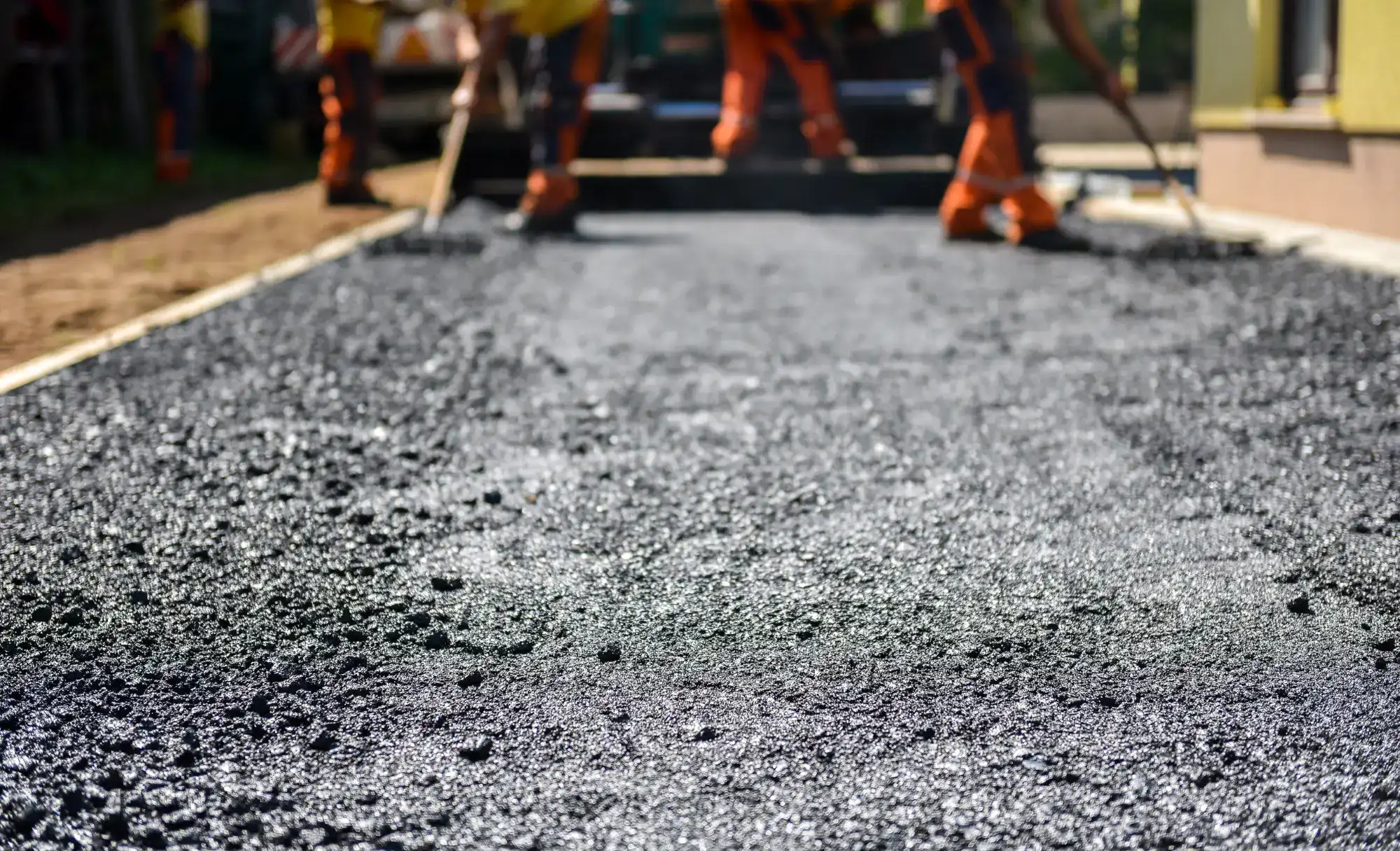
Asphalt thickness matters too. The industry standard for a residential driveway that handles standard passenger vehicles is 2 to 3 inches of hot-mix asphalt over that compacted base. Driveways that need to handle heavier vehicles — trucks, RVs, equipment — should be 3 to 4 inches. A contractor who doesn’t specify thickness in their quote may be planning to install less than the standard. That’s not a savings. That’s a shorter lifespan baked into the job before it even starts.
Then there’s demolition and disposal. Removing an existing driveway on Long Island typically adds $1 to $3 per square foot to the project — anywhere from $1,500 to $4,000 for a full removal depending on the size and condition of what’s coming out. Some quotes include this. Some don’t mention it at all, and the homeowner finds out when the crew shows up and the price suddenly goes up.
Permits are another one. Most driveway replacements and new installations in Suffolk County require a permit through the local municipality. A legitimate contractor factors that into the scope. A contractor who doesn’t mention permits either isn’t pulling them — which puts the liability on you — or plans to add that cost later.
Finally, asphalt is a petroleum-based product. Its price fluctuates with crude oil markets, which means the same job can genuinely cost more in one season than another. That’s a real variable, not a contractor making excuses.
A quote that comes in significantly lower than the others isn’t necessarily a deal. More often, it’s a signal that something is missing from the scope — and that missing piece will show up later, either as a change order mid-project or as a driveway that fails years before it should.
The most common thing lowball quotes skip is base preparation. Skimping on excavation depth and gravel compaction saves a contractor significant time and material cost. It also means the asphalt has no proper foundation. On Long Island, where freeze-thaw cycles hit the same pavement repeatedly every winter, a shallow or poorly compacted base doesn’t just shorten the lifespan — it accelerates failure. Water gets under the surface, freezes, expands, and the cracking starts within a few seasons.
Lowball quotes also tend to omit disposal fees, permit costs, and sometimes even the demolition of the existing surface. The quote looks clean because it’s only showing you part of the job. By the time the crew is on your property and the full scope becomes clear, you’re in a position where stopping the work is disruptive and expensive, so you agree to the additional charges. That’s the bait-and-switch pattern that homeowners across Suffolk County have experienced, and it’s more common than most people realize.
There’s also the question of who’s actually doing the work. Some contractors win jobs with a professional estimate and then hand the project to subcontractors the homeowner has never met and cannot verify. The quality, licensing, and insurance coverage of those workers may be unknown. If something goes wrong — property damage, an on-site injury — the accountability chain gets complicated fast.
A vague quote is almost always a red flag. If a contractor gives you a single total number with no line items, no mention of base depth or asphalt thickness, no reference to permits or disposal, you don’t have enough information to evaluate what you’re actually buying. A complete, itemized estimate isn’t just professional — it’s the only way to compare quotes on equal footing.
Want live answers?
Connect with a Corsino Construction expert for fast, friendly support.
Once you know what drives quote variation, it’s easier to evaluate what’s in front of you. The goal isn’t to find the cheapest contractor — it’s to find the one whose quote is actually telling you the full story.
A legitimate asphalt company quote should spell out the scope of work in detail: what’s being demolished and removed, how deep the base will be excavated, what material goes into the sub-base, the thickness of the asphalt layer, how permits are handled, and what cleanup looks like when the job is done. If those details aren’t in the quote, ask for them in writing before you agree to anything.
The most well-documented scam in the paving industry is the door-to-door “leftover asphalt” pitch. A crew shows up unannounced, says they have material left over from a nearby job, and offers to pave your driveway at a steep discount if you pay cash today. The asphalt they use is often cold-mix — a temporary patching material, not a proper hot-mix installation — and it won’t hold up through a single Long Island winter. By the time you realize the problem, the crew is long gone.
Even outside of outright scams, there are patterns worth watching for. A contractor who asks for full payment upfront before any work begins is a risk. A quote with no written contract is a risk. A contractor who can’t provide proof of licensing and insurance is a significant risk — in New York, if an uninsured worker is injured on your property, you can be held personally liable. Suffolk County requires contractors performing home improvement work to be registered with the Suffolk County Department of Consumer Affairs. That’s verifiable. Ask for it.
Pressure to sign the same day is another one. A legitimate contractor gives you time to review the quote, ask questions, and compare. High-pressure tactics are a sign that the contractor doesn’t want you looking too closely at what they’re offering.
Unmarked trucks, out-of-state plates, and no local address are worth noting too. A contractor with no verifiable presence in Suffolk County has no reputation to protect in your community. That changes the accountability calculation significantly.
The most common source of homeowner frustration in the paving industry isn’t a bad outcome — it’s a price that changed after the work started. A quote comes in, the homeowner agrees, the crew shows up, and somewhere in the middle of the project the number goes up. The excavation was “deeper than expected.” The disposal cost “more than anticipated.” The permit fee “wasn’t included in the original estimate.”
These aren’t always fabrications — sometimes site conditions genuinely change — but they’re also one of the most common ways a lowball quote catches up to reality on the homeowner’s dime.
The way to protect yourself is simple in theory: get a written, itemized estimate that accounts for the full scope before anyone touches your property. The estimate should include every cost factor — base preparation, material, disposal, permits, cleanup — so that if something changes, there’s a clear baseline to reference.
We built Corsino Construction Corp around fixed pricing because we’ve seen what the alternative does to homeowners. When we give you an estimate, that number doesn’t change. The scope is defined upfront, the costs are itemized, and there are no surprises mid-project. Our crews are our own — licensed, insured, and the same people who showed up for the estimate — so there’s no handoff to unknown subcontractors and no gap in accountability between what was promised and what gets done.
We’ve been working in Suffolk County since 2000, which means we understand what this market actually requires. We know how deep a base needs to go in Brookhaven versus a South Shore community with a high water table. We know the permit process in the towns we serve. We know what Long Island winters do to a driveway that was installed without proper base preparation, because we’ve been here long enough to see it happen. That local knowledge isn’t a marketing line — it’s what goes into every estimate we write and every driveway we install.
If you’re comparing quotes right now and something doesn’t add up, that instinct is worth listening to. A $2,000 gap between two quotes for the same driveway usually means something is missing from the cheaper one — and what’s missing is usually the part that determines how long the driveway lasts.
Getting multiple quotes is smart. But comparing quotes that don’t include the same scope isn’t really a comparison — it’s a guessing game. The contractor who wins on price alone may be leaving out the base work, the permits, the disposal, or the thickness of the asphalt itself. Those omissions don’t save you money. They just move the cost to a different line item, or to a driveway replacement you’re making five years earlier than you should be.
Look for a written, itemized estimate. Look for verifiable licensing and insurance. Look for a contractor with a real local presence and a track record you can check. And look for a price that holds — not one that’s designed to get you to say yes before you’ve had a chance to read it carefully.
If you’re working through quotes right now and want a straightforward conversation about what your project actually involves, reach out to Corsino Construction Corp. We’re happy to walk you through it.
Article details:
Share:
Continue learning: