Permits, timelines, hidden costs — here's what Suffolk County homeowners actually need to know before starting a backyard renovation.
Share:
Summary:
You’ve got a clear picture in your head. A patio, maybe a deck, something that actually makes the backyard worth using. What you probably didn’t picture was navigating a permit application, figuring out which town building department you’re dealing with, or discovering three months in that your contractor’s crew has changed twice and your project is still half-finished.
That’s the reality for a lot of Suffolk County homeowners. This guide is here to help you understand what a backyard renovation actually involves — from the permit process to realistic timelines to the warning signs worth watching for before you sign anything. You’ll also need to think about what happens to the old materials and construction debris, which is where dumpster rental can become an important part of the project.
This is the question most homeowners ask too late — usually after they’ve already gotten a few quotes. The short answer is: it depends on what you’re building, but more often than not, yes.
In New York State, any deck attached to your home or more than 12 inches above grade requires a building permit, regardless of size. Ground-level patios that sit below 30 inches and aren’t attached to the house may fall under the threshold, but that still depends on your specific town’s rules. In Suffolk County, that distinction matters more than most people realize.
Here’s something that surprises a lot of people: Suffolk County doesn’t have one building department. It has ten. Each of the county’s ten towns — Babylon, Brookhaven, East Hampton, Huntington, Islip, Riverhead, Shelter Island, Smithtown, Southampton, and Southold — runs its own permitting process, sets its own review timelines, and enforces its own requirements.
What’s standard in Huntington may differ from what Brookhaven requires, and neither of those looks exactly like Smithtown. This town-by-town structure is one of the biggest sources of confusion and delay in backyard renovation projects across Long Island.
A contractor who’s only done work in one or two towns may not be familiar with the specific submission requirements or inspector expectations in yours. That gap shows up as delays, incomplete applications, or projects that stall mid-phase while paperwork gets sorted out.
Suffolk County charges $300 to review plans and specifications for each project. That fee is straightforward. What’s less straightforward is knowing exactly what documentation each town requires, how long their review queue typically runs, and what triggers a second round of revisions. We submit permit applications early, before materials are even ordered, which keeps your project on schedule rather than waiting on a building department.
The consequences of skipping the permit process entirely are worth understanding. In New York, unpermitted work can result in fines, required demolition, and complications when you try to sell the home. Lenders and buyers will ask. Home inspectors will flag it. The short-term convenience of skipping a permit almost always creates a longer-term problem.
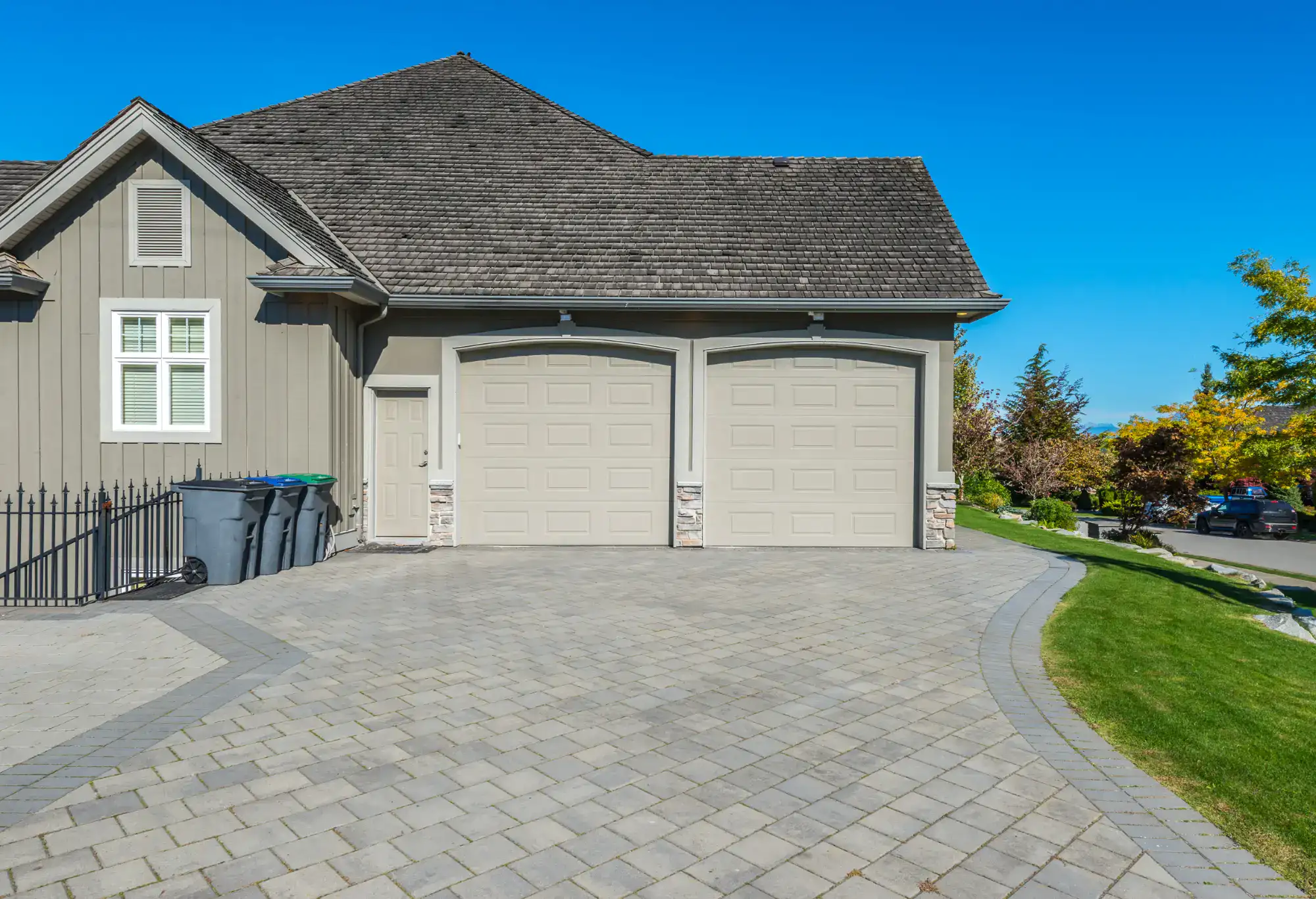
Beyond decks, the permit requirement in Suffolk County covers more ground than most homeowners expect. Repaving or replacing a driveway requires a permit. So does replacing or improving a sidewalk, installing a fence, and constructing a porch.
Any electrical work — including outdoor lighting, outlets, or wiring for an outdoor kitchen — must be performed by a licensed electrician and requires its own permit. Plumbing work follows the same rule.
If you’re planning a full backyard renovation that involves multiple elements — a patio, a new driveway section, lighting, drainage — you’re likely looking at more than one permit application. A contractor who handles only one piece of that and leaves you to figure out the rest isn’t doing you any favors.
What you want is a contractor who reviews the full scope of your project upfront, identifies everything that needs to be permitted, and handles the submissions as part of the job. That’s not a premium service — it’s what a properly run renovation looks like. You don’t get surprised by a stop-work order because someone forgot to pull a permit for the electrical, and all the work that gets done is inspectable, documented, and legally sound.
We handle all permit applications and coordinate with Suffolk County inspectors throughout every project. We submit early, account for review time in the project timeline, and make sure everything meets current code requirements before we close out a job.
Want live answers?
Connect with a Corsino Construction expert for fast, friendly support.
“A few weeks” is probably the most common thing homeowners hear from contractors during the estimate phase. It’s also one of the most common sources of frustration once the project actually starts.
A realistic backyard renovation timeline in Suffolk County — one that accounts for permits, material lead times, and actual construction — looks different from what most contractors describe upfront. Here’s what the process actually involves.

Before a single paver gets laid or a post gets set, there’s a planning and permitting phase that most homeowners don’t fully account for. After the initial consultation and estimate, the design and material selections need to be finalized. That’s not just a style decision — it affects the permit application, because your building department needs to know what you’re building, how large it is, and where it sits relative to your property lines and setbacks.
Once the permit application is submitted, review time varies by town. Depending on the season and the town’s current workload, that process can take anywhere from a couple of weeks to longer. Spring is the busiest time for building departments on Long Island, which is also when most homeowners want to start. Submitting early — before the spring rush — is one of the most effective ways to keep a project on schedule.
Material lead times add another variable. Composite decking, pavers, and specialty concrete can take two to six weeks from order to delivery, depending on the supplier and the time of year. We order materials early — with permit approval anticipated — rather than waiting until permits clear. That’s how we keep projects moving instead of building unnecessary delay into your timeline.
By the time you account for consultation, design finalization, permit submission, permit review, and material delivery, the pre-construction phase alone can run four to eight weeks. That’s not a sign anything is going wrong. That’s what a properly planned project looks like.
Most backyard renovation problems don’t come from bad luck. They come from predictable mistakes — some made by contractors, some made by homeowners who didn’t know what to watch for.
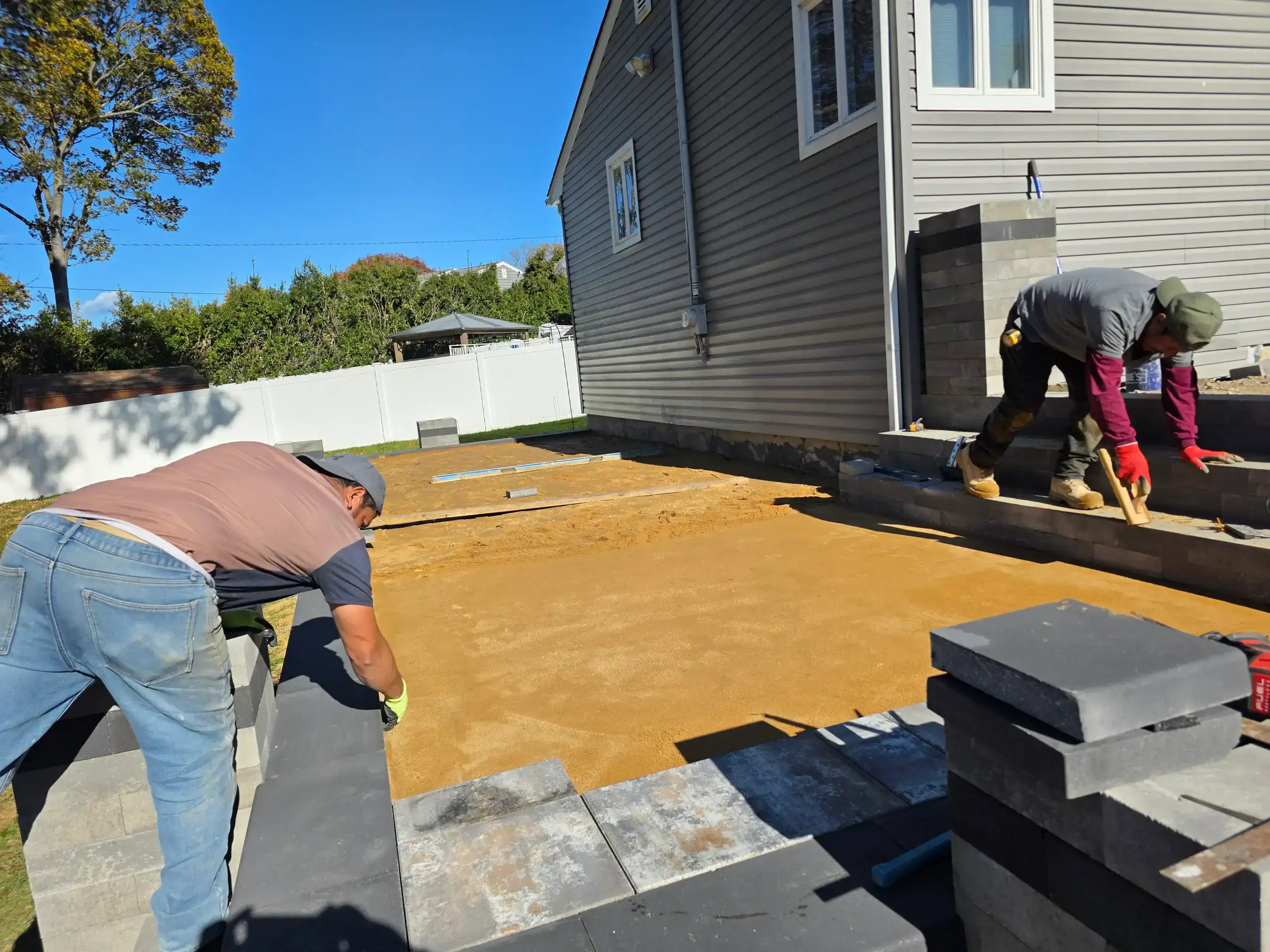
The most common one is the low bid that leaves things out. Some contractors make their estimates look competitive by quietly omitting job site cleanup, grading, drainage work, or finish details like caulking and painting. The scope looks similar on paper, but the actual work delivered is different. That gap shows up either during construction — when you’re suddenly getting charged for things you thought were included — or within a few years, when a patio starts heaving or cracking because the base preparation was skipped.
Long Island’s climate makes that second scenario especially common. The freeze-thaw cycle that Suffolk County goes through every winter is hard on outdoor surfaces. Patios and driveways installed without proper excavation, adequate base depth, and drainage fail faster here than they would in a milder climate. Contractors who don’t account for that — or who use materials that aren’t rated for this environment — are setting up their work to fail.
The subcontractor model creates its own set of problems. When a contractor manages your project by hiring out different phases to whoever is available, you lose continuity. The person who did the base work isn’t the same person doing the surface installation. Nobody owns the full result. Quality inconsistency between phases is common, and when something goes wrong, accountability gets murky. There’s also a real liability issue: if a worker on your property isn’t properly insured and gets hurt, you could be exposed.
The clearest sign of a contractor worth trusting is straightforward: they give you a written estimate that doesn’t change, they use the same licensed crew from start to finish, they handle the permits, they tell you exactly what the timeline looks like and why, and they clean up after themselves every day. None of that is exceptional. It’s just what the job should look like.
A backyard renovation is a real investment — in your home, your property value, and the way you actually use your space. NAR data puts the average patio installation at $10,500 with a 95% cost recovery at resale. That’s not a number to gamble on with a contractor who disappears after the deposit or hands your project off to a rotating crew.
What makes the difference in Suffolk County specifically is local experience — knowing the permit process across all ten towns, understanding the climate and freeze-thaw challenges, working with suppliers who know what materials hold up here, and having a track record with the building departments you’ll actually be dealing with.
We’ve been doing this work in Suffolk County since 2000. If you’re in the planning stage and want straight answers about what your project involves, what it will cost, and how long it will realistically take, reach out to Corsino Construction Corp. We’re happy to walk you through it.
Article details:
Share:
Continue learning: