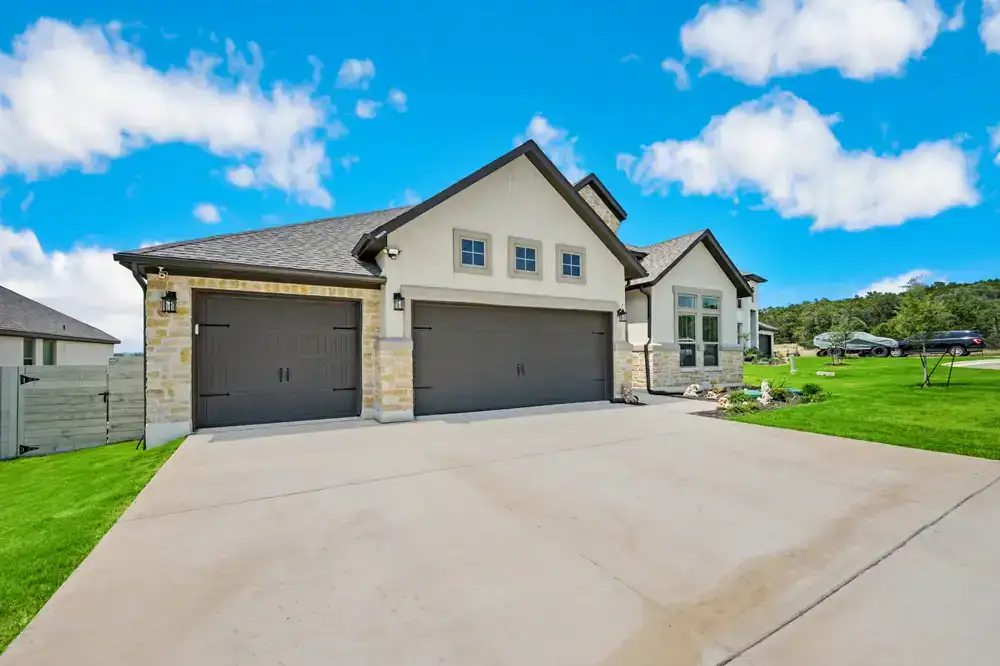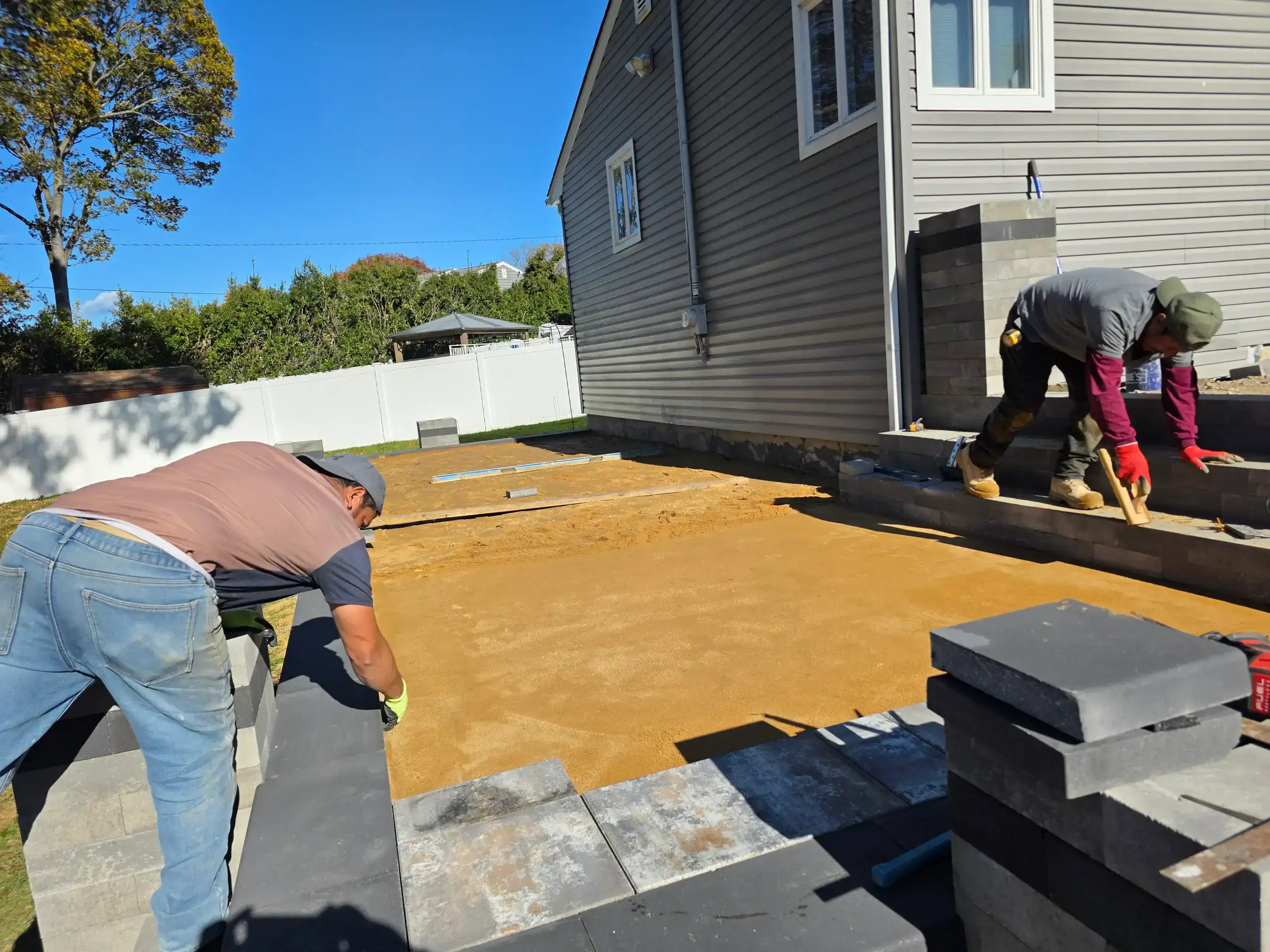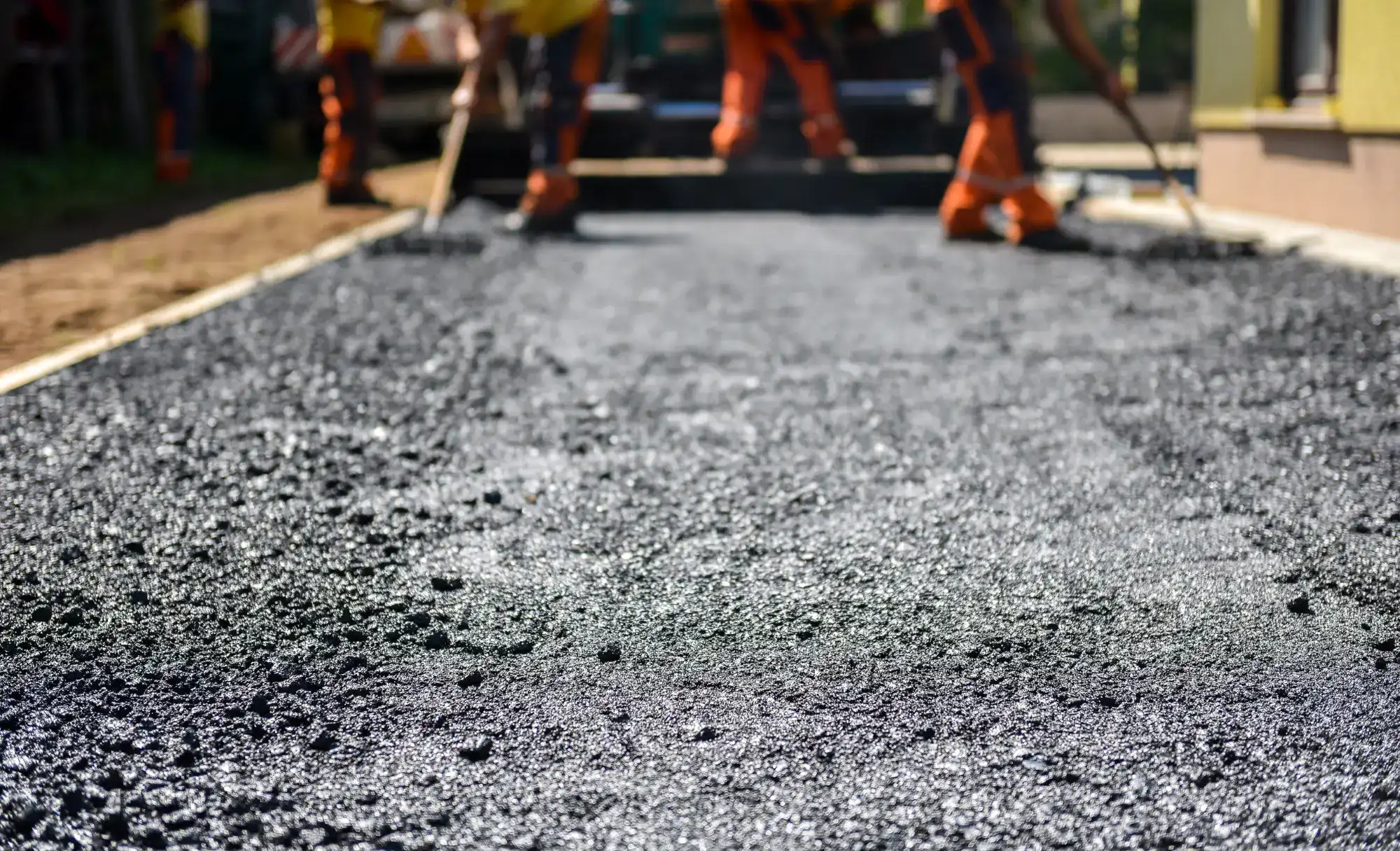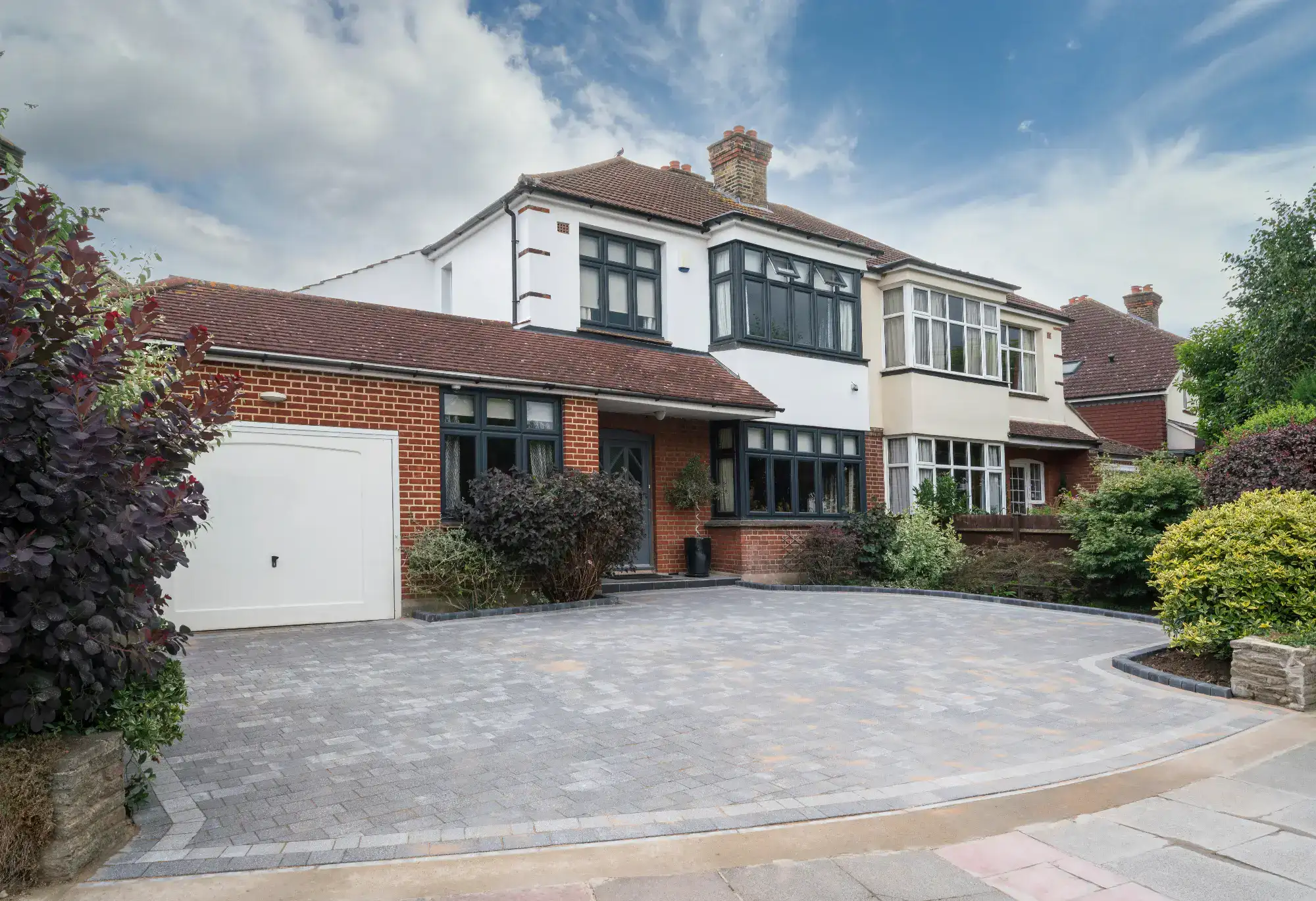
Not sure which driveway material makes sense for your Long Island home? Here's an honest breakdown of asphalt, concrete, and pavers — costs, lifespan, and what actually holds up to Suffolk County winters.
Share:
Summary:
If you’re replacing a driveway in Suffolk County, you’ve probably already discovered that getting a straight answer is harder than it should be. Quotes vary wildly. Contractors push different materials. And every comparison guide online seems to be written for somewhere that doesn’t get Long Island winters.
After more than 20 years of paving driveways across Suffolk County — from Coram and Commack to Islip, Sayville, and East Northport — we’ve learned that the material you choose matters. But it matters a lot less than most people think compared to how well the job gets done underneath the surface.
Let’s start with the number everyone wants first. On Long Island, asphalt runs roughly $7 to $15 per square foot installed. Concrete comes in at $12 to $25 per square foot. Pavers sit at the top of the range — typically $20 to $35 per square foot depending on the material and pattern.
For a standard two-car driveway (around 600 square feet), that translates to somewhere between $4,800 and $9,000 for asphalt, $7,200 to $15,000 for concrete, and significantly more for pavers. Those ranges are wide because the final number depends on excavation depth, base conditions, drainage needs, and local labor — all of which vary from one property to the next across Suffolk County.
If you’ve already gotten a few quotes, you may have noticed they don’t line up. One contractor comes in at the low end. Another is twice the price. And you’re left trying to figure out if the cheaper one is a deal or a disaster waiting to happen.
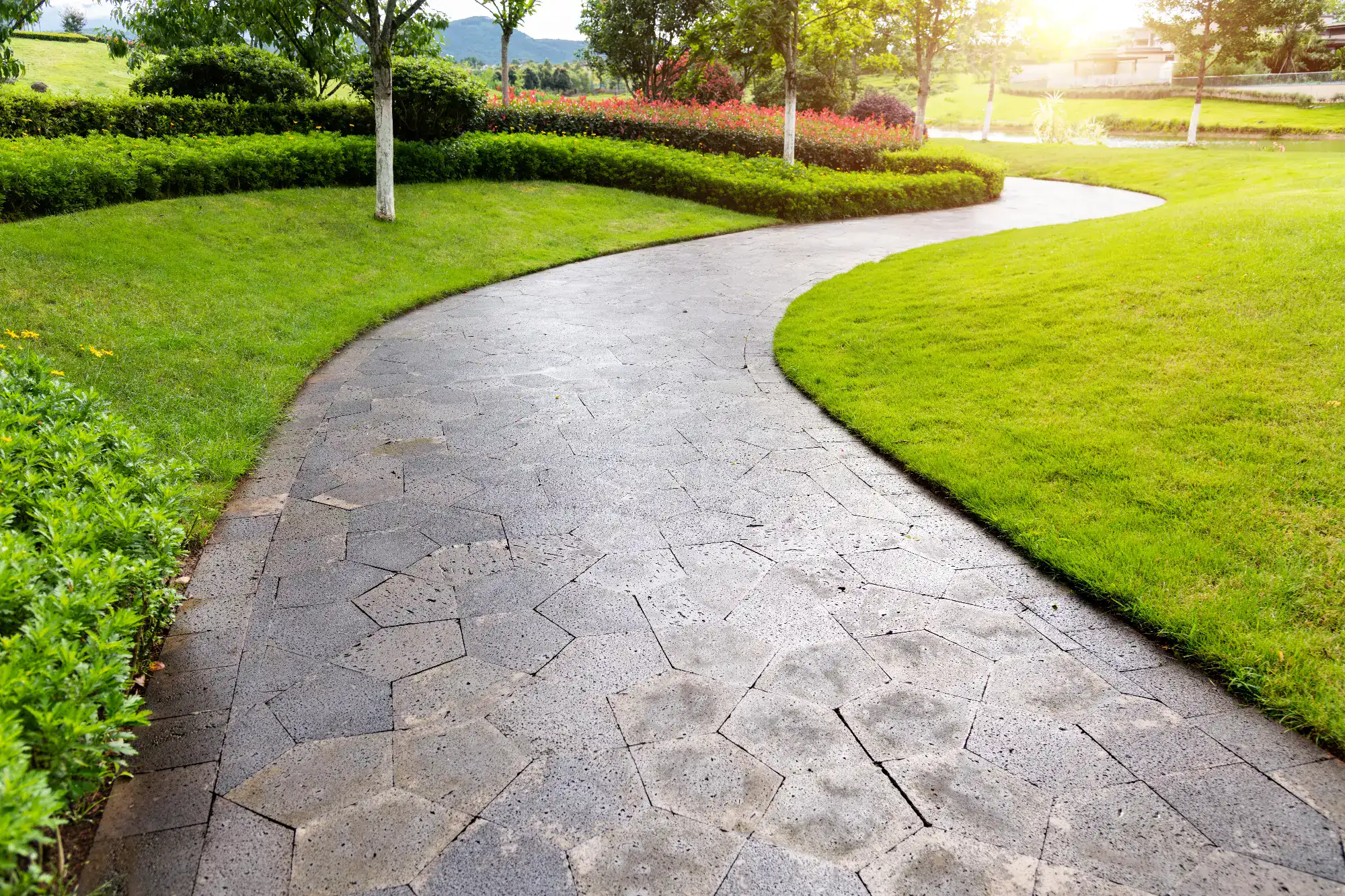
Here’s what’s usually driving that gap: base preparation. The part of your driveway you’ll never see is the part that determines how long it lasts. A proper installation in Suffolk County means excavating to the right depth, laying a compacted crushed stone base of at least six to eight inches, and grading the surface so water drains away from your home rather than pooling against your foundation.
In colder climates like ours, that base depth matters even more because water that gets into a weak subgrade freezes, expands, and starts cracking the surface from below. Contractors who skip steps — thinner base, no tack coat between layers, cheap asphalt mix — can quote lower because they’re doing less. The driveway might look fine for a year or two. Then the cracks start, the edges begin to crumble, and you’re back to square one earlier than you should be.
On Long Island specifically, the soil adds another layer of complexity. Our soil is predominantly sandy and glacially deposited — it drains quickly, which sounds like a good thing, but sandy soil can shift and settle if it isn’t properly excavated and compacted before the base goes in. A contractor who doesn’t account for that is setting you up for problems, regardless of which material goes on top.
The honest answer to “why is this quote so much cheaper” is almost always: something is being skipped. And the thing being skipped is almost always underground, where you won’t see it until it’s too late.
This is the question that matters most for Suffolk County homeowners, and the answer isn’t what most people expect.
Asphalt has a real performance advantage in cold climates. Because it’s flexible, it can expand and contract with temperature swings without cracking the way rigid materials do. Long Island winters are cold enough to cause repeated freeze-thaw cycles — water seeps into small cracks, freezes overnight, expands, and widens the crack — but asphalt’s flexibility means it absorbs that movement rather than fighting it. A properly installed asphalt driveway, sealed every two to three years, can last 15 to 30 years here.
Concrete is more durable in theory — it can last 30 to 40 years with good installation and maintenance. But concrete is rigid. When freeze-thaw cycles hit, concrete cracks, and those cracks are harder to repair invisibly. The color mismatch on concrete repairs is obvious in a way that asphalt repairs simply aren’t. Add the road salt that gets tracked onto driveways every winter across Suffolk County, and concrete surfaces can deteriorate faster than their lifespan suggests.
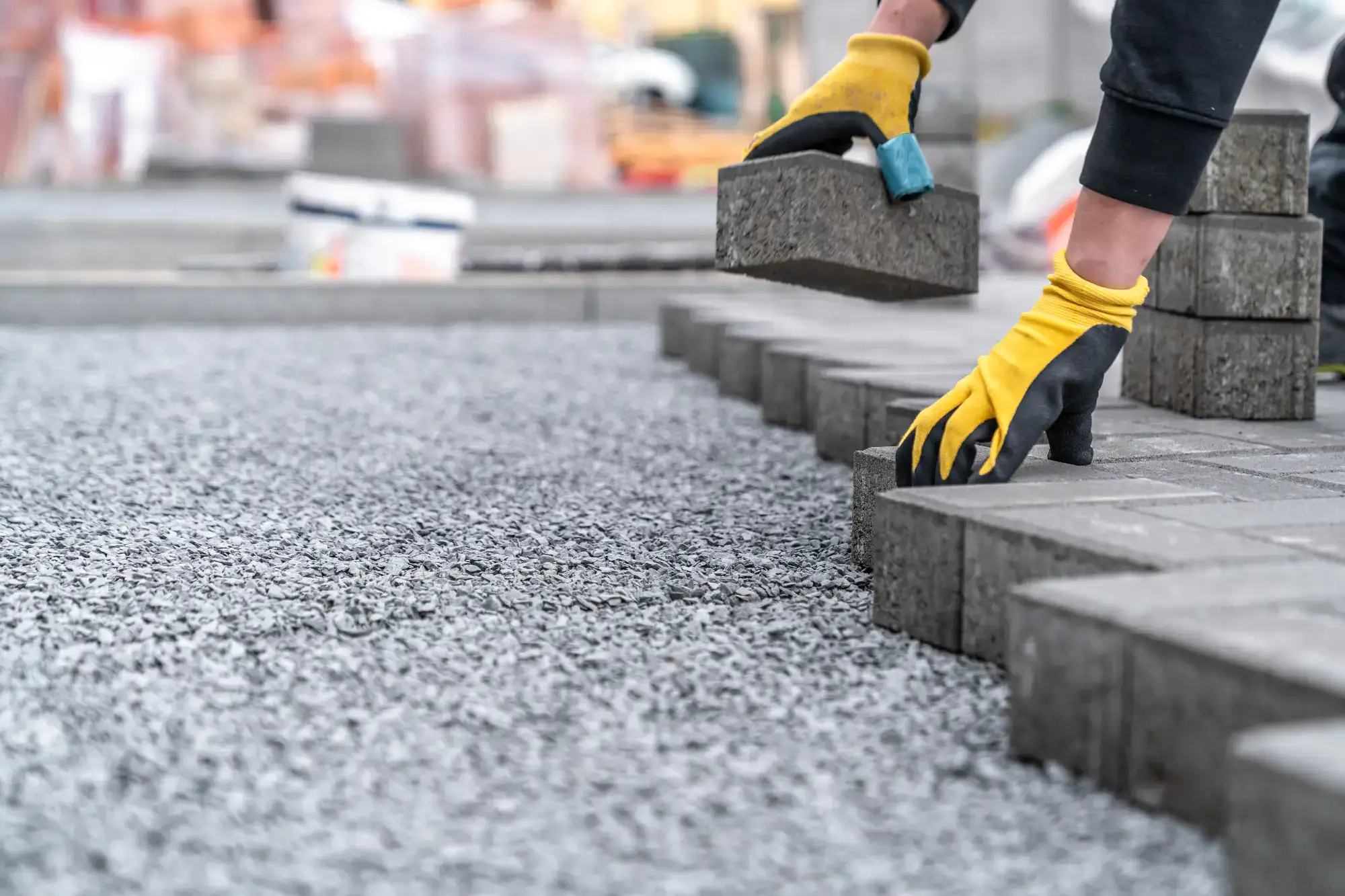
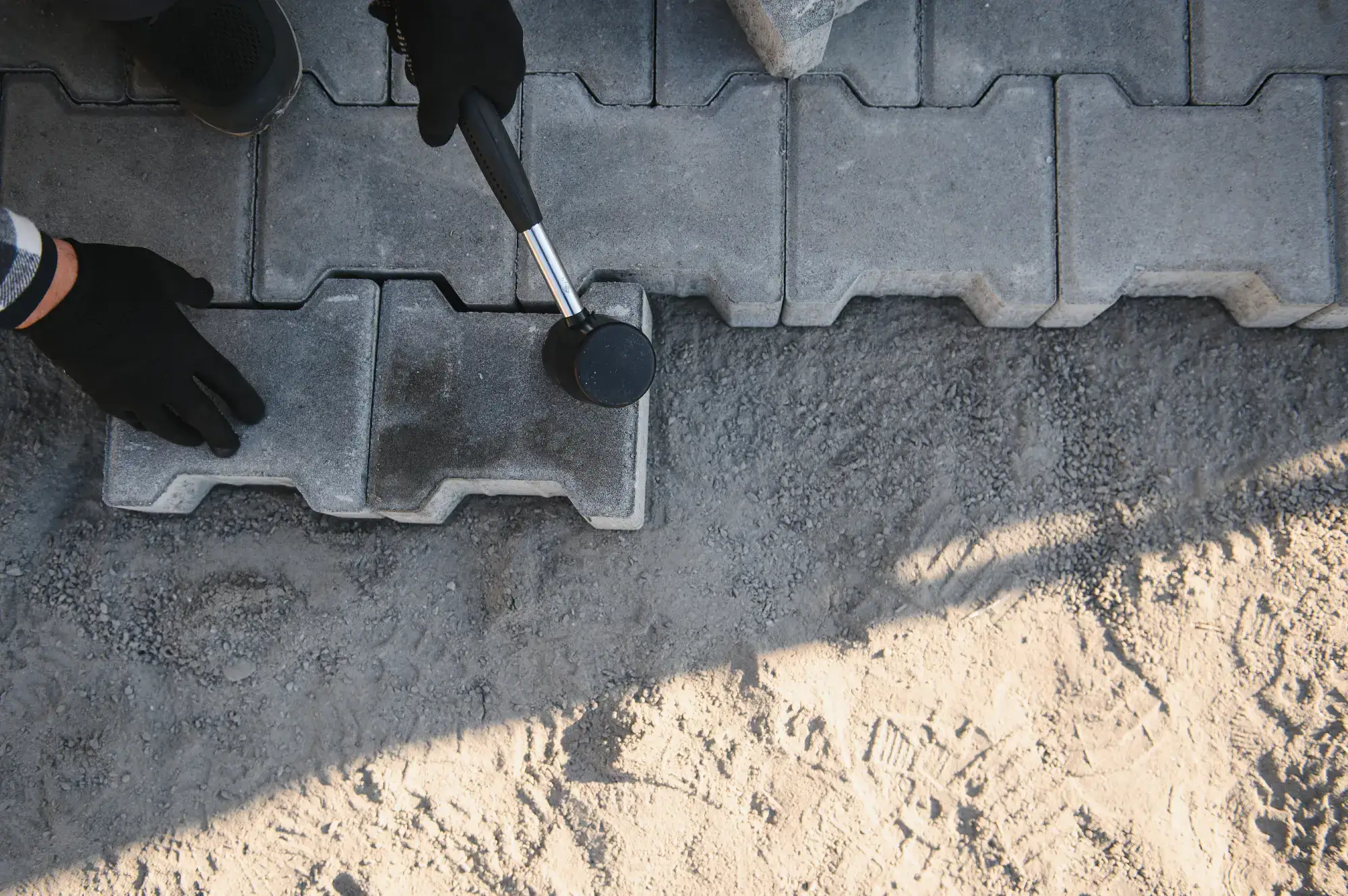
Pavers handle freeze-thaw cycles differently than either poured material. Because individual units can shift slightly without the whole surface cracking, pavers are actually quite resilient. The bigger advantage is repairability — if a section heaves or a unit cracks, you replace the affected pieces rather than patching or repaving an entire area. For homeowners planning to stay long-term, that repairability changes the math on the higher upfront cost. Pavers also add significant curb appeal, which is worth something in communities where property values have climbed steadily across Suffolk County in recent years.
For most Suffolk County homeowners on a reasonable budget, asphalt is the most practical choice for our climate. Concrete is viable but requires more careful maintenance and is less forgiving when cracks develop. Pavers are the best long-term investment if you can absorb the upfront cost and plan to stay in the home.
Want live answers?
Connect with a Corsino Construction expert for fast, friendly support.
Once you’ve settled on a material, the next decision is who’s installing it — and this is where a lot of Long Island homeowners get tripped up. The market here has a real problem with contractors who show up at your door claiming they have leftover materials from a nearby job and can give you a deal. The BBB and local news outlets have documented dozens of cases across Suffolk County where homeowners paid thousands of dollars for work that was either never completed or done so poorly it failed within a season.
The warning signs are consistent: door-to-door solicitation, cash-only payment upfront, no written estimate, no verifiable local address. A legitimate driveway contractor doesn’t need to knock on your door.
Licensing and insurance aren’t optional — they’re the baseline. Any contractor working on your property in Suffolk County should be able to show proof of both without hesitation. If they deflect or make it complicated, that’s your answer.
Beyond that, the questions worth asking are about process, not just price. How deep will the base be? What mix are they using? How do they handle drainage grading? A contractor who can answer those questions specifically — not just say “we do it right” — is a contractor who actually knows what they’re doing.
Written estimates matter more than most people realize. Verbal quotes are easy to walk back once work begins. A written estimate that spells out exactly what’s included — excavation depth, base thickness, asphalt layer, drainage plan — is the document that protects you if the conversation changes later. Every estimate we provide is detailed and fixed. The number we quote before we start is the number you pay.
Subcontractors are another factor worth understanding. Some contractors win the job and then hire whoever’s available to do the actual work. That creates accountability gaps — if something goes wrong, the person who sold you the job isn’t the person who did it, and responsibility gets murky. Our crew is in-house, licensed, and consistent from the first day to the last. You’ll see the same people on your property throughout the project, and if you have a question or a concern, you can reach us directly.
Permits are part of the job too, not an afterthought. Most driveway installations in Suffolk County require permits, especially if you’re changing the size, grade, or drainage pattern of an existing driveway. The requirements vary by town — Brookhaven, Islip, Babylon, Huntington, and Smithtown each have their own process — and navigating that correctly from the start prevents problems down the road. We handle permit applications as part of our process, so that piece doesn’t fall on you.
One question we hear constantly: “Can I just patch it instead of replacing it?” Sometimes yes, sometimes no — and the honest answer depends on what’s going wrong beneath the surface. If the cracking or heaving is a base problem, patching the surface is cosmetic. The cracks come back because the underlying issue hasn’t been addressed. If the surface is deteriorating but the base is still solid, resurfacing can extend the driveway’s life meaningfully. We’ll tell you which situation you’re in after we take a look, and we won’t push replacement if resurfacing is the right call.
Another common one: “Do I need a permit to replace my driveway?” In most cases, yes — especially for a full replacement or any work that changes drainage patterns. The permit process in Suffolk County varies by town, which is why it’s worth working with a contractor who knows the local requirements and handles the paperwork. Unpermitted driveway work can create complications when you sell the home, so it’s worth doing it correctly from the start.
People also ask about sealcoating, and how often it’s actually necessary. For asphalt, sealcoating every two to three years is the single most cost-effective maintenance step you can take. It protects the surface from moisture penetration, UV degradation, and the road salt that gets tracked onto Suffolk County driveways every winter. The cost is a fraction of what you’d spend on repairs or early replacement — and it’s one of the reasons a well-maintained asphalt driveway can reach the upper end of its lifespan rather than the lower.
Finally: “Is the cheaper quote worth it?” A driveway that’s installed correctly — proper base, correct drainage grade, quality materials — will outlast a cheap installation by a decade or more. The upfront savings on a low-ball quote often disappear within a few years when the problems start. The real cost of a driveway isn’t the quote. It’s what you end up spending over the life of the surface.
The material comparison — asphalt vs. concrete vs. pavers — is worth understanding, but it’s only part of the decision. What’s underneath the surface, how the drainage is handled, and who’s actually doing the work matters just as much as what you choose to put on top.
For most Suffolk County homeowners, asphalt is the most practical starting point: lower upfront cost, good freeze-thaw performance, and straightforward maintenance. Pavers make sense if you’re planning to stay long-term and want the curb appeal and repairability. Concrete is viable but requires more care in our climate.
If you’re ready to get a real number — not a ballpark, not a verbal estimate that changes later — Corsino Construction Corp has been doing this work across Suffolk County since 2000. Reach out to us at 516-693-4270, Monday through Friday, 9am to 5pm, and we’ll give you a straight answer on what your project actually involves.
Article details:
Share:
Continue learning: