Planning a custom deck in Stony Brook or Port Jefferson Station? Learn what separates a quality build from a costly mistake, and why material choice matters more than you think.
Share:
Summary:
You’re thinking about a deck. Maybe you’ve been eyeing that backyard space for years, or maybe you just moved in and realized your outdoor area has serious potential. Either way, you’re here because you want to do it right.
Building a custom deck in Suffolk County means dealing with coastal weather, local building codes, and a market full of contractors promising the world. Some deliver. Many don’t. The difference often comes down to understanding what actually matters—materials that work with Long Island’s climate, proper permitting, and a builder who knows the area.
This guide cuts through the noise. You’ll learn what goes into a quality deck build, how to choose materials that make sense for your budget and lifestyle, and what questions to ask before signing anything. Let’s start with what most homeowners get wrong from day one.
Not every deck builder understands Long Island. The coastal climate here does things to outdoor structures that don’t happen inland. Salt air, humidity swings, and freeze-thaw cycles all take their toll. A deck built without accounting for these factors might look fine for a year or two, then start showing problems you can’t ignore.
The right deck builder for Stony Brook, Port Jefferson Station, or anywhere in Suffolk County knows these challenges. We understand which materials hold up to moisture and which ones warp or rot. We know local permit requirements—like the fact that decks over 8 inches in height need permits in most Suffolk County towns. And we’ve built enough decks in the area to anticipate issues before they become expensive problems.
Experience in the area matters more than most people realize. A builder who’s worked in Suffolk County for years has relationships with local building departments, knows the terrain challenges, and understands what homeowners here actually need from their outdoor space.
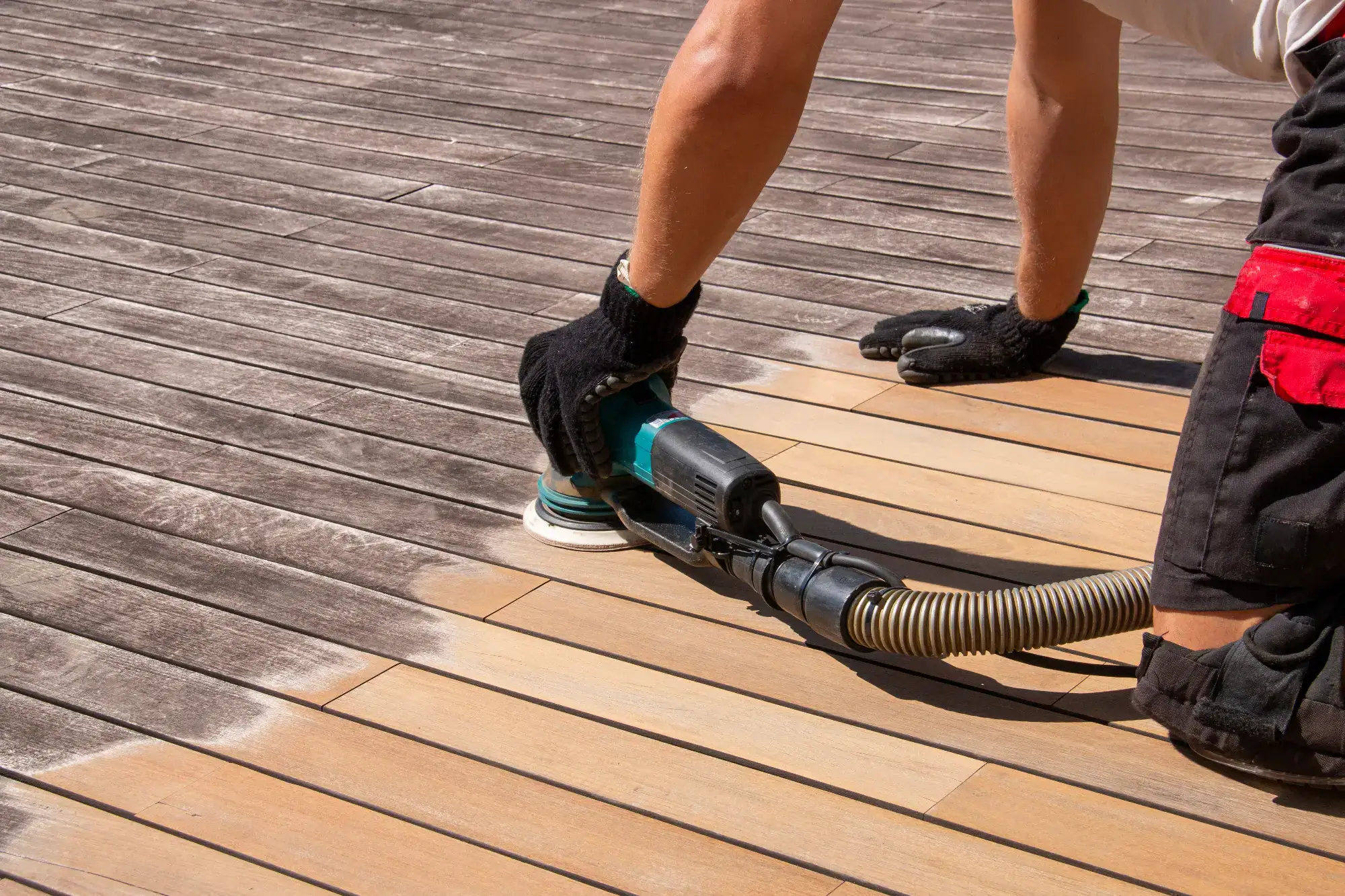
This is where most homeowners get stuck. Composite costs more upfront but requires almost no maintenance. Wood looks natural and costs less initially but needs staining or sealing every few years. Both can work in Suffolk County, but the right choice depends on your priorities.
Composite decking runs about $49 to $60 per square foot in materials. It resists moisture, doesn’t splinter, and won’t rot or warp the way wood can. For Long Island’s coastal climate, that moisture resistance is a big deal. Composite also holds up better against fading from UV exposure, which matters when your deck gets full sun most of the day. The tradeoff is that initial cost and the fact that composite can retain heat in direct sunlight, though newer products have addressed this with cooling technology.
Pressure-treated wood costs around $25 to $30 per square foot, making it the budget-friendly option. It’s also easier to work with if you’re doing custom cuts or curved designs. But wood absorbs moisture, which means you’re looking at regular maintenance to prevent rot, mold, and insect damage. In Suffolk County’s humid summers, that maintenance schedule becomes even more important. You’ll need to clean, sand, and reseal every two to three years to keep the deck looking good and structurally sound.
Cedar and hardwoods like ipe fall somewhere in between, offering natural beauty and better rot resistance than pressure-treated pine. Cedar runs $42 to $48 per square foot, while ipe can hit $7 to $12 per square foot for materials alone. These options give you that authentic wood look and feel, but they still require more upkeep than composite.
The long-term cost calculation often surprises people. A composite deck might cost $4,000 more upfront for a typical 300-square-foot build, but you save on staining, sealing, and eventual board replacement. Over ten years, those costs can even out or tip in favor of composite. If you’re planning to stay in your home long-term and value low maintenance, composite makes sense. If you’re working with a tight budget now and don’t mind the upkeep, wood can be the right call.
For Suffolk County specifically, composite handles the coastal environment better. It doesn’t absorb moisture the way wood does, which means less warping, fewer mold issues, and better performance year after year. That’s why we often recommend composite for clients who want to minimize long-term headaches.
Permits aren’t optional in Suffolk County, and trying to skip them creates problems you don’t want. Most towns require building permits for decks over 8 inches in height, measured from the lowest point of natural grade. That covers the majority of deck projects, especially if your property has any slope or if you’re building off an elevated door.
The permit process starts with detailed plans showing dimensions, materials, and construction methods. You’ll need to demonstrate that your deck meets setback requirements—how far it sits from property lines—and height limitations. Some towns also have specific requirements for railings, stairs, and structural support. Getting this wrong means delays, fines, or being told to tear down work you’ve already completed.
Working with a deck builder who handles permits as part of the project saves you time and stress. We know what local building departments expect, how to prepare plans that get approved, and how to schedule inspections at the right stages. Most permit processes in Suffolk County take 10 to 30 days depending on the complexity and the town’s current workload.
Inspections happen at multiple points during construction. Foundation inspections ensure your footings and support structure are solid. Framing inspections check the structural integrity before decking goes on. Final inspections verify everything meets code and is safe for use. Each stage needs approval before you move forward, which is why having someone experienced managing the process matters.
Building without a permit might seem like a way to save money or time, but it backfires. If the town discovers unpermitted work, you face fines and may be required to remove the deck entirely. It also creates issues when you sell your home, as buyers and their inspectors will ask about permits for any major structures. A deck built without proper permits can delay or kill a sale, or force you to reduce your asking price to account for the risk.
Some homeowners assume they can handle permits themselves, and technically you can. But the learning curve is steep if you’re not familiar with building codes, plan requirements, and inspection processes. Mistakes in your application or plans lead to rejections and delays. A professional deck builder who’s done this hundreds of times gets it right the first time, which keeps your project on schedule.
The cost of permits varies by town and project size, but budget a few hundred dollars for fees. That’s a small price compared to the risk of building without approval. And when your deck is properly permitted and inspected, you have documentation proving it was built to code, which protects your investment and gives you peace of mind.
Want live answers?
Connect with a Corsino Construction expert for fast, friendly support.
Your deck should fit how you actually use outdoor space, not just look good in a photo. Some homeowners want a simple platform for grilling and casual seating. Others need zones for dining, lounging, and entertaining. The design process starts with understanding your priorities and your property’s layout.
Multi-level decks work well on sloped properties or when you want to define different areas without walls. A raised section for dining keeps that space separate from a lower lounge area or fire pit. This approach also adds visual interest and can help your deck blend into the landscape instead of looking like a flat addition stuck onto the house.
Built-in features like benches, planters, and storage make your deck more functional without cluttering the space. Integrated seating along the perimeter maximizes usable floor area while providing plenty of spots for guests. Planters add greenery and can create natural dividers between zones. Storage benches give you a place to stash cushions, grilling tools, or outdoor games.
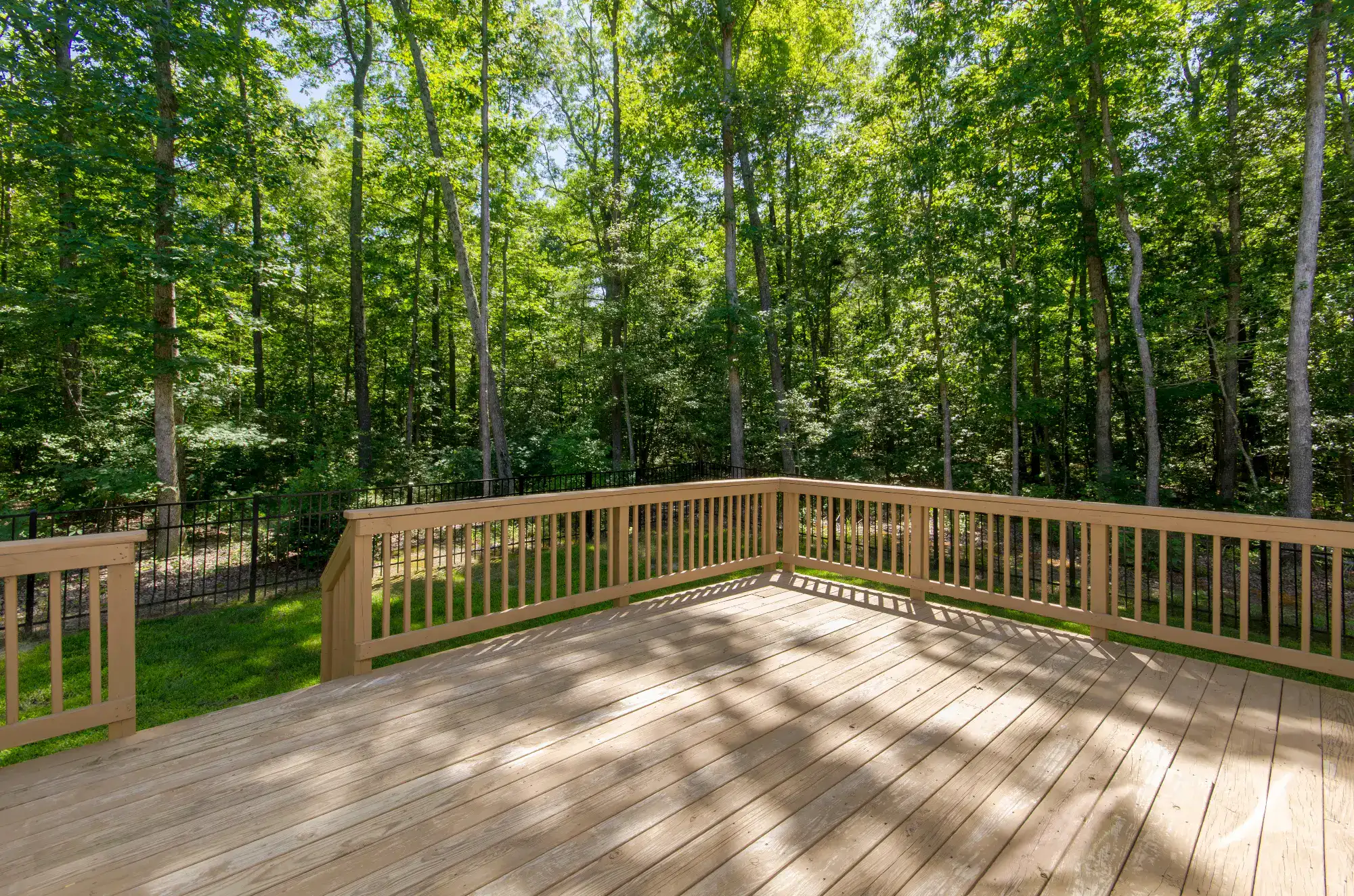
Size drives cost more than any other factor. A 200-square-foot deck might run $5,000 to $6,000 in pressure-treated wood or $10,000 to $12,000 in composite. A 400-square-foot deck doubles those numbers. Every additional square foot adds materials, labor, and time.
But bigger isn’t always better. A well-designed 250-square-foot deck with thoughtful zones and built-in features often works better than a sprawling 400-square-foot platform with no clear purpose. Think about how many people you realistically entertain, how much furniture you need, and what activities happen outdoors. That helps you right-size the deck instead of building more space than you’ll use.
Layout complexity also impacts cost. A simple rectangular deck attached to your house is straightforward to build. Add curves, multiple levels, custom stairs, or wraparound sections, and you’re increasing labor and materials. Those features can be worth it if they solve specific problems or create the flow you want, but understand they come with a price tag.
Location on your property matters too. A ground-level deck on flat terrain is easier and cheaper to build than an elevated deck on a slope. If your site requires significant excavation, grading, or tall support posts, that adds to the project cost. We can assess your property and give you realistic expectations about what’s involved.
Railings, stairs, and finishes add up quickly. Standard wood railings are the budget option. Upgrade to composite, metal, or cable railings and you’re adding hundreds to thousands depending on the linear footage. The same goes for stairs—basic steps cost less than wide, custom staircases with integrated lighting. Decide which features matter most to you and where you’re willing to spend versus save.
Permits, as mentioned earlier, add a few hundred dollars but are non-negotiable. Some towns also require engineering stamps for elevated decks or specific designs, which adds another cost. We include these in our estimates so you’re not surprised.
Most homeowners in Suffolk County spend between $10,500 and $15,000 on deck projects, though costs can range from $5,500 for a small, basic build to $25,000 or more for larger, high-end designs. Getting multiple quotes helps you understand what’s reasonable for your specific project, but be wary of estimates that seem too good to be true. Low bids often mean corners get cut on materials, labor, or permitting.
Once you’ve chosen a deck builder and finalized the design, the actual construction happens in stages. Understanding what to expect helps you plan around the work and know if things are progressing normally.
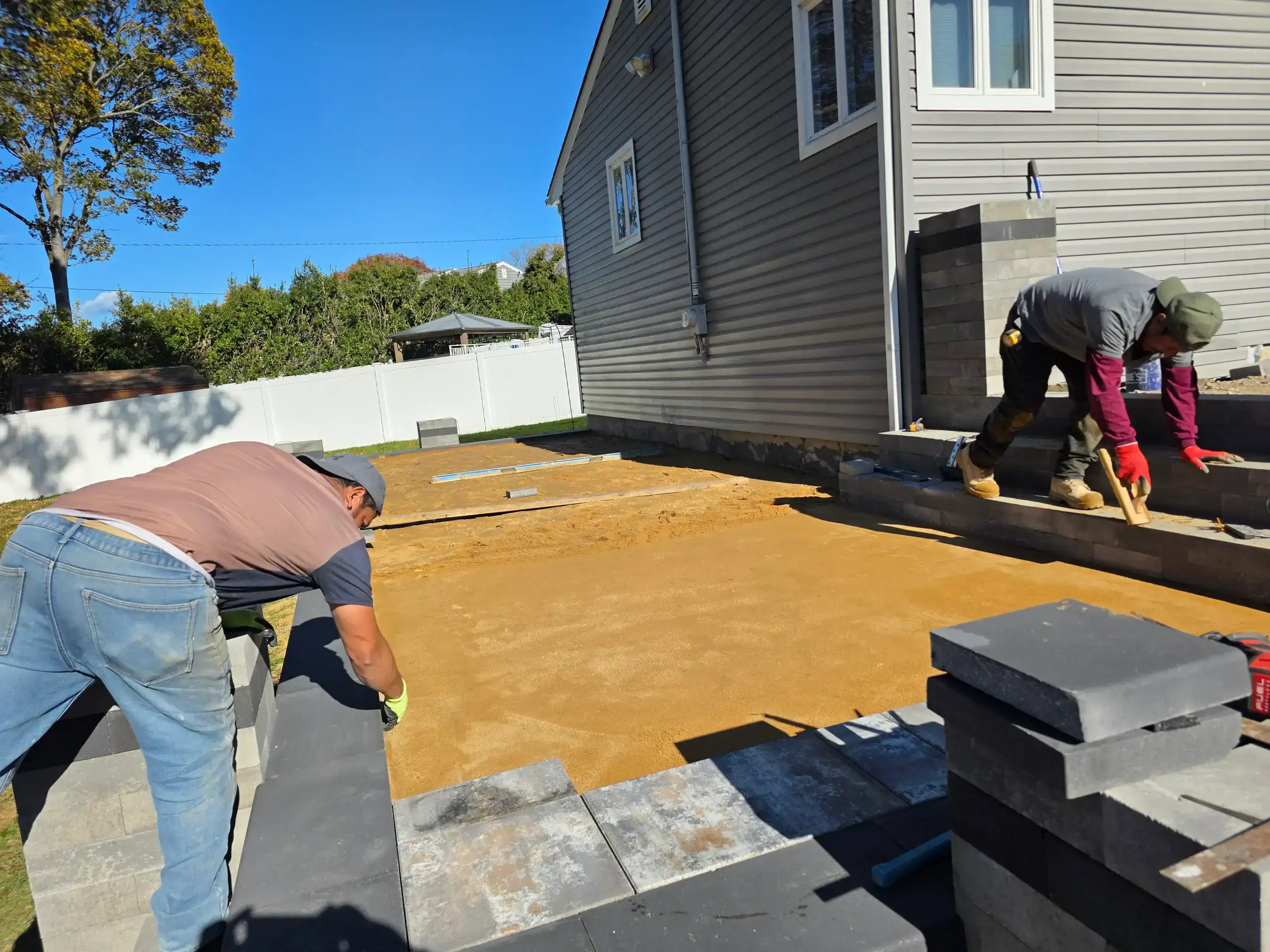
The first step is site preparation. This includes marking the deck footprint, clearing the area, and setting up for excavation if needed. If your deck requires footings—and most do—we dig holes for concrete piers that will support the structure. The depth and spacing of these footings depend on your deck’s size and local code requirements. This stage also includes the foundation inspection, where a building inspector verifies the footings meet code before we pour concrete or proceed.
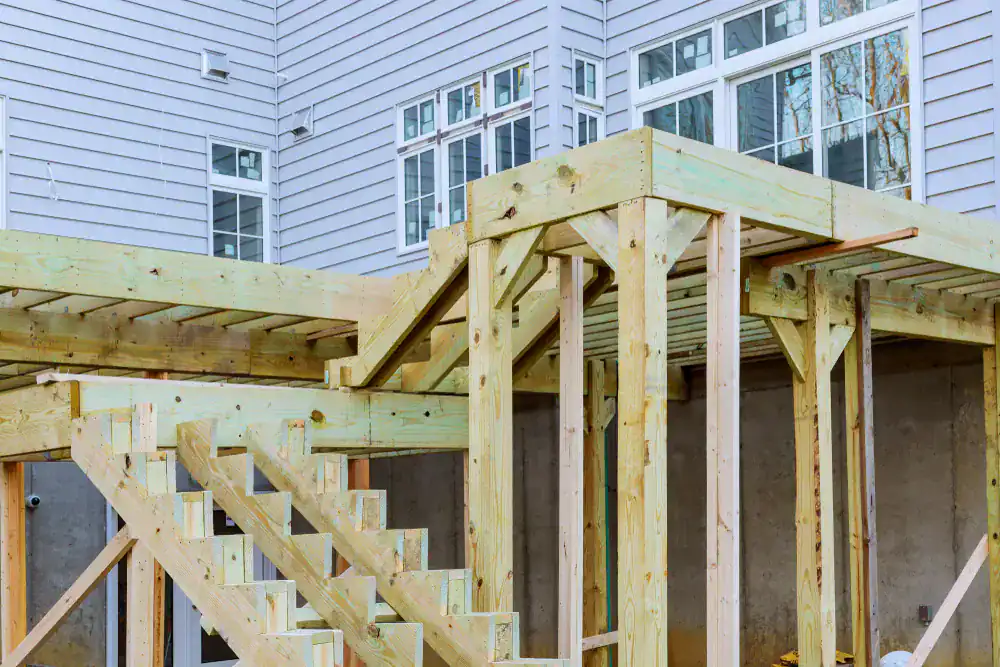
Framing comes next. This is the skeleton of your deck—the posts, beams, and joists that create the structure. Framing needs to be level, properly spaced, and securely fastened. This stage determines how solid your deck feels and how well it holds up over time. A framing inspection happens before decking boards go on, ensuring everything is structurally sound.
Decking installation is when your project starts looking like a deck. Boards get laid, fastened, and trimmed. If you’re using hidden fasteners for a cleaner look, this stage takes a bit longer but eliminates visible screws on the surface. We also install any built-in features like benches or planters during this phase.
Railings and stairs go on toward the end. Railings need to meet specific height and spacing requirements for safety, and stairs need proper rise and run measurements. This is also when any finishing touches like post caps, lighting, or decorative elements get added.
The final inspection verifies everything meets code and is safe for use. Once you pass, you get your certificate of occupancy or compliance, which is your official documentation that the deck was built legally and correctly.
Most standard decks take one to two weeks from start to finish, though larger or more complex projects can take longer. Weather delays happen, especially during rainy periods or extreme heat. We keep you updated on progress and any issues that arise.
During construction, expect some disruption. Crews arrive early, tools make noise, and there’s activity in your yard. We keep the site organized and clean up at the end of each day so you’re not living in a construction zone. We also protect your existing landscaping and property as much as possible.
Communication matters throughout the process. You should feel comfortable asking questions, raising concerns, or requesting updates. We keep clients informed and address issues before they become bigger problems.
Building a custom deck in Stony Brook, Port Jefferson Station, or anywhere in Suffolk County comes down to three things: choosing materials that work with the climate, working with someone who understands local requirements, and designing a space that actually fits your life.
Composite handles Long Island’s coastal conditions better than wood if you value low maintenance and long-term durability. Wood works if you’re budget-conscious now and don’t mind regular upkeep. Either way, make sure your deck builder knows how to work with your chosen material and can guide you based on your priorities.
Permits aren’t optional, and trying to skip them creates expensive problems. Work with a contractor who handles permitting as part of the project and has experience navigating Suffolk County’s building departments. That keeps your project legal, on schedule, and protects your investment.
Most importantly, choose a deck builder you trust. Look for established companies with local experience, transparent pricing, and a track record of quality work. At Corsino Construction Corporation , we’ve been serving Suffolk County since 2000, bringing over two decades of experience to every deck project. Our team handles design, permitting, and construction with in-house professionals—no subcontractors—ensuring consistent quality and clear communication from start to finish.
Article details:
Share:
Continue learning: