Share:

Summary:
You’ve been living with that cramped kitchen for five years. The deck out back is more hazard than hangout spot. Or maybe you’re finally ready to add the extra bedroom your growing family needs. Whatever’s driving your decision, you’re not alone—over half of homeowners tackled renovation projects last year, and Suffolk County saw some of the strongest home value growth in the region.
But here’s what most people don’t realize until they’re already in it: the difference between a home renovation that adds value and one that drains your bank account usually comes down to what happens before the first hammer swings. You need a plan that accounts for permits, realistic timelines, and the kind of structural work that actually lasts in Long Island’s coastal climate.
Let’s talk about what that looks like.
Home renovation covers a lot of ground. It’s not just cosmetic updates like new paint or fixtures—though those certainly count. Real renovation work typically means changing how your space functions, looks, or performs.
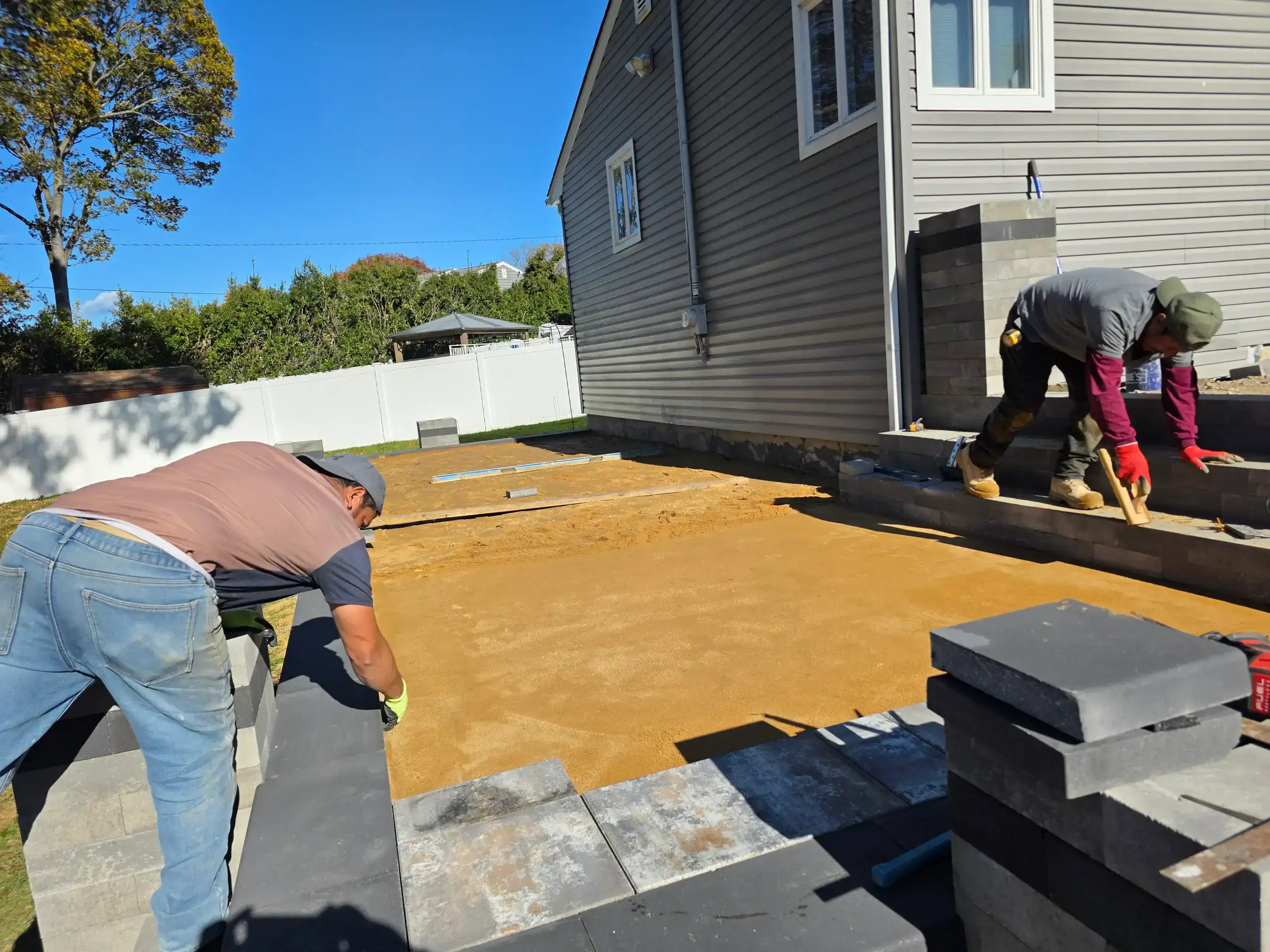
In Suffolk County, NY, most renovation projects fall into a few categories. Interior work like kitchen and bathroom remodeling. Exterior improvements including deck building, patio installation , driveways, and walkway paving. Structural changes that involve load-bearing walls, foundations, or adding square footage. And then there’s the work that touches multiple systems—electrical, plumbing, HVAC—which often happens alongside bigger projects.
The scope matters because it determines what permits you’ll need, how long the work takes, and frankly, what it’s going to cost. A bathroom refresh in Coram, NY might take two weeks and $15,000. A full kitchen gut with layout changes in Selden, NY could run three months and $50,000 or more. Adding a room to your house in Middle Island, NY? You’re looking at four to nine months from permits to final inspection, and costs that scale with every square foot.

Structural work is where things get serious. We’re talking about changes to load-bearing elements—walls that hold up your roof, beams that support your second floor, foundations that keep everything level. This isn’t optional knowledge if you’re planning to remove walls, add a second story, or expand your home’s footprint in Ridge, NY or surrounding areas.
Suffolk County building codes don’t mess around with structural modifications. Any work that affects how your home carries weight requires professional engineering, proper permits, and inspections at multiple stages. That wall you want to remove to create an open-concept kitchen? It might be load-bearing. Taking it out without installing a proper beam and supports doesn’t just risk your permit—it risks your home’s structural integrity.
Structural repairs fall into this category too. Foundation issues, rotted support beams, failing roof structures—these problems only get worse with time. Older homes in Middle Island, NY and Ridge, NY often need this kind of attention, especially if they’ve weathered decades of Long Island winters and coastal moisture. The fix isn’t cheap, but ignoring it costs more in the long run, both in safety and in home value.
Here’s what homeowners in Stony Brook, NY and Centereach, NY often miss: structural work triggers other requirements. You might need to upgrade your electrical service if you’re adding square footage. New living space means meeting current energy codes, not the standards from when your house was built. Your HVAC system might need expansion to heat and cool the addition properly. Each of these layers adds time and cost, which is why planning matters so much upfront.
The permit process for structural work in Suffolk County typically takes four to eight weeks, sometimes longer if revisions are needed. You’ll need professionally stamped plans from a licensed architect or engineer. The building department will review everything from your foundation design to how you’re tying into existing roof structures. Then come the inspections—foundation, framing, mechanical, final. Each one needs to pass before you move to the next phase.
Smart contractors build all of this into your timeline from day one. The ones who don’t? They’re the reason projects stall out halfway through when the building inspector shows up and finds work that doesn’t match the approved plans.
Adding square footage changes everything about how you use your home. An extra bedroom for a growing family. A home office now that remote work is permanent. A primary suite that finally gives you the space you need. These aren’t just construction projects—they’re investments in how you want to live, especially important in markets like Medford, NY and Patchogue, NY where home values continue climbing.
But additions come with complexity that interior renovations don’t touch. You’re building new foundation, framing new walls, extending your roof, and tying into existing electrical, plumbing, and HVAC systems. Every one of these connections needs to be done right, or you’ll end up with problems that show up months or years later.
Start with your property itself. Suffolk County has setback requirements—minimum distances from your property lines where you can’t build. Your addition needs to fit within these boundaries, and if it doesn’t, you’re looking at variance applications that add months to your timeline. Zoning regulations also limit how much of your lot you can cover with structures, and in some neighborhoods around Port Jefferson Station, NY and Farmingville, NY, there are height restrictions or architectural guidelines you’ll need to follow.
The foundation work alone deserves serious attention. Long Island soil conditions vary significantly even within the same town. Some areas have high water tables that require special drainage considerations. Others have soil that shifts with seasonal freeze-thaw cycles. Your foundation design needs to account for these local conditions, which is why working with contractors who know Suffolk County specifically makes a difference.
Then there’s the question of how your addition integrates with your existing home. The new space should feel like it’s always been there, not like an obvious add-on. That means matching roof lines, siding materials, window styles, and interior finishes. It means making sure the flow between old and new space makes sense for how you actually live. And it means building to standards that will hold up just as well as your original structure—or better.
Most homeowners underestimate the timeline for additions. Permit approval alone can take two to four months in Suffolk County. Construction typically runs another three to six months depending on size and complexity. Weather delays happen, especially if you’re building during winter months. Material delivery issues can push schedules back. And if inspections reveal problems, you’re stopped until those get resolved.
Budget planning needs to be equally realistic. Construction costs in Suffolk County run $150 to $270 per square foot depending on finish quality, and that’s before you factor in permits, engineering fees, and the inevitable surprises that come with tying into existing systems. Smart planning includes a 15-20% contingency fund for the unexpected—because there’s always something unexpected.
Want live answers?
Connect with a Corsino Construction expert for fast, friendly support.
The contractor you choose determines whether your home renovation becomes a success story or a cautionary tale. This isn’t about finding the cheapest bid for your deck building or patio installation needs. It’s about finding someone who’s properly licensed, actually knows Suffolk County building codes, and will still be around to stand behind their work five years from now.
Suffolk County, NY requires home improvement contractors to hold a valid license. This isn’t optional. Unlicensed contractors can’t legally pull permits, which means any work they do—whether it’s a pool patio, walkway paving , or full home addition—puts you at risk for fines, failed inspections, and serious problems when you eventually try to sell your home. Verify the license through the Suffolk County Office of Consumer Affairs. Check their complaint history while you’re at it.
Insurance matters just as much. Your contractor should carry both liability coverage and workers’ compensation. If someone gets hurt on your property and the contractor isn’t properly insured, you could be held liable. Ask for current certificates and verify they’re active—don’t just take their word for it.

The questions you ask upfront tell you everything about how the project will actually go. Start with the basics: How long have they been working in Suffolk County specifically? What similar projects have they completed in the past year in Middle Island, NY, Ridge, NY, or nearby communities? Can you see examples of their work or talk to recent clients?
Then get into the details that matter. Who’s actually doing the work—in-house crews or subcontractors? If they use subs, are those people also licensed and insured? How do they handle permits and inspections? What’s their typical timeline for a project like yours, and what factors could change that?
Communication is where a lot of renovations fall apart. Ask how often you’ll get updates and through what method. Who’s your main point of contact when questions come up? How do they handle change orders or unexpected issues that arise during construction? What happens if you’re not satisfied with some aspect of the work?
The contract itself should answer most of these questions in writing. It needs to include a detailed scope of work, not vague descriptions. A clear payment schedule tied to specific milestones, not just dates on a calendar. Start and completion dates that account for permit timelines and inspection requirements. And specifics about who’s responsible for cleanup, debris removal, and protecting the rest of your home during construction.
Suffolk County law limits how much contractors can collect upfront—generally no more than one-third of the total contract price unless materials need to be specially ordered. Be wary of anyone asking for large deposits before work begins. That’s often a red flag for contractors who are undercapitalized or have cash flow problems from other jobs.
Warranties matter too. What’s covered and for how long? Some contractors offer one year on workmanship, others offer more. Material warranties are separate and usually come from the manufacturer, but your contractor should help you understand what’s covered and how to make claims if needed. This applies whether you’re hiring a deck builder for composite decking or a patio contractor for paver installation.
Suffolk County takes building permits seriously, and for good reason. They’re not bureaucratic hassle—they’re how your town ensures work meets safety standards and won’t cause problems down the road. Most renovation work that involves structural changes, electrical, plumbing, or additions requires permits. Even some deck and patio projects need approval depending on size and how they’re attached to your house.
The permit process starts with submitting detailed plans that show exactly what you’re building and how. For structural work, those plans typically need to be stamped by a licensed engineer or architect. The building department reviews everything against current codes—not the codes from when your house was built, but today’s standards. This is why additions often trigger requirements for upgraded electrical service or energy efficiency measures that weren’t needed before.
Review times vary but generally run four to eight weeks for residential projects. If the plans need revisions, you’re looking at additional review cycles that add more time. Rush the process or skip steps, and you’ll end up with rejected applications and wasted fees. Work with contractors who know how to submit complete, code-compliant plans the first time.
Once permits are issued, inspections happen at specific stages. Foundation inspection before you pour concrete. Framing inspection before walls get closed up. Mechanical, electrical, and plumbing inspections before you cover those systems. And a final inspection before you can use the new space. Each inspection needs to pass before work continues, which is why scheduling and coordination matter so much.
Here’s what catches people off guard in Coram, NY, Selden, NY, and throughout the county: work done without proper permits doesn’t just risk fines. It creates problems when you sell your home. Buyers’ inspectors look for unpermitted work, and when they find it, it kills deals or forces you to retroactively permit everything—which costs two to four times what it would have cost to do it right the first time. Some insurance companies also refuse to cover damage related to unpermitted work.
Different towns within Suffolk County sometimes have additional requirements beyond the county-level permits. East Hampton, Southampton, and Shelter Island all have their own licensing and permitting processes. Your contractor should know these local variations and handle them as part of the project, not as surprises that come up mid-construction.
Energy codes are another layer that affects most renovation work. Adding heated square footage means meeting current insulation, window, and HVAC efficiency standards. Some projects require energy compliance documentation as part of the permit application. In practice, this usually means better insulation and more efficient windows than your existing house has, which is actually good for your utility bills long-term.
The bottom line: permits aren’t optional, and they’re not something to shortcut. They add time and cost to your project, yes, but they also ensure the work is done safely and legally. Contractors who push back on permits or suggest ways to avoid them are contractors you don’t want anywhere near your home.
Home renovation in Suffolk County, NY doesn’t have to feel overwhelming. It requires planning, realistic expectations, and working with people who actually know what they’re doing. The difference between a project that adds value and one that creates headaches usually comes down to those fundamentals.
Start with a clear picture of what you want to accomplish and why. Understand that permits, inspections, and proper engineering aren’t obstacles—they’re how you ensure the work is done right. Budget realistically with room for the unexpected. And choose contractors based on their licenses, insurance, experience, and track record, not just their bid price.
When you’re ready to talk about your project, we bring over two decades of experience to homeowners throughout Middle Island, NY, Ridge, NY, and all of Suffolk County. Licensed professionals, transparent pricing, and the kind of attention to detail that turns renovation plans into spaces you’ll actually love living in.
Article details:
Share:
Continue learning: