Not sure which dumpster size fits your Bay Shore remodel? We break down the 10, 20, and 30-yard options so you avoid overpaying or running out of space mid-project.
Share:

Summary:
Most homeowners underestimate their debris volume by at least 30%, usually because they forget that physics is a thing. You’re not just removing a vanity and some tile; you’re dealing with drywall, subflooring, old fixtures, and the massive amount of cardboard packaging your new “eco-friendly” fixtures came in. A standard bathroom remodel in Suffolk County typically produces 10-15 cubic yards of waste. That sounds like a lot until you realize a “cubic yard” is basically the size of a standard kitchen stove. Now imagine stacking 15 stoves in your driveway—suddenly, that “little” bathroom update feels a lot more substantial.
The challenge isn’t just volume; it’s the “Why Is This So Heavy?” factor. A cast-iron tub weighs as much as a small piano but is significantly harder to play. Tile and drywall are deceptively heavy, and since dumpsters have weight limits, hitting that ceiling can turn your “bargain” rental into a very expensive math lesson.
Let’s break down a real bathroom renovation to see what you’re actually evicting from your home. Your old fiberglass shower unit takes up about 20 cubic feet, but if it’s cast iron, it’s basically a literal anchor for your project. The toilet adds another 4 cubic feet, and your vanity contributes enough bulk to make the bin look full before you’ve even started on the walls.
Then comes the real villain: the tile and drywall. If you’re retiling, you’re removing 100 square feet of ceramic and the “heavy-as-lead” backer board behind it. That’s not just trash; that’s structural weight that wants to test the limits of your driveway. By the time you add the subflooring and the “surprise rot” you found near the sink, you’re easily looking at 12 cubic yards of chaos.
Here’s the kicker: you can’t fill a dumpster to the absolute brim like a toddler stuffing their pockets with candy. Debris must stay below the top edge for the driver to safely transport it down Sunrise Highway. So even if you calculate 10 yards of junk, you want at least a 12-15 yard bin unless you’re a world-class Tetris champion with a sledgehammer.
Kitchens generate roughly double the waste of bathrooms, mostly because we tend to pack more “stuff” into the place where we keep the snacks. If you’re doing a full gut in Bay Shore, you’re tossing cabinets, countertops, appliances, and those weird soffits that builders in the 70s thought were a great idea. It adds up faster than your local deli’s lunch rush.
Standard cabinets for a 10×10 kitchen don’t look huge until they’re ripped off the wall and sitting in a jagged pile. Add in granite or quartz countertops—which weigh about as much as a mid-sized sedan—and your “budget” bin is going to start groaning. Most kitchen remodels generate 20-25 cubic yards of debris before you even account for the boxes the new fridge came in.
One mistake we see constantly: homeowners order a 10-yard dumpster thinking they’ll just “squish it down.” Halfway through the demo, the bin is full, the heavy appliances are still in the house, and they’re calling us for a second rental. You end up paying for two deliveries and two pickups, which is a great way to turn your “savings” into a donation to the waste industry.
Want live answers?
Connect with a Corsino Construction expert for fast, friendly support.
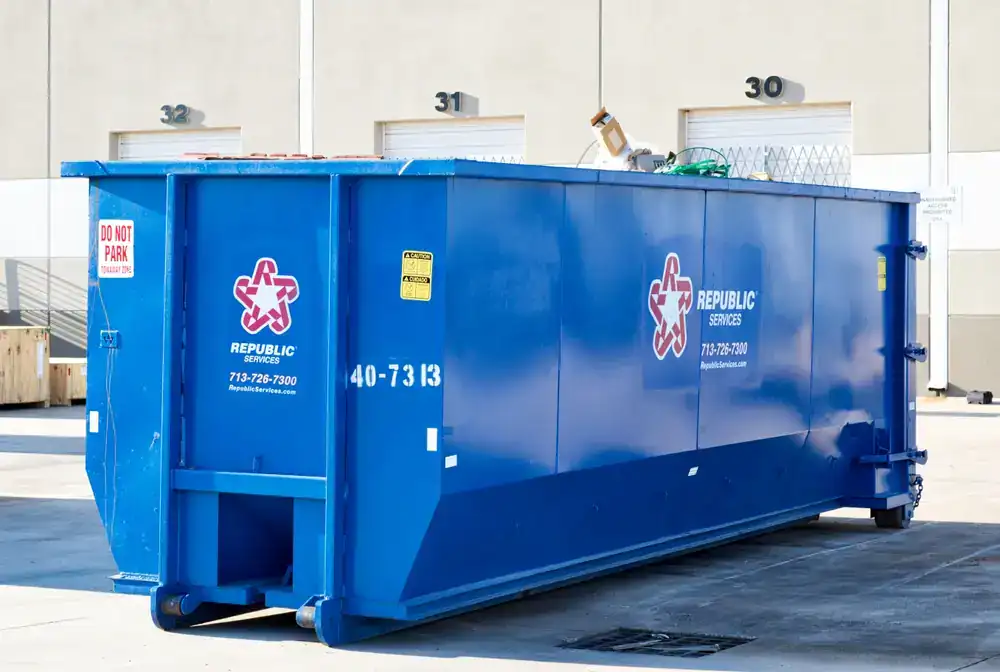
Dumpster sizes are measured in cubic yards, which is just a fancy way of saying “how many stoves can I fit in here?” But size isn’t just about length; it’s about depth and height. Each size comes with a different weight limit, and in the world of Long Island remodeling, weight is what usually gets you in trouble. A 10-yard dumpster is the “compact car” of waste. It’s great for half-baths, cleaning out a shed, or getting rid of all the junk your teenager left behind when they went to college. It typically holds 3-4 pickup truck loads, which sounds impressive until you realize how fast a single bathroom vanity and a few sheets of drywall can eat that up.
The 20-yard dumpster is the “Golden Child” of home renovations. It holds 7-8 pickup truck loads and is usually the sweet spot for both kitchens and full master baths. It fits in most standard Bay Shore driveways without the neighbors thinking you’re opening a regional landfill, and it has the weight capacity to handle the heavy hitters like tile and appliances.
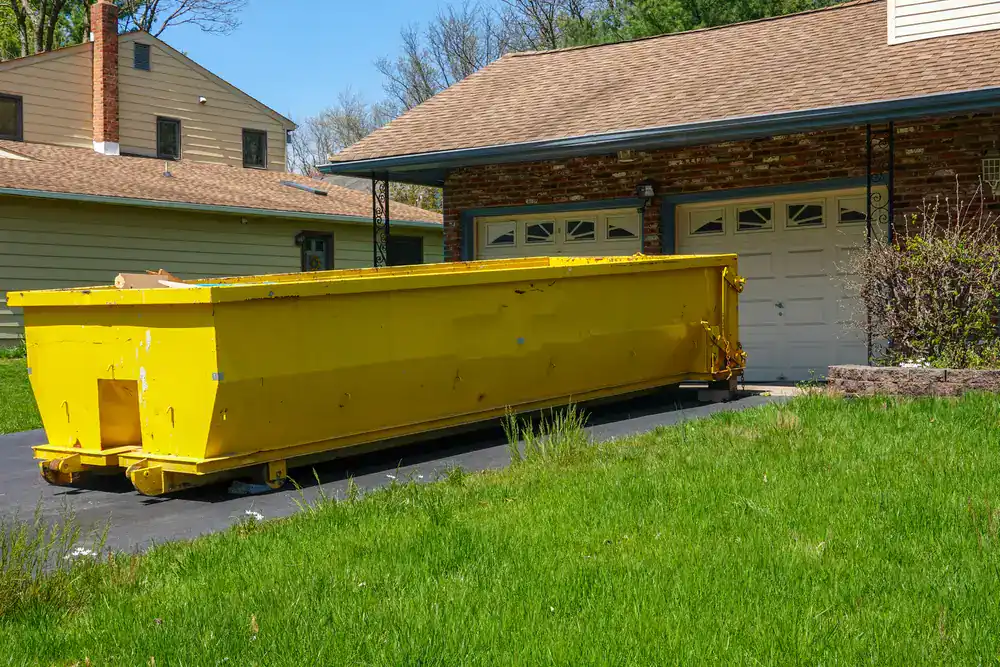
The 10-yard dumpster is perfect for those “weekend warrior” projects where you aren’t trying to rebuild the entire house. If you’re just swapping out a vanity, a toilet, and some light fixtures, this size is your best friend. It has a small footprint, so it won’t kill your entire lawn or block your spouse’s car for the next two weeks.
It works great for small 5×5 powder rooms where the heaviest thing you’re tossing is your dignity after realizing you don’t know how to plumb a sink. In Suffolk County, these usually run about $475-$550. If you stay under the 2-ton weight limit, you’re golden. Go over, and you’ll be paying extra for the privilege of tossing heavy dirt and rocks.
The big mistake? Using a 10-yarder for a master bath. People see the small room and think “small trash.” Then they pull up the floor and realize there’s three layers of linoleum and 1950s mud-job tile underneath. Suddenly, that 10-yard bin is overflowing like a bad science fair volcano, and you’re the one who has to explain it to the dumpster driver.
The 20-yard dumpster is the workhorse of the industry because it’s the most forgiving. Even if you’re not a pro at packing trash, it gives you enough breathing room to handle the “I didn’t think there was that much drywall” moments. It’s large enough for a full kitchen gut, but low enough at 4 feet high that you don’t need a catapult to get the trash inside.
For a standard kitchen or a large master bath, this is the smartest move. It only costs about $75-$100 more than the 10-yarder, but it gives you double the space. That’s essentially “insurance” against having to order a second dumpster. Plus, with a 4-ton weight limit, you can throw away that cast-iron tub without worrying about the dumpster sinking into your driveway.
Think of it as the “Buffet Strategy”: you might not eat everything, but you’re glad the food is there if you get hungry. Having that extra 10 yards of space means your project keeps moving smoothly. You won’t have to stop mid-demo because the bin is full, allowing you to get the “ugly part” over with and get back to the fun part—like picking out which shade of “Off-White” looks best for your backsplash.
Choosing the right dumpster size comes down to a simple truth: your trash will always be bigger and heavier than you think. For most Interior remodels in Bay Shore or Holbrook, the 20-yard option is the “safe bet” that keeps your budget from exploding. It handles the weight of Long Island construction while fitting comfortably in a standard driveway.
Small bathroom updates can slide by with a 10-yarder. Full guts need a 20-yarder. And if you’re knocking down walls or remodeling three rooms at once, you might want to look at the 30-yard “Big Kahuna.” When in doubt, go up one size—it’s significantly cheaper than paying for a second delivery fee halfway through your renovation.
The real value isn’t just the metal box; it’s working with someone who knows how Suffolk County projects actually go. We’ve seen it all, from “simple” floors that turned into structural nightmares to kitchens that generated enough cardboard to build a small fort. We’re here to make sure your waste goes away without the drama.
Article details:
Share:
Continue learning: