Confused about walkway paving vs. patio installation? Get straight answers on materials, costs, and what actually survives Stony Brook's freeze-thaw cycles.
Share:
Summary:
The distinction isn’t complicated once you understand the “job” of the stone. Walkway paving is like the hallway of your yard—it’s designed to get you from Point A (your car) to Point B (your couch) without tracking mud across your white carpets. These are usually 3 to 4 feet wide, because nobody likes walking in single file like a group of hikers unless they’re actually on a mountain.
Patio installation, on the other hand, is about building a destination. This is the “outdoor living room” where you’ll grill burgers, drink wine, and pretend to enjoy your neighbors’ company. Patios are much larger, ranging from a cozy 10×10 nook to a massive 20×30 entertainment stage that can handle a full dining set and a fire pit without someone falling into the hydrangeas.
While you can use the same materials for both—pavers, natural stone, or concrete—their internal “blueprints” are different. A walkway needs to stay slip-resistant when you’re sprinting through a November rainstorm with groceries. A patio needs to support the weight of a heavy grill and a table for six without sinking into the Long Island soil like a forgotten civilization.
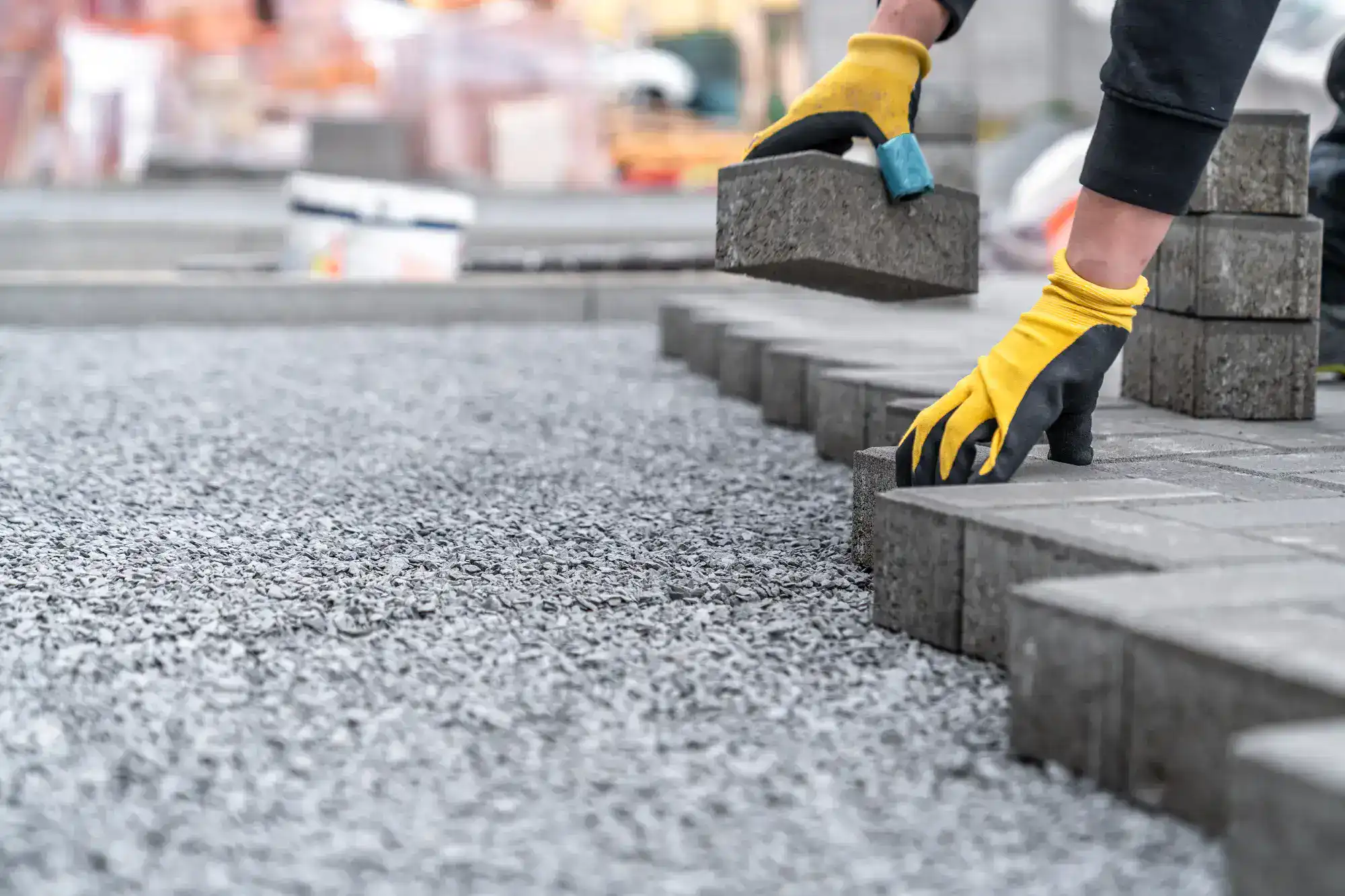
Walkways are the unsung heroes of yard circulation. If your guests are currently cutting across your lawn and leaving “desire paths” through your grass, you have a circulation problem. A properly paved walkway tells people exactly where to go, protects your expensive landscaping, and prevents the “Suffolk County Swamp” from entering your mudroom during the rainy season.
The width of a walkway is the difference between a “nature trail” and a “welcoming entrance.” A 36-inch path is fine for the route to your trash cans, but your front entrance should be at least 48 inches wide. Why? Because walking side-by-side with your spouse is much more romantic than one of you trailing five feet behind like a lost puppy.
Patios are all about the “Stay-cation.” You’re essentially adding square footage to your house, just without the drywall and the roof. To get the size right, imagine your furniture is already there. A dining table for six needs a “safety zone” of at least three feet around it so guests don’t tip their chairs off the edge and into the pool. It’s about creating a space that works for the lifestyle you want, not just the space you have.
In Stony Brook, “texture” is your best friend on a walkway. Smooth concrete looks sleek until it gets wet or icy; then it becomes a high-speed slip-and-slide that no one signed up for. For walkways, we recommend textured pavers or natural stone with a bit of “grip.” It’s much better for your dignity (and your tailbone) when you’re walking the dog on a frosty January morning.
Drainage is the unglamorous secret to a long-lasting project. Since walkways are narrow, we can usually just give them a slight “lean” to one side to shed water. Patios are more like a giant bowl; if they aren’t pitched perfectly, you’ll end up with a pond in the middle of your seating area. And unless you’re planning on raising bullfrogs, standing water is generally considered a “bad thing” for your stone.
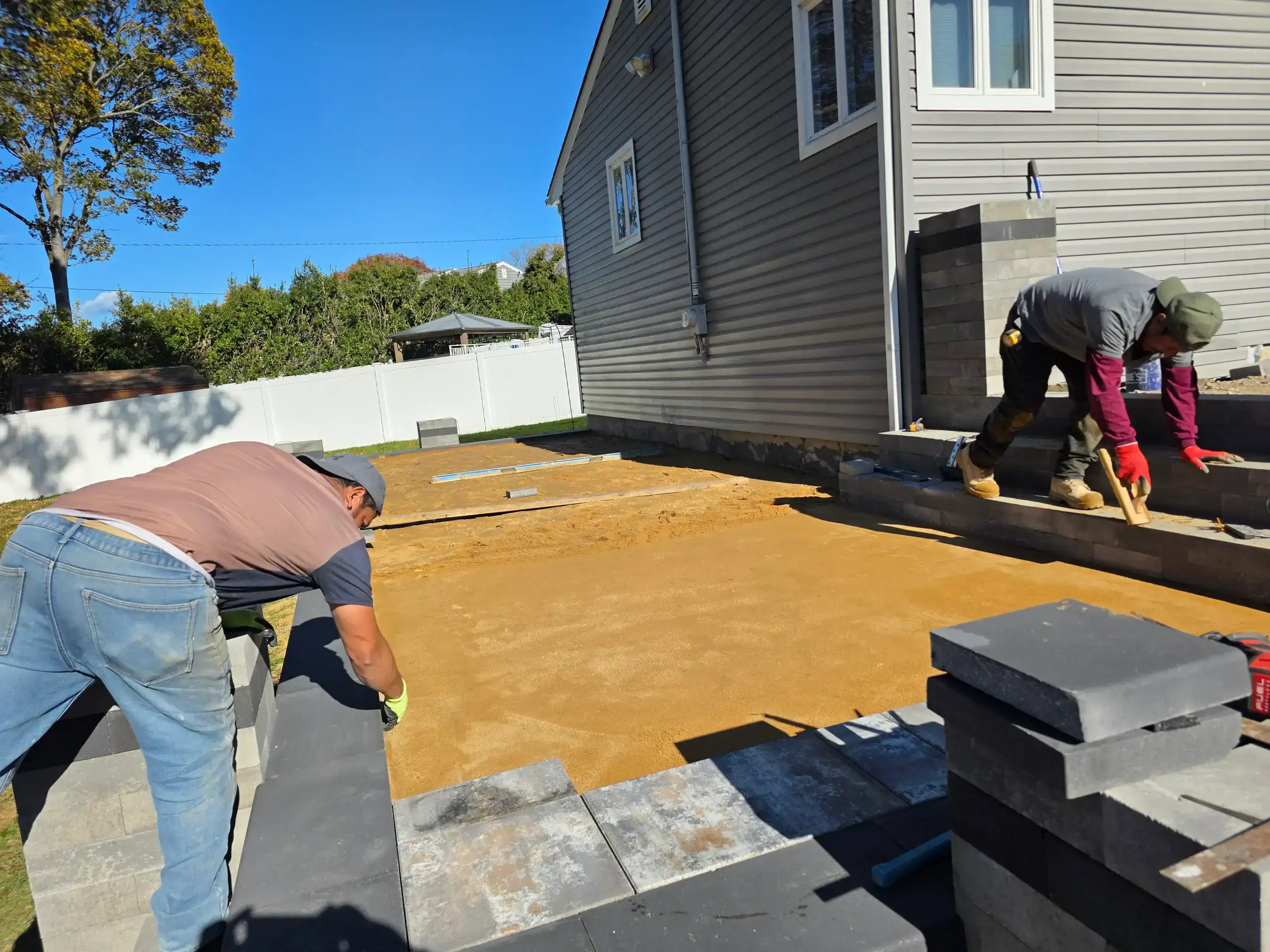
The “foundation” also changes depending on the load. A walkway for feet only needs about 4 inches of compacted base. But if you’re building a patio to hold a 500-pound hot tub or a full outdoor kitchen with a pizza oven, you need at least 6 to 8 inches of gravel. If you skimp on the base, your patio will eventually develop “waves,” which are great for the ocean but terrible for a dining table.
Want live answers?
Connect with a Corsino Construction expert for fast, friendly support.
Long Island weather is essentially a scientific experiment designed to break things. We get 30 to 40 “freeze-thaw” cycles every winter. Water sneaks into your stone, freezes, and expands with the confidence of someone who just won the lottery. Then it thaws, more water gets in, and the cycle repeats until your once-beautiful slab looks like a jigsaw puzzle that’s been through a blender.
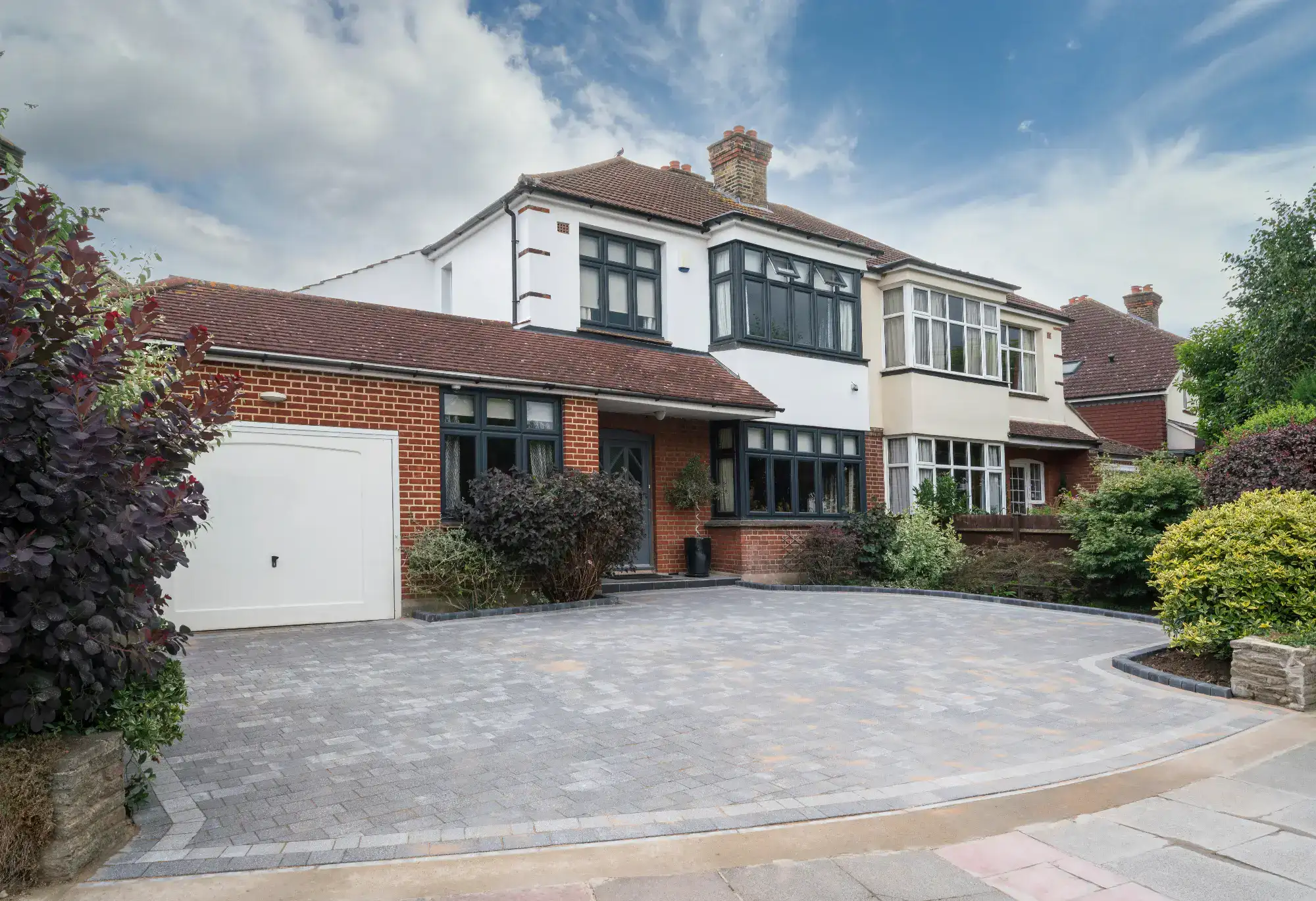
Concrete pavers are the “bodyguards” of the hardscaping world. They are manufactured at a much higher density than standard poured concrete, which means they absorb less water. Less water inside the stone means less pressure during a deep freeze. This isn’t just a sales pitch; it’s physics. It’s why a paver driveway looks great after ten years while a poured slab often looks like a road map of the Bronx.
The “modular” secret is also a lifesaver. Because pavers are individual units, they can “sigh” and move with the ground as it freezes and thaws. Think of a wooden bridge versus a rope bridge. The rigid wood snaps when the earth moves; the rope bridge just swings. In Stony Brook’s sandy, shifty soil, you want a surface that can roll with the punches.
Poured concrete is like that one friend who refuses to compromise—it’s rigid until it eventually snaps. Once a crack appears in a concrete slab, it’s there forever. You can patch it, sure, but that patch will always look like a scar, and it won’t stop the crack from growing. It’s a slow-motion heartbreak that every Suffolk County homeowner has seen at least once.
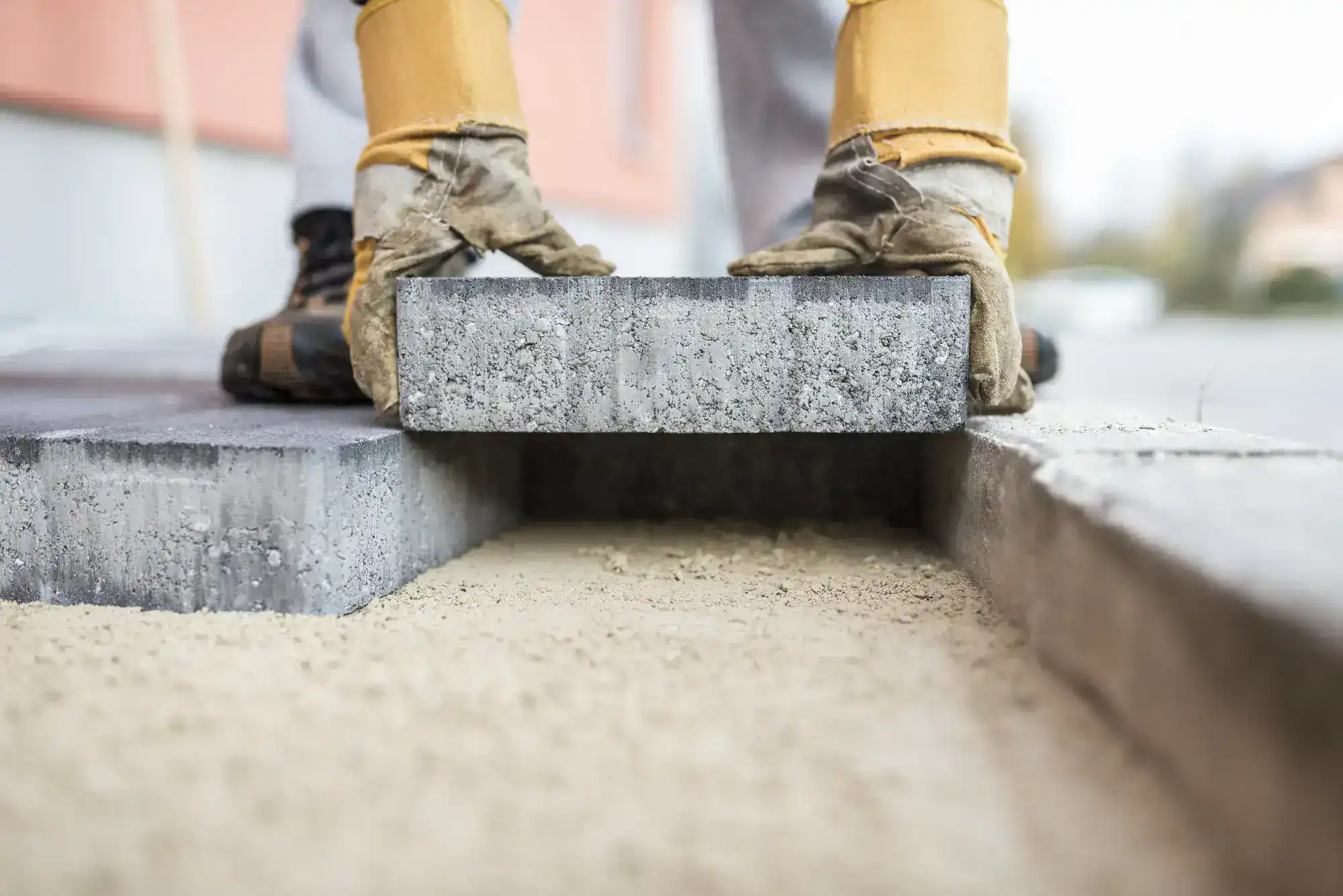
Pavers are different because they are a “flexible system.” You have small, high-strength units separated by sand-filled joints. These joints act like microscopic shock absorbers for the earth. If the ground heaves, the pavers shift slightly and then settle back down. No cracking, no drama, and no need to call a psychiatrist for your backyard.
The “repairability factor” is the ultimate win. If a heavy delivery truck cracks a few stones or your kid decides to test their new chemistry set on the patio, you just pop out the damaged pieces and slide in new ones. It’s the “Undo” button of the construction world. With poured concrete, your only “Undo” button is a jackhammer and a very large check.
The stones you see are just the “frosting”; the gravel underneath is the “cake.” If the cake is mushy, the frosting is going to fall off. Proper base prep is the most boring—and most important—part of the job. We dig deep to remove the “unstable” topsoil and replace it with layers of crushed stone that we compact until it’s as hard as a diamond.
If your contractor shows up with just a bag of sand and a shovel, politely show them the way to the curb. In Stony Brook, you need a serious foundation to handle the drainage. Water needs to be able to pass through the stone layers and away from the house. If it gets trapped underneath, it’ll turn into ice and push your pavers into the air like a slow-motion volcano.
Edge restraints are the final piece of the puzzle. These are the “bookends” that stop your patio from slowly migrating into your neighbor’s yard. We use commercial-grade restraint systems pinned deep into the ground. Without them, your pavers will eventually “spread” and the gaps will fill with weeds. It’s a small detail that separates a “Weekend Warrior” job from a professional installation that lasts 30 years.
Hardscaping your home is a major investment, and the difference between “wow” and “woops” comes down to materials and preparation. Regardless of if you’re building a welcoming walkway or a legendary patio, the goal is the same: a beautiful space that survives the Long Island winter without flinching. Don’t let a bad installation turn your dream backyard into a maintenance nightmare.
Material choice matters, but the team behind the tools matters more. You want someone who understands that Stony Brook soil is different from South Carolina soil. You want a team that obsesses over the pitch and the compaction so you don’t have to spend your Saturdays pulling weeds from between your pavers.
We’ve been the “Hardscape Heroes” of Suffolk County for over 20 years, and we’ve seen it all—from “sinkhole” patios to walkways that led to nowhere. If you’re ready to stop staring at the dirt and start planning your outdoor empire, we’re here to help.
Article details:
Share:
Continue learning: