Your Suffolk County patio deserves proper installation that handles our climate. Learn what separates quality patio work from costly mistakes.
Share:
Summary:
Suffolk County soil doesn’t behave like soil in other parts of the country. The clay composition holds water. Seasonal moisture changes create movement. And if your patio contractor doesn’t account for these factors during installation, you’ll see the results in cracked pavers and shifted sections before long.
The right contractor knows that proper drainage isn’t optional here. It’s the foundation of everything else. We also understand that freeze-thaw cycles demand specific paver thickness and base preparation that weekend warriors and inexperienced installers routinely skip.
Experience with local conditions matters more than a low bid. You’re not just buying labor and materials. You’re buying knowledge about how Suffolk County properties behave over time.
Water is the silent destroyer of outdoor installations. In Suffolk County’s relatively wet climate, your land needs to slope at roughly 5% grade away from your house. That’s about six inches of drop for every ten feet. Get this wrong and you’re looking at foundation issues, not just puddles.
Most patio failures trace back to poor drainage planning. The water builds up behind retaining walls or under paver bases with nowhere to go. Pressure accumulates. Structures shift, crack, or in worst cases, collapse entirely.
Proper drainage starts before the first paver goes down. We evaluate your yard’s current water flow patterns. We plan subsurface drainage for clay soil that naturally holds moisture. Edge drains often become necessary. And the patio surface itself requires the right angle to shed water without creating furniture-wobbling slopes.
This isn’t guesswork. It’s engineering based on how your specific property handles rainfall. We walk your yard, identify problem areas, and design drainage that protects both your new patio and your home’s foundation.
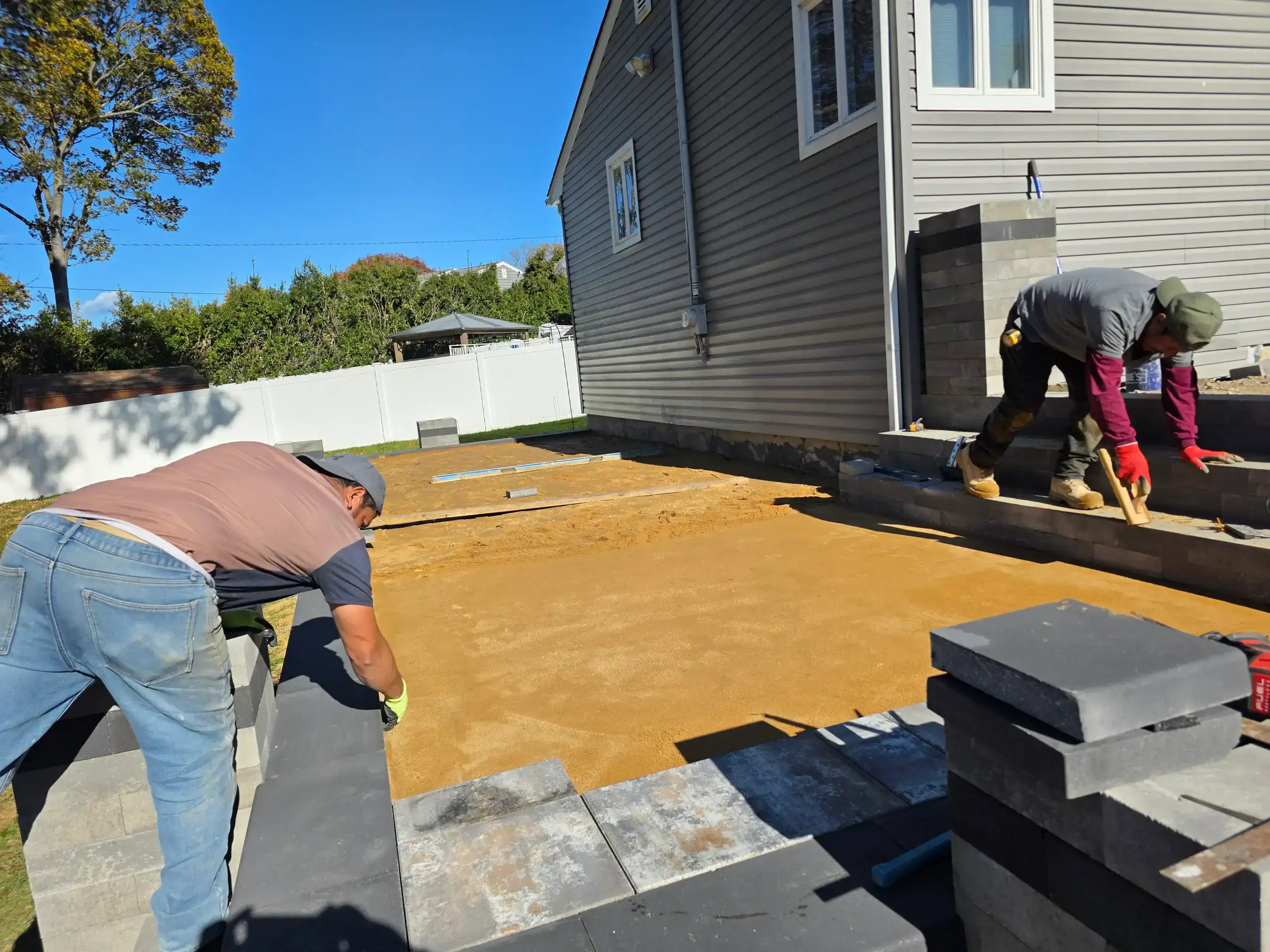
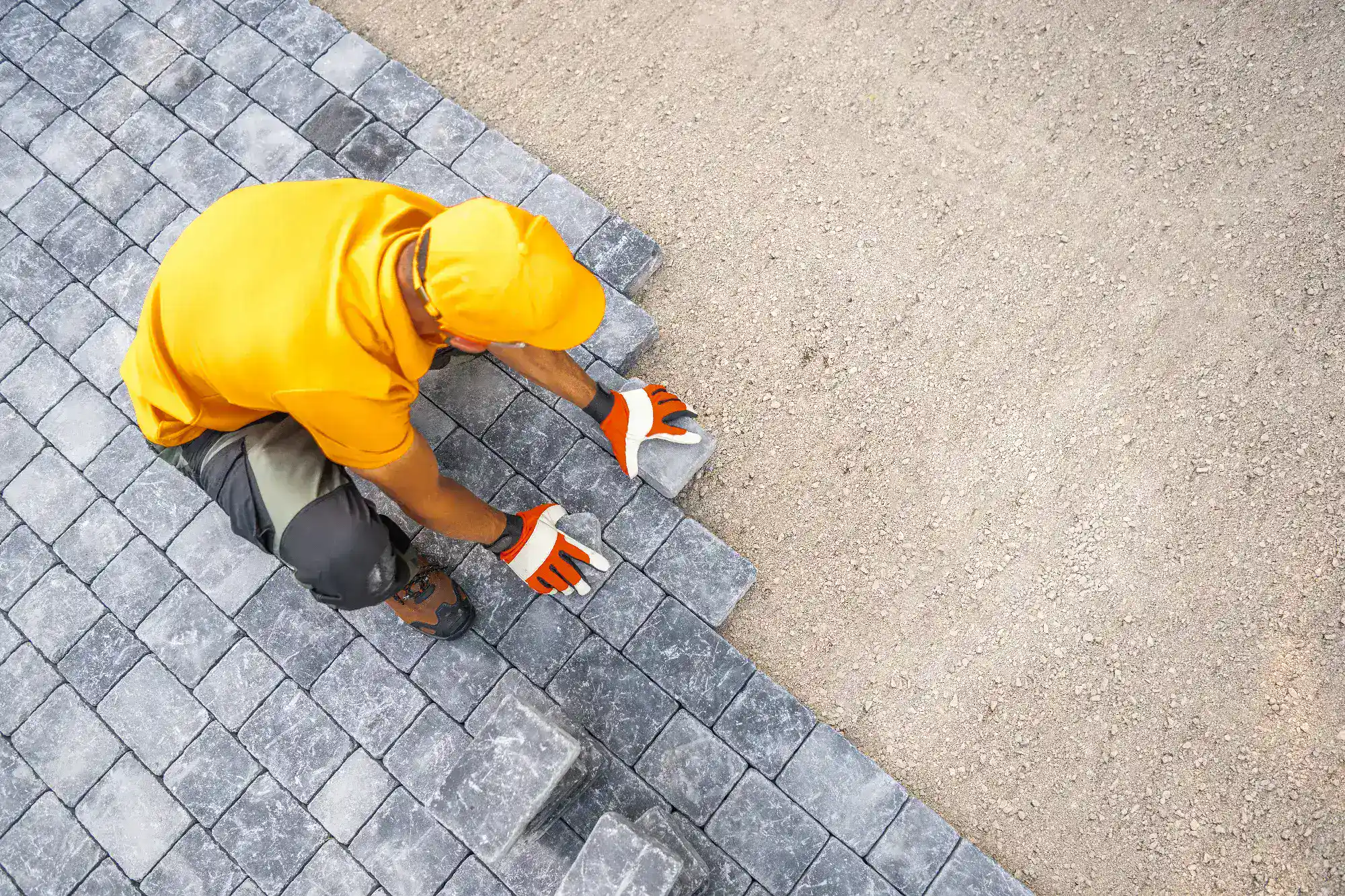
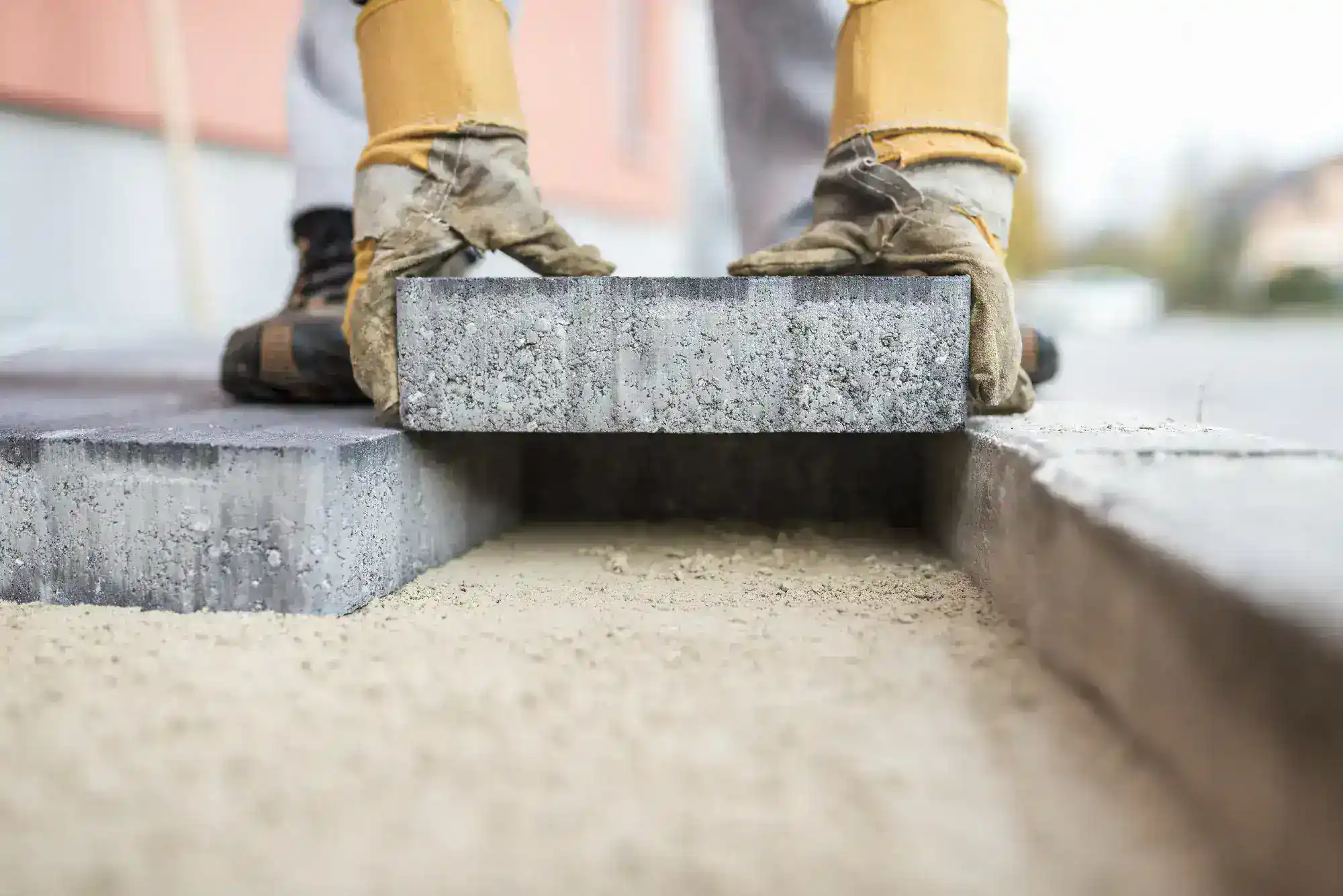
The base preparation matters just as much. Four to six inches of crushed concrete aggregate, properly compacted in layers. A quarter-inch of mason sand for the leveling process. These aren’t optional steps you can skip to save money. They’re what separates a patio that lasts from one that fails.
And here’s something most contractors won’t tell you upfront: Suffolk County’s clay soil often requires addressing subsurface drainage separately from surface grading. Your patio might look perfect on day one, but if water’s moving underneath, you’ll have problems within a season or two.
Grading and leveling do different jobs, but both matter for your outdoor living space. Grading shapes your land to control water flow. Leveling creates smooth, even surfaces where you actually want to place furniture and walk comfortably.
Your yard’s current grade probably isn’t ideal for a patio. Most Suffolk County properties need some reshaping to prevent water from flowing toward the house or pooling in low spots. This is where experience separates professionals from amateurs.
Proper grading considers your entire property’s drainage patterns, not just the patio area. Where does water go when it leaves your patio surface? How does the new installation affect existing drainage? What happens during heavy rain or spring thaw?
Inexperienced contractors often create new problems while solving old ones. They’ll grade your patio area perfectly but redirect water into a neighbor’s yard or create a new low spot that becomes a mud pit. We map the whole picture before moving dirt.
Leveling comes after grading establishes the right slopes. This is where precision matters. Your patio surface needs to be smooth enough for furniture to sit stable, but maintain enough slope to shed water. Too flat and you get pooling. Too steep and your dining table rocks.
The equipment matters here. Hand-tamping doesn’t achieve the same compaction as gas-powered plate compactors. Eyeballing slopes doesn’t match laser levels. You can’t feel the difference on installation day, but you’ll see it in how the patio performs over years.
Suffolk County’s seasonal ground movement makes this even more critical. Soil expands and contracts with temperature and moisture changes. Proper base preparation and compaction minimize settling that comes from this natural movement. Skip these steps and your level patio won’t stay that way.
Retaining walls often become part of grading solutions for sloped yards. They create usable flat space where none existed before. But they also need their own drainage systems and proper engineering to handle soil pressure behind them. This is specialized work that requires understanding both structural requirements and local soil behavior.
Want live answers?
Connect with a Corsino Construction expert for fast, friendly support.
Material selection affects both your patio’s appearance and its longevity. Flagstone offers natural beauty with color variations and textures you can’t get from manufactured pavers. But installation method matters as much as the stone itself.
Dry-laid flagstone costs less and allows easier future repairs. Stones sit on a sand or gravel base, making this the most common installation approach. Mortar-set methods add stability but require existing concrete bases. Wet-laid installations offer maximum durability but demand more labor and expertise.
Suffolk County’s freeze-thaw cycles favor certain materials over others. Concrete pavers rated for these conditions perform best. Natural stone like bluestone works well but requires different installation techniques than you’d use in warmer climates. Cheaper pavers crack during winter or fade quickly in coastal sun exposure.
Flagstone patio installation typically runs between $15 and $27 per square foot including materials and labor. Most homeowners spend around $3,600 for average-sized projects. But costs vary significantly based on stone type, installation method, and site conditions.
The dry-laid method costs between $1,515 and $5,200 for typical residential patios. Stones are laid in sand or gravel, then compacted. Grout fills the joints between stones for a finished appearance. This approach offers the best combination of cost and durability for most Suffolk County applications.
Mortar-set installations range from $800 to $7,200. Stones are laid in mortar instead of sand, creating a more permanent installation. This works well when you already have a concrete base to build on. The added stability comes at higher labor costs.
Wet-laid or concrete-set methods cost $1,535 to $7,935. Contractors pour a concrete base first, then grout flagstones onto the cured surface. This creates the most durable installation but requires the most labor and expertise. It’s often overkill for standard residential patios.
Stone selection affects your total cost. Bluestone and sandstone typically cost $200 to $450 per ton. Quartzite runs higher at $400 to $450 per ton. Availability in your area impacts pricing, so locally sourced stone often provides better value than exotic options shipped from distant quarries.
Installation complexity adds cost. Simple rectangular patios with straight edges cost less than curved designs or intricate patterns. Cutting stones for custom shapes requires more labor. Multiple colors or alternating patterns increase installation time.
Site preparation can surprise homeowners with additional costs. If your yard needs significant grading, drainage system installation, or removal of old hardscaping, expect these to add to your total. A professional estimate should include all site work, not just the stone and labor to lay it.
Material costs alone run $3.95 to $5.95 per square foot if you’re considering DIY installation. But flagstone installation demands experience with proper base preparation, drainage planning, and stone-cutting techniques. Most homeowners discover that professional installation provides better value than struggling through a learning curve with expensive materials.
Retaining walls solve multiple problems for Suffolk County properties. They prevent soil erosion on sloped yards. They create level terraces for patios and outdoor living areas. And they manage water flow that would otherwise cause drainage issues.
But retaining walls fail spectacularly when drainage isn’t addressed. Water pressure building up behind the wall creates force that even properly built structures can’t handle indefinitely. Every retaining wall needs a drainage system, not just tall ones or those holding back steep slopes.
Even a two-foot retaining wall requires basic drainage. Water accumulates behind short walls just like tall ones. Over time, this leads to erosion, frost damage, or wall movement. The drainage doesn’t need to be elaborate, but it needs to exist.
Design considerations go beyond just holding back soil. Retaining walls can incorporate seating areas, define garden spaces, or create multiple levels for entertaining. The best outdoor living space designs integrate walls naturally with patios, walkways, and landscaping rather than treating them as separate elements.
Material choices for retaining walls range from natural stone to concrete blocks to poured concrete. Each has advantages depending on your property’s needs, desired appearance, and budget. Natural stone offers timeless beauty but costs more and requires skilled installation. Concrete blocks provide durability at lower cost with various finish options. Poured concrete delivers maximum strength for larger projects.
Height matters for both engineering and permits. Walls under three feet typically don’t require permits in Suffolk County, though regulations vary by specific location. Taller walls or those bearing significant loads need engineering and often require permits. We handle permit research and applications when needed.
The foundation determines whether your retaining wall lasts decades or fails within years. Proper excavation depth, base material, and compaction create stability that visible wall materials depend on. Cutting corners on foundation work to save money guarantees expensive problems later.
Retaining walls interact with your patio’s drainage system. Water that your wall redirects needs somewhere to go. If that water ends up under your patio or against your foundation, you’ve traded one problem for another. Professional design considers the entire property’s water management as a connected system.
Your patio investment deserves proper installation that accounts for Suffolk County’s specific challenges. Clay soil, freeze-thaw cycles, coastal weather, and drainage requirements aren’t optional considerations. They’re the difference between a patio that lasts decades and one that needs replacement within years.
The right patio contractor brings experience with local conditions, proper licensing and insurance, and transparent communication about what your project actually needs. We handle permits, coordinate drainage solutions with your property’s existing systems, and use materials rated for Long Island’s climate.
Corsino Construction Corp has served Suffolk County homeowners since 2000, specializing in patio installation, retaining walls, drainage solutions, and outdoor living space transformations. Licensed professionals, fixed pricing, and a two-year workmanship warranty back every project. If you’re ready to transform your outdoor space the right way, reach out to us for a consultation.
Article details:
Share:
Continue learning: