Modern minimalist homes deserve walkways that match their sophisticated aesthetic. Explore seven concrete paving designs that combine clean geometric lines with durability built for Long Island's climate.
Share:
Summary:
Modern minimalist architecture relies on clean lines, geometric precision, and intentional material choices. A standard concrete slab walkway undermines all of that. It cracks, settles unevenly, and ages poorly—none of which aligns with the refined aesthetic you’ve built.
The challenge in Suffolk County goes beyond aesthetics. Long Island’s clay soil shifts with temperature changes, and freeze-thaw cycles put constant pressure on rigid concrete surfaces. Within 2-3 years, you’re patching cracks that never quite match the original color. The solution isn’t just about choosing a pattern—it’s about understanding which materials and installation methods actually work with your soil conditions and climate while complementing contemporary design.
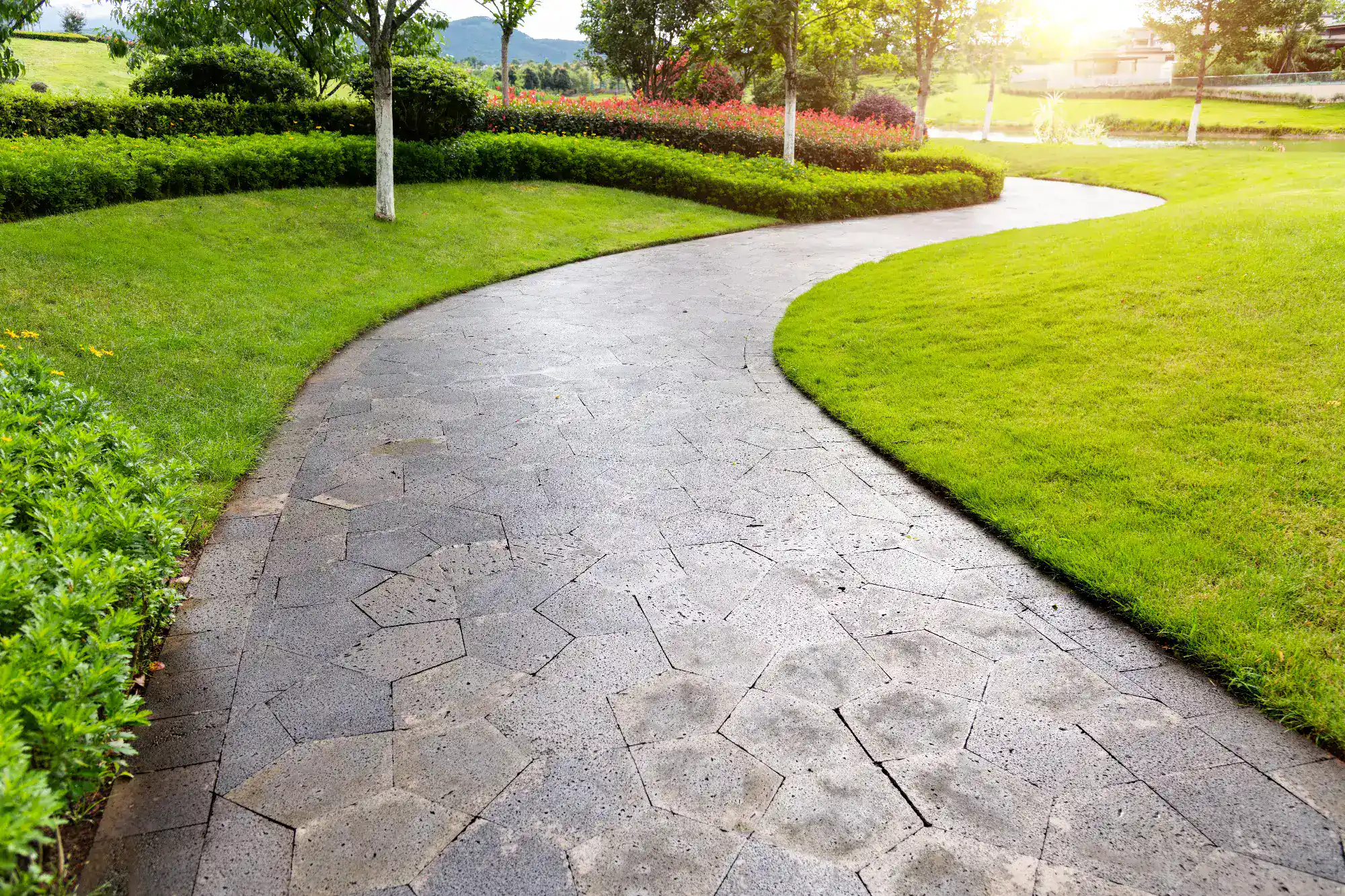
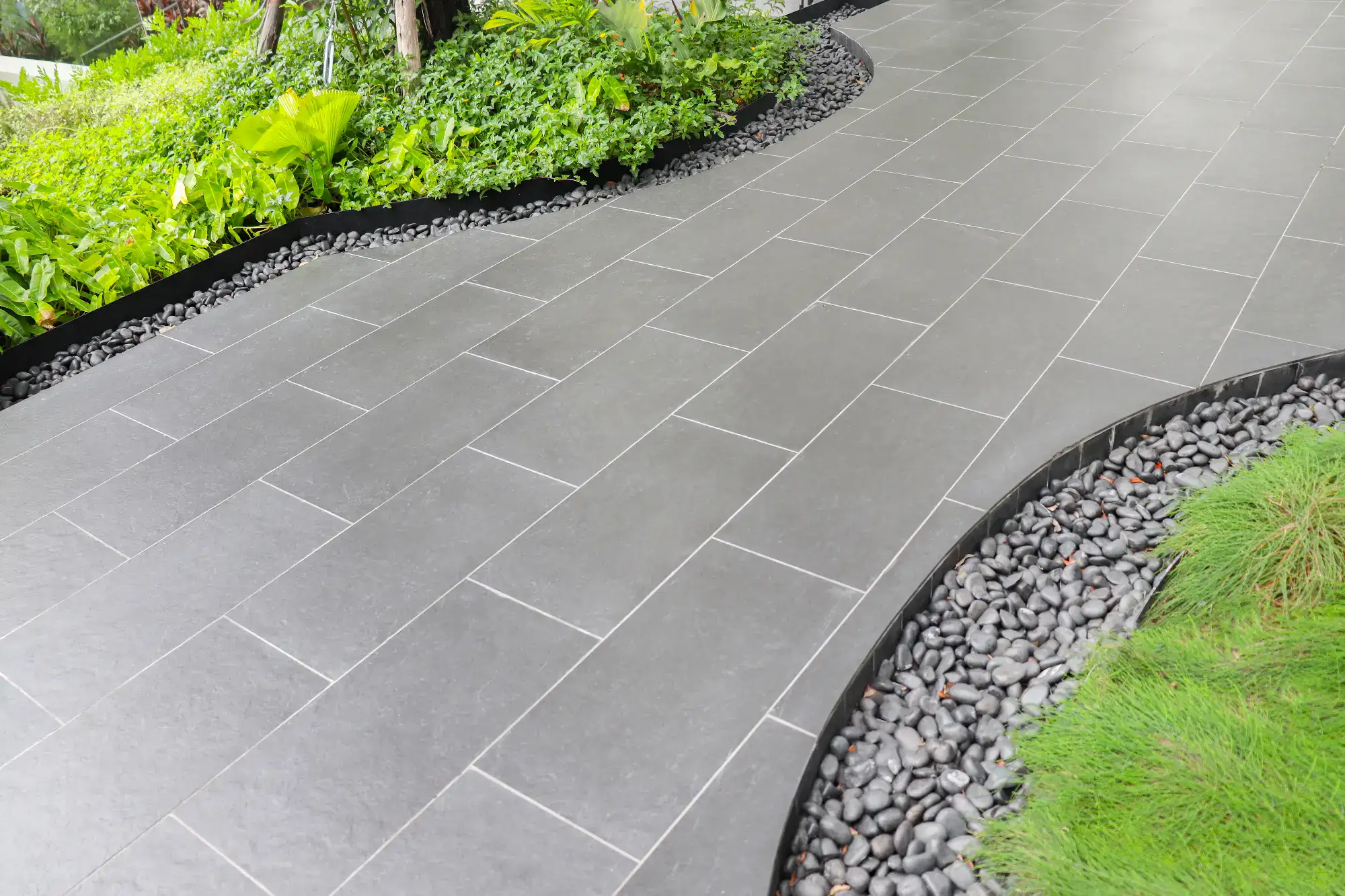
Linear geometric patterns deliver the clean, structured look that modern minimalist homes demand. Think long, narrow pavers arranged in straight lines that guide the eye toward your entrance without visual clutter. This approach uses rectangular pavers in running bond or stack bond patterns, creating horizontal or vertical lines that emphasize your home’s architectural geometry.
The beauty of linear paving lies in its simplicity. No ornate curves or busy patterns—just precise lines that feel intentional. You can orient pavers to run parallel with your home’s facade for a grounded, stable appearance, or perpendicular to create visual length and draw visitors forward. The pattern works especially well with neutral tones—charcoal, slate gray, or warm beige—that complement modern exteriors without competing for attention.
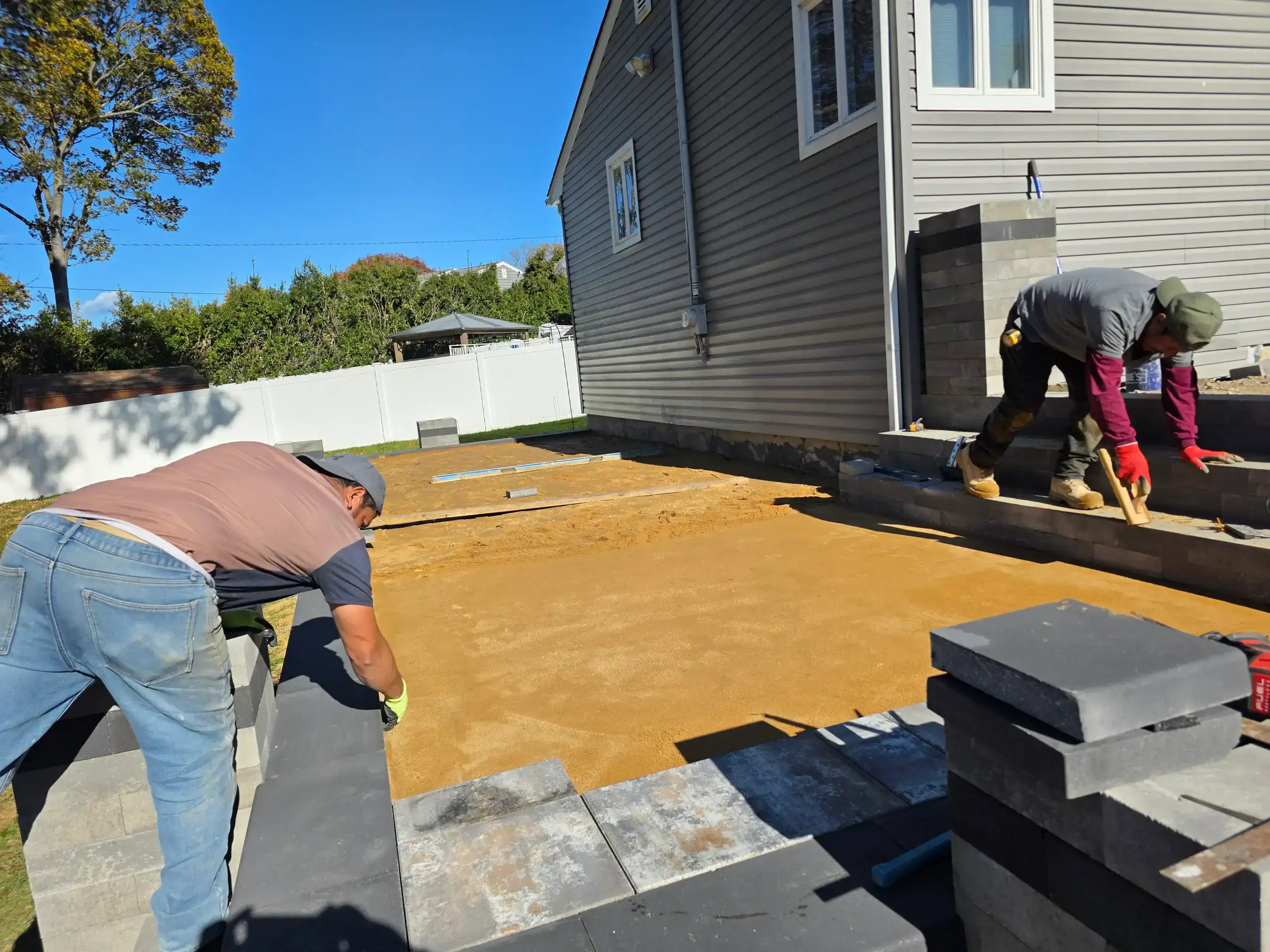
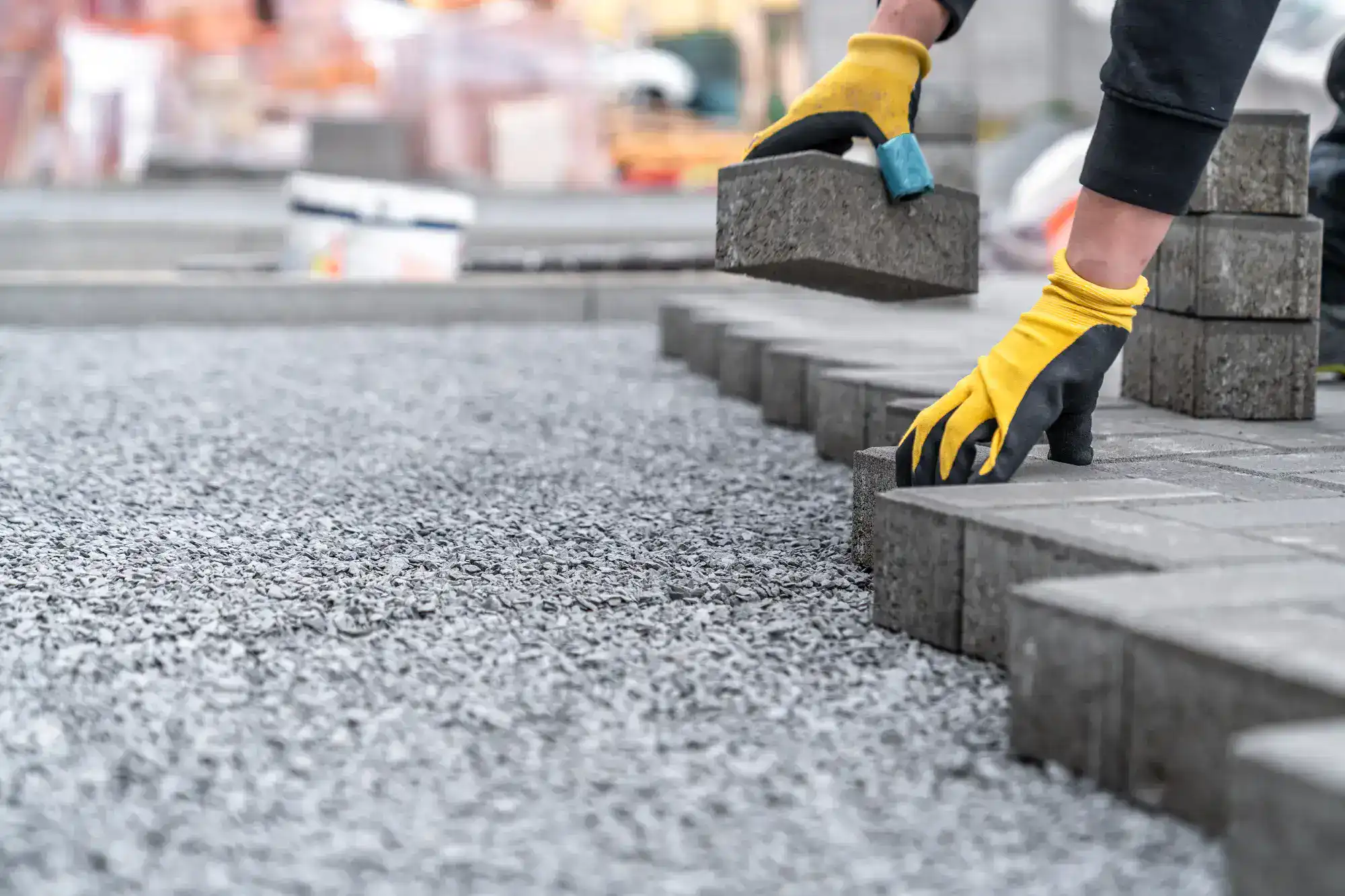
Installation matters more than pattern when it comes to longevity. Suffolk County’s clay soil requires 4-6 inches of properly compacted crushed stone base. Without this foundation, even the most beautiful geometric pattern will shift and settle unevenly within a year or two. The pavers themselves need to be rated for freeze-thaw conditions, which means choosing materials specifically designed to handle Long Island’s temperature swings.
Linear patterns also offer practical advantages. They’re easier to keep level during installation, which means fewer lippage issues where one paver sits higher than its neighbor. When you need to replace a damaged paver years down the road, the straightforward pattern makes matching and replacement simpler. And because the joints run in consistent lines, water drainage stays predictable and effective.
Color selection amplifies the modern aesthetic. Monochromatic schemes—varying shades of the same color family—create sophisticated depth without breaking the minimalist vibe. A blend of light and medium gray pavers, for example, adds subtle texture while maintaining clean visual lines. Avoid high-contrast patterns or multicolor blends that read as busy or dated.
Large format pavers—typically 24×24 inches or larger—create an almost seamless surface that mirrors the smooth, uninterrupted planes common in modern minimalist design. Fewer joints mean less visual interruption, which translates to a cleaner, more refined appearance that feels like an extension of your home’s interior floors rather than traditional outdoor paving.
The appeal goes beyond aesthetics. Larger pavers mean fewer individual pieces to install, which can reduce labor time and potential installation errors. Each paver covers more surface area, and with proper base preparation, the larger format actually increases stability. The weight and size of each piece help resist shifting, especially when combined with edge restraints and polymeric sand in the joints.
Choosing the right finish matters. Smooth-faced pavers with subtle texture provide grip without looking rough or rustic. You want enough surface texture to prevent slipping when wet, but not so much that it conflicts with your home’s sleek aesthetic. Many manufacturers offer large format pavers with a lightly brushed or honed finish that splits the difference perfectly.
Installation requires precision. Large format pavers are less forgiving of base imperfections than smaller units. Any dips or high spots in your base layer will telegraph through to the finished surface. This is where working with experienced professionals who understand Suffolk County soil conditions becomes critical. We know how to create a perfectly level, properly compacted base that won’t settle unevenly over time.
Joint spacing with large format pavers typically runs 3-8mm, creating thin, barely-there lines between units. This tight spacing reinforces the seamless look while still allowing for thermal expansion and contraction. Polymeric sand in these joints locks everything in place while preventing weed growth and ant infiltration—two common problems with traditional concrete walkways.
Color consistency across large format pavers is crucial. Variations that might be charming in smaller, more rustic designs can look like defects in a minimalist application. Specify pavers from a single production run when possible, and review samples in natural light before committing. What looks uniform in a showroom can reveal unexpected variation once installed across a 40-foot walkway.
The cost of large format pavers typically runs higher than standard sizes, both for materials and installation. You’re paying for the precision manufacturing required to produce consistently flat, large units, plus the specialized handling needed during installation. But the investment delivers a distinctly modern aesthetic that smaller pavers simply can’t match.
Want live answers?
Connect with a Corsino Construction expert for fast, friendly support.
Stamped concrete offers pattern possibilities that traditional pavers can’t match, but choosing the right design makes the difference between contemporary and dated. For modern minimalist homes, you want patterns that emphasize geometry and restraint rather than ornate detail. Think clean ashlar slate patterns with large, rectangular shapes, or modern wood plank textures with minimal grain detail.
The advantage of stamped concrete is customization. We can create patterns specifically scaled to your walkway dimensions, eliminating awkward cuts or partial pieces at edges. You get a continuous surface without the individual joint lines of pavers, which some homeowners prefer for a truly seamless look. Color can be integrated throughout the concrete or applied as a surface treatment, offering flexibility in achieving your desired aesthetic.
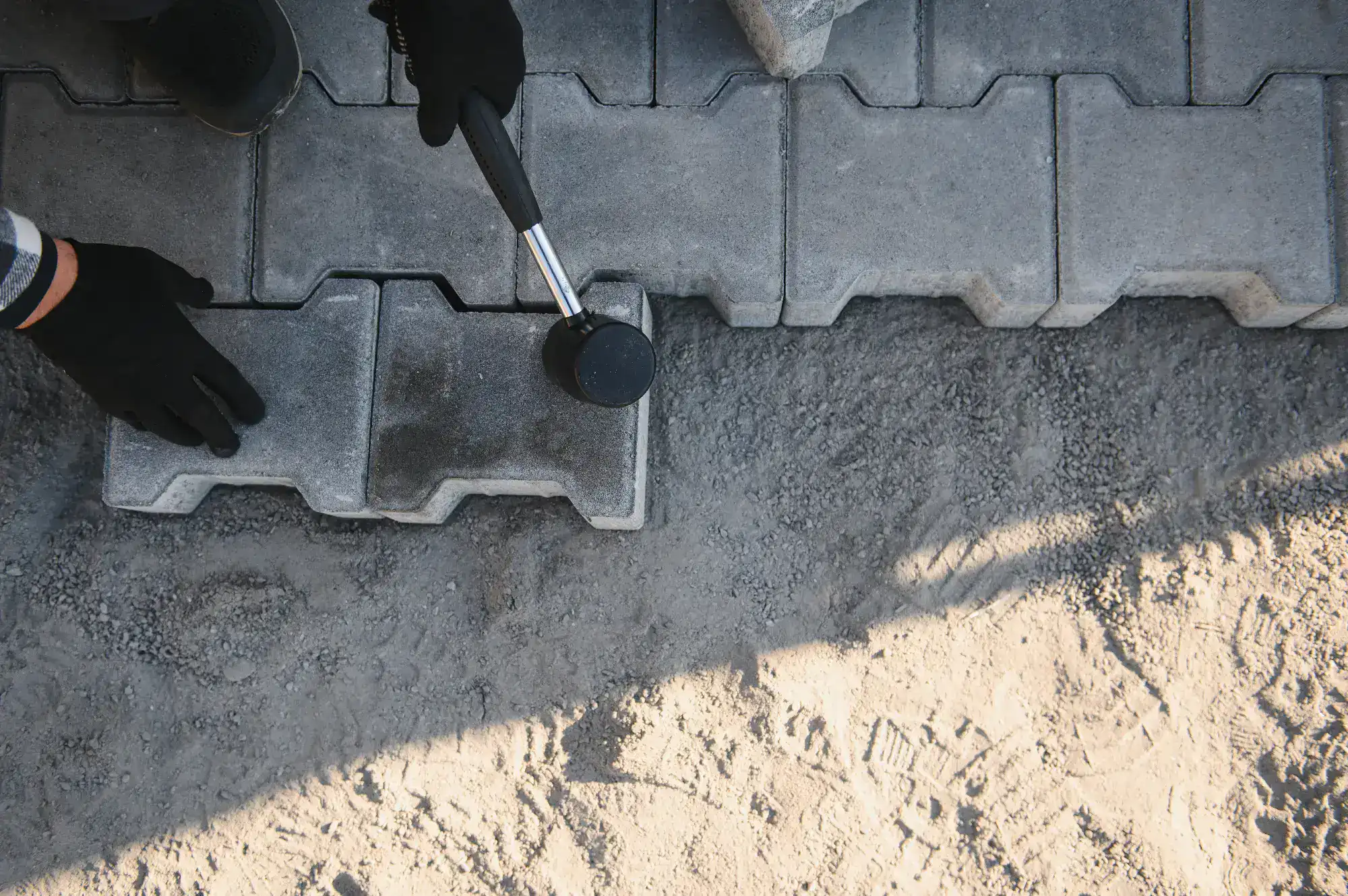
Herringbone and chevron patterns bring geometric sophistication that complements industrial chic and modern minimalist homes. These patterns use rectangular pavers arranged at 45 or 90-degree angles, creating visual movement without sacrificing the clean lines modern design demands. The interlocking nature of herringbone provides exceptional structural stability—the pattern naturally resists shifting and spreading.
True herringbone features pavers laid at right angles in a staggered pattern, with each paver’s end meeting the side of the next. Chevron, often confused with herringbone, cuts paver ends at angles so pieces meet point-to-point, creating continuous V-shaped lines. Both patterns work beautifully in modern applications, but chevron reads as slightly more formal and structured while herringbone feels more dynamic.
The pattern’s complexity requires professional installation. Cutting and fitting pavers to maintain the precise angles throughout your walkway, especially around curves or obstacles, demands experience and the right tools. Poorly executed herringbone looks worse than a simple running bond pattern—the geometric nature of the design makes mistakes immediately obvious.
Color selection significantly impacts the final look. Monochromatic herringbone in charcoal or slate gray feels contemporary and sophisticated. Introducing a second color—perhaps alternating light and dark gray—adds visual interest but risks feeling too busy for minimalist sensibilities. If you’re considering a two-tone approach, keep contrast subtle and ensure both colors share similar undertones.
Herringbone works particularly well for walkways with width. The pattern needs space to establish its visual rhythm—in narrow applications under 4 feet wide, you lose much of the pattern’s impact. For modern homes with generous entrance walkways or those connecting to wider patio spaces, herringbone creates a sense of importance and intentional design that simpler patterns can’t match.
The pattern also affects how your eye moves through space. Herringbone laid with the pattern running perpendicular to your home’s entrance creates visual width, making the walkway feel more expansive. Running the pattern parallel to the path of travel emphasizes length and draws visitors forward toward your front door. Understanding these visual effects helps you use pattern strategically to enhance your home’s proportions.
Strategic use of contrasting borders and geometric inlays transforms a simple walkway into an architectural feature. For modern minimalist homes, this means clean lines and intentional contrast rather than ornate detail. A border might be as simple as a single row of darker pavers framing a lighter field, or a band of pavers running perpendicular to the main pattern to create visual definition.
Borders serve practical purposes beyond aesthetics. They provide edge restraint that helps prevent the main field pavers from shifting or spreading over time. A properly installed border, secured with concrete or edge restraint systems, essentially frames your walkway and locks everything in place. This structural benefit means your investment in pattern and design stays intact for decades rather than gradually deteriorating.
Geometric inlays offer opportunities for subtle personalization. A square or rectangular section filled with pavers in a contrasting color or pattern can mark your entrance or create visual interest at key points along your walkway. For modern homes, keep inlay designs simple—think squares, rectangles, or linear bands rather than complex medallions or circular patterns that feel too traditional.
The key to successful borders and inlays in minimalist design is restraint. One well-placed contrast element makes a statement. Multiple competing borders or several different inlay patterns create visual chaos that undermines the clean aesthetic you’re trying to achieve. Choose one approach and execute it with precision.
Color contrast should be deliberate but not jarring. Pairing warm gray pavers with charcoal borders creates definition without high contrast that feels too bold. If your home features natural wood elements or warm metal accents, consider borders in complementary earth tones that tie exterior materials together. The goal is cohesion—your walkway should feel like an intentional part of your home’s overall design, not an afterthought.
Installation precision becomes even more critical with borders and inlays. Uneven joints or misaligned borders immediately draw the eye and undermine the geometric precision these designs require. This is where our experience with pattern work pays off. We know how to plan cuts, maintain consistent joint spacing, and ensure borders run perfectly parallel or perpendicular to your home’s lines.
Width proportions matter. A border that’s too narrow gets lost and fails to provide visual definition. Too wide, and it overwhelms the main field and feels heavy. A good rule of thumb for modern applications is keeping border width between 6-12 inches—enough to register visually without dominating. For inlays, scale them appropriately to your walkway width so they feel integrated rather than dropped in as an afterthought.
The right concrete walkway paving design does more than complement your modern minimalist home—it solves the practical problems that come with Suffolk County’s climate while creating an entrance that reflects your design sensibility. Whether you choose linear geometric patterns, large format pavers, or strategic use of borders and inlays, the key is matching aesthetics with proper installation methods that account for Long Island’s soil conditions and freeze-thaw cycles.
Your walkway should last 25-30 years without the constant patching and repairs that concrete requires. That longevity comes from proper base preparation, materials rated for your climate, and installation by professionals who understand local conditions. When you’re ready to transform your entrance with a walkway that actually matches your home’s architecture, we bring over 20 years of experience serving Suffolk County homeowners with the craftsmanship and transparency modern design deserves.
Article details:
Share:
Continue learning: