Cracked concrete walkways in Suffolk County aren't a maintenance issue—they're a design flaw. Professional paver installations last 25-30 years, boost property value 7%, and end the repair cycle for good.
Share:
Summary:
Concrete walkways fail in Suffolk County because they’re designed as one solid slab. When the ground shifts or temperatures swing from freezing to thawing, that slab has nowhere to go. It cracks. You patch it. It cracks again.
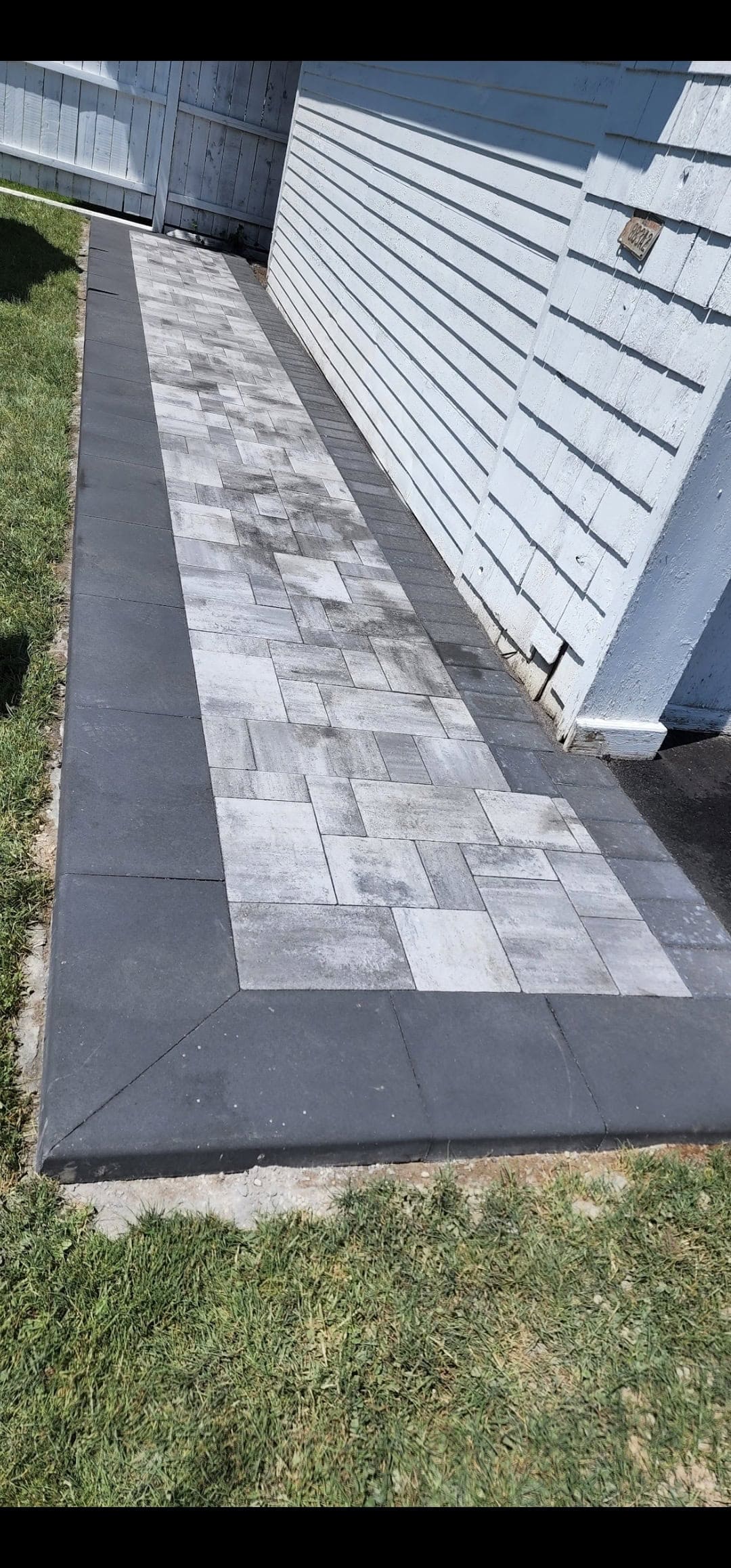
Paver walkways work differently. Individual pavers flex with soil movement instead of fighting against it. The joints between them allow for expansion and contraction without creating surface damage. Water drains through instead of pooling on top, which prevents the ice formation and pressure that destroy concrete.
The difference isn’t just in the material—it’s in how the system handles the real conditions your front entrance faces every day. That’s why properly installed paver walkways last 25-30 years while concrete starts showing problems within 2-3 years.
Suffolk County sits in a climate zone that’s particularly brutal on concrete. Hot, humid summers. Cold winters with constant freeze-thaw cycles. That combination creates perfect conditions for concrete failure.
Here’s what happens. Water seeps into tiny cracks during warmer months. Winter hits, that water freezes and expands. The expansion creates pressure inside the concrete, turning small cracks into big ones. Spring comes, the ice melts, leaving larger gaps for more water. The cycle repeats. Each winter makes it worse.
Your clay soil adds another layer of problems. It expands when wet, contracts when dry. Concrete can’t flex with those movements, so it develops stress fractures. Within a few years, you’re staring at a walkway with multiple cracks, uneven sections, and tripping hazards that make you nervous every time someone visits.
Professional paver installations account for these conditions from day one. The base preparation includes proper drainage layers that prevent water accumulation. The pavers themselves shift slightly with soil movement without breaking. Edge restraints keep everything in place while still allowing for the natural expansion and contraction that happens with temperature changes.
This is why the contractor you choose matters more than the pavers you pick. Anyone can lay pavers on top of sand. Understanding how to prepare the foundation for Long Island’s specific soil and climate conditions—that separates installations lasting decades from ones failing within years.
The key is in the details most homeowners never see. Proper excavation depth. The right type and amount of base material. Correct compaction techniques. Precise grading for drainage. These steps take more time and require specific equipment, but they’re what keep your walkway level, stable, and crack-free for 25-30 years instead of 2-3.
You could install the most expensive durable paving stones available, but if the base isn’t right, your walkway will fail. The base is everything. It keeps pavers level, prevents settling, and manages water drainage. Get it wrong, and you’ll see problems within the first year.
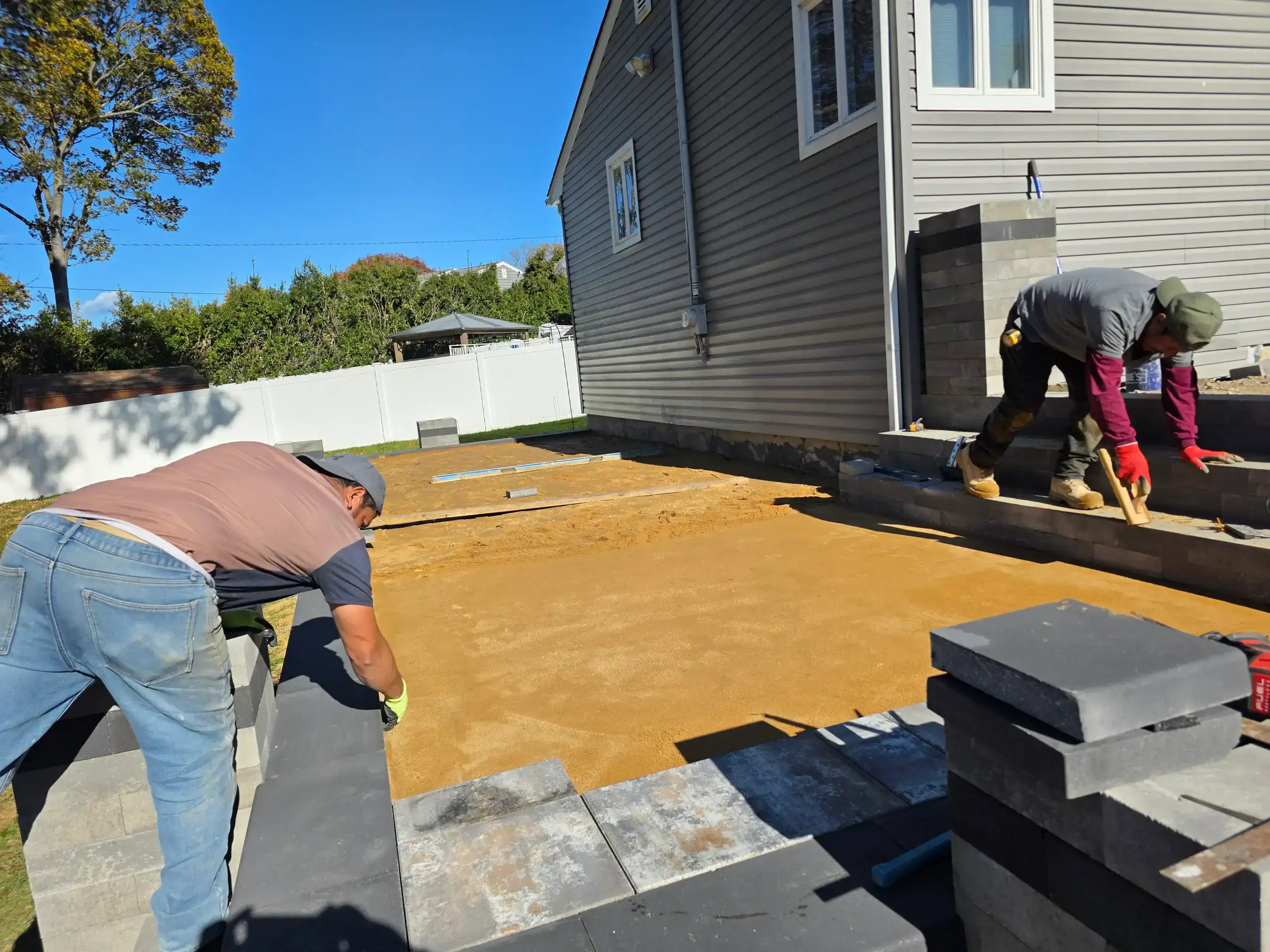
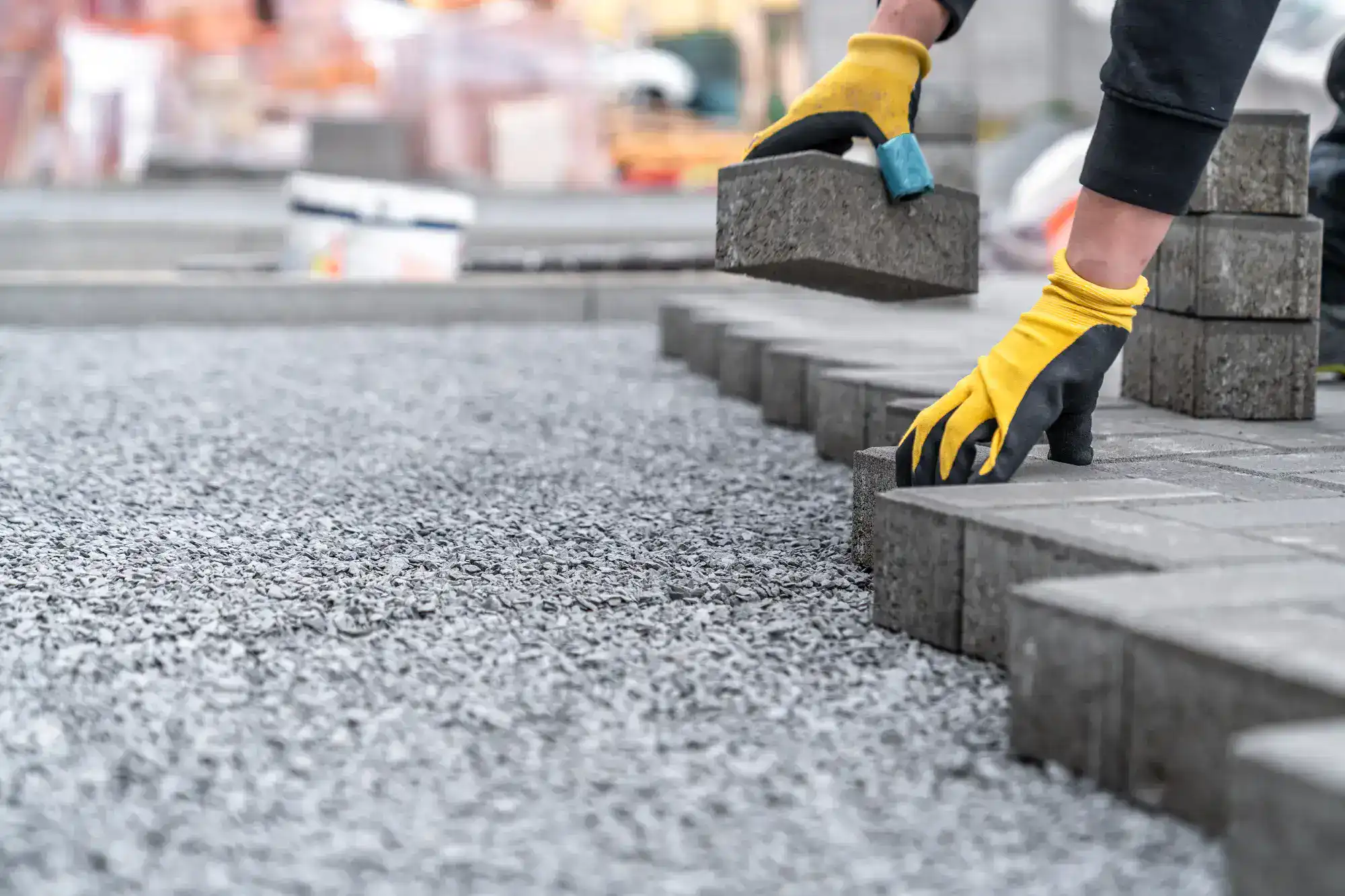
Professional walkway paving starts with excavation to the correct depth—usually 8-12 inches depending on your soil conditions. That excavated area gets filled with layers of compacted gravel, each layer serving a specific purpose. The bottom layer provides stability and drainage. The middle layer creates a solid foundation that won’t shift. The top layer of sand allows for precise leveling of each paver.
Compaction is where most DIY projects fall apart. You need a plate compactor, not a hand tamper, to achieve proper density. Each layer of base material must be compacted separately to specific standards. Miss this step or do it incorrectly, and your pavers will settle unevenly over time, creating the same trip hazards you’re trying to eliminate.
Drainage matters just as much as stability. Water needs somewhere to go. If it can’t drain through and away from your walkway, it pools, freezes, and causes damage. Professional installations include proper grading that directs water away from your foundation. Some situations require additional drainage solutions like French drains or gravel channels to handle Suffolk County’s heavy rains.
Edge restraints are the final piece that holds everything together. Without them, pavers gradually spread apart, creating gaps and uneven surfaces. The restraint can be concrete, metal, or heavy-duty plastic, depending on the application. It gets installed along the walkway’s perimeter before the final pavers go in, creating a boundary that keeps everything locked in place for decades.
This level of preparation takes time. A typical residential walkway requires 2-4 days for complete installation, with the first day focused entirely on excavation and base work. Contractors who rush this phase or cut corners deliver the same problems you’re trying to avoid with concrete—just in a different form.
The interlocking pavers you see on the surface are important for aesthetics and slip resistance, but they’re sitting on top of the real work. That’s why we focus so much attention on what happens below grade. It’s not visible once the project is complete, but it’s what determines whether your front entrance design lasts 3 years or 30 years.
Want live answers?
Connect with a Corsino Construction expert for fast, friendly support.
Real estate data shows homes with well-maintained exteriors sell for 7% more than comparable properties with dated or damaged curb appeal. For a $680,000 home in Suffolk County—that’s nearly $48,000 in additional value. Your front walkway is one of the first things potential buyers see, and it sets expectations for everything else.
Buyers form opinions within seconds of seeing your property online or in person. A cracked, patched concrete walkway signals deferred maintenance and raises questions about what else needs attention. A professionally installed paver walkway communicates the opposite—you’ve invested in quality improvements and maintained your property properly.
The value isn’t just about eventual resale. You get to enjoy the improved appearance and functionality every single day. No more worrying about guests tripping on uneven sections. No more scheduling weekend projects to patch new cracks. No more watching your entrance deteriorate despite your best efforts.
Curb appeal improvements deliver some of the highest returns on investment in home renovation. Industry data shows that investing around $3,500 in exterior upgrades can yield approximately $12,000 in increased home value—a 238% return that far exceeds most interior renovations.
Most paver walkway projects in Suffolk County fall between $3,000 and $4,500, depending on size, materials, and design complexity. That’s $30 to $45 per square foot for professional installation that includes proper base preparation, quality materials, and workmanship that lasts. That investment positions your property above comparable homes in your neighborhood. When buyers compare listings, yours stands out.
Real estate professionals consistently rank outdoor improvements as one of the strongest selling points in current market conditions. More than half of agents say these upgrades make homes more appealing to buyers. The reason is simple—buyers can see and experience the improvement immediately, unlike interior renovations that might not match their taste or style preferences.
The timing matters too. Curb appeal improvements deliver value whether you’re selling next month or in ten years. Unlike kitchen renovations that might look dated in five years, a well-installed paver walkway maintains its appeal and functionality for decades. You’re not just adding value for the next owner—you’re improving your daily experience and protecting your investment right now.
The financial benefits extend beyond direct property value increases. Homes with strong curb appeal sell faster, often receiving multiple offers. In competitive markets like Suffolk County, that can mean selling for asking price or above, rather than negotiating down. The improved first impression gets buyers through the front door, where they can see the rest of what your home offers.
Consider the alternative cost too. If you stay with concrete, you’re looking at ongoing repair expenses every few years. Patching, sealing, and eventual replacement add up quickly. A professional paver installation eliminates those recurring costs while delivering the value benefits. The math favors pavers even before you factor in the property value increase.
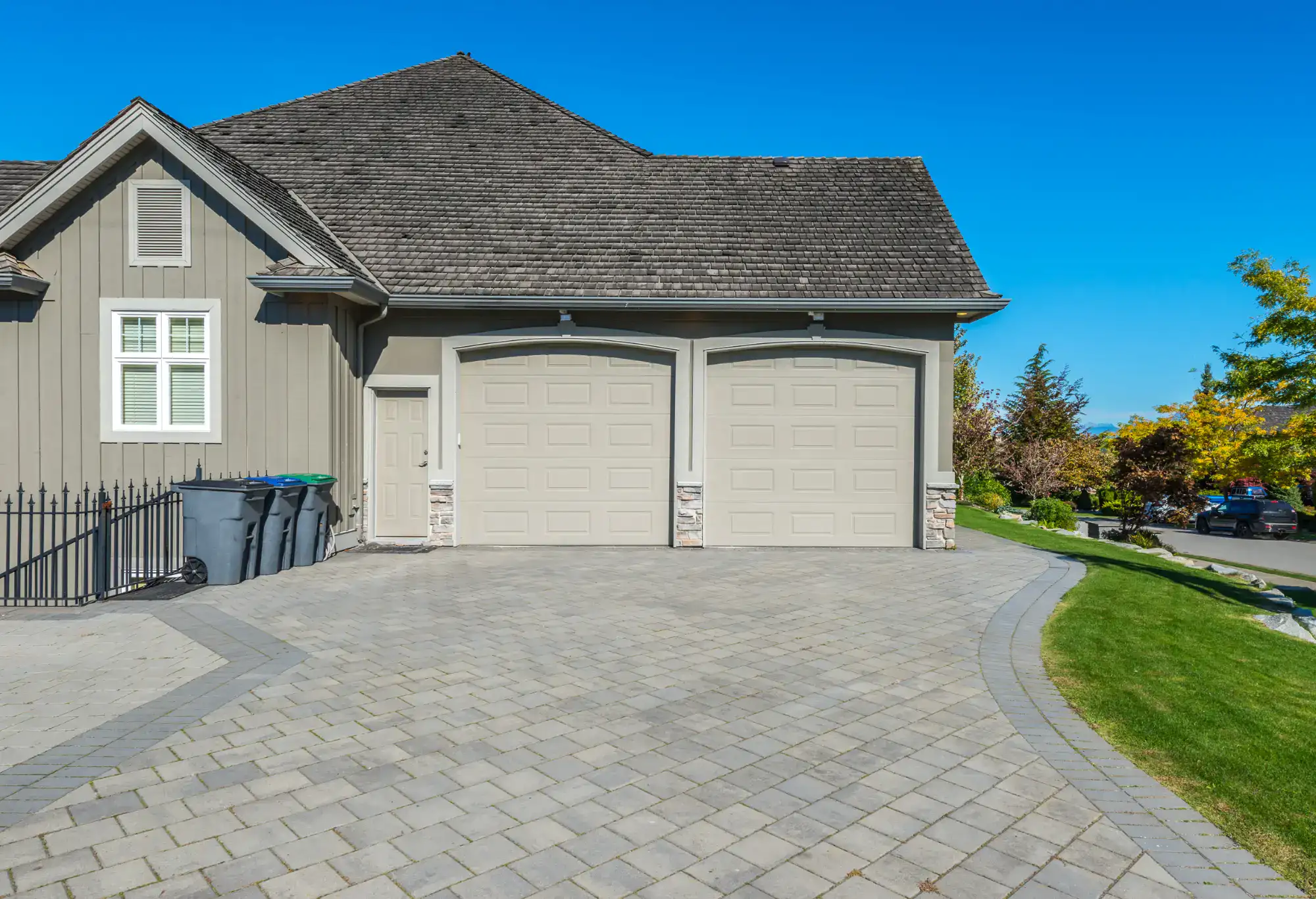
Your walkway doesn’t exist in isolation. It’s part of a complete entrance design that includes your driveway, landscaping, lighting, and front door. When these elements work together, they create a cohesive first impression that elevates your entire property.
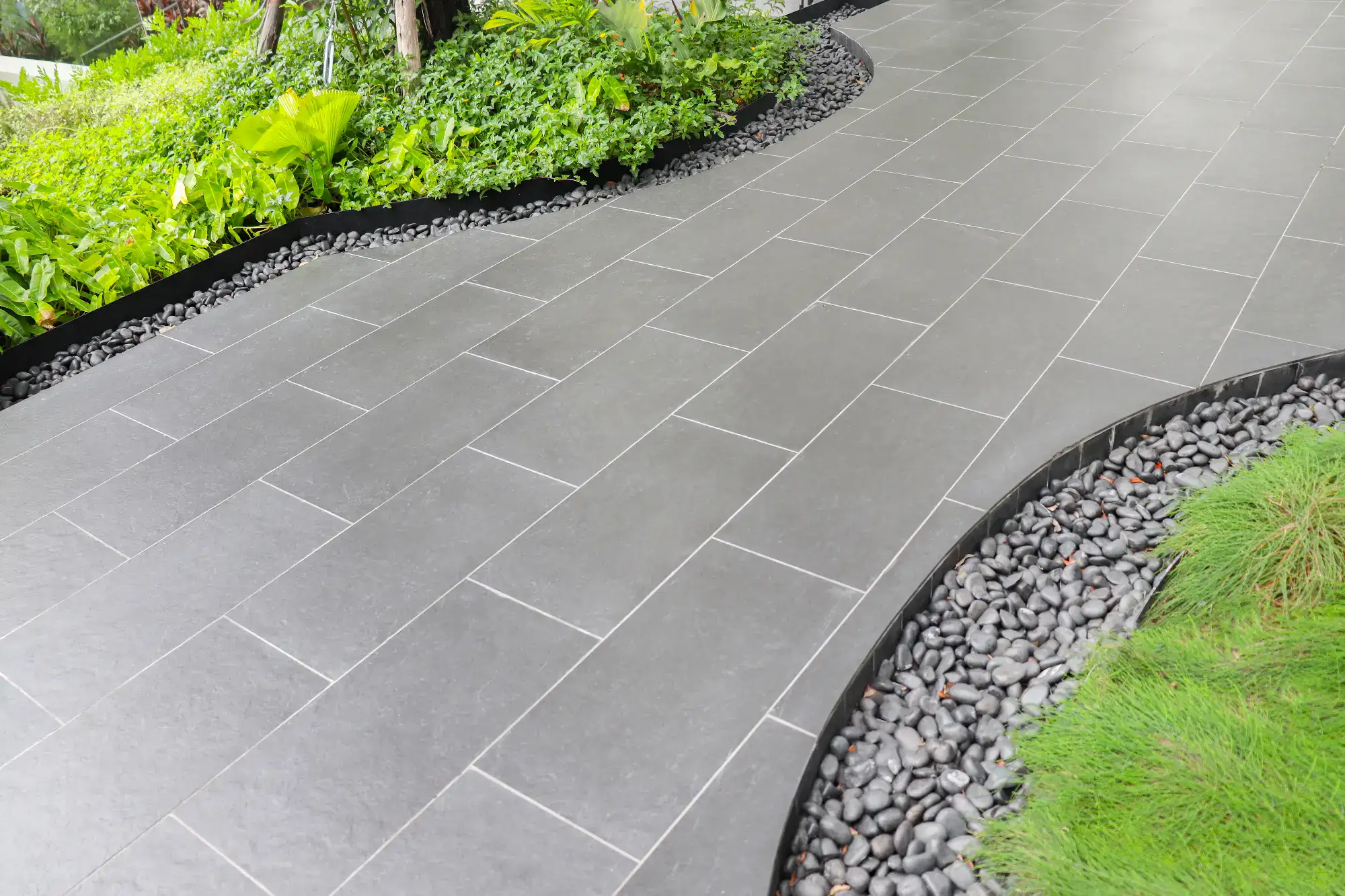
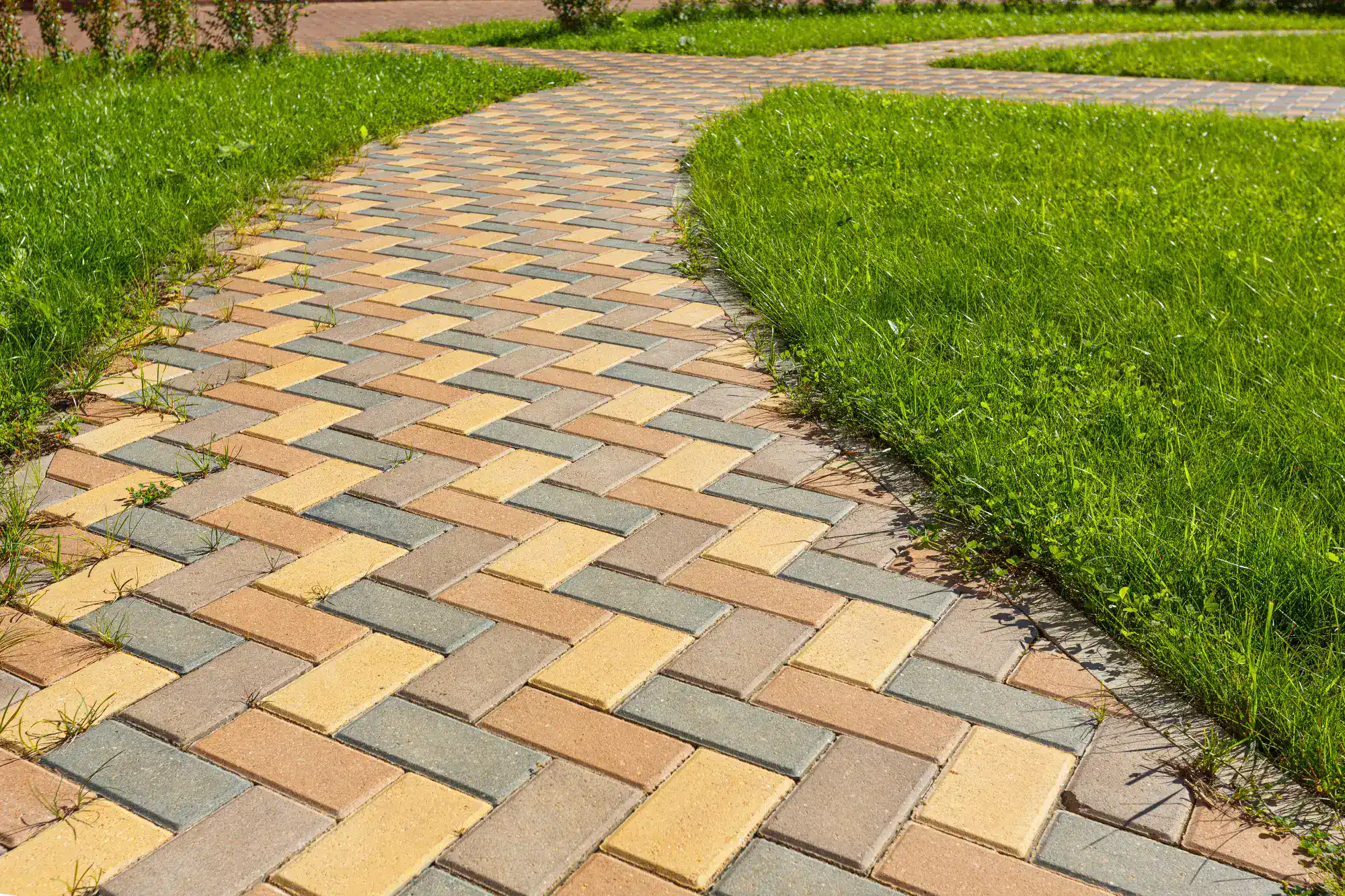
Design trends for 2026 emphasize integrated entrance features with bold colors and natural materials. Think about how your walkway connects to your driveway and front door. Straight paths work well for traditional homes, while curved walkways can soften modern architecture and create visual interest. The width matters too—a 4-foot wide walkway accommodates two people walking side by side comfortably, making your entrance feel more welcoming.
Material selection plays a role beyond durability. Paver colors and patterns can complement your home’s exterior or create visual interest through contrast. Many Suffolk County homeowners choose colors that tie into their home’s brick, siding, or trim colors. Others use borders or inlay patterns to add definition and character that makes their entrance memorable.
Lighting transforms your entrance after dark and extends your curb appeal beyond daylight hours. Low-voltage path lights along your walkway improve safety while highlighting your landscaping. They make your home look welcoming whether someone drives by at noon or 9 PM, which matters more than most homeowners realize.
Landscaping softens the hardscape and adds seasonal color without overwhelming your entrance. Low-maintenance plantings along your walkway edges create visual interest without requiring constant attention. Choose varieties that thrive in Long Island’s climate and complement your walkway design. The goal is to frame your entrance, not hide it behind overgrown shrubs that block the view.
Accessibility considerations matter more than most homeowners think about initially. Even if you don’t have mobility concerns now, designing your walkway with accessibility in mind adds value and functionality for everyone. Proper width, gentle slopes instead of steps where possible, and slip-resistant surfaces benefit every person who uses your entrance—from elderly relatives to delivery drivers carrying packages.
The most successful entrance designs balance aesthetics with practical considerations. Your walkway needs to handle foot traffic, direct water away from your foundation, remain safe in all weather conditions, and look good doing it all. Professional design accounts for all these factors while creating something that fits your home’s style and your budget.
This is where working with experienced contractors provides value beyond installation. We can suggest design elements you might not have considered and help you avoid choices that look good in photos but don’t work well in practice. Our experience with hundreds of installations in similar homes gives you insight that saves time, money, and future headaches.
Your walkway decision comes down to whether you want to keep repairing concrete every year or invest in something that actually lasts. Professional walkway paving costs more upfront, but it eliminates the repair cycle, boosts your property value by up to 7%, and gives you an entrance that works properly for 25-30 years.
The difference between installations that last and ones that fail within a few years is in the preparation work and the contractor’s understanding of local conditions. Suffolk County’s clay soil and freeze-thaw cycles require specific base preparation techniques that account for drainage, soil movement, and temperature extremes that concrete simply can’t handle.
If you’re ready to stop patching concrete and start enjoying a walkway that actually improves your property value and daily life, we’ve been installing professional paver walkways in Suffolk County for over 20 years. We offer fixed pricing, work with in-house licensed professionals instead of subcontractors, and use proper installation techniques that account for Long Island’s specific challenges—from soil conditions to weather patterns that destroy inferior installations.
Article details:
Share:
Continue learning: