Thinking about hiring a patio contractor for your Suffolk County backyard? Learn the real differences between professional installation and DIY, plus what specialized expertise means for Long Island weather.
Share:
Summary:
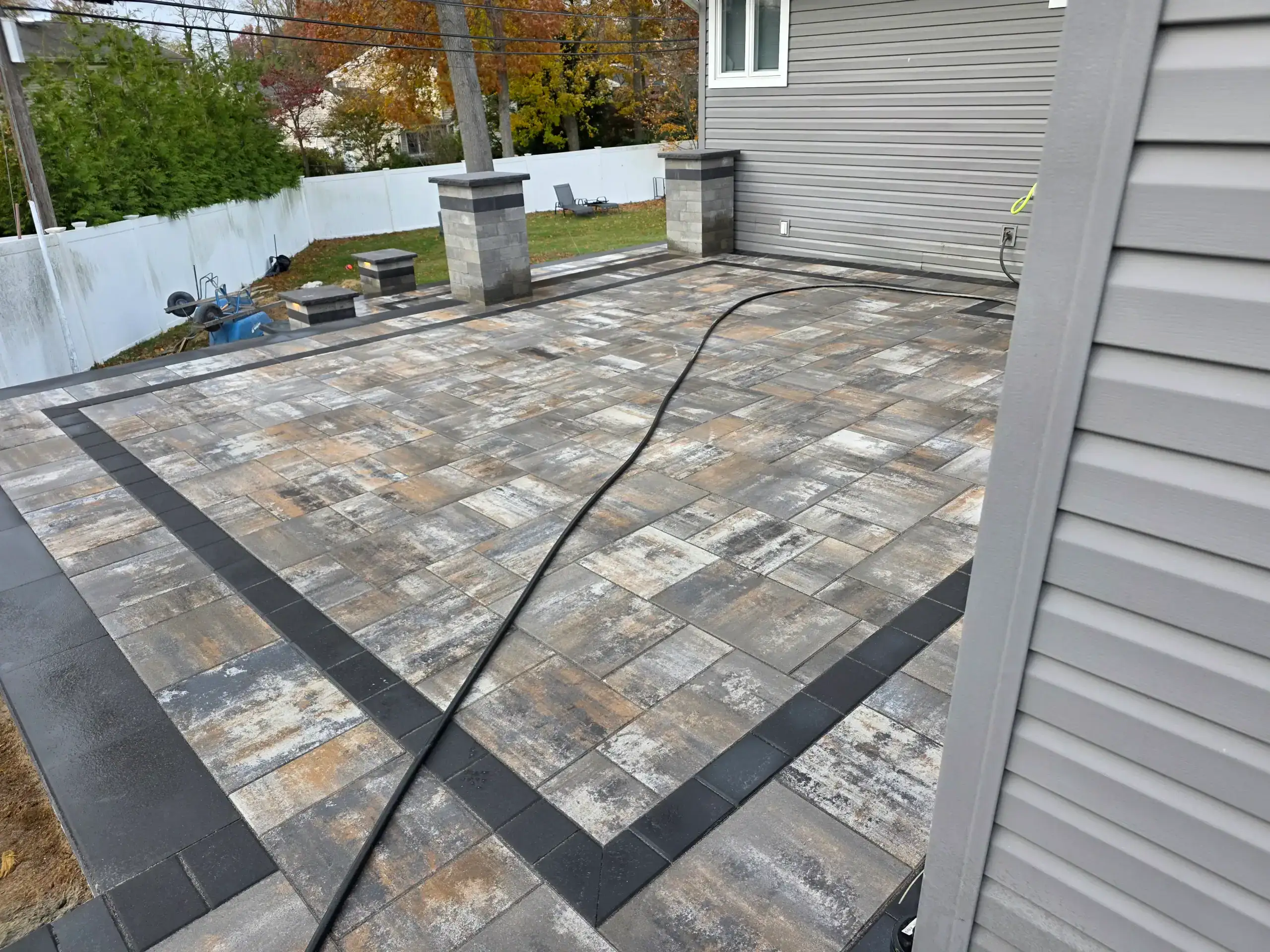
Not all contractors are built the same. A general contractor coordinates multiple trades across various projects. A specialized patio contractor lives and breathes hardscaping.
That distinction matters more than you’d think. When you hire someone who installs 150-200 patios every year versus someone who does five, you’re getting a completely different level of expertise. The specialist knows exactly when concrete reaches the right consistency for stamping. We understand how Suffolk County’s clay soil behaves differently than sandy soil. We’ve solved drainage problems on properties just like yours dozens of times.
General contractors often subcontract patio work to whoever’s available. Specialized contractors like us have in-house crews who’ve worked together for years. That consistency shows up in the details, the timeline, and how your patio performs ten years from now.
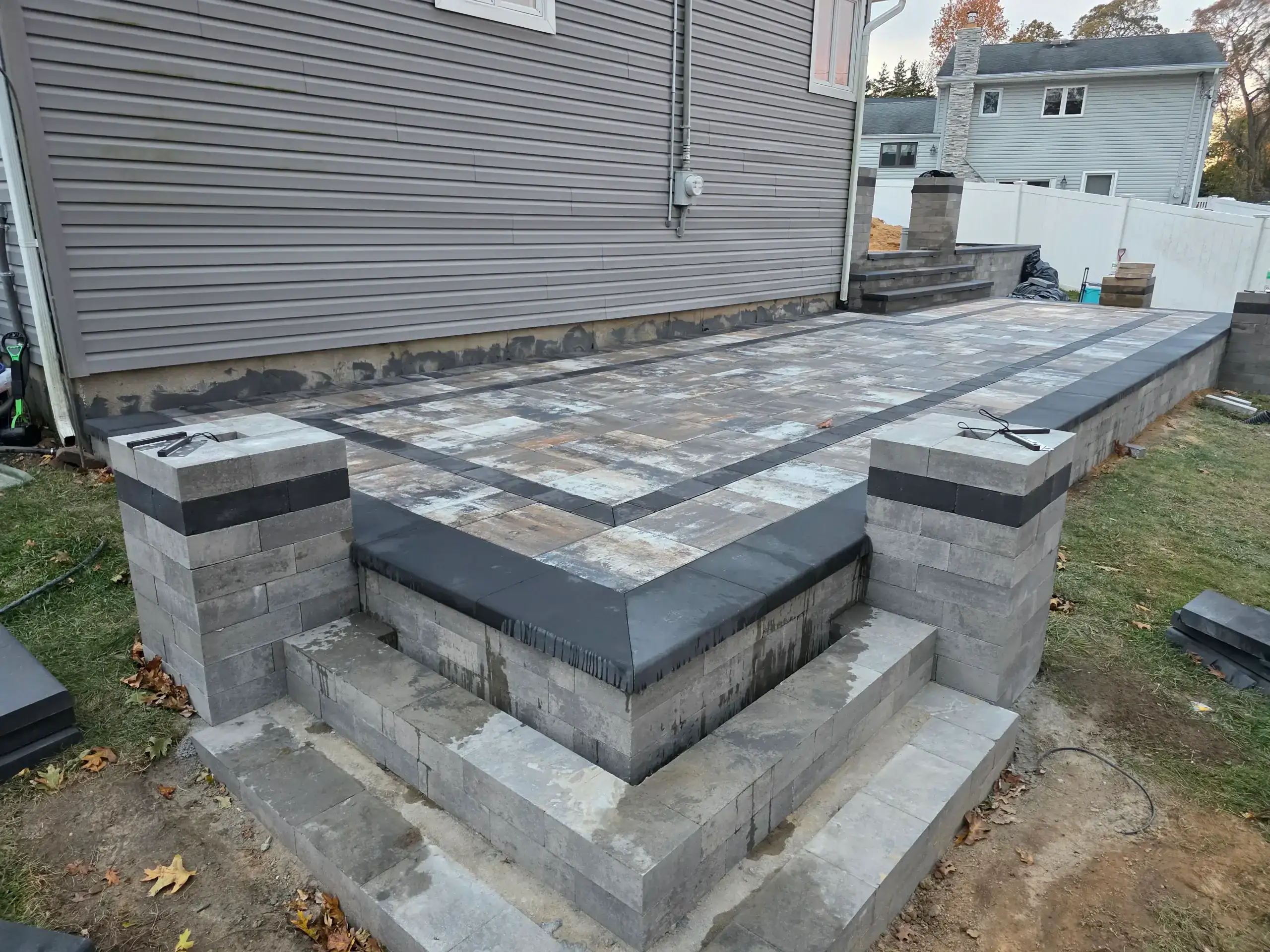
Most patio problems start underground, long before you ever see a crack or notice pavers shifting out of place. The base is everything. Get it wrong and you’re looking at expensive repairs within a few years.
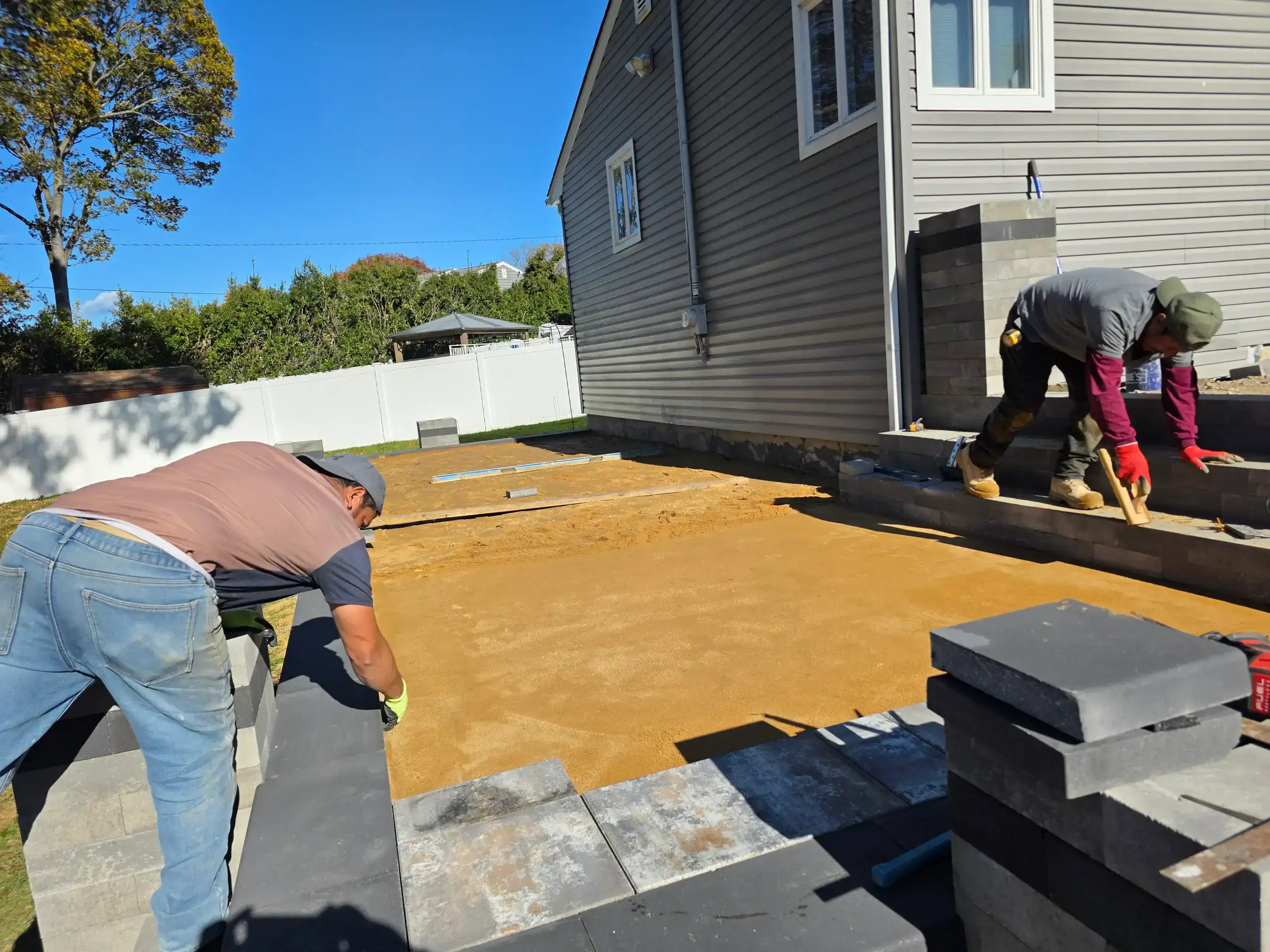
Professional patio contractors excavate to the proper depth for your specific site conditions. That’s typically 7-8 inches, but it varies based on soil type and intended use. We install engineered base materials in compacted lifts, not all at once. Each layer gets compacted with equipment that exerts thousands of pounds of pressure per square inch. This prevents the settling that ruins cheaper installations.
Suffolk County’s clay soil presents unique challenges. Clay holds water, which means subsurface drainage often needs to be addressed during base preparation. We account for this. We understand that proper grading isn’t just about the surface you see. It’s about creating drainage layers within the base that prevent water from pooling underneath your pavers.
DIY installations typically skip these steps or execute them incorrectly. Homeowners rent a hand tamper instead of a plate compactor. They eyeball drainage instead of using laser levels. They don’t realize their soil needs additional base depth until pavers start sinking. By then, the only fix is tearing everything up and starting over.
The base also needs to accommodate Suffolk County’s freeze-thaw cycles. Water that gets trapped in an improperly prepared base will freeze, expand, and cause heaving. Professional contractors build bases that allow water to drain through and away, preventing this damage before it starts. That’s the difference between a patio that lasts 30 years and one that needs major repairs after the first winter.
If you’ve lived in Suffolk County for any length of time, you know what happens after a heavy rain. Water sits. Clay soil doesn’t absorb water quickly, and if your property has any low spots, you’re dealing with pools that take days to dry out.
A patio changes how water moves across your property. If it’s not designed correctly, you’re creating new problems. Water that used to spread across your yard now channels toward your foundation. Or it pools on the patio surface itself, creating slip hazards and accelerating wear.
We start every project by evaluating your property’s drainage patterns. We look at how water currently flows, where it goes after storms, and how the new patio will affect that movement. We’re checking for grade, identifying problem areas, and planning solutions before breaking ground.
Proper drainage means sloping the patio surface away from your house at the correct angle. That’s typically a quarter inch per linear foot, enough to shed water without making furniture wobble. It means installing edge drains when necessary. It means considering how the patio connects to existing drainage systems and making adjustments so water doesn’t pool elsewhere in your yard.
Suffolk County’s clay soil makes this even more critical. The soil acts like a barrier to water movement, so surface drainage alone often isn’t enough. We install subsurface drainage systems that intercept water before it reaches the surface. These systems work by gravity, requiring no electricity or mechanical components that can fail.
The result is a patio you can use right after it rains. No standing water. No erosion around the edges. No water backing up against your foundation. That level of planning separates professional installations from DIY attempts that look fine initially but create headaches every time it storms.
Want live answers?
Connect with a Corsino Construction expert for fast, friendly support.
Walk into any big box store and you’ll find dozens of paver options. They all look pretty similar in the display. But not all pavers are designed to handle what Long Island throws at them.
Suffolk County weather cycles between summer heat, winter freezes, and everything in between. Coastal exposure adds salt air to the mix. Cheap pavers crack during freeze-thaw cycles. They fade in the sun. They don’t hold up to the conditions your patio will face for the next 20-30 years.
We know which materials work and which don’t. We use commercial-grade pavers rated specifically for freeze-thaw cycles. We understand that thickness matters, typically recommending 1.875-inch pavers for standard patios and 2.375-inch for high-traffic areas. We know that certain natural stones like bluestone perform well in Long Island conditions, while others don’t.
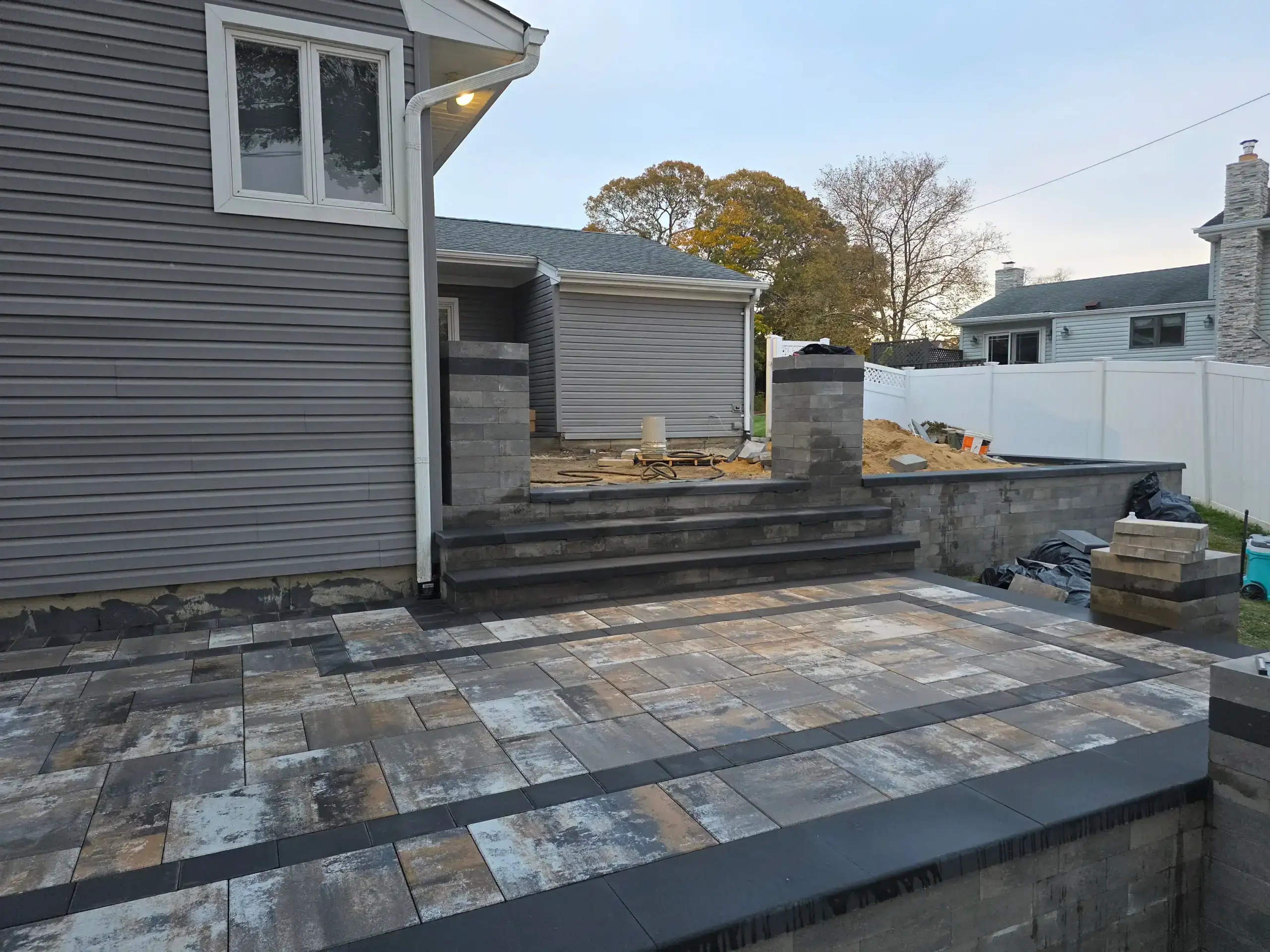
Freeze-thaw damage happens when water gets into a paver, freezes, expands, and causes cracking. It’s not a question of if this will happen with cheap pavers. It’s when.
Quality concrete pavers designed for northern climates go through manufacturing processes that make them resistant to this damage. They have lower absorption rates, meaning less water gets into the material in the first place. They’re tested to withstand hundreds of freeze-thaw cycles without deteriorating.
We source these materials as standard practice. We’re not trying to save a few dollars on pavers that will need replacing in five years. We understand that the material cost is a small part of the total project expense, and using quality products protects your entire investment.
Natural stone options like bluestone and granite also perform well in Suffolk County conditions when installed correctly. These materials have been used in the Northeast for generations because they hold up. But installation technique matters just as much as material choice. The base needs to support the stone properly. Joints need to be filled correctly. Edge restraints need to contain everything without allowing movement.
This is where specialized knowledge makes the difference. When you install patios regularly, you know exactly how different materials behave over time. You’ve seen what works and what fails. We can recommend options based on your specific use case, budget, and aesthetic preferences, backed by years of real-world experience.
The warranty coverage reflects this confidence. Quality pavers come with manufacturer warranties of 25 years or more. Professional installation includes workmanship warranties, typically two years, covering any settling, shifting, or installation-related problems. DIY installations get neither, leaving you on your own if something goes wrong.
Pavers want to spread outward under traffic, weather, and ground movement. Without proper edge restraints, that’s exactly what happens. You start noticing gaps. Pavers shift out of place. Weeds grow through the joints. The whole installation starts falling apart.
Professional edge restraint systems contain this horizontal movement. In Suffolk County conditions, that typically means concrete edge restraints, not the plastic spike systems you see in DIY videos. Clay soil is too soft for those plastic systems. They pull right out of the ground.
Concrete edge restraints get poured and set properly, creating a permanent barrier that holds everything in place. This is messy work that requires mixing and pouring concrete along the entire perimeter. It’s not something most homeowners want to tackle, but it’s essential for long-term performance.
Joint filling is another detail that separates professional work from amateur attempts. Polymeric sand gets swept into the joints between pavers, then activated with water. It hardens to prevent weed growth and insect infiltration while still allowing for slight movement. But it needs to be applied correctly. Too much water and it washes out. Too little and it doesn’t activate properly. The pavers need to be completely dry before application, which means timing matters.
Sealing is the final step for many installations. A quality sealer protects against stains, prevents color fading, and makes maintenance easier. We know which sealers work with which paver types and how to apply them for even coverage without creating a slippery surface.
These finishing details don’t show up in before-and-after photos. They’re not the glamorous part of the project. But they’re what determines whether your patio still looks great in year ten or needs major repairs. We handle all of it as standard practice because we know it matters.
Your backyard patio is more than a construction project. It’s where you’ll spend summer evenings. Where your kids will play. Where you’ll host the people who matter most. That space deserves to be built right.
Specialized patio contractors bring expertise that prevents the failures most homeowners don’t see coming. We understand Suffolk County’s clay soil, drainage challenges, and freeze-thaw cycles. We use materials designed for Long Island conditions. We install bases that won’t settle and drainage systems that actually work.
The difference between professional installation and DIY isn’t just about convenience. It’s about getting a patio that performs the way you expect for decades, not just months. When you’re ready to move forward with a backyard space that’s built to last, Corsino Construction Corp brings over 20 years of experience to every Suffolk County project.
Article details:
Share:
Continue learning: