Trying to decide between a patio and a deck on Long Island? Here's what the cost comparison actually looks like — and why the answer isn't as simple as it sounds.
Share:
Summary:
Most homeowners asking this question already know they want something — they just haven’t decided what. And the answer you’ll find on most national home improvement sites is technically correct but practically useless: “patios are cheaper upfront, but decks have better ROI.” Thanks. Very helpful.
Here’s the thing — that answer was written for a generic homeowner in a generic market. It wasn’t written for someone in Babylon or Bay Shore dealing with a 30-year-old pressure-treated deck that’s starting to rot, or a homeowner in Coram who’s tired of sealing the same boards every spring. Long Island has its own cost realities, its own climate challenges, and its own permit requirements. So let’s actually talk about those.
At the national level, the average deck runs about $8,220 to build while the average patio comes in around $4,000. That gap is real. But those averages blur together materials that perform very differently, and they don’t reflect what labor and materials actually cost on Long Island.
Here in Suffolk County, a basic concrete patio typically runs $14–$16 per square foot installed. A stamped concrete patio — which looks considerably more premium — lands closer to $18–$25 per square foot. A wood deck, depending on materials and complexity, generally falls in the $25–$50 per square foot range.
For a 300 square foot project, you’re looking at a potential gap of several thousand dollars between a concrete patio and a pressure-treated wood deck — and that’s before you factor in what each one will cost you over the next decade.
On upfront cost alone, a concrete patio wins. It’s not particularly close. But the more useful question is what each option costs over time — and that’s where Long Island’s climate starts to matter a lot.
Wood decks require annual maintenance. Power washing, staining, sealing, replacing boards that have started to warp or rot — it adds up. On Long Island, that maintenance cycle is more demanding than it would be in a drier climate because of the humidity, the coastal salt air in towns like Lindenhurst, Babylon, and Southampton, and the freeze-thaw cycles that hit the wood hard every winter.
Properly maintained, a pressure-treated wood deck lasts 10–15 years. That’s not a long runway for a significant investment.
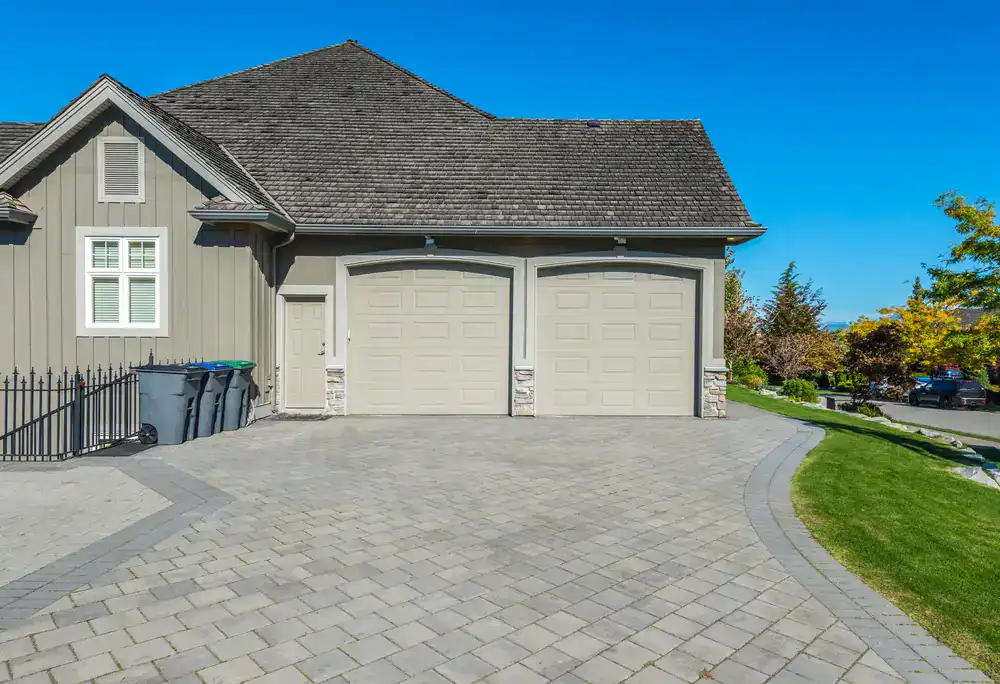
Concrete patios, on the other hand, can last 30 years or more with far less intervention. You’re looking at occasional cleaning and resealing every few years — not an annual maintenance ritual. Paver patios are even more forgiving, since individual pavers can be replaced if one cracks or shifts, rather than having to repair or refinish an entire surface.
There’s also a cost nuance worth knowing: lumber prices were 26.6% higher in 2024 compared to 2019, driven by the demand spikes of the pandemic years. That’s one reason the gap between wood deck costs and patio costs has widened recently — and why homeowners who priced out a wood deck a few years ago may be surprised by current quotes.
None of this means a wood deck is the wrong choice. If your yard is sloped, a deck may be your only practical option — you can’t pour a patio on a significant grade without serious grading work. And if you’re planning to sell in the next several years, decks do tend to deliver better ROI at resale, somewhere in the range of 60–80% compared to a patio’s 50–55% nationally. Interestingly, New York concrete patios specifically have been cited at around 70% ROI — higher than the national patio average — which reflects the premium home values in this market.
The honest answer is that a concrete patio is almost always cheaper to build and cheaper to maintain, but a deck may pay back more when you sell. Which one matters more depends on your situation.
If low maintenance is what you’re after — and for a lot of Suffolk County homeowners, it absolutely is — the material you choose matters as much as the structure type. Not all patios are created equal, and the wrong material in Long Island’s climate will create problems down the road.
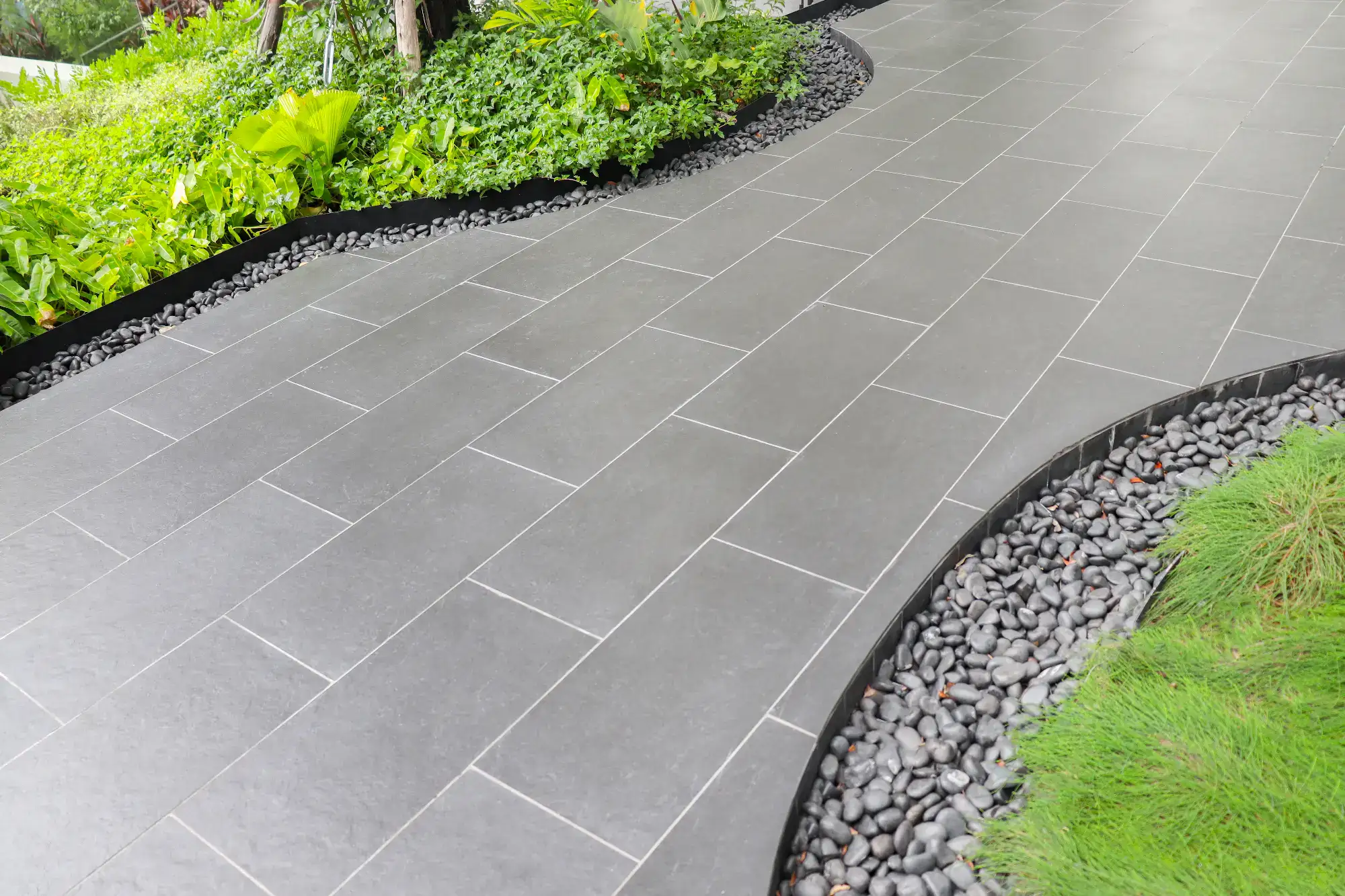
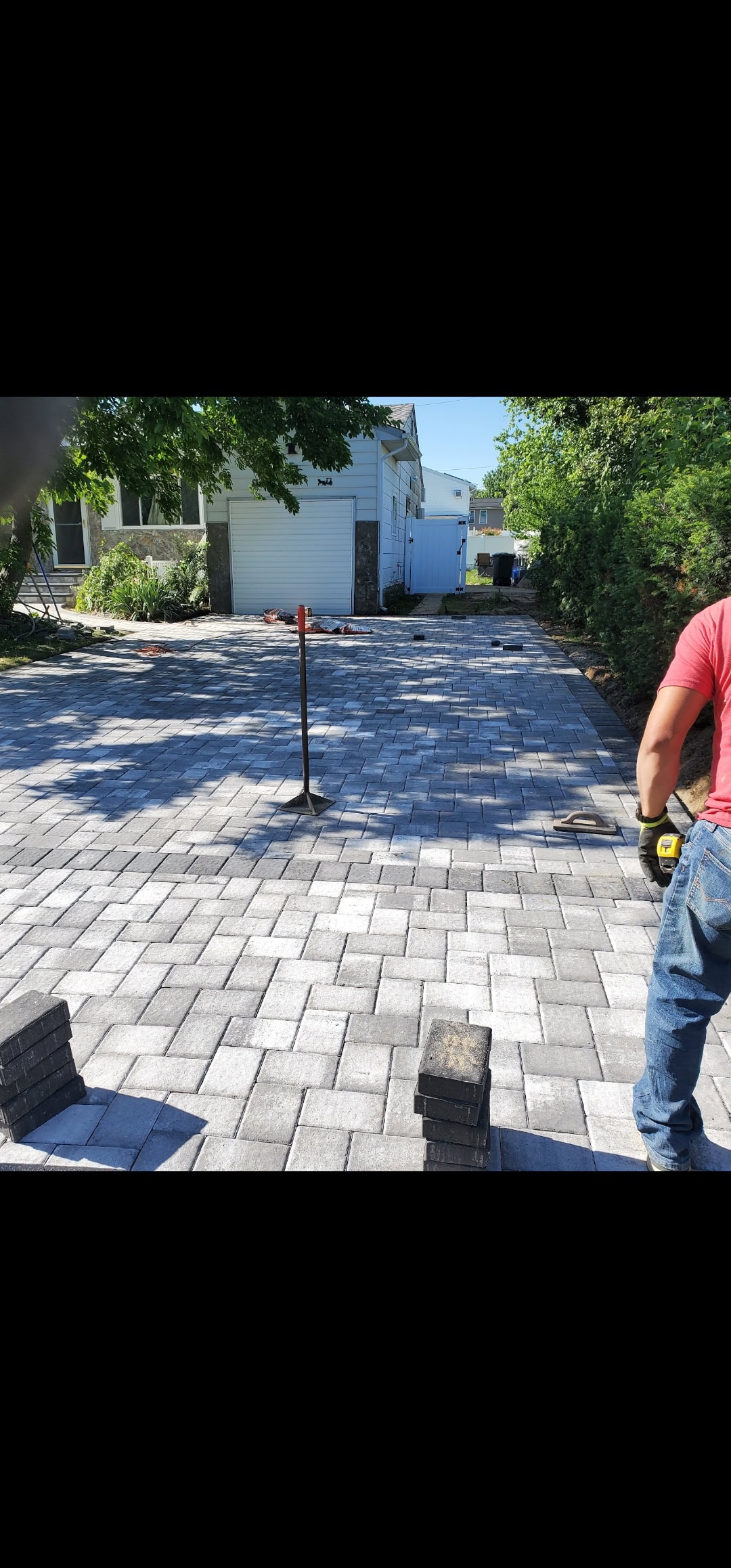
Concrete pavers are one of the most practical choices for this area. They handle freeze-thaw cycles well when installed on a proper compacted base, individual pavers can be replaced if one cracks or shifts, and they don’t require sealing to stay functional (though sealing extends their life and keeps them looking sharp). They’re also versatile — you can get a clean, modern look or a more traditional cobblestone feel depending on the pattern and color you choose.
Poured and stamped concrete is another strong option. It’s generally less expensive than pavers upfront, and stamped concrete can genuinely look premium — brick patterns, flagstone textures, custom colors. The trade-off is that if a section cracks, you’re patching or resurfacing rather than swapping a single unit. For Long Island’s freeze-thaw environment, the quality of the base preparation and the concrete mix matter a lot. A properly installed concrete patio can last 30 years or more; a poorly installed one will start showing cracks within a few winters.
Porcelain pavers sit at the premium end of the spectrum. They’re frost-proof, fade-resistant, don’t require sealing, and are highly slip-resistant — which makes them a practical choice for pool patios in coastal communities across Suffolk County. They’re not cheap, but they’re genuinely low-effort over the long term.
If you’ve been managing a wood deck and are exhausted by the maintenance cycle, any of these patio materials will feel like a significant quality-of-life improvement. The annual ritual of power washing, staining, and sealing simply goes away.
Want live answers?
Connect with a Corsino Construction expert for fast, friendly support.
This is the scenario a lot of Suffolk County homeowners are actually in. The question isn’t “deck or patio from scratch” — it’s “my deck is 25 years old, it’s rotting in three places, and I’m done with it. Should I rebuild it or replace it with something lower-maintenance?”
It’s a fair question, and the answer depends on a few things: the condition of your existing structure, how you use the space, whether your yard is flat or sloped, and what you’re planning to do with the home. What we can tell you is that replacing an aging wood deck with a concrete or paver patio is a very common project in this area — and for the right yard, it’s often the smarter long-term move.
The first thing to understand is that replacing a deck with a patio isn’t just a patio installation — it’s a demo project first. Removing an existing deck adds roughly $2–$6 per square foot in demolition costs before any new work begins. For a 300 square foot deck, that’s $600–$1,800 in demo alone, depending on the size and complexity of the structure.
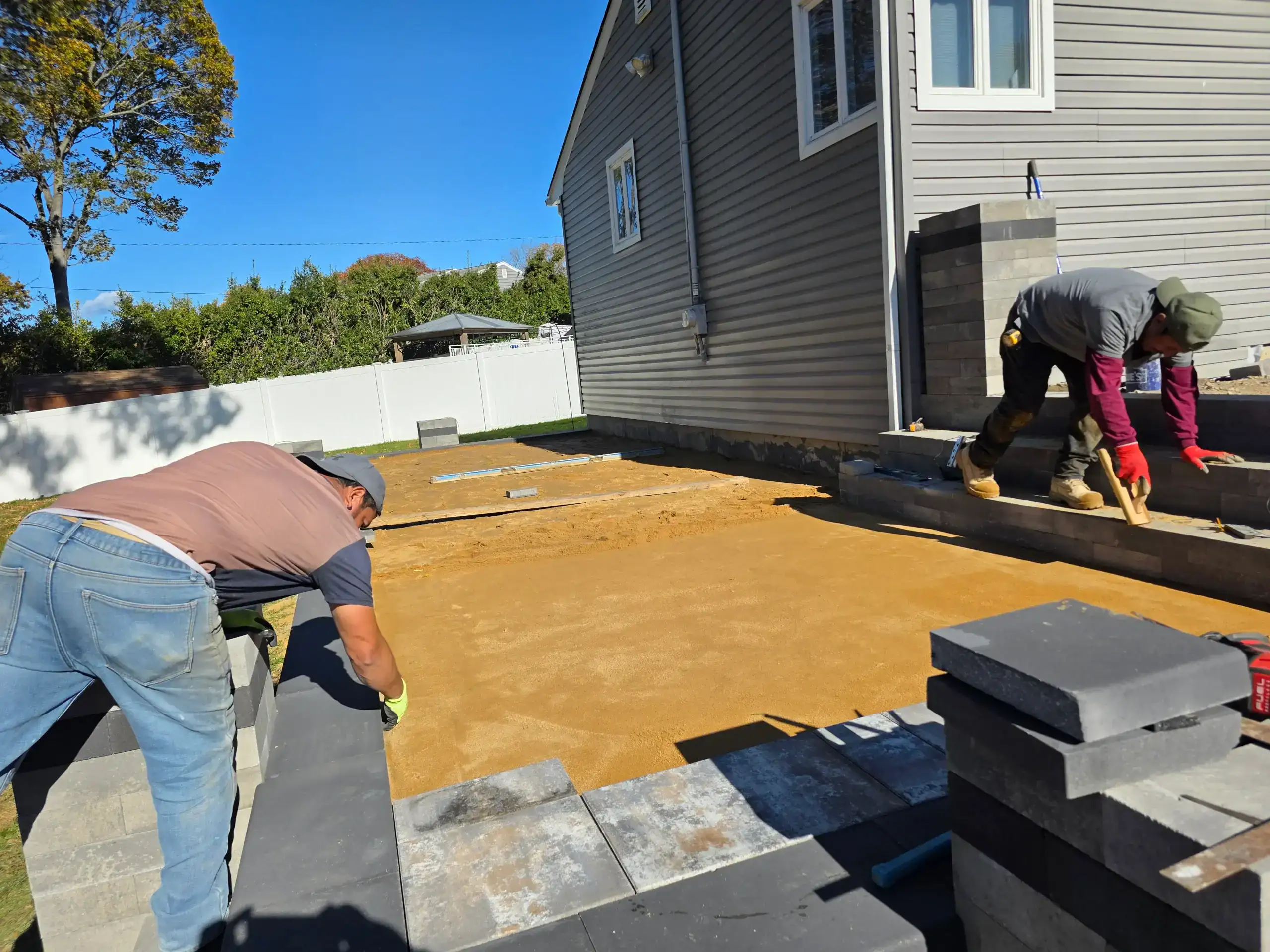
After demo, you’re looking at site preparation — grading the area, addressing any drainage issues, and compacting the base. Long Island’s soil conditions vary considerably across the county. Sandy coastal soil drains quickly but may need reinforcement. Clay-heavy soil in other parts of Suffolk County can hold water and create drainage challenges if the base isn’t properly prepared.
This is one of those areas where local experience genuinely matters, because a contractor who’s worked across Coram, Medford, Islip, and Huntington has seen how the ground behaves in different parts of the county.
Once the site is prepped, the patio installation itself follows the same cost range described earlier — $14–$25 per square foot for concrete, depending on finish. Add it all together and a deck-to-patio replacement on a 300 square foot footprint might run $5,000–$10,000 or more depending on materials, site conditions, and what the demo reveals. That’s still often less than rebuilding a deck of comparable size, and it eliminates the ongoing maintenance costs that come with wood.
One other thing worth knowing: in most cases, patio installation in Suffolk County doesn’t require a building permit. Deck construction does — and that permit process typically adds 4–8 weeks to your project timeline, plus the administrative requirements of submitting plans, licensing documentation, and coordinating inspections. For homeowners on a timeline, that difference is real.
Converting to a patio isn’t the right call for every situation. There are cases where rebuilding or upgrading the deck is the smarter choice — and it’s worth being honest about when that is.
The most obvious case is a sloped yard. If your home sits on a grade — which is common in parts of Suffolk County — a deck can span that elevation change in a way that a patio simply can’t without major grading work. Trying to force a patio onto a significantly sloped yard often costs more than just building the deck, and the end result is less functional.
Another case is resale timeline. If you’re planning to sell within the next few years and you’re in a market where buyers expect a deck — which is true in many Suffolk County neighborhoods — then rebuilding in composite rather than converting to a patio may serve you better. Composite decks (Trex, TimberTech, and similar products) carry manufacturer warranties of 25–50 years, require no staining or sealing, and deliver the elevated outdoor living aesthetic that buyers in this market respond to. The upfront cost is higher than pressure-treated wood, but the maintenance savings over the deck’s life close that gap considerably.
The third case is simply preference. Some people genuinely want a deck — the height, the feel, the connection to the house. If that’s what you want and your yard supports it, the right answer isn’t to talk you out of it. It’s to make sure you’re building it with the right materials for Long Island’s climate, with a contractor who handles the permit process and uses in-house crews who are accountable for the work.
What we’d caution against is rebuilding in pressure-treated wood if the reason you’re replacing the old deck is maintenance fatigue. You’ll be back in the same situation in 10–15 years. If you’re going to invest in a deck, composite is worth the conversation.
If upfront cost is the priority and your yard is flat, a concrete or paver patio is almost certainly the cheaper option — and the lower-maintenance one. If resale value is the priority and your yard has elevation, a composite deck likely makes more financial sense over time. And if you’re replacing an aging wood deck, the real question is whether you want to repeat the same maintenance cycle or step off it entirely.
There’s no universal right answer. But there is a right answer for your specific yard, your budget, and your plans for the home — and that’s a conversation worth having with someone who actually knows this area.
We’ve been building decks and patios across Suffolk County since 2000. We handle the permits, use our own licensed crews, and give you a written estimate that doesn’t change. If you’re trying to figure out which direction makes sense for your property, we’re happy to take a look and give you a straight answer.
Article details:
Share:
Continue learning: