The savings from going DIY aren't always what they seem. Here's an honest look at what each option actually costs Suffolk County homeowners.
Share:
Summary:
You’ve priced out the materials. You’ve watched the YouTube videos. You’re wondering if you could just handle this yourself and save a significant chunk of money. That’s a completely reasonable place to be — and the answer isn’t always “no.”
But before you commit either way, it’s worth understanding what the comparison actually looks like in Suffolk County, where the permit process, the coastal climate, and the age of most homes add layers that don’t show up in the HGTV version of this decision. This breakdown covers the real costs, the real risks, and the one distinction most comparison articles never bother to make.
The honest answer is: it depends on the project. Painting a bedroom, swapping cabinet hardware, or replacing a light fixture? Those are reasonable DIY candidates if you’re handy and have the time. But the moment a project touches plumbing, electrical, structural elements, or anything that requires a permit in Suffolk County, the calculus changes fast.
What most comparison articles miss is that “hiring a contractor” isn’t one thing. There’s a meaningful difference between hiring a general contractor who manages your project through a rotating cast of subcontractors and hiring one with a licensed in-house crew who handles every trade themselves. That distinction affects cost, quality, accountability, and your experience living through the renovation — and it’s worth understanding before you make any decision.

The appeal of DIY is straightforward: you skip the labor markup and pocket the difference. On paper, that math works. In practice, it gets complicated quickly.
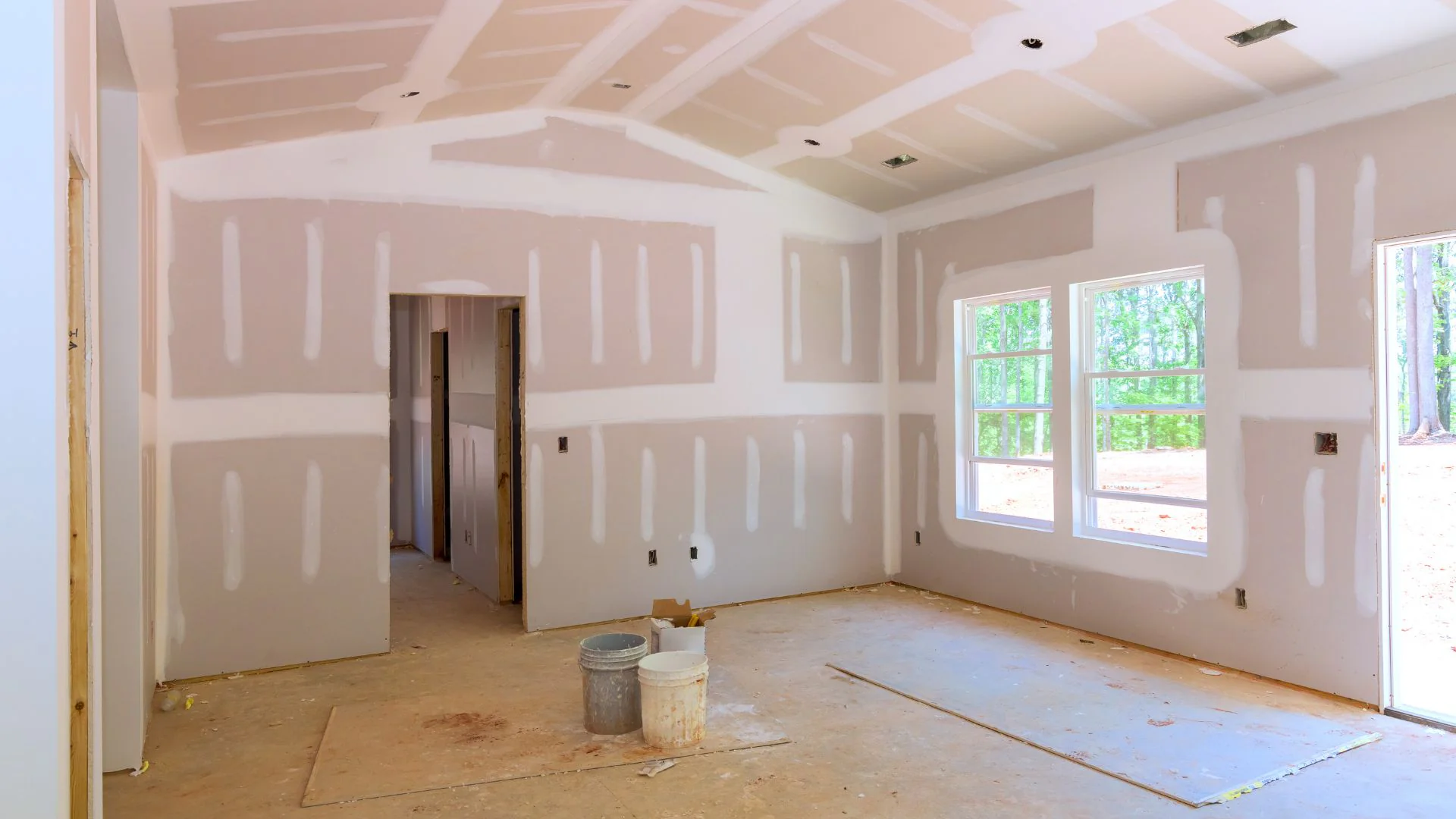
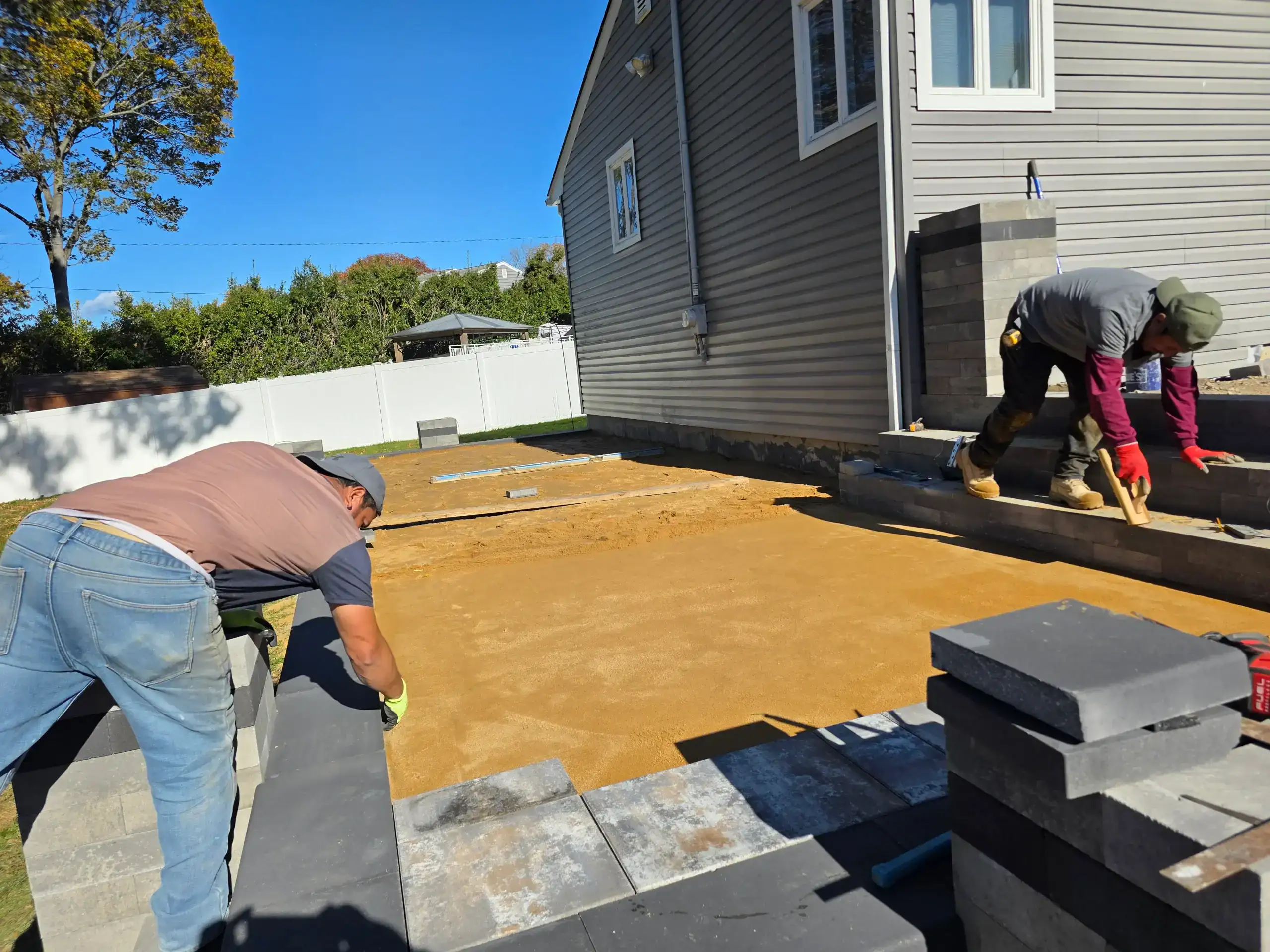
Start with tools. A quality wet saw for tile, a nailer for flooring, a compactor for a paver driveway — these aren’t items most homeowners already own, and renting or buying them adds up before you’ve touched a single material. Then there’s the waste factor. Professionals order materials with precision built on experience. First-timers routinely over-order or under-order, and either outcome costs money — one in wasted materials, the other in delays while you wait for a second delivery.
Permits are where things get genuinely expensive in Suffolk County. Virtually every meaningful renovation requires one — kitchen and bathroom remodels that touch plumbing or electrical, deck construction, driveway paving, siding, and window replacement all fall under the permit umbrella. The county’s process is layered: you’re dealing with both county-level requirements through the Department of Labor, Licensing & Consumer Affairs and individual town or village requirements on top of that. Miss a step, skip an inspection, or complete work that doesn’t pass code, and you’re looking at fines, forced removal of completed work, or a disclosure problem when you go to sell.
According to a survey of more than 1,700 homeowners by Hippo Insurance, 58% of people who attempted DIY projects spent more than they anticipated — specifically because of errors. When DIY work has to be redone by a professional, that rework typically costs 1.5 to 2 times what professional work would have cost from the beginning.
For Suffolk County homeowners specifically, there’s another layer: the coastal environment. Salt air, humidity, and Long Island’s freeze-thaw cycles are hard on materials that weren’t selected with those conditions in mind. A paver driveway installed without accounting for the county’s sandy soil and seasonal ground movement will heave and crack. Standard big-box siding that works fine in a drier climate may fail prematurely here. These are the kinds of details that come from years of working in this specific market — not from a product description on a shelf.
Here’s the part of this comparison that almost never gets discussed: when most people decide to “hire a contractor,” they’re actually hiring a general contractor who then hires subcontractors to do the work. That’s the industry norm. And it creates a set of problems that are worth knowing about before you sign anything.
With a subcontractor-based model, the people showing up to your home each day may change depending on who’s available, what other jobs are running, and how scheduling shakes out. The tile guy doesn’t necessarily know what the plumber did, and the plumber may not have spoken to whoever is handling the carpentry. When something goes wrong — and in any renovation, something always needs to be addressed — the accountability question gets murky fast. Who’s responsible? The GC points to the sub. The sub points to the GC. You’re in the middle.
There’s also the quality consistency issue. Subcontractors work for multiple contractors simultaneously. Their attention and availability aren’t guaranteed, and the GC’s ability to enforce quality standards depends entirely on the strength of those relationships. You might get excellent tile work and mediocre carpentry, or vice versa, with no clear way to predict which you’ll get.
The alternative — a contractor with a licensed in-house crew — operates differently. The same team handles every trade. They know the project from day one because they’ve been on it from day one. If you have a question, you’re talking to someone who actually knows your job, your timeline, and what was decided last week. When something needs to be adjusted, there’s no finger-pointing. There’s just one team and one point of contact.
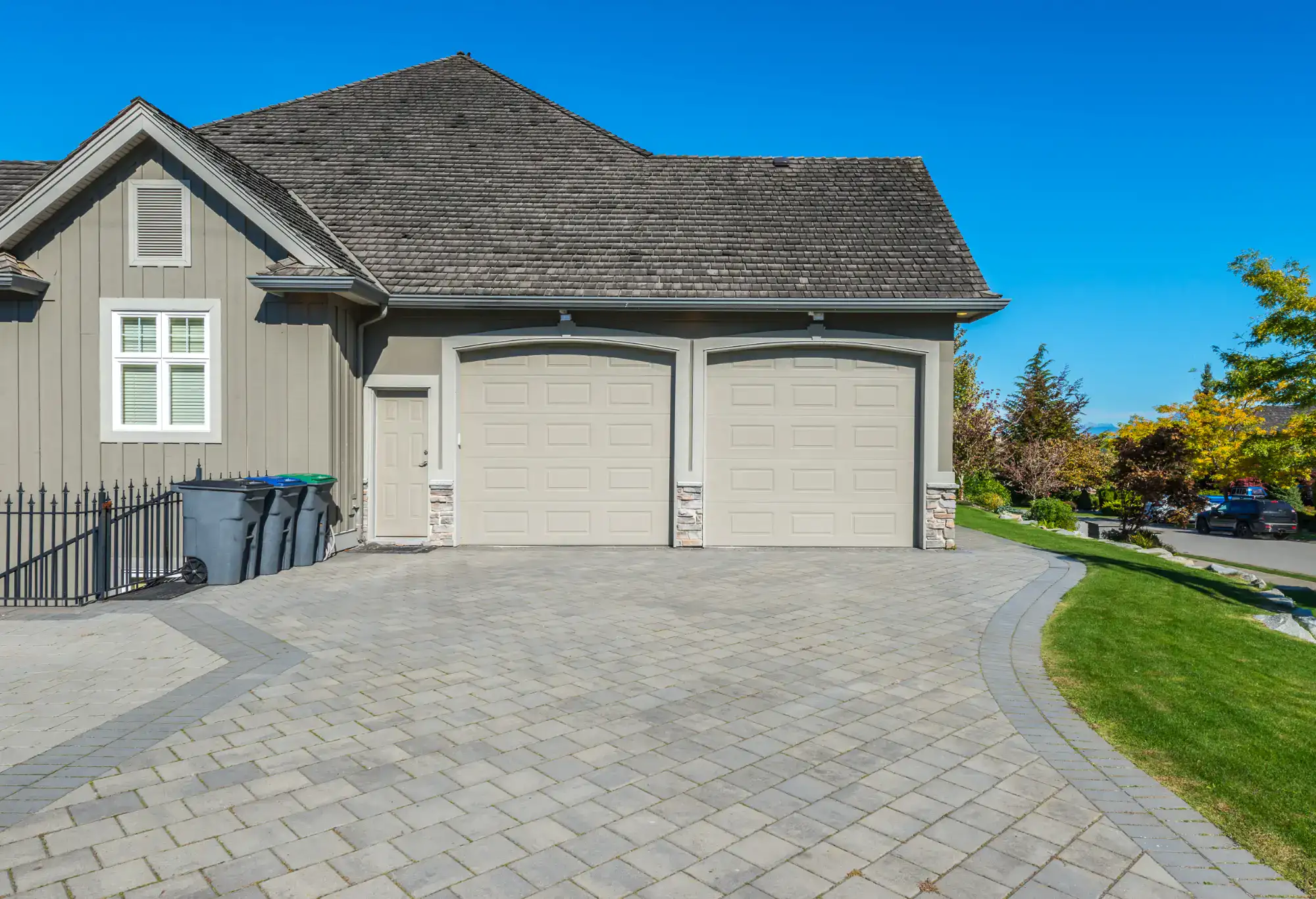
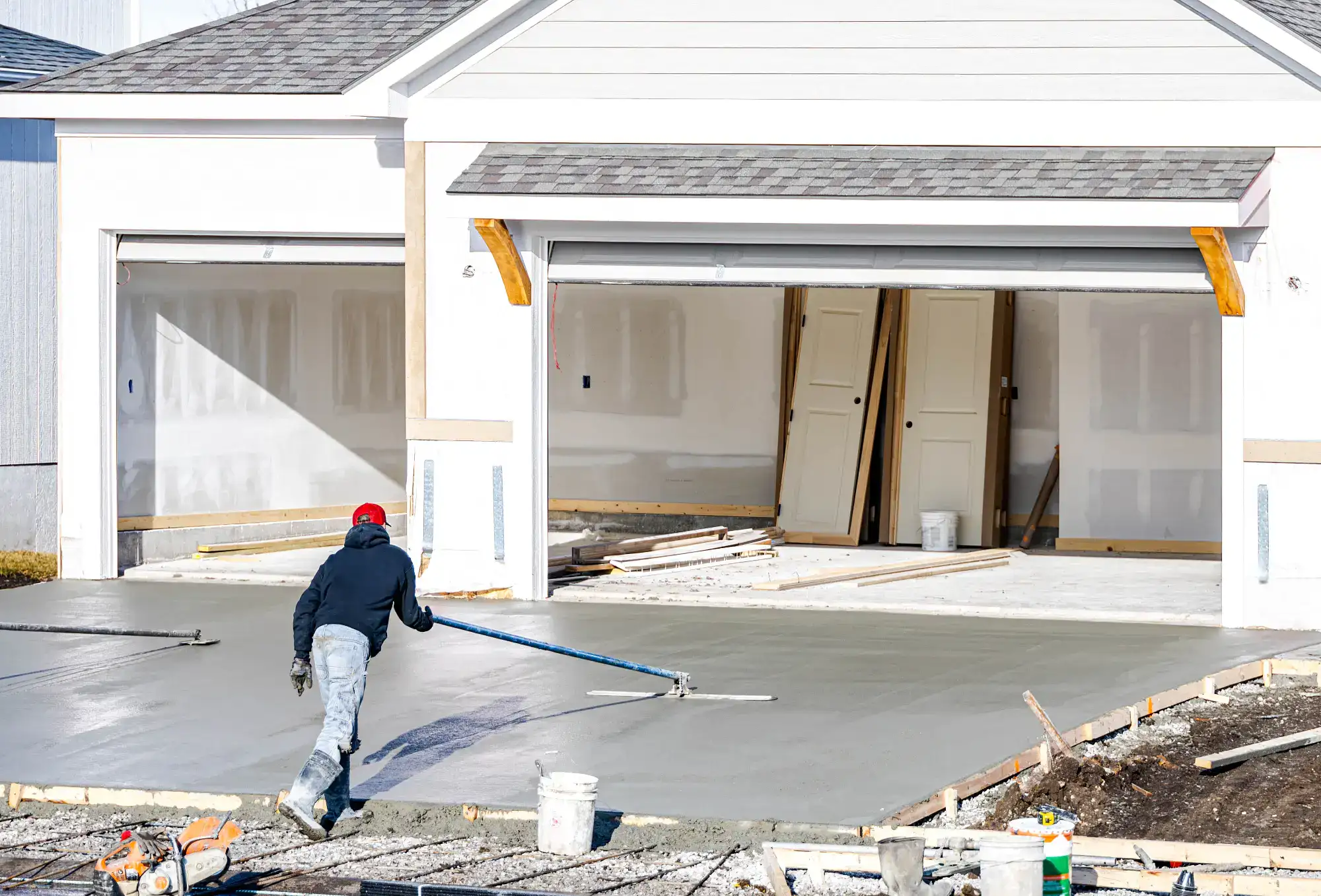
This distinction matters especially on projects like driveway and walkway paving, where the quality of the base prep, the drainage slope, the compaction, and the finishing all have to work together. If different crews handle different stages without consistent oversight, the result shows — usually a year or two later when the surface starts to fail.
Want live answers?
Connect with a Corsino Construction expert for fast, friendly support.
Cost is almost always the deciding factor, so let’s be direct about what the numbers actually look like. General contractor fees typically add 40 to 50 percent to the overall project cost — but that figure covers a lot: permitting, project management, material sourcing, sequencing of trades, quality oversight, and the transfer of liability from you to a licensed, insured professional.
For kitchen remodeling in Suffolk County, project costs typically range from $25,000 to $75,000 depending on scope and materials. Bathroom remodeling generally runs $15,000 to $40,000. These are the ranges we work within regularly, and they reflect real local pricing — not national averages adjusted with a multiplier.

The financial risk of DIY is real, but it’s not the only risk. There’s a physical one too. The CPSC recorded 4.5 million home and structure-related injuries in 2024 — and a meaningful portion of those happened to homeowners doing exactly what you’re considering. Ladder falls, power tool injuries, and electrical accidents aren’t hypothetical. They’re documented, and they happen to people who considered themselves reasonably capable before they started.
There’s also an insurance angle that rarely comes up until it matters. If you hire an unlicensed or uninsured worker — or if you complete work without the required permits — your homeowners insurance coverage can be voided for any claim related to that work. In Suffolk County, where homes routinely hold significant value, that’s a risk with real financial weight.
And then there’s the resale question. Long Island’s real estate market is active, and buyers and their attorneys know what to look for. Unpermitted work is a known deal-killer in Suffolk County transactions. It has to be disclosed, and it often has to be remediated before a sale can close — which means paying to redo work you already paid to do once, usually under time pressure and at a premium.
The permit process exists for good reasons. When a licensed contractor pulls permits and passes inspections, it creates a documented record that the work was done correctly and to code. That record protects you at resale, protects your insurance coverage, and protects the people living in the home.
One of the most common ways renovation costs spiral — whether you’re DIYing or hiring a subcontractor-based GC — is the absence of a fixed, written estimate that doesn’t change. DIY projects are subject to scope creep, unexpected conditions behind walls, and the cost of correcting early mistakes before you can move forward. Subcontractor-based GCs often operate on cost-plus models, where the final bill reflects whatever came up along the way.
A fixed-price estimate changes the dynamic entirely. Before work begins, you know exactly what materials are being used, what work is being performed, and what the total cost is. That number doesn’t change unless you change the scope. For homeowners who’ve heard stories about contractors who “kept finding more things wrong,” this is the difference between a renovation that fits your budget and one that blows past it.
In Suffolk County, where homes often date back to the 1950s through 1970s and aging infrastructure is genuinely common, unexpected conditions do come up. The difference is how they’re handled. With a fixed-price contractor, surprises are absorbed into the professional’s responsibility to scope the job accurately — not passed on to you as line items after the fact.
Living through a renovation is also something that rarely gets discussed in cost comparisons, but it matters. Daily job site cleanup, organized work areas, and a predictable schedule aren’t luxuries — they’re what allow you to stay in your home during construction without your daily life falling apart. That’s worth factoring in when you’re comparing options, because the alternative — moving out temporarily, or living in genuine chaos for weeks — has its own cost.
DIY can be the right answer for the right project. But for anything that requires permits, involves multiple trades, or carries real consequences if it’s done incorrectly — which describes most meaningful renovations in Suffolk County — the math usually favors hiring a licensed, in-house crew over attempting it yourself or handing it to a GC who’ll subcontract the work out.
The question worth asking isn’t just “how much will I save?” It’s “what happens if this goes wrong, and who’s accountable?” Those answers look very different depending on which path you choose.
If you’re weighing your options on a kitchen, bathroom, driveway, or any other renovation in Suffolk County, we’re happy to walk through the scope with you, give you a detailed written estimate, and let you make the call with real numbers in front of you. Reach out to Corsino Construction Corp by phone or text at 516-693-4270, Monday through Friday, 9am to 5pm.
Article details:
Share:
Continue learning: