Before you call anyone, there's one decision that shapes everything — and most homeowners skip it entirely.
Share:
Summary:
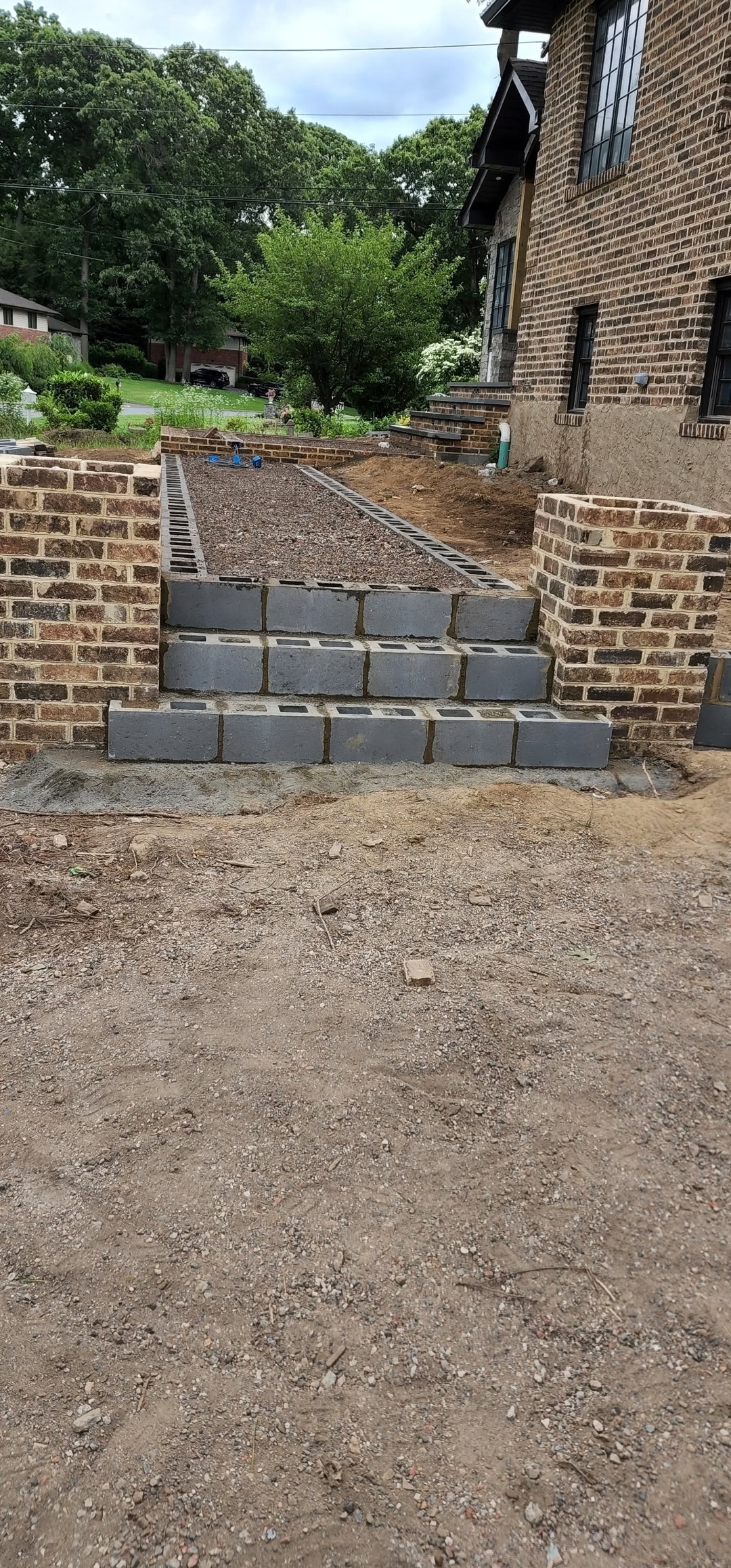
You know you want to do something with the backyard. Maybe you’ve been staring at a cracked concrete slab all winter. Maybe the kids are getting older and you want a real outdoor space before another summer slips by. Whatever the reason, you’ve started looking around — and now you’re not sure whether you want a deck, a patio, or even what the difference really is.
That’s where most people are when they start this process. And it’s exactly the right moment to slow down for a few minutes, because the decision you make here shapes everything that comes after — the cost, the contractor you need, the permits involved, and how long it actually lasts.
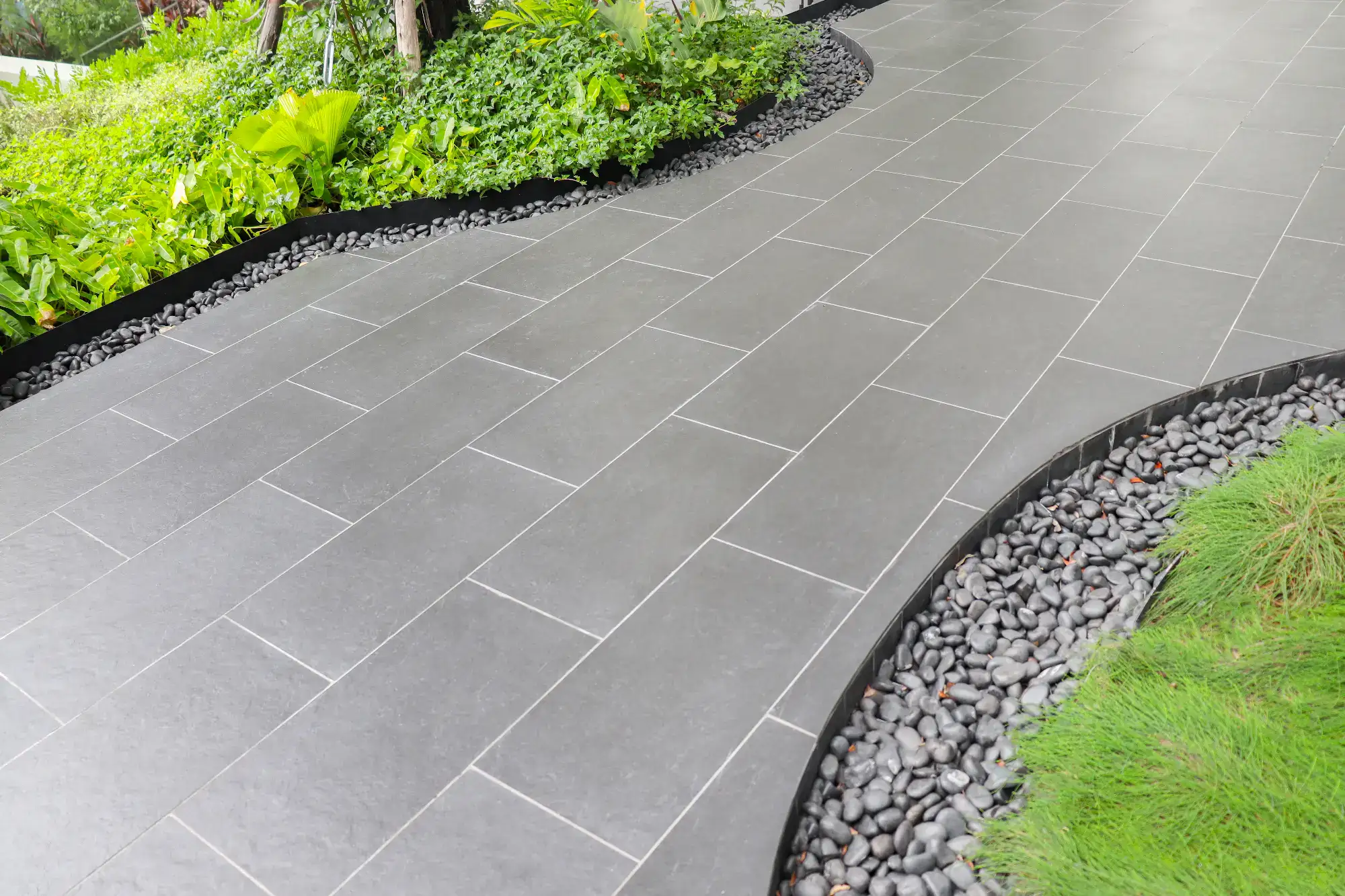
The simplest way to think about it: a deck is built above the ground, supported by posts and a frame structure underneath. A patio sits at or near ground level, typically made from concrete, pavers, or stone laid directly on a prepared base. That one difference — elevation — drives most of the other differences between the two.
Decks tend to work better on properties where the yard slopes away from the house, because you can build the structure level even when the ground isn’t. Patios work best on relatively flat ground where grading and drainage can be managed without major earthwork. Neither is universally better. The right choice depends on your yard, your budget, and what you actually plan to use the space for.
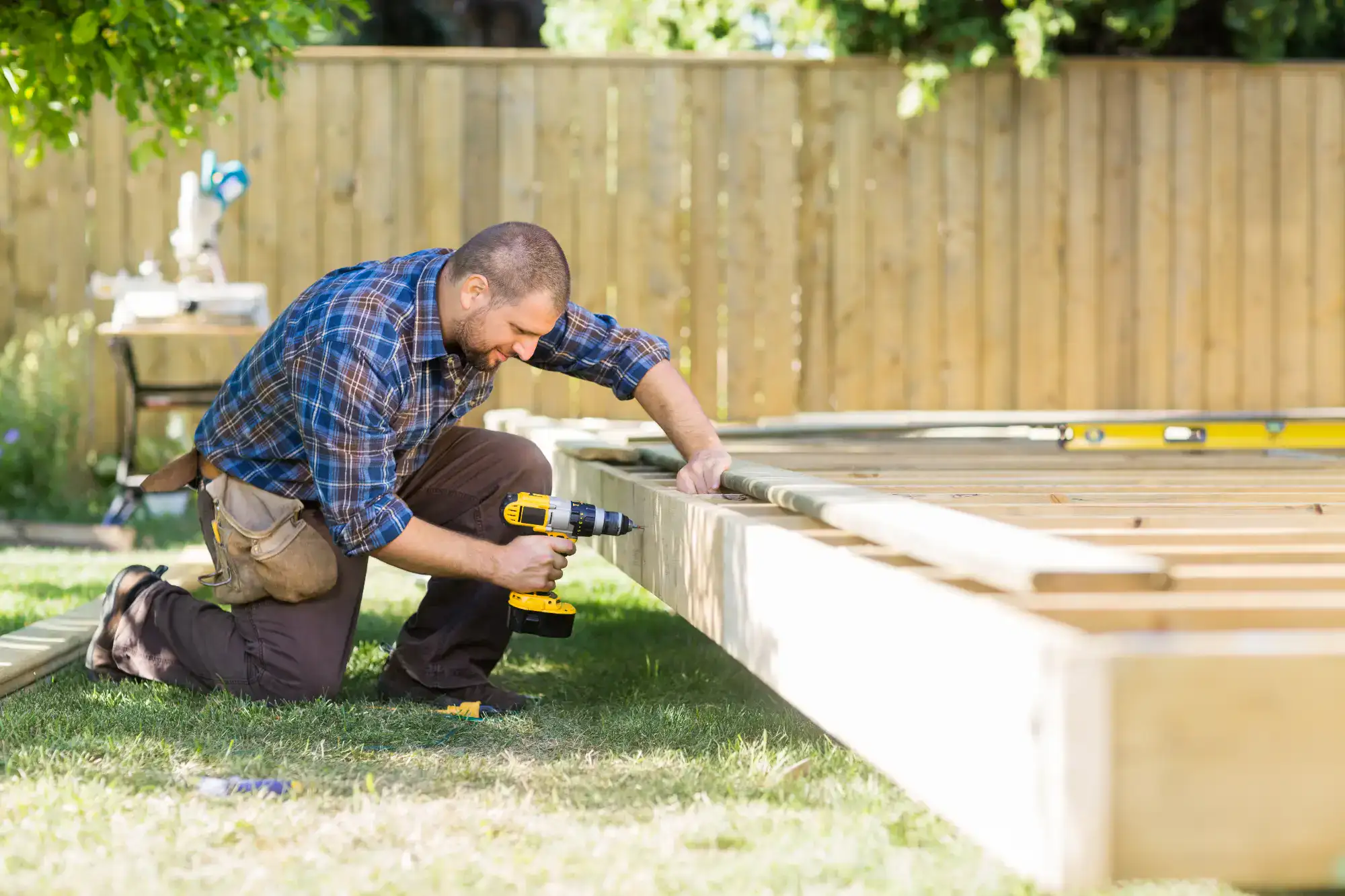
Generally speaking, patios cost less upfront than decks. Patio installation in Suffolk County typically runs between $1,500 and $7,000 depending on size, materials, and site conditions. Decks involve more structural work — footings, framing, ledger connections to the house — which pushes costs higher, especially for elevated builds.
That said, the cost comparison isn’t always as clean as it looks on paper. A patio on a yard that needs significant grading, drainage correction, or retaining walls can get expensive quickly. A simple ground-level deck on flat terrain might not be as far apart in price as you’d expect. The honest answer is that you need a site-specific estimate to know what either option will actually cost on your property.
What’s worth keeping in mind is the long-term picture. A well-installed patio can recoup more than 80% of its cost in home value, and some simpler concrete installations recover close to 95% according to NAR research. A professionally installed patio can even yield a return that exceeds what you put in — a HomeLight survey cited by U.S. News Real Estate found that a new patio costing around $3,269 to build brought an estimated $3,563 increase in home value. In a market like Suffolk County, where home values are well above national medians, that math matters.
Decks carry their own ROI, but the numbers tend to be lower — wood decks recoup around 50% of their cost on average, and composite decks a bit less than that, according to the 2023 Cost vs. Value Report. That doesn’t make a deck the wrong choice. It just means the decision shouldn’t be made on ROI alone.
The real cost question isn’t deck vs. patio in the abstract. It’s what does each option actually cost on your specific lot, and which one gives you the outdoor space you’ll actually use.
Long Island’s winters cycle above and below freezing repeatedly throughout the season. That freeze-thaw pattern is hard on hardscaping — it causes improperly installed concrete to crack, pavers to shift, and deck footings to heave if they weren’t set deep enough.
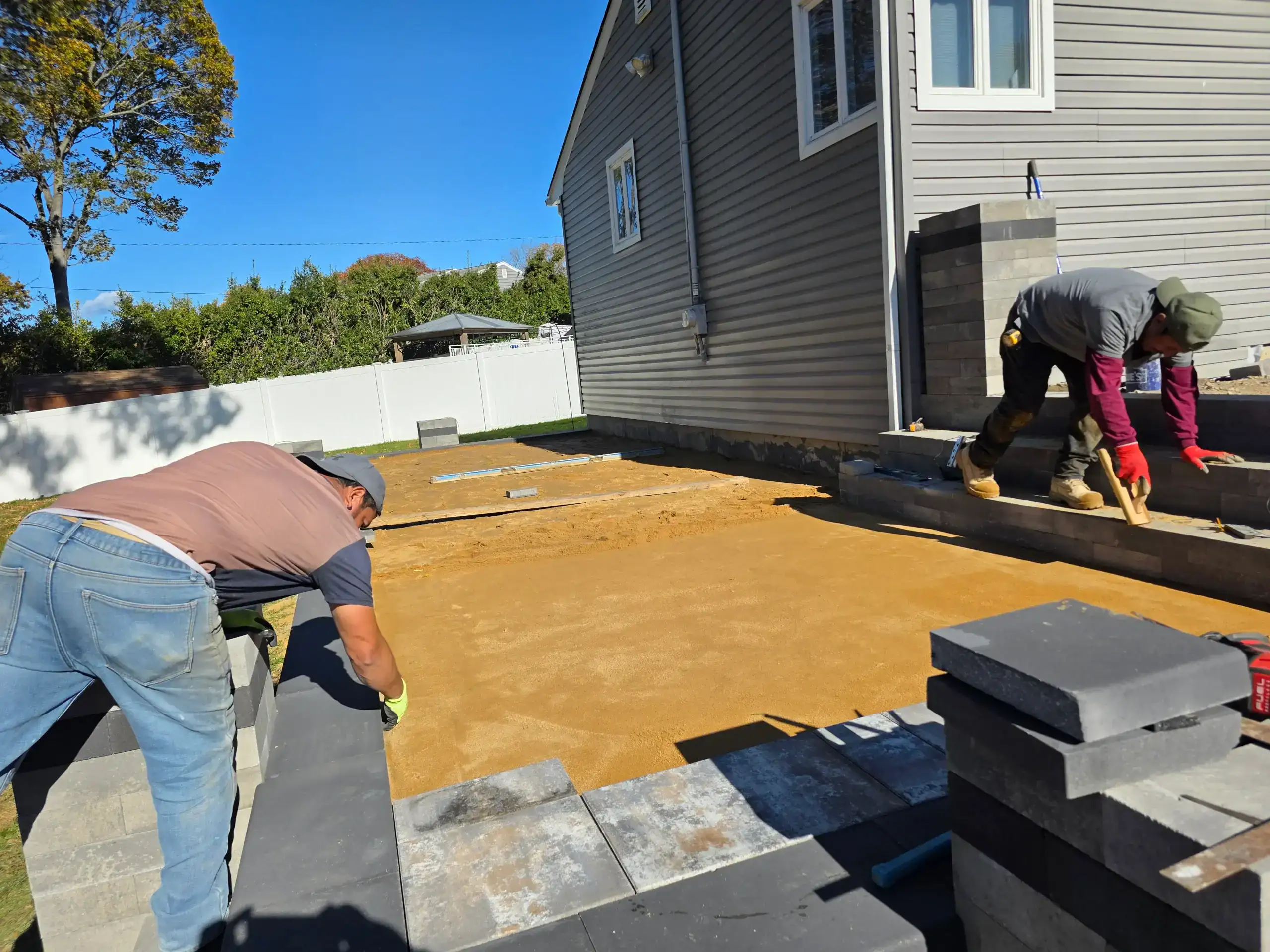
For patios specifically, the base preparation matters enormously. A paver patio that looks perfect in June can start showing movement by the following spring if the gravel base wasn’t compacted properly or the drainage wasn’t graded away from the house. Suffolk County’s soil composition adds another layer — certain areas drain poorly, which means water can sit under a patio surface and accelerate freeze-thaw damage.
Coastal proximity is a factor too. If your property is near the South Shore, the Sound, or anywhere in the Hamptons or East End, salt air is a real consideration for material selection. Wood decks require specific species and treatment levels to hold up in those conditions. Not all composite decking is rated for coastal exposure either — the brand and line matter, not just the category.
This is where local experience genuinely earns its keep. A contractor who has been working in Suffolk County for years knows which materials hold up on the South Shore versus an inland neighborhood like Coram or Selden. They know how deep footings need to go to get below the frost line, and they know how to grade a patio surface so water moves away from your foundation instead of toward it. That knowledge isn’t something you can look up in a product brochure — it comes from doing this work here, in this specific climate, for a long time.
Want live answers?
Connect with a Corsino Construction expert for fast, friendly support.
Once you have a general sense of what you want, the next step is finding the right person to build it. This is where a lot of homeowners run into trouble — not because they made a bad choice on purpose, but because they didn’t know what to look for before they signed.
There are a handful of questions that separate a straightforward project from a stressful one. None of them are complicated. But most people don’t think to ask them until something has already gone wrong.
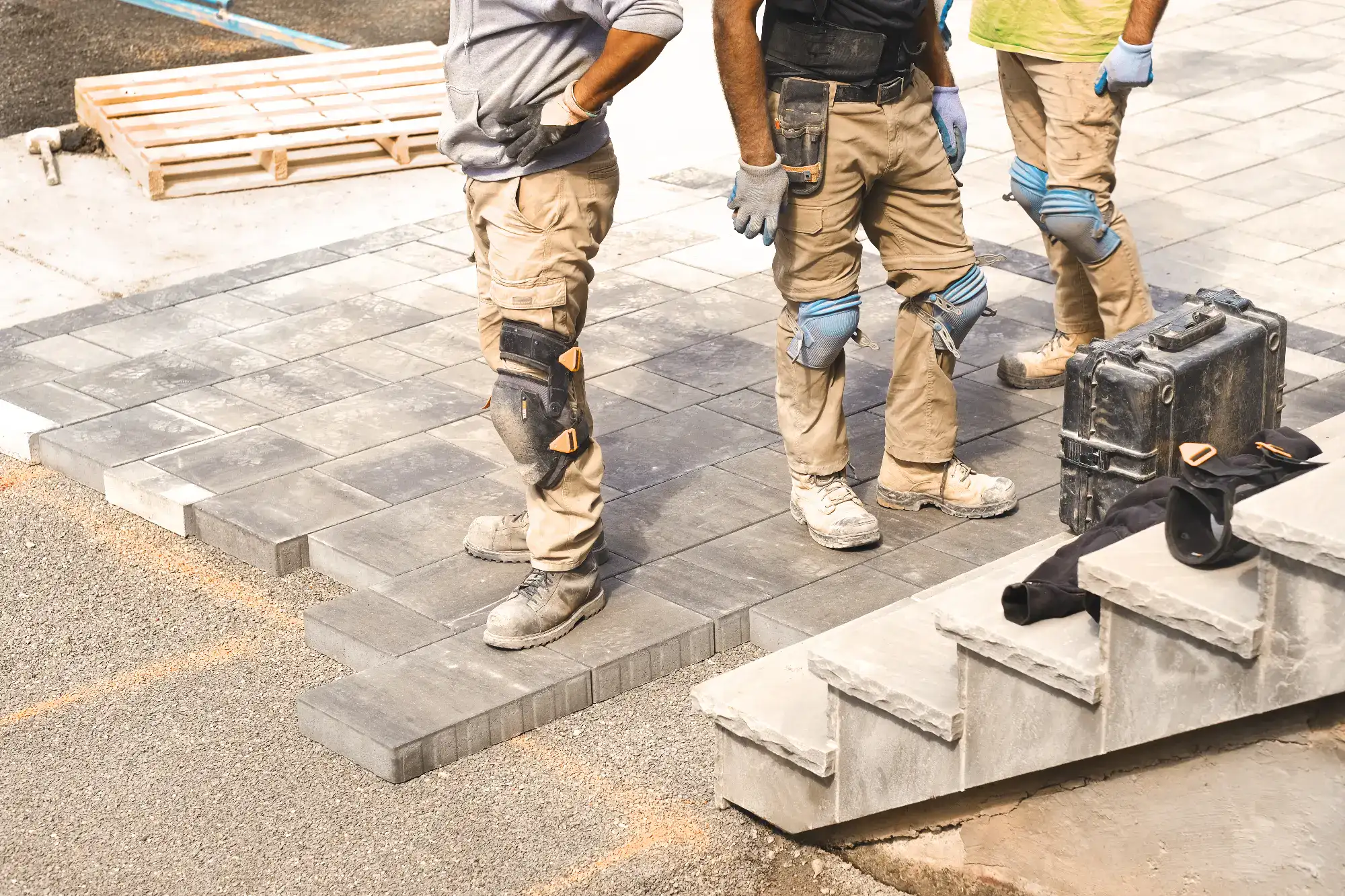
For patios: it depends. Smaller patio installations in Suffolk County often don’t require a permit, but larger projects — or those that affect drainage patterns or impervious surface coverage on your lot — can trigger permit requirements. Assuming you’re in the clear without checking is a risk that can cause real problems when you go to sell the house.
For decks: permits are always required. Every town in Suffolk County requires building permits and construction drawings for deck installation, and the documentation requirements are specific. At minimum, you’ll typically need a plot plan showing the deck footprint and setbacks from property lines, construction drawings with footing sizes and joist layout, and a material spec sheet. Some towns, including Brookhaven and Huntington, also ask for a site photograph showing existing conditions before work begins.
What makes Suffolk County’s permit process more complicated than most markets is that it’s not a single system. The county has its own Home Improvement Contractor (HIC) license requirement — issued by the Department of Consumer Affairs — but each of the county’s 10 towns has its own building department with its own process. A homeowner in Huntington deals with the Town of Huntington Building Department. A homeowner in Coram deals with the Town of Brookhaven. And if you’re in East Hampton, Southampton, or Shelter Island, those towns require their own separate contractor licenses on top of the county credential.
A contractor who tells you permits aren’t their problem is a contractor who’s leaving you exposed. We handle the permit process as part of every job — pulling the right permits for your specific town, managing inspections, and making sure the finished project is code-compliant from day one.
Start with the basics: verify that the contractor holds a valid Suffolk County HIC license. This isn’t optional — it’s a legal requirement for home improvement work in the county, and it confirms the contractor carries proper insurance and has demonstrated financial responsibility. You can verify a contractor’s license status through the Suffolk County Department of Consumer Affairs.
Beyond the license, there are a few things worth asking directly. Find out whether the crew doing the work is employed by the contractor or hired out as subcontractors. This matters more than most homeowners realize. When a contractor uses subcontractors, accountability gets diffuse — if something goes wrong, the question of who’s responsible becomes a negotiation. When the same team that shows up on day one finishes your project, there’s no finger-pointing between trades. You know exactly who to call.
Ask how the estimate is structured. A written, itemized estimate that locks in the full scope of work protects you from change orders that inflate the final bill. Verbal quotes and vague line items are how projects end up costing significantly more than the homeowner expected. A contractor who won’t put the full price in writing before work begins is a contractor worth walking away from.
Ask about cleanup during construction. If the project runs multiple days — and most patio and deck installs do — you need to know what the job site looks like at the end of each workday. Some contractors leave debris and materials scattered until the project wraps. Others clean up daily so you can actually use your yard and live in your house without navigating a construction zone.
Finally, ask about the warranty. Any reputable contractor should be able to tell you clearly what’s covered after the project is complete, for how long, and what the process is if something needs attention. If the answer is vague, that’s useful information too.
None of these questions are confrontational. A contractor who does good work and runs a clean operation will answer all of them without hesitation.
The deck vs. patio decision doesn’t have to be complicated — but it does need to be made before you start calling contractors, because it changes everything from the permit requirements to the materials to what the finished project will actually cost on your specific lot. Take the time to think through your yard’s grade, your budget, how you plan to use the space, and what Suffolk County’s climate means for material longevity. That preparation makes every conversation with a contractor more productive.
When you’re ready to talk specifics, Corsino Construction Corp has been doing this work in Suffolk County since 2000. We use in-house licensed crews — no subcontractors — and we handle permits, inspections, and daily cleanup as part of every project. Our estimates are written, itemized, and fixed. No surprises halfway through.
If you have questions or want to get a quote, reach out to us directly. We get back to every inquiry within 24 to 48 hours, and we’re happy to walk through the options with you before you commit to anything.
Article details:
Share:
Continue learning: