Rotting boards, wobbly railings, or just an outdated layout — figuring out what your deck actually needs can feel overwhelming. Here's how to think through it.
Share:
Summary:
You noticed something’s off with your deck. Maybe a board gave a little too much underfoot. Maybe the railing wobbled when you leaned on it. Maybe you’re just looking at the thing and thinking — is it worth saving, or should I tear it out and start over?
That’s exactly where most homeowners in Suffolk County find themselves. And the honest answer is: it depends on things most contractor websites won’t bother to explain. So before you call anyone, here’s a straightforward breakdown of what deck remodeling actually means, when replacement is the smarter call, and how Long Island’s specific conditions factor into the decision.
Deck remodeling gets used loosely, so it’s worth being specific. Remodeling means making meaningful changes to your existing deck — not just slapping new boards over old ones. That could mean reconfiguring the layout, upgrading the railing system, adding stairs, switching from pressure-treated wood to composite decking, or expanding the footprint to better fit how you actually use your yard.
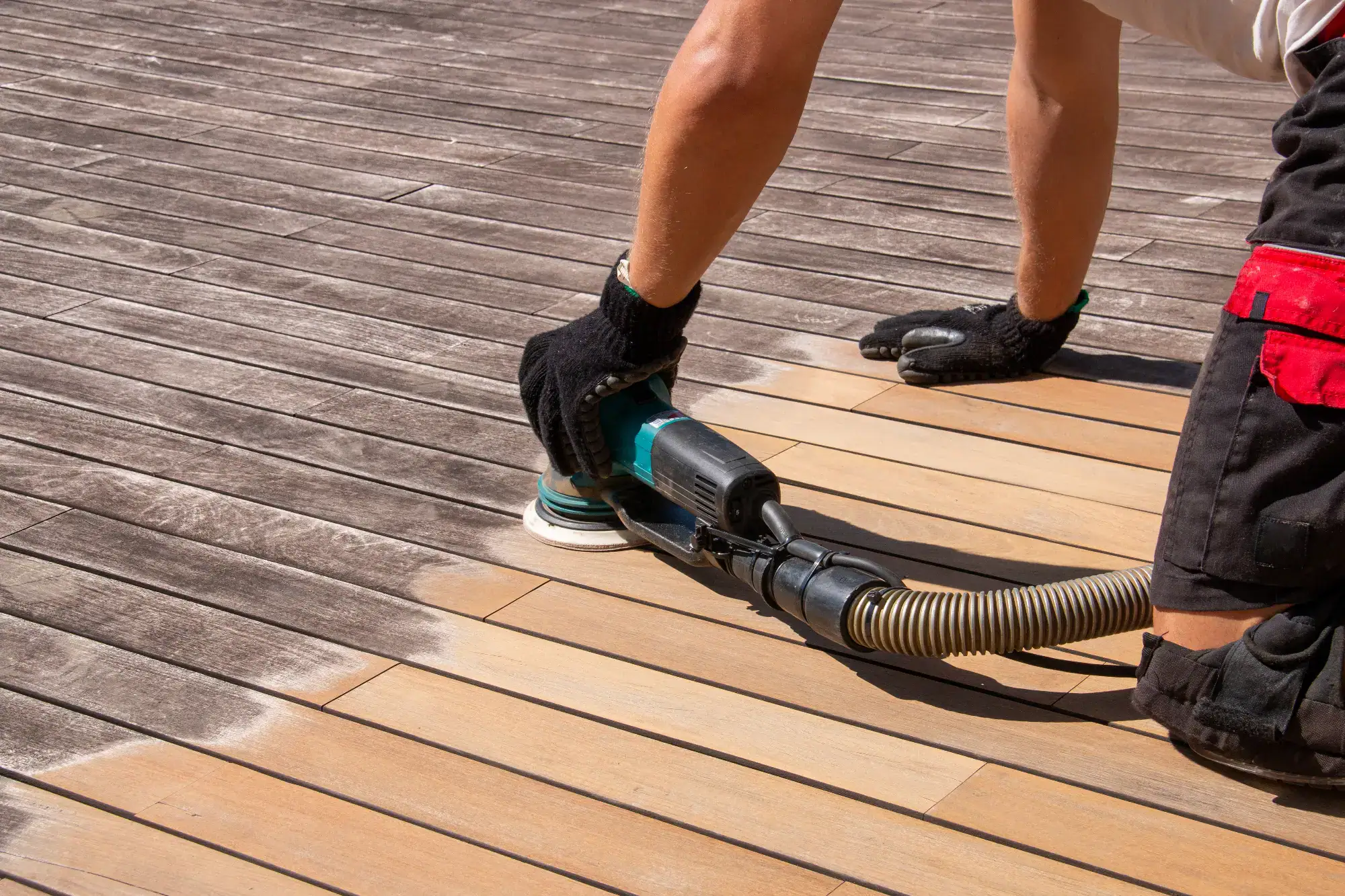
It’s different from resurfacing, which only replaces the surface boards without touching the structure underneath. Resurfacing can work, but only when the framing, posts, ledger board, and footings are still sound. If the bones are compromised, resurfacing just hides the problem — and that’s a much bigger issue in Suffolk County than most people realize.
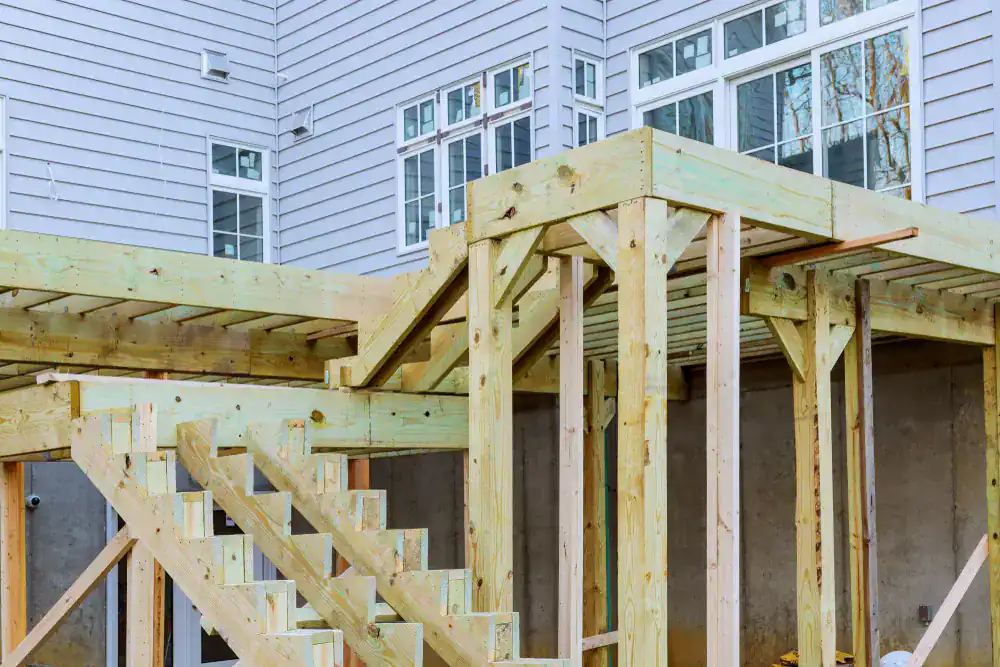
This is the question that most homeowners can’t answer on their own — and it’s the most important one. The surface of a deck can look fine while the structure underneath is quietly failing. The components that matter most are the ones you can’t easily see: the ledger board where the deck connects to your house, the post bases and footings below grade, the joists and beams carrying the load.
In Suffolk County, these hidden components take a beating that homeowners in drier, more inland climates simply don’t deal with. Salt air accelerates corrosion on metal fasteners and hardware. Freeze-thaw cycles — and we get real ones here — stress footings and cause frost heaving, especially on older decks that weren’t built with footings below the 36-inch frost line required in New York. In central Suffolk communities like Coram, Medford, and Holbrook, clay-heavy soil drains poorly and shifts more than sandy soil, which puts additional pressure on post bases over time.
A deck that was built in the 1980s or early 1990s — which describes a lot of homes in Babylon, Huntington, Islip, and Brookhaven — is likely at or past the 20-year threshold where structural rebuilding is typically recommended. That doesn’t automatically mean tear it down, but it does mean the structure needs a real inspection before anyone talks about remodeling or resurfacing.
One useful tip: walk the perimeter after a heavy rain. Water pooling under the deck or against the ledger board is a warning sign that drainage issues are already doing damage.
The honest answer to whether your deck is worth saving comes down to one number: if the cost to properly repair the structural problems exceeds 50 to 60 percent of what a full replacement would cost, replacement is almost always the better investment. You’re not saving money by patching a failing structure — you’re just delaying the same conversation while the damage gets worse.
If the structure checks out — solid ledger connection, footings at proper depth, posts and joists without rot or significant deterioration — then remodeling is absolutely worth considering. You’re not paying to rebuild what’s already working. You’re upgrading what’s visible and functional, and you’re doing it on a foundation that still has years of life left.
Common remodeling scenarios that make sense: the framing is solid but the surface boards are worn and splintering, the layout no longer fits how the family uses the yard, the railing system is outdated or doesn’t meet current code, or the homeowner wants to switch materials — typically from pressure-treated wood to composite — to reduce long-term maintenance.
That last point matters a lot for Long Island specifically. Composite decking has improved significantly, and for homes near the water — the South Shore, the Hamptons, waterfront communities along the Sound — it’s not just a lifestyle preference, it’s a practical one. Composite resists moisture, salt air, and the kind of temperature swings we get from January through April without warping, splitting, or requiring the annual maintenance cycle that pressure-treated wood demands. If you’re tired of power washing and re-staining every season, a remodel that switches your surface material can change the whole relationship you have with your deck.
One thing to keep in mind: if your deck remodel involves structural changes — expanding the footprint, modifying the framing, or altering the connection to the house — you’ll need a permit. In Suffolk County, that means working through your town’s building department. Each of the ten towns (Babylon, Brookhaven, Huntington, Islip, Riverhead, Smithtown, Southampton, Southold, East Hampton, and Shelter Island) runs its own permit process with its own setback rules and inspection requirements. Permit timelines can add two to four weeks to a project start, which is worth factoring into your planning — especially if you’re trying to have everything done before summer.
Want live answers?
Connect with a Corsino Construction expert for fast, friendly support.
At some point in this research process, most homeowners start wondering whether they should just skip the deck conversation entirely and put in a patio instead. It’s a fair question — and one worth taking seriously rather than dismissing.
Nationally, the average deck build runs around $8,220, while a patio averages closer to $4,000. But those numbers don’t tell the whole story, and they definitely don’t reflect Long Island’s labor market and material costs. What they do reflect is a real difference in scope, and that difference matters when you’re deciding how to spend your money.
From a resale standpoint, a wood deck recoups roughly 95 percent of its cost, and a composite deck comes in around 89 percent, according to Cost vs. Value data. A paver patio returns closer to 69 percent. On paper, the deck wins. But the math is a little more nuanced than that.
A $3,000 patio at 69 percent recoup and an $18,000 deck at 95 percent recoup both result in roughly similar dollar losses at resale — the difference is how much you put in upfront, and how much you’re getting out of the space in the years in between. If you’re in a Hamptons or South Shore community where outdoor living is a genuine selling point and buyers expect a well-finished deck, replacement with quality materials is usually the right call. If you’re on a tight budget and your yard is mostly at grade, a well-built patio can deliver real value without the maintenance overhead.
Maintenance is where patios have a real advantage over wood decks. Pressure-treated wood needs power washing annually and staining or sealing every two years to hold up in Long Island’s climate. A concrete or paver patio needs far less attention. That ongoing cost difference is worth calculating over a ten-year horizon, not just at the point of installation.
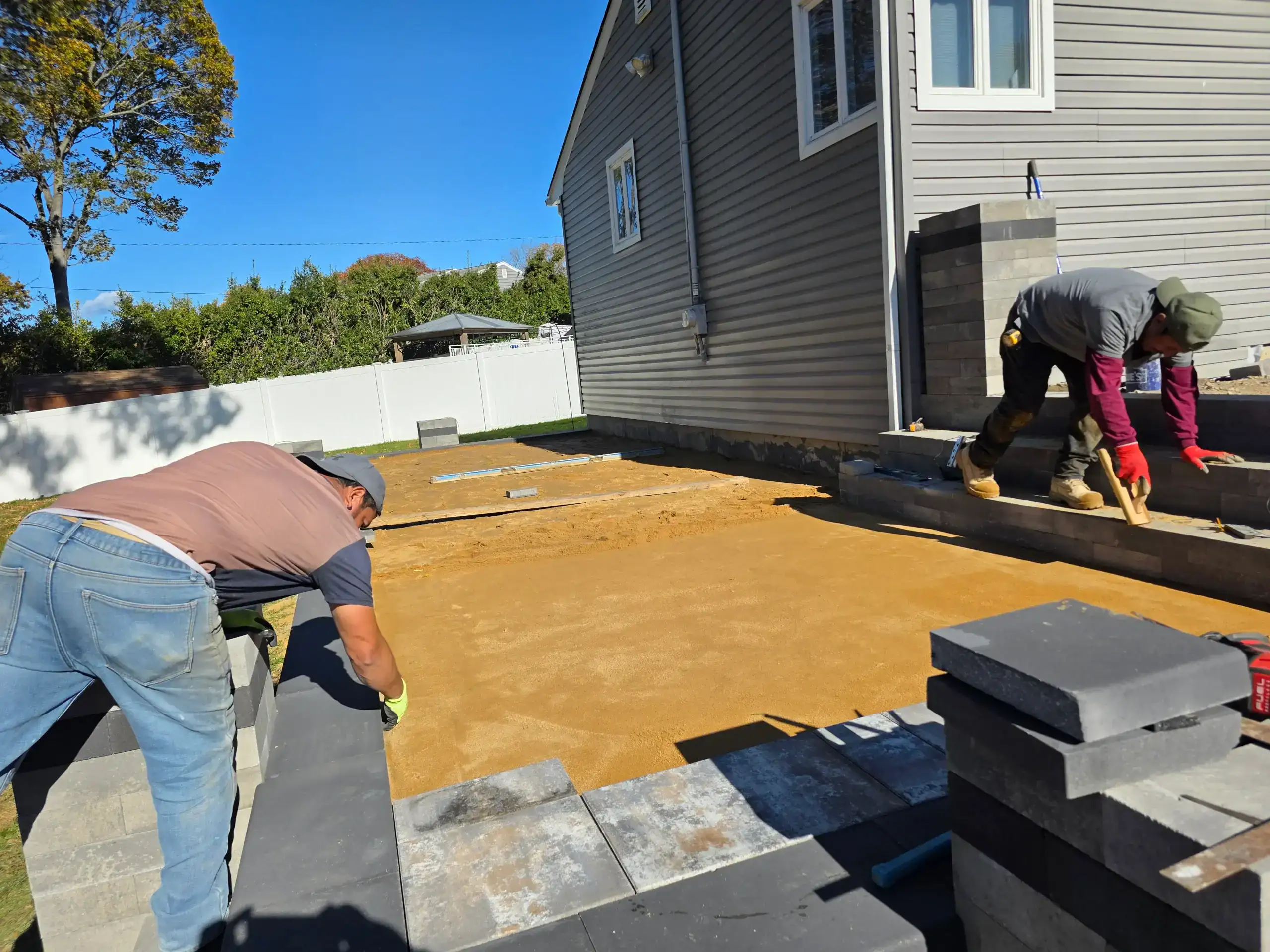
Material costs vary significantly depending on what you choose. Poured concrete typically runs $5 to $15 per square foot installed. Paver patios run $10 to $17 per square foot. Wood decking comes in at $25 to $50 per square foot installed. For Long Island specifically, pressure-treated decking boards run $3 to $5 per linear foot at local suppliers — but by the time you factor in labor, permits, and framing, the total cost climbs considerably above the material price alone.
Replacing a deck with a patio makes the most sense when the deck is at or near grade level, when the homeowner is genuinely tired of wood maintenance, or when the budget favors a lower upfront cost. It also makes sense when the existing deck has structural problems significant enough to warrant full demo anyway — at that point, you’re already starting from scratch, and the patio option deserves a real look.
It makes less sense for elevated decks — situations where the deck provides access to a raised entry, overlooks a sloped yard, or sits well above grade. Converting an elevated deck to a patio requires significant grading, drainage planning, and base prep work that can close the cost gap quickly. In those cases, the practical and financial case for staying with a deck is usually stronger.
For coastal communities in Suffolk County — East Hampton, Southampton, Westhampton Beach, and the barrier island communities — there are additional considerations. East Hampton, for example, has strict coastal setback requirements and stormwater management rules that apply to both decks and patios. What you can build, where you can build it, and how drainage is handled are all subject to local review. That’s not a reason to avoid the project; it’s a reason to work with someone who knows the local code and has navigated those departments before.
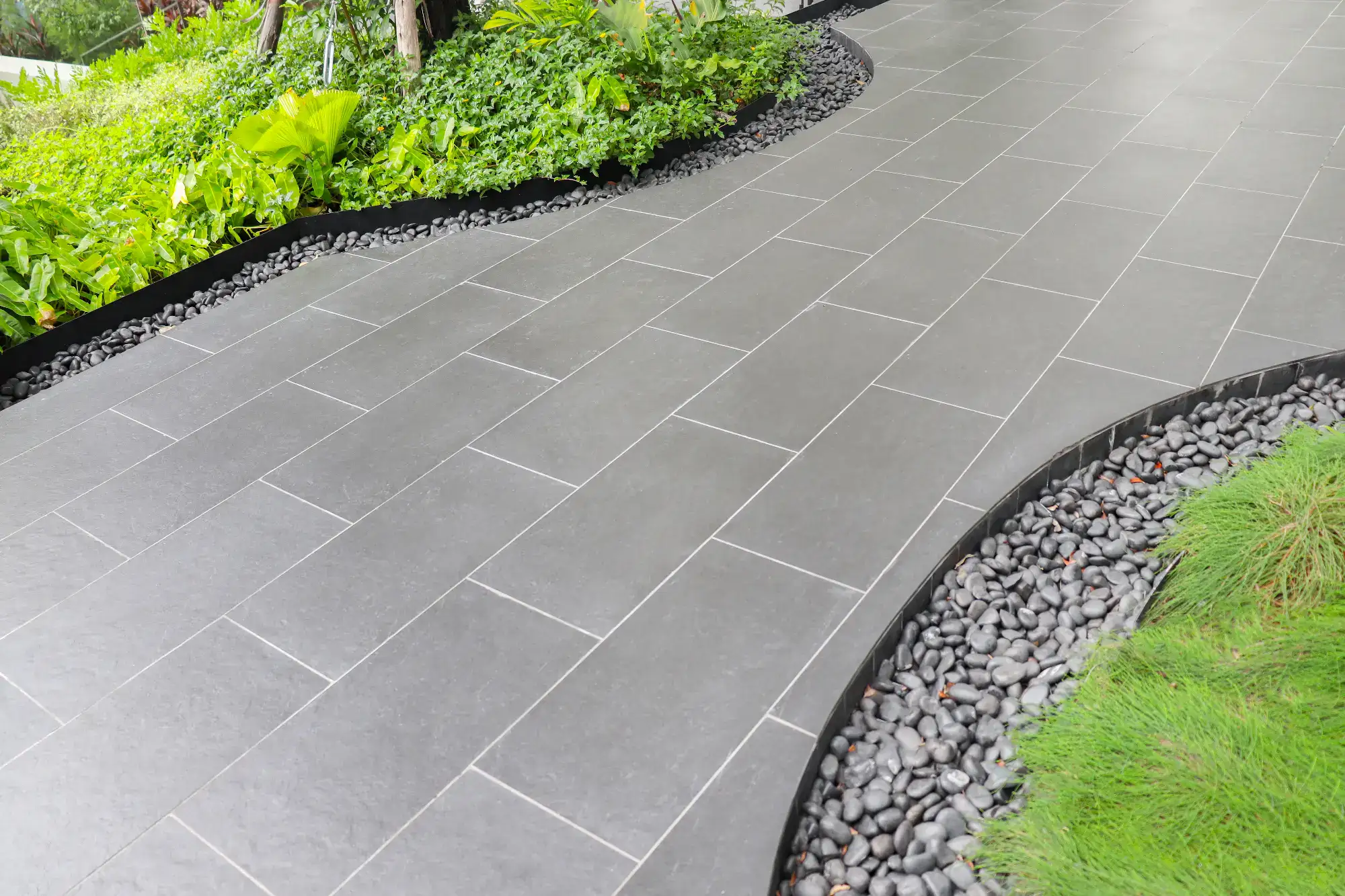
Bluestone is worth mentioning here specifically for East End homeowners — it’s a popular and durable patio material in the Hamptons that holds up well to the coastal environment and fits the architectural character of the area. For central Suffolk communities dealing with clay soil drainage issues, proper base preparation and drainage planning matter more than material selection alone. A patio that drains poorly in Holbrook or Medford becomes a maintenance problem of its own.
The bottom line: the deck-versus-patio question doesn’t have a universal answer. It depends on your yard, your budget, how you use the space, and what the local building requirements allow. We’ll give you an honest comparison rather than steering you toward whichever option we happen to specialize in.
Here’s what it comes down to: start with the structure. Before you decide on remodeling, resurfacing, replacing, or converting to a patio, you need to know what you’re actually working with underneath. A deck that looks rough on the surface might have years of life left in the frame. One that looks passable might be one hard winter away from a serious problem.
Long Island’s climate — the salt air, the freeze-thaw cycles, the clay soil in central Suffolk — means the standard advice you’ll find in national guides doesn’t always apply here. Material choices, permit requirements, and structural lifespan all play out differently when you’re in Coram, Huntington, Bay Shore, or East Hampton than they do in a dry inland market.
We’ve been doing this work in Suffolk County since 2000. We handle everything from the initial assessment through permits, materials, and construction — with the same in-house crew from start to finish, and a written estimate that doesn’t change once the work begins. If you’re working through this decision and want a straight answer, we’re here to help.
Article details:
Share:
Continue learning: