Professional patio contractors bring expertise that prevents the drainage failures, structural problems, and safety hazards that plague most DIY patio projects in Suffolk County.
Share:
Summary:
Professional masonry contractors don’t just lay pavers on the ground. We engineer outdoor living spaces that handle real-world conditions.
The work starts below the surface. Proper excavation accounts for your specific soil type, local frost lines, and drainage patterns. In Suffolk County, that means dealing with clay soil that holds water and shifts with seasonal moisture changes.
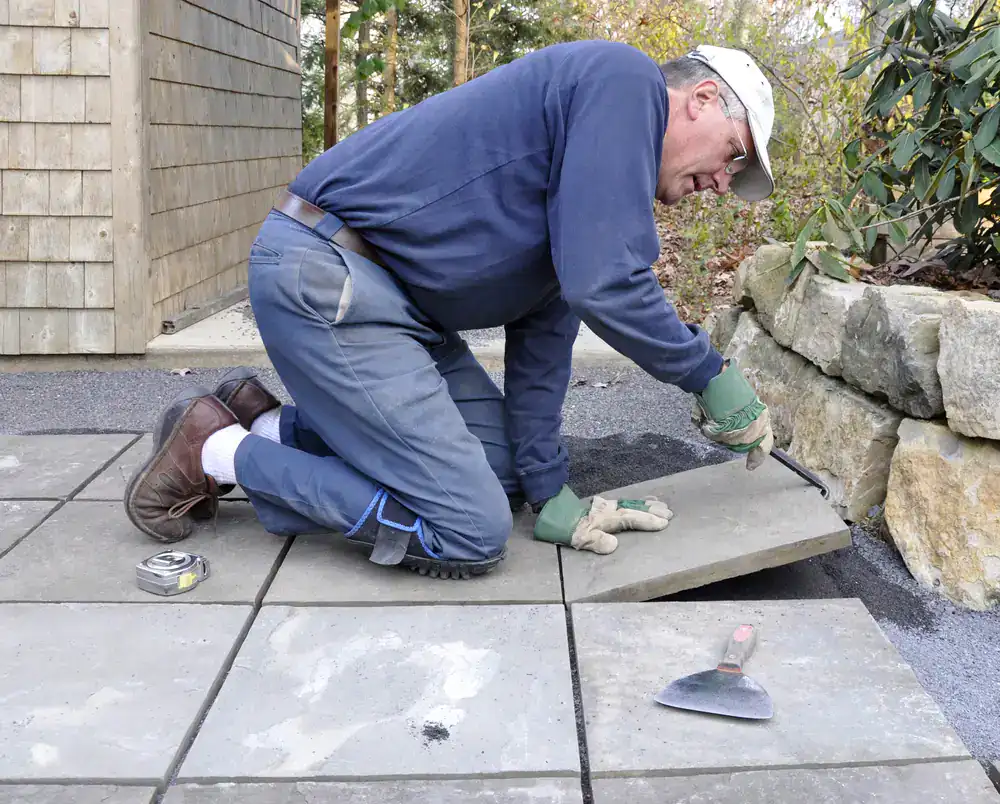
A specialized patio contractor knows these conditions intimately. We’ve seen what happens when shortcuts get taken. We understand that the base preparation—the part nobody sees—determines whether your patio lasts five years or twenty-five years.
Most DIY patio failures trace back to one problem: inadequate base preparation. You can’t see it once the pavers go down, but improper compaction guarantees future headaches.
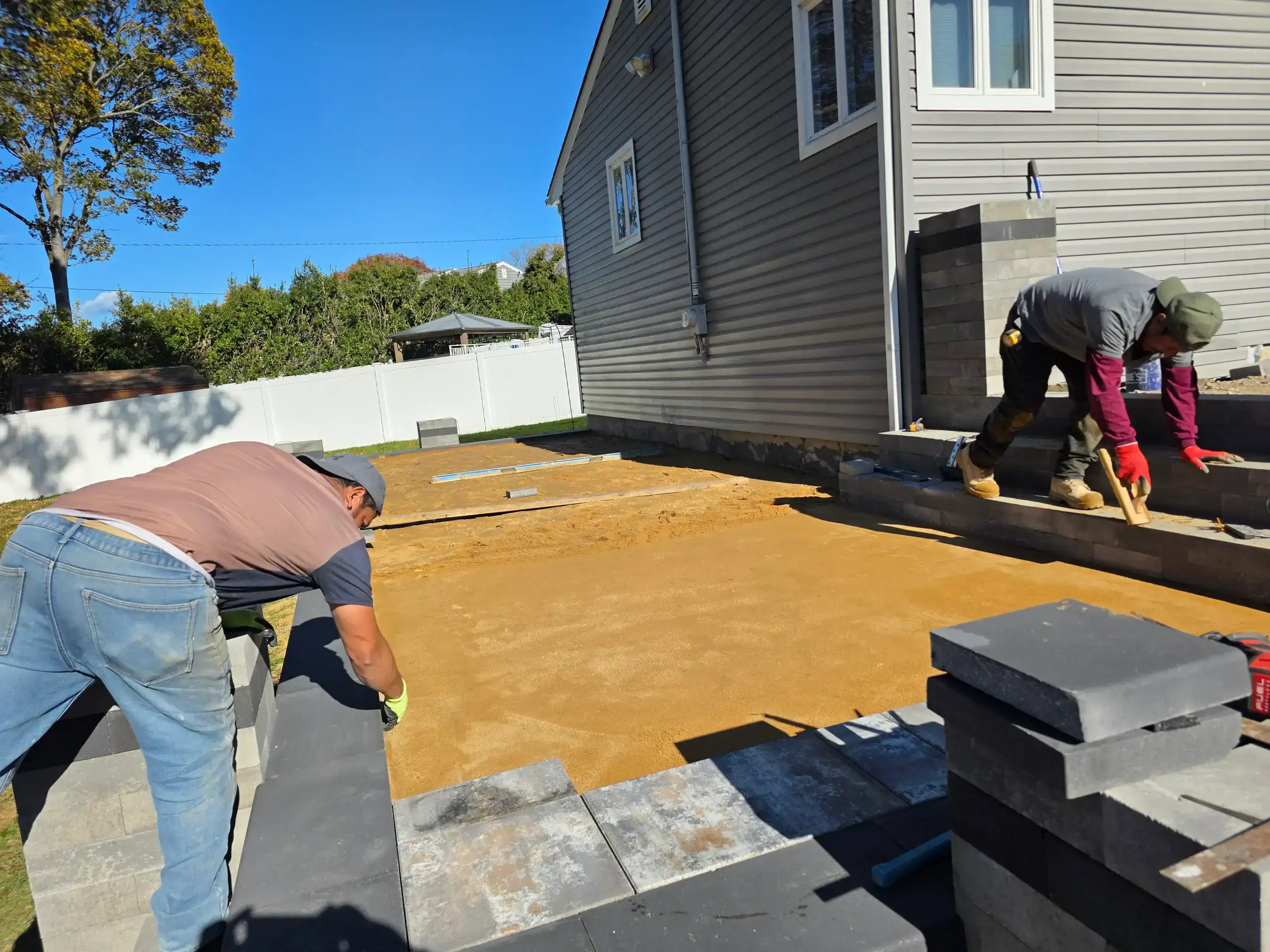
Professional patio contractors use plate compactors that deliver 3,500 pounds of pressure per square inch. We compact in layers, wetting and re-compacting until the base is rock solid. This isn’t optional equipment you can skip—it’s the difference between a stable surface and one that sinks unevenly over time.
The base itself requires specific materials. Many DIYers use dirt because it’s readily available. That’s a critical mistake. Dirt shrinks during compaction and continues moving afterward, dislodging pavers and creating uneven surfaces. We use crushed stone or recycled concrete aggregate, installed in two to three-inch lifts and compacted between each layer.
Depth matters too. Suffolk County’s freeze-thaw cycles demand deeper excavation than you’d need in warmer climates. We typically excavate six to eight inches, then build up a four to six-inch compacted base topped with leveling sand. Skip any of these steps, and you’re looking at repairs within a few years.
Your soil type changes everything about base preparation. Clay-rich soil holds water and becomes unstable. Sandy soil erodes easily. A professional patio contractor analyzes your specific conditions and adjusts the approach accordingly. Sometimes that means additional stabilization measures like geotextile fabric. Sometimes it requires modified drainage solutions. You won’t know until someone with experience evaluates your site.
Water is your patio’s biggest enemy. Get drainage wrong, and you’re not just dealing with a failing patio—you’re risking foundation damage to your home.
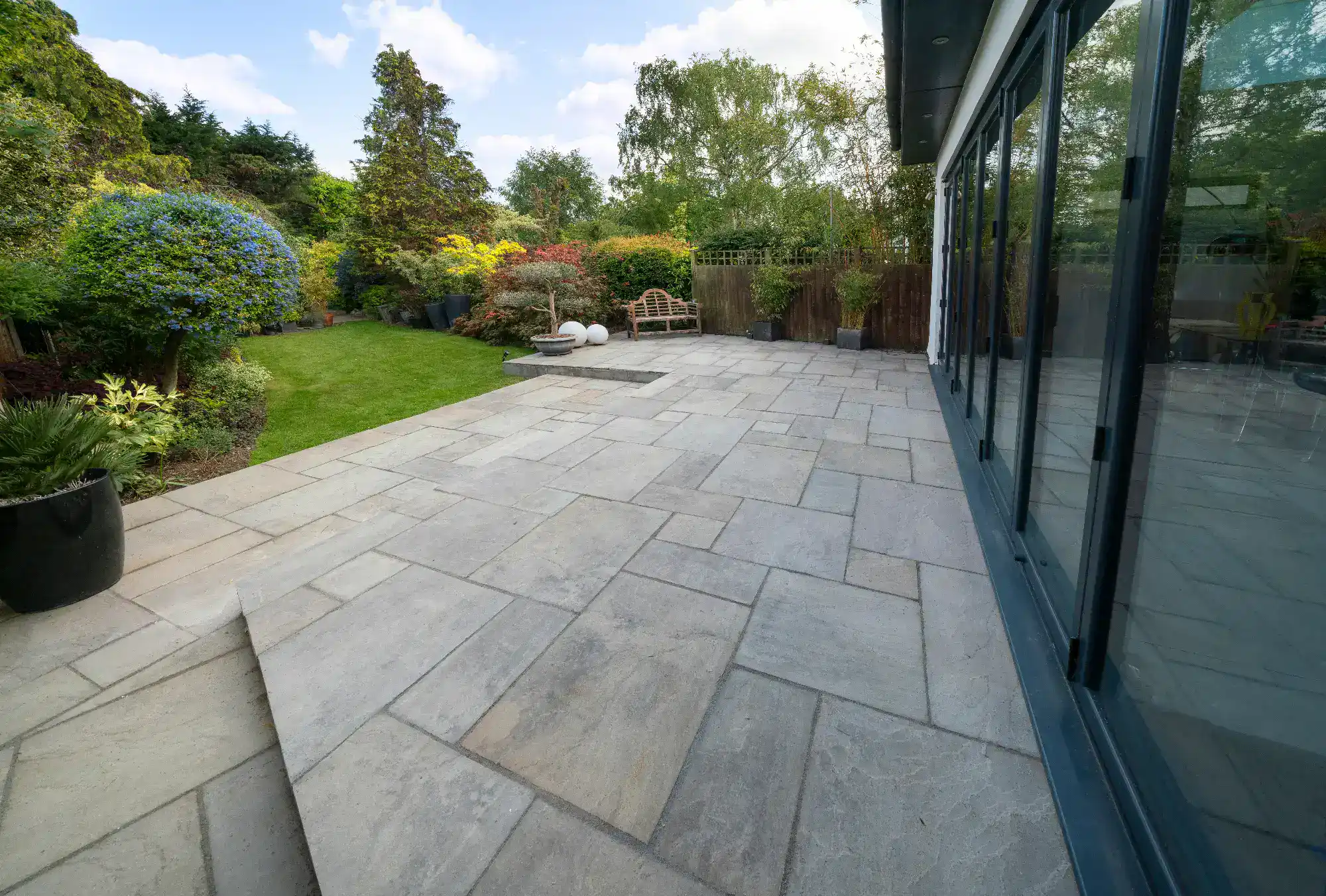
Professional installations include comprehensive drainage planning from day one. The patio surface needs proper slope: enough to shed water effectively but not so much that furniture wobbles. That’s typically a quarter inch per foot, sloped away from your house. Sounds simple until you’re trying to maintain that grade across a 400-square-foot surface while accounting for existing landscape features.
Suffolk County’s clay soil compounds drainage challenges. Clay doesn’t absorb water quickly, which means surface water needs somewhere to go. We often install edge drains along the patio perimeter to capture runoff before it pools. In some cases, subsurface drainage becomes necessary to handle water that would otherwise saturate the base and cause settling.
The consequences of poor drainage extend beyond your patio. When water collects underneath hardscaping, it can migrate toward your foundation. That creates basement moisture problems, foundation cracks, and structural issues that cost thousands to remediate. A properly installed patio actually protects your foundation by managing water flow deliberately.
Drainage isn’t something you can retrofit easily. Once pavers are down and edges are set, fixing drainage problems means tearing everything out and starting over. That’s why professional patio contractors address drainage during the planning phase, not after problems emerge.
Want live answers?
Connect with a Corsino Construction expert for fast, friendly support.
The math that makes DIY look affordable rarely accounts for the full picture. Yes, you eliminate labor costs. But you’re also taking on expenses and risks that don’t appear in those initial calculations.
Start with materials. Homeowners typically pay 30 to 40 percent more than contractors who buy in bulk. That $3,000 material budget? A professional patio contractor gets the same products for around $2,000. Then add equipment rentals: plate compactor, concrete saw, levels, and specialized tools. Those rentals add up quickly, especially when projects stretch across multiple weekends.
The real cost comes from mistakes. Improper base preparation means re-doing the entire project within a few years. Drainage failures lead to foundation repairs. Safety hazards from uneven surfaces create liability issues. When you factor in these potential expenses, DIY often costs more than professional installation.
A typical 20-by-20-foot patio involves moving over 20,000 pounds of material. Excavation alone takes most DIYers an entire weekend. Then comes base material delivery, spreading, and compaction. Then leveling sand. Then paver installation. Then edge restraints. Then joint sand.
Professional crews complete that same project in one to three days. We have the equipment, the experience, and the manpower to work efficiently. You’re looking at four to eight weekends of hard physical labor, assuming weather cooperates and you don’t encounter complications.
Those weekends have value. Whether it’s family time, other projects, or simply rest, you’re trading significant personal time for labor savings that may not materialize once you account for material premiums and equipment rentals. Many homeowners find that the time investment alone justifies hiring a professional patio contractor.
Weather adds unpredictability. Rain delays your timeline. Extreme heat makes physical labor dangerous. Suffolk County’s seasonal weather means your DIY window might be shorter than you planned. Professionals work around weather challenges more effectively because we’re not constrained to weekend availability.
Then there’s the learning curve. Your first patio is practice. We’ve installed hundreds. We spot problems before they become issues. We know how to handle complications that would stop a DIY project cold. That experience translates directly into better results and faster completion.
The failure rate tells the story: 68 percent of DIY patio projects over 100 square feet develop significant problems within the first year. Professional installations fail at just 12 percent. That difference reflects the complexity of proper patio installation.
Common failures start with settling. Inadequate base compaction allows pavers to sink unevenly, creating trip hazards and drainage problems. You’ll notice pavers rocking underfoot or gaps appearing between stones. Once settling starts, it accelerates. Water infiltrates gaps, further destabilizing the base.
Drainage failures often don’t show up immediately. You might not notice problems until heavy rain reveals that water pools on your patio surface or, worse, drains toward your foundation. By then, you’re looking at excavation and reinstallation to correct the grading.
Edge restraints prevent pavers from migrating outward over time. Many DIY installations skip proper edge restraints or install them incorrectly. Within a season or two, you’ll see pavers spreading apart at the edges, joint sand washing out, and the entire patio losing structural integrity.
Suffolk County’s freeze-thaw cycles punish improper installation. Water that penetrates the base expands when it freezes, heaving pavers upward. Come spring, you’ve got an uneven surface that gets worse with each winter. We account for frost depth and install bases below the frost line to prevent heaving.
Fixing these problems costs more than hiring a professional contractor initially. You’re paying for demolition and disposal of the failed installation, then paying again for proper installation. Some homeowners end up spending double what professional installation would have cost, plus dealing with months of an unusable outdoor space.
The appeal of DIY is understandable. The reality is that patio installation requires specialized knowledge, professional equipment, and experience that comes from installing hundreds of projects. Most homeowners don’t have access to those resources.
Professional patio contractors deliver value beyond just labor. We prevent the mistakes that plague DIY projects. We understand local soil conditions and climate challenges. We have relationships with suppliers that translate into better material pricing. We complete projects in days instead of months.
Your patio is an investment in your property. Done right, it adds 80 to 100 percent return on investment and creates outdoor living space your family actually uses. Done wrong, it becomes an expensive problem that compromises your home’s foundation and creates safety hazards.
Corsino Construction Corp has spent over 20 years installing patios throughout Suffolk County. We understand what works in this climate, we use licensed professionals instead of subcontractors, and we stand behind our work with clear warranties. When you’re ready to build a patio that lasts, that’s the kind of expertise that makes the difference.
Article details:
Share:
Continue learning: