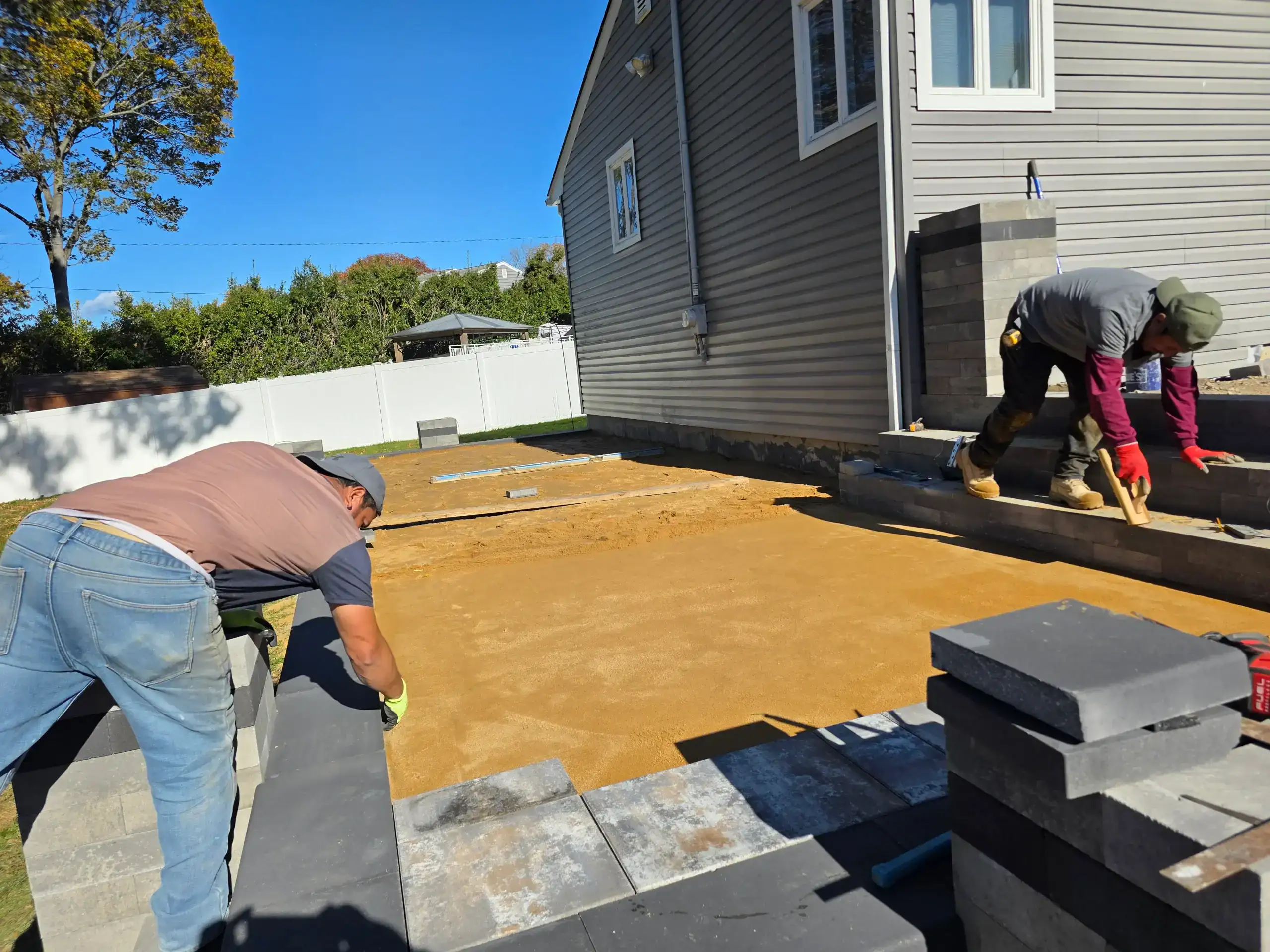
Hiring a remodeling contractor in Suffolk County is more complicated than it looks. Here's what the process actually involves — and what separates reliable contractors from the ones who disappear.
Share:

Summary:
Most people start searching for remodeling contractors with a general idea of what they want — a new kitchen, a bathroom that doesn’t feel like 1987, maybe an addition to finally give the family some breathing room. What they don’t always have is a clear picture of how the hiring process works, what a contractor actually manages behind the scenes, or how to tell a reliable one from a nightmare waiting to happen.
Suffolk County has no shortage of contractors. What it does have is a lot of homeowners who’ve learned the hard way that “licensed and insured” doesn’t tell the whole story. We’re here to fill in the gaps — including what to expect from a professional exterior home remodeling contractor.
A remodeling contractor is the person — or company — responsible for turning a renovation plan into a finished result. That sounds simple, but the scope of what’s involved is often wider than homeowners expect. It’s not just construction. It’s permits, scheduling, material sourcing, subcontractor coordination (when that model is used), code compliance, inspections, and daily problem-solving when things don’t go exactly as planned.
Think of a general contractor company as the project manager of your renovation planning. We’re the ones who know which town in Suffolk County requires a permit for a kitchen electrical upgrade and which doesn’t. We’re the ones who sequence the trades so the plumber isn’t waiting on the framer and the tile guy isn’t waiting on the plumber. When something unexpected shows up inside a wall — and in a 1960s ranch in Medford or a Cape Cod in Commack, something often does — we’re the ones who figure out what to do next without derailing the whole project.

This is one of the most important distinctions in the industry, and most homeowners don’t know to ask about it until after something goes wrong.
When you hire a general contractor, you’re hiring one company to manage your project from start to finish. But here’s what that doesn’t automatically tell you: who is actually going to show up and do the work? Many general contractors operate by hiring subcontractors — independent tradespeople brought in for specific portions of the job. The GC coordinates them, but the workers themselves aren’t employed by the GC. They might be working three other jobs simultaneously. Their quality standards may not match what you were shown in the portfolio. And when something goes wrong, the finger-pointing between the GC and the sub can leave you stuck in the middle.
The in-house model works differently. When a contractor uses licensed in-house professionals instead of subcontractors, every person on your job site works for the same company, under the same standards, with the same accountability structure. There’s no handoff, no miscommunication between a GC and an outside crew, and no gap in responsibility when one phase of the project affects the next.
We mention this because it’s the model we use at Corsino Construction Corp, and because it’s the question homeowners almost never think to ask. Before you hire anyone, find out whether the people doing the work are employed by the company you’re signing a contract with — or whether they’re being brought in from somewhere else. The answer tells you a lot about how your project will actually go.
Suffolk County doesn’t have a single, unified permit process. Each of the county’s ten towns — Babylon, Brookhaven, East Hampton, Huntington, Islip, Riverhead, Shelter Island, Smithtown, Southampton, and Southold — runs its own building department with its own requirements, timelines, and inspection procedures. A kitchen remodel in Huntington may require different documentation than the same scope of work in Southampton. A deck addition in Dix Hills may trigger different setback requirements than one in Westhampton Beach.
This is why local experience isn’t just a marketing phrase — it’s a practical advantage. A contractor who has been working in Suffolk County for 25 years has navigated these departments repeatedly. We know what each town typically requires, how long approvals take, and how to structure permit applications to avoid unnecessary delays. That institutional knowledge saves time and protects you.
Here’s the part most homeowners don’t realize: unpermitted work creates real problems down the road. If you sell your home and the buyer’s inspector finds an addition or a finished basement that was never permitted, you may be required to pull the permits retroactively — or worse, open up walls to prove the work meets code. In some cases, unpermitted work has to be removed entirely. A contractor who handles permits in their own name, as part of the project scope, isn’t just doing you a favor. They’re protecting your investment.
At Corsino Construction Corp, we handle all permit applications and coordinate inspections with the relevant Suffolk County building departments. It’s part of how we do the job — not an add-on.
Want live answers?
Connect with a Corsino Construction expert for fast, friendly support.
The estimate meeting is where most homeowners make their decisions — but it’s also where the most important questions go unasked. Price matters, obviously. But the lowest bid in a stack of three estimates is often the one that comes with the most surprises later. What you’re really evaluating in that first conversation is whether this contractor is going to do what they say, for the price they quoted, in the time they promised.
Here are the things worth asking — not because they’ll trip anyone up, but because the answers tell you what kind of project experience you’re actually signing up for.

Start with the basics: Are you licensed in Suffolk County? This is not a trick question, but it’s a meaningful one. New York State does not issue a statewide general contractor license. What matters in Suffolk County is the Home Improvement Contractor License, issued by the Suffolk County Office of Consumer Affairs. It requires passing a written exam, maintaining liability insurance of at least $500,000, and carrying workers’ compensation coverage. You can verify a contractor’s license through the Consumer Affairs office before you sign anything.
Ask who will actually be doing the work. Will it be your employees, or are you bringing in subcontractors? Ask whether the estimate you receive is fixed or whether it’s subject to change orders. Ask what happens if something unexpected comes up during construction — who decides how to proceed, and how does that affect the final cost?
Ask about the permit process. Who pulls the permits? Whose name are they in? Ask how they handle daily communication — will you know what crews are working on each day, and how do you reach someone if a question comes up? Ask what the cleanup situation looks like, because if you’re living in your home during construction (which most Suffolk County homeowners are), that’s not a small thing.
These aren’t aggressive questions. A contractor who handles them clearly and directly is one who’s thought through the process. One who gets evasive or vague is showing you something important.
Most homeowners ask for references and then don’t quite know what to do with them. Calling a reference and asking “were you happy with the work?” will almost always get you a yes — contractors don’t give you the names of unhappy clients. The more useful questions dig into specifics.
Ask the reference whether the project came in on budget. Ask whether the timeline matched what they were told at the start. Ask whether there were change orders, and if so, how they were handled — were they discussed before the work happened, or did they show up on the final bill? Ask what the job site looked like at the end of each day. Ask whether they’d hire the same contractor again for a different project.
One thing worth noting: references from your own community carry more weight than general ones. If you’re in Commack and the reference is from Commack, that’s more useful than a glowing review from someone in a different part of Suffolk County. Local reputation in a place like Suffolk County — where word travels through neighborhoods and school districts and community groups — is a real accountability mechanism. Contractors who do bad work in a close-knit community don’t stay busy for long.
Ask the reference how communication went during the project. Did the contractor show up when they said they would? Did they let the homeowner know what was happening each day? Did they clean up after themselves? These details sound minor until you’re three weeks into a kitchen renovation and you can’t find anyone to answer a question.
The right remodeling contractor for your Suffolk County home isn’t necessarily the one with the flashiest website or the lowest number on an estimate. It’s the one who shows up when they say they will, gives you a written price that doesn’t change, handles the permits so you don’t have to think about them, and treats your home like people still live there — because they do.
Ask the questions. Verify the license through Suffolk County Consumer Affairs. Find out who’s actually doing the work. Get the estimate in writing and make sure you understand what it does and doesn’t include. Talk to references and ask the specific questions that matter.
If you’re in Suffolk County and you want to talk through what your project actually involves — scope, timeline, what to expect from the process — Corsino Construction Corp has been doing this work here since 2000. Reach out and we’ll get back to you within 24 to 48 hours with a real conversation, not a sales pitch.
Article details:
Share:
Continue learning: