Most homeowners don't know what separates a driveway that lasts 30 years from one that cracks in three. This guide covers what contractors rarely bring up.
Share:
Summary:
You’ve probably gotten a quote that felt too low to be real. Or maybe you’ve heard a neighbor’s story about a crew that disappeared after the deposit. The concrete driveway contractor space has a reputation problem — and most of it comes down to things buyers never think to ask about upfront.
This guide isn’t here to scare you. It’s here to give you a realistic picture of how this process works, what actually separates a driveway that holds up for decades from one that starts cracking after two winters, and the specific questions that will tell you almost everything you need to know about a contractor before a single shovel hits the ground.
Most homeowners picture concrete driveway installation as: crew shows up, pours concrete, done. The reality involves a lot more that happens before any concrete is mixed — and that prep work is where the quality difference is made or lost.
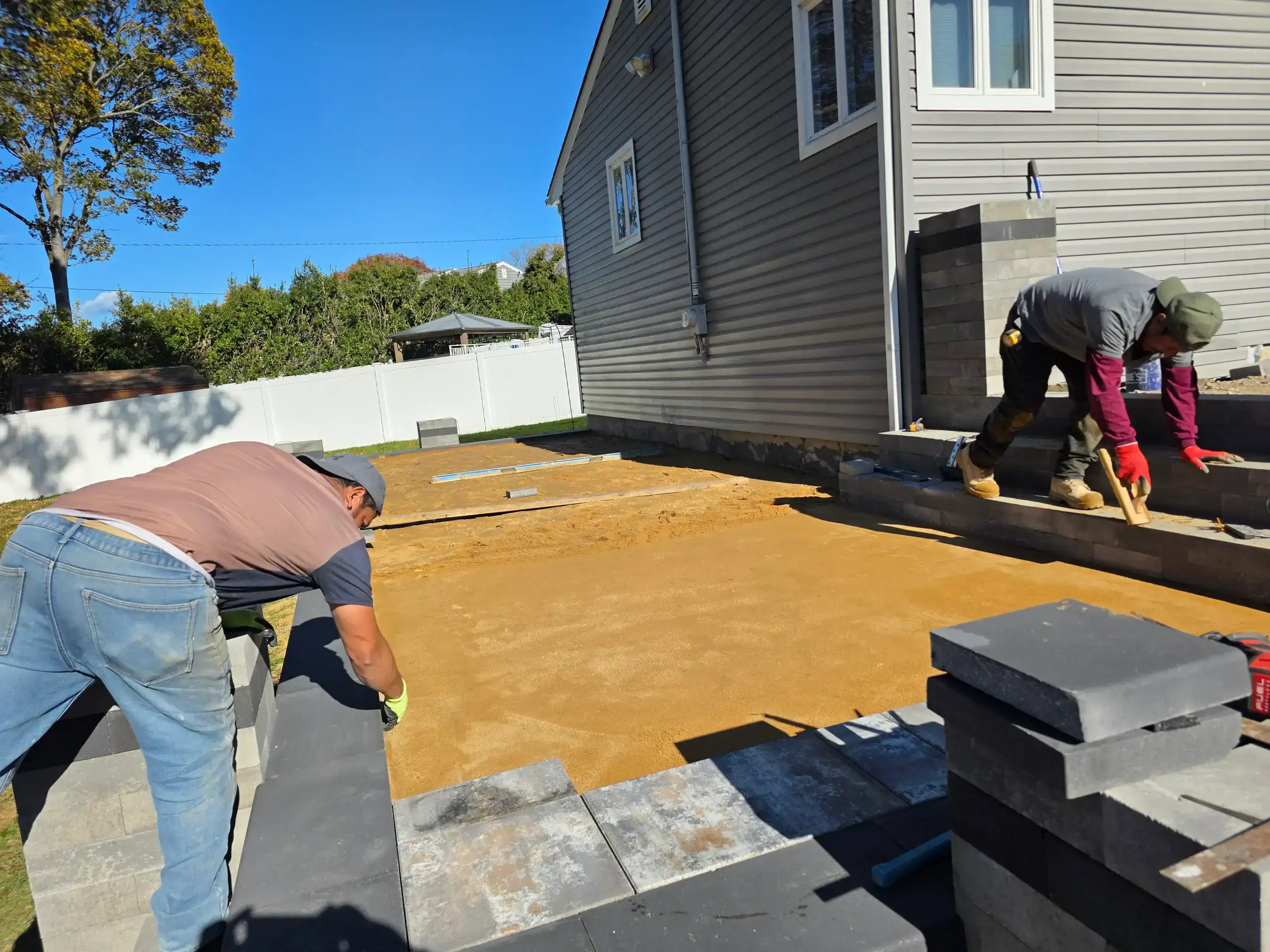
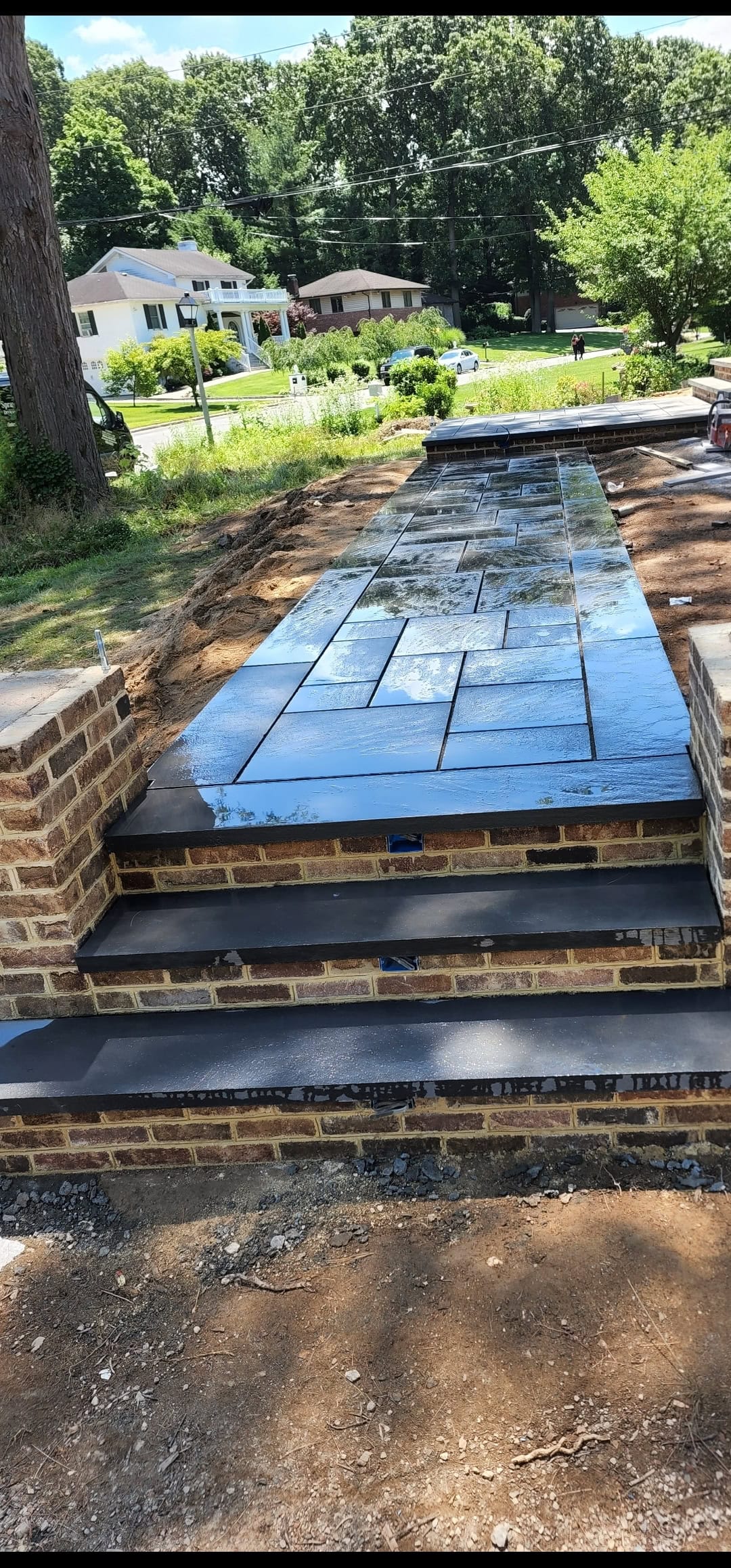
The process starts with excavation. A proper installation requires digging down far enough to lay a compacted aggregate base — typically four to six inches of crushed stone — before a single inch of concrete goes in. That base is what keeps the slab stable as the ground below it shifts with the seasons. Skip it or cut it short, and you’re essentially pouring concrete over a problem.
From there, crews set forms to define the shape, place reinforcement if the job calls for it, and then pour and finish the concrete in a time-sensitive window. Once it’s down, the slab needs to cure — a minimum of seven days before light foot traffic, and a full 28 days before it should see a vehicle. Driving on it too early can cause permanent damage that no sealer will fix. For homeowners planning a larger project or coordinating multiple aspects of the work, a general contractor can help manage the installation process and keep the work properly coordinated.
Here’s the part that rarely comes up in a sales conversation: the biggest factor in how long your driveway lasts isn’t the concrete itself. It’s what’s underneath it.
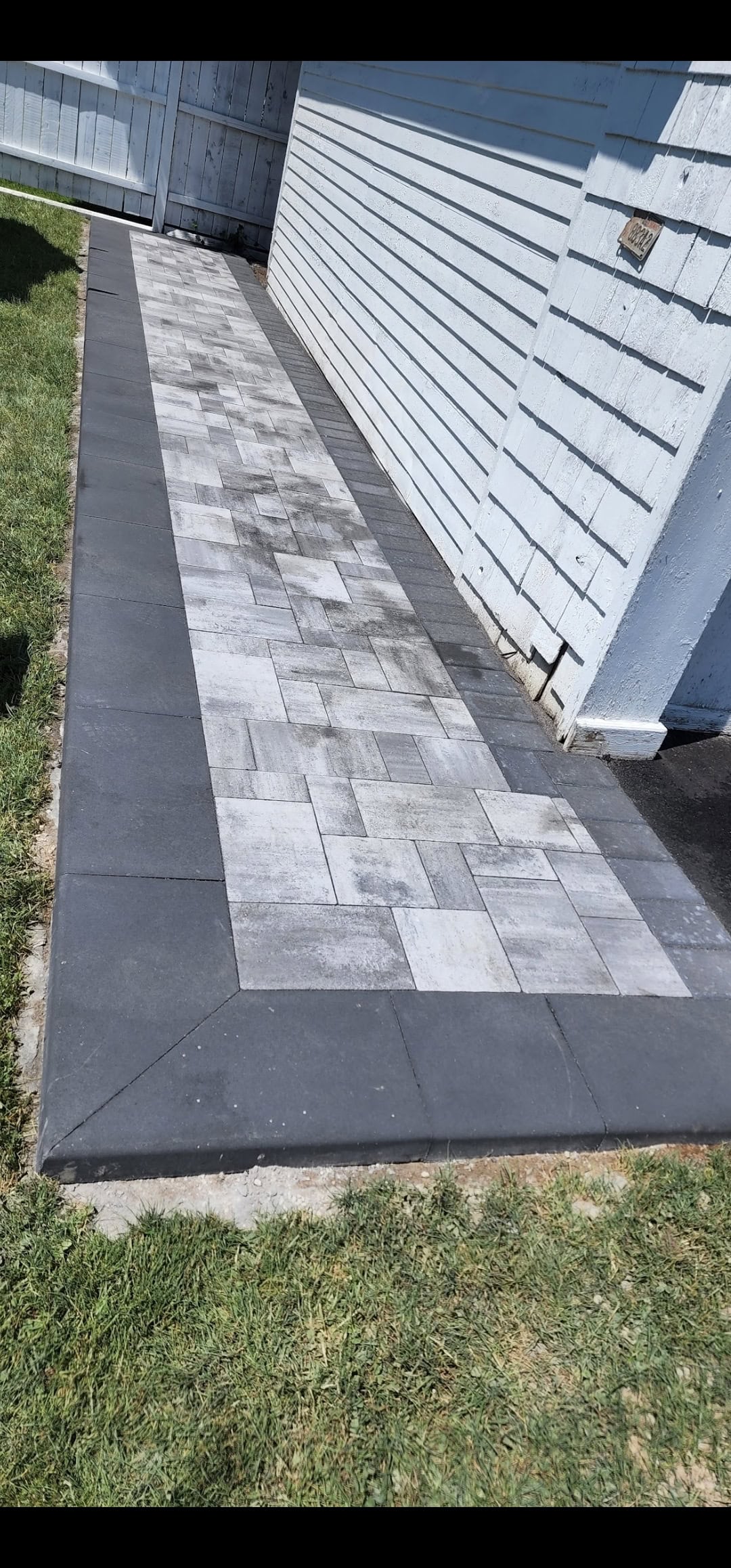
Proper base preparation takes time and costs more to do right. A compacted crushed stone base, excavated to the correct depth, and graded for drainage — that’s not glamorous work, but it’s what separates a driveway that looks the same in year fifteen as it did in year one from a slab that starts heaving and cracking after a few hard winters.
In Suffolk County, this matters more than it does in a lot of other markets. Long Island’s soil has a significant clay content — a result of glacial deposits that make the ground particularly susceptible to seasonal movement. Clay absorbs moisture and expands when it freezes, then contracts again when it thaws. Do that 20 to 40 times a year, which is a realistic freeze-thaw count for a Suffolk County winter, and a poorly supported concrete slab doesn’t stand a chance.
A contractor who gives you a quote without asking about your site’s drainage, or who doesn’t mention the base preparation process at all, is telling you something important. The base is invisible once the job is done — which is exactly why it’s the easiest place to cut corners without the homeowner ever knowing. Until the cracks show up.
The concrete mix itself matters too. In a freeze-thaw climate like Long Island’s, the mix should hit a minimum compressive strength of 4,000 psi. Lower-grade mixes are cheaper and they fail faster — especially when moisture gets into hairline cracks, freezes, expands, and starts doing the work of a chisel from the inside out. It’s not dramatic. It’s just physics, and it happens slowly enough that by the time it’s obvious, the contractor is long gone.
Every contractor says they’re licensed and insured. That phrase has been repeated so many times it’s stopped meaning anything to most homeowners. But the specifics behind it matter a lot — especially in Suffolk County, where the licensing requirements go beyond the state level.
New York State requires home improvement contractors to register with the NYS Department of State. Suffolk County, NY adds its own layer: contractors working here need a Suffolk County Home Improvement Contractor License, issued through the Suffolk County Department of Consumer Affairs. That’s a separate credential, and it’s verifiable. If a contractor can’t give you a license number you can look up, that’s not a minor detail to overlook.
Insurance is the other half of that equation. Liability coverage protects your property if something goes wrong during the job. Workers’ compensation protects you if a crew member gets hurt on your property. Without both, you could end up holding the bill for an on-site injury that had nothing to do with you. Ask for certificates of insurance before work begins — not after.
The subcontractor question is one most homeowners never think to ask, and it’s one of the most revealing. A lot of contractors in this space operate as middlemen: they sell the job, then farm the actual work out to whoever’s available that week. The person who gave you the quote is not the person doing the work. The crew that shows up Monday might not be the crew that shows up Friday. Quality becomes inconsistent, accountability gets murky, and if something goes wrong, you’re left trying to figure out who’s actually responsible.
We don’t operate that way. Every project we take on is handled by our own in-house crew — licensed professionals who work for us directly, not subcontractors we’ve brought in to fill a schedule gap. It’s a straightforward thing, but it’s less common in this industry than it should be.
Want live answers?
Connect with a Corsino Construction expert for fast, friendly support.
A good contractor won’t be thrown off by direct questions. In fact, the ones who answer clearly and specifically — without getting vague or defensive — are usually the ones worth trusting with the job.
There are a handful of questions that cut through the noise quickly. They’re not complicated, but the answers will tell you more than any sales pitch.
Ask who will actually be doing the work. Ask what the base preparation process looks like and how deep they plan to excavate. Ask what concrete mix strength they use and whether it’s appropriate for freeze-thaw conditions. Ask what’s included in the quote and what would trigger an additional charge. Ask about the warranty — specifically what it covers and what it doesn’t.
Price is the obvious one, but it’s not always the most telling. A quote that’s significantly lower than everyone else’s is usually lower for a reason — and that reason is almost always something that happens underground, before the concrete goes in.
The absence of a written contract before any work begins is a serious warning sign. Not a verbal agreement, not a handshake — a written contract that spells out the scope of work, the materials being used, the timeline, and the total cost. If a contractor pushes back on that or tries to get started without one, stop there.
Watch out for pressure tactics too. Legitimate contractors don’t show up unsolicited with a “limited time offer” because they happen to have leftover material from a job down the street. The Better Business Bureau has tracked individual homeowner losses from paving scams averaging around $8,000. The urgency is manufactured. A contractor who needs you to decide today before you’ve had a chance to compare quotes or verify their license is not a contractor you want working on your property.
On the flip side, a contractor who volunteers their license number, provides an insurance certificate without being asked, puts everything in writing, and gives you a fixed quote that won’t change — that’s the baseline you should be holding everyone to. It’s not a high bar. It just feels that way because the industry has normalized doing less.
We give every homeowner a detailed, upfront estimate before we start. The number on that estimate is the number on the invoice. No change orders for things that should have been accounted for from the beginning, no fees that surface after the work is done.
If you already have an asphalt driveway, this is probably a question you’ve turned over at least once. Concrete costs more upfront — that part is true. Whether it costs more over time is a different conversation.
Asphalt driveways need to be sealed every two to three years to hold up against water penetration and UV damage. That’s a recurring cost that adds up over the life of the driveway. Asphalt also has a shorter lifespan — typically 20 to 30 years under normal conditions. A properly installed concrete driveway can last 25 to 50 years, and it doesn’t require that same cycle of sealing and resealing to get there.
In Suffolk County, NY, the freeze-thaw argument tilts further toward concrete. Asphalt softens in summer heat and becomes brittle in hard winters. Concrete, when it’s installed with the right mix and the right base, handles the seasonal stress better over the long run. The coastal moisture and salt air that come with living on Long Island — particularly near the Sound or the south shore — are harder on asphalt than most homeowners realize until they’re looking at a driveway that’s aged faster than it should have.
The conversion process itself involves removing the existing asphalt, which adds to the overall project scope. Depending on the condition of what’s underneath, the base preparation work may be more involved than a straightforward new installation. That’s worth knowing before you start comparing quotes — a lower number on an asphalt-to-concrete job might mean someone is planning to skip the demo properly or lay new concrete over a compromised base, which defeats the entire purpose of the upgrade.
If you’re weighing the decision, the honest answer is that the right choice depends on your timeline, your budget, and what condition your current driveway is in. What we can tell you is that homeowners who make the switch and do it right — proper removal, proper base, proper mix — rarely regret it.
The information in this guide isn’t complicated, but it’s the kind of thing most contractors are hoping you don’t know before you call them. A proper base. The right concrete mix for a freeze-thaw climate. A fixed quote in writing. An in-house crew you can actually hold accountable. These aren’t premium features — they’re what a solid installation looks like.
Suffolk County’s soil conditions, its winters, and its aging housing stock make it a market where cutting corners catches up with you fast. The driveways that hold up here are the ones that were built right from the ground up, not the ones that looked fine on installation day.
If you’re ready to get a straight answer and a quote that won’t change on you, reach out to Corsino Construction Corp. We’ve been doing this work in Suffolk County since 2000, and we’re happy to walk you through exactly what your project involves before you commit to anything.
Article details:
Share:
Continue learning: