Learn which materials deliver the best performance and value for your kitchen or bathroom remodel from experienced Suffolk County contractors.
Share:
Summary:
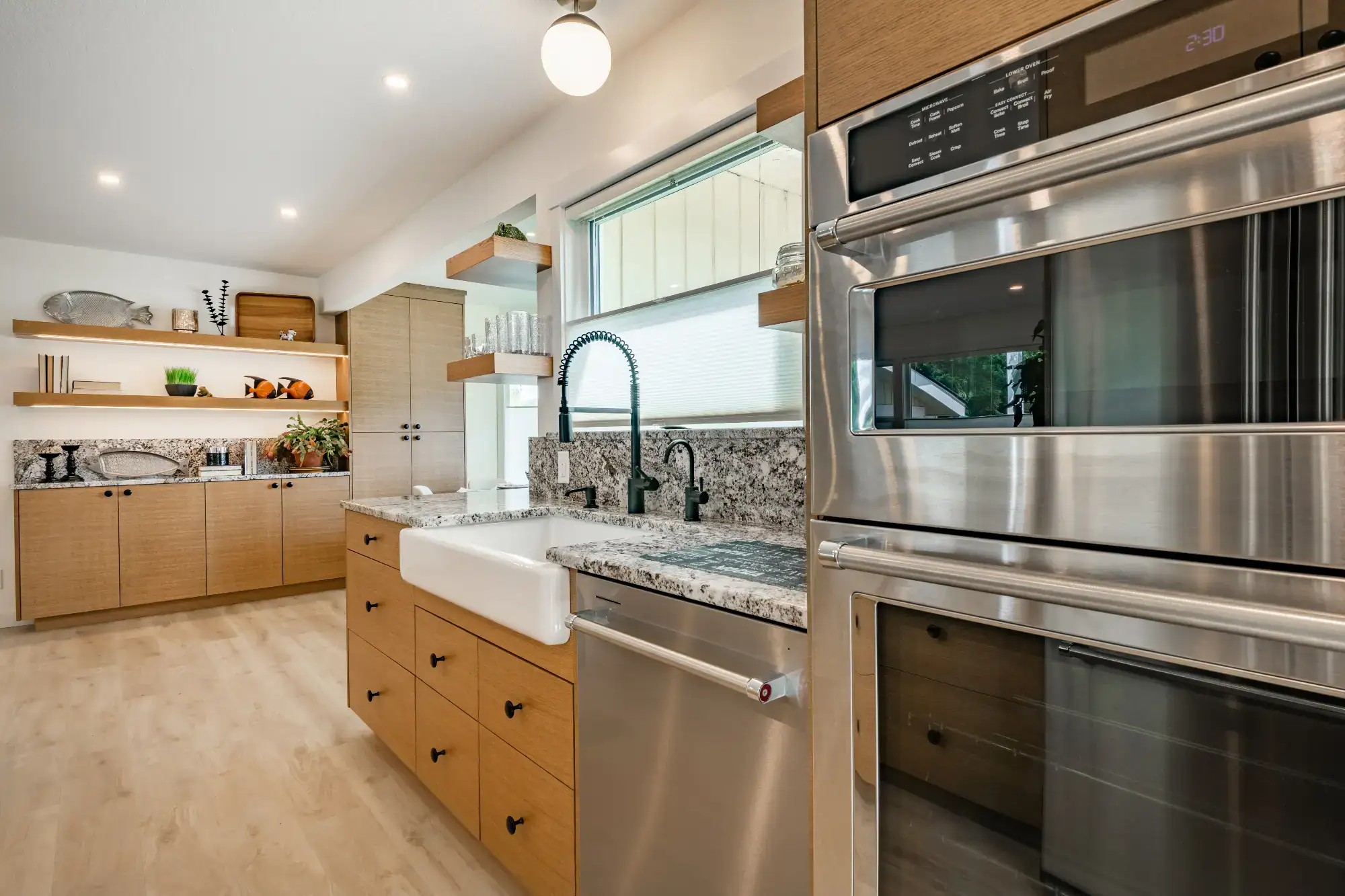
Your kitchen takes a beating every single day. Spills, heat, kids, pets – it all happens here. The materials you choose need to handle real life, not just look good in photos.
The smartest approach starts with understanding how you actually use your kitchen. Do you cook every night or mostly reheat? Are you hosting dinner parties or feeding toddlers? These aren’t just lifestyle questions – they determine which materials will serve you best.
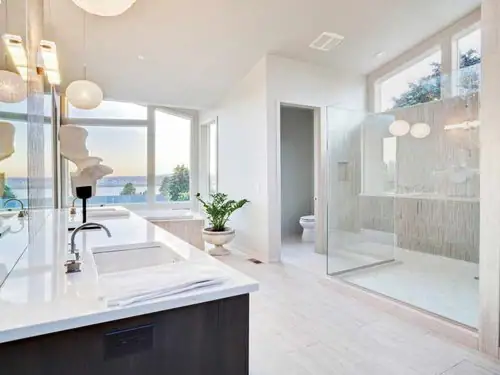
Everyone gets stuck on granite versus quartz, but that’s honestly missing the point. Both can work beautifully – it depends on what matters most to you.
Quartz gives you consistency and virtually zero maintenance. No sealing, no staining from that red wine you spilled last Tuesday. It’s engineered, so every slab looks exactly like the sample. Perfect if you want predictable results and minimal upkeep.
Granite brings natural character that you can’t replicate. Each slab is unique, with patterns and movement that make your kitchen distinctly yours. Yes, it needs sealing every year or two, but many homeowners find that small maintenance task worth it for the authentic stone look.
Here’s what really matters: both materials will outlast your mortgage if installed properly. The difference comes down to your maintenance preferences and whether you want natural variation or engineered consistency. Neither choice is wrong – they’re just different approaches to the same goal.
Butcher block deserves mention too, especially if you’re working with a tighter budget. It requires more care, but it’s repairable, adds warmth, and costs significantly less than stone options.
Kitchen floors need to handle spills, dropped dishes, and constant foot traffic. The material that looks amazing in the showroom might not survive your actual daily routine.
Luxury vinyl plank has become incredibly popular, and for good reason. Today’s versions look remarkably like real wood or stone, but they’re completely waterproof and comfortable underfoot. They’re also budget-friendly and can be installed over most existing floors, which saves time and money during your remodel.
Tile remains a solid choice, especially porcelain. It’s durable, water-resistant, and available in countless styles. The key is choosing larger tiles with minimal grout lines – less grout means easier cleaning and fewer places for stains to hide.
Hardwood can work in kitchens, but it requires commitment to quick cleanup and regular maintenance. Engineered hardwood performs better than solid wood in kitchens because it’s more stable with moisture changes.
Whatever you choose, remember that your floor sets the foundation for everything else. It’s not just about looks – it’s about how the space feels under your feet during those long cooking sessions and how easy it is to keep clean when life gets messy.
Want live answers?
Connect with a Corsino Construction expert for fast, friendly support.
Bathrooms in Suffolk County deal with humidity, temperature swings, and constant moisture exposure. The materials that work in drier climates might fail here, leading to mold, warping, or premature wear.
Moisture management isn’t just about choosing waterproof materials – it’s about creating a system where everything works together. Your tile choice affects your grout selection, which impacts your ventilation needs, which influences your paint selection.
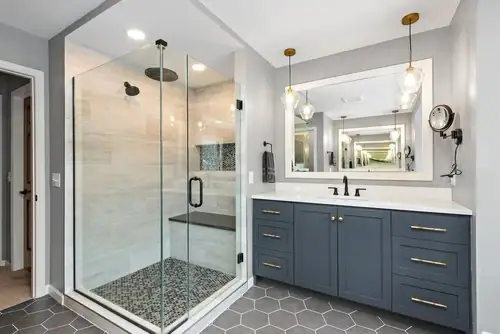
This is where many bathroom remodels go wrong. Beautiful materials that can’t handle daily shower use lead to expensive repairs down the road.
Porcelain and ceramic tiles remain the gold standard for shower surrounds. They’re waterproof, easy to clean, and available in styles that mimic everything from natural stone to wood. The key is proper installation – even the best tile fails if the waterproofing behind it isn’t done right.
Natural stone can work in showers, but it requires more maintenance and proper sealing. Marble looks stunning but needs regular care to prevent etching and staining. Travertine and other porous stones need even more attention.
Solid surface materials like Corian or similar products offer seamless installation with no grout lines to maintain. They’re non-porous, repairable, and can be custom-fabricated to fit any space. The investment is higher upfront, but maintenance is minimal.
Fiberglass and acrylic surrounds get dismissed as “cheap,” but high-quality versions can be practical choices, especially for guest bathrooms or when budget is a primary concern. They’re easy to clean, won’t crack like tile, and can be installed quickly.
The real secret isn’t just the surface material – it’s what’s behind it. Proper waterproofing, adequate ventilation, and quality installation matter more than the specific tile you choose.
Bathroom floors face unique challenges. They need to handle water, provide safe footing when wet, and resist the humidity that builds up over time.
Porcelain tile tops the list for bathroom floors. It’s completely waterproof, available in non-slip textures, and handles temperature changes without cracking. Large format tiles create fewer grout lines, which means easier maintenance and fewer places for moisture to penetrate.
Luxury vinyl has revolutionized bathroom flooring. It’s completely waterproof, comfortable underfoot, and available in realistic wood and stone looks. Installation is straightforward, and it performs well in Suffolk County’s humid summers and dry winters.
Natural stone requires more consideration. While beautiful, most natural stones need sealing and can be slippery when wet. If you choose stone, look for honed or textured finishes rather than polished surfaces.
Avoid traditional hardwood in full bathrooms – the moisture exposure is too much for most wood floors. Laminate flooring, despite being less expensive, isn’t truly waterproof and can swell if moisture gets into the joints.
Remember that your bathroom floor connects to your home’s subfloor. Water damage here can affect rooms below, so choosing materials that won’t allow moisture penetration protects your entire home investment.
The best materials for your remodel aren’t necessarily the most expensive or the most trendy. They’re the ones that fit your lifestyle, your budget, and your home’s specific needs.
Consider how you actually live in these spaces. A busy family with young kids needs different materials than empty nesters who entertain frequently. Your maintenance preferences matter too – some materials require regular care, while others are virtually maintenance-free.
When you’re ready to move forward with your kitchen or bathroom remodel, we at Corsino Construction Corp can help you navigate these choices and create a space that works for your specific situation.
Article details:
Share:
Continue learning: