Hiring the wrong contractor can derail your entire renovation. Discover the five critical mistakes Suffolk County homeowners make before signing a contract.
Share:
Summary:
You wouldn’t hire a babysitter without checking references. Yet somehow, when it comes to someone who’ll have access to your home for weeks and control over tens of thousands of dollars, people skip the homework.
It feels awkward to ask. You don’t want to seem distrustful. But here’s the reality: legitimate contractors expect these questions. We’re prepared for them. The ones who get defensive or evasive? That’s your first red flag.
This isn’t about being difficult. It’s about being smart. Because once you’ve signed a contract and handed over a deposit, your leverage disappears.
“Licensed and insured” gets thrown around like it’s one word. But these are two separate protections, and both matter more than most homeowners realize.
A license means your contractor has met New York state requirements and is legally allowed to do the work. It means they understand building codes, safety regulations, and the standards that protect you. In Suffolk County, where building codes can be specific and weather conditions create challenges, working with someone who knows local requirements isn’t optional—it’s essential.
Insurance is your financial safety net. If a worker gets injured on your property, you want to know their workers’ compensation will cover it—not your homeowner’s policy. If something gets damaged during construction, liability insurance should handle it. Without proper coverage, you could end up paying twice: once for your project, and again for problems that weren’t even your fault.
Here’s what actually checking looks like: ask for their license number and verify it. Don’t just take their word for it. Request a certificate of insurance and call the insurance company directly to confirm it’s current. Yes, it takes 20 minutes. Yes, it’s worth it.
Some contractors will hand you documents without hesitation. Others will make excuses about why they can’t provide them “right now.” The difference between these two responses tells you everything you need to know. A contractor who’s properly licensed and insured isn’t bothered by the question. We’re used to it. We respect it.
And if you’re wondering if this really matters for smaller projects—it does. The size of the job doesn’t change the risk. Whether you’re paving a walkway or remodeling your entire kitchen, you need the same protections in place. Because accidents don’t discriminate based on project scope.
Online reviews are a starting point, not the finish line. They tell you what strangers thought about their experience. References tell you what real people—who you can actually talk to—experienced firsthand.
When you call a reference, you’re not just asking if they liked the contractor. You’re asking the questions that matter: Did they stick to the timeline? How did they handle problems when they came up? Would you hire them again? These conversations reveal things no five-star review ever will.
Pay attention to how the contractor responds when you ask for references. Do they provide them immediately, or do they hesitate? Can they give you examples of projects similar to yours—same scope, same budget, same type of work? A bathroom remodeler should be able to point you to other bathroom projects. A paving contractor should have driveway customers you can speak with.
Here’s a pro move: ask if you can see a completed project in person. Not just photos—the actual finished work. This gives you a chance to see quality firsthand and talk to the homeowner about their experience. Were there surprises? How was communication? Did the contractor clean up properly? You’ll learn more in a 10-minute conversation than you will from a dozen online reviews.
And don’t just ask for three references and stop there. Ask about their most recent projects. Some contractors will give you their three best customers from five years ago and hope you don’t notice the gap. Recent references matter because they reflect current practices, current crews, and current standards.
One more thing: be wary of contractors who can’t provide any references at all, or who only offer first names and phone numbers that go straight to voicemail. Legitimate professionals have satisfied customers who are willing to vouch for them. If a contractor has been working in Suffolk County for years and can’t produce a single verifiable reference, that silence is telling you something important.
Want live answers?
Connect with a Corsino Construction expert for fast, friendly support.
You get three quotes. One comes in significantly lower than the others. Your first instinct is to feel relieved—you’re saving money.
Your second instinct should be to ask why. Because in construction, like most things, you generally get what you pay for. The lowest bid isn’t always a deal. Sometimes it’s a warning.
This doesn’t mean you should automatically pick the most expensive option. It means you need to understand what you’re comparing. A lower price might mean cheaper materials, less experienced workers, or corners being cut that you won’t discover until later.
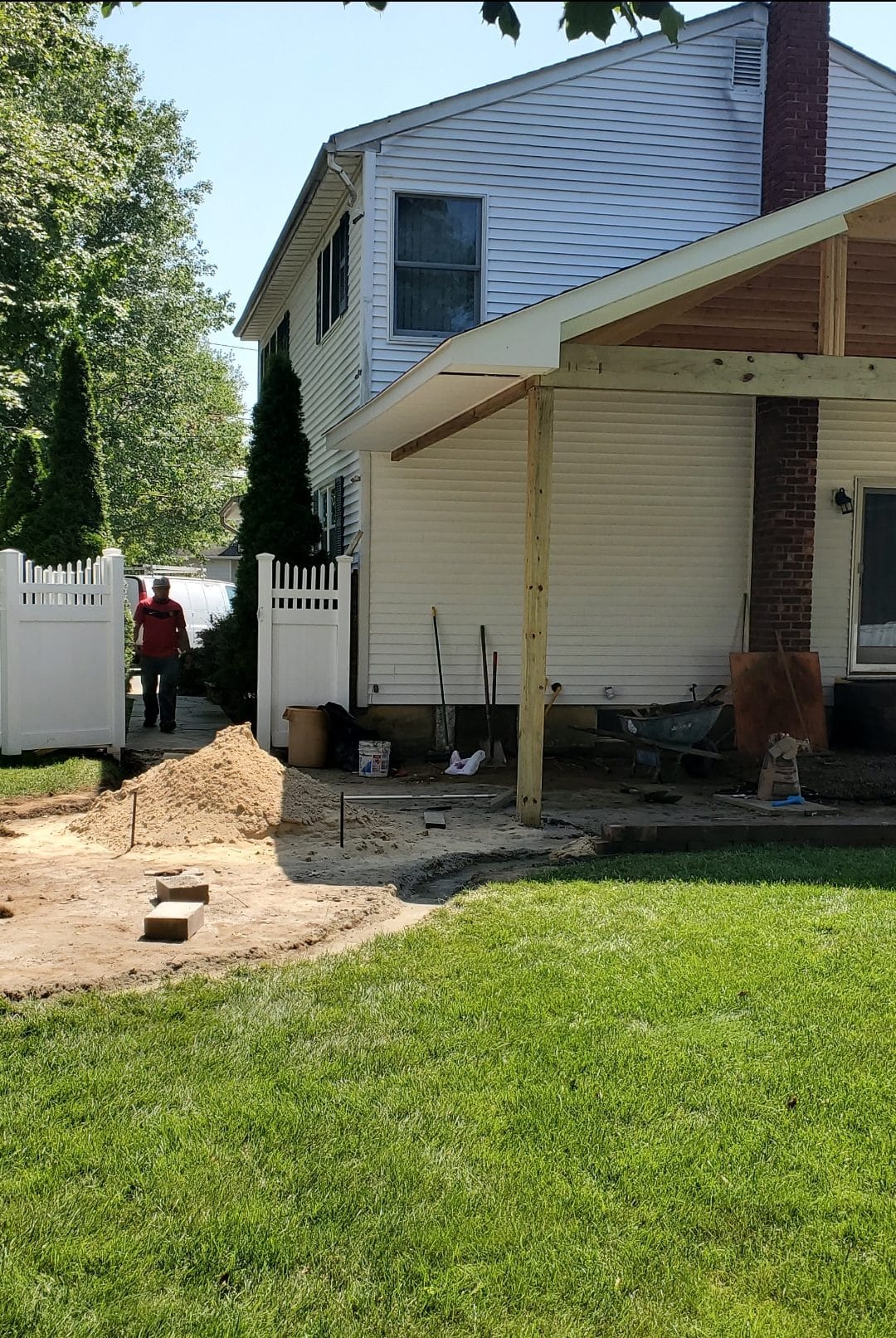
A legitimate quote isn’t a number scribbled on the back of a business card. It’s a detailed breakdown that shows you exactly what you’re paying for—and what you’re not.
Look for specifics: what materials are being used, what brands, what quality grade. If you’re getting a driveway paved, is it two inches of asphalt or three? What’s the base preparation? For a kitchen remodel , what grade of cabinets are included? What about the countertops—are we talking laminate or stone?
The timeline should be clear. When does work start? What’s the estimated completion date? What happens if there are delays? A vague “it’ll take a few weeks” isn’t good enough when you’re planning your life around construction.
Payment terms matter too. Reputable contractors typically don’t ask for more than 10-20% upfront. If someone wants half the money before they’ve done any work, that’s a red flag. The payment schedule should align with project milestones—you pay as work gets completed, not before.
And here’s something most homeowners don’t think to ask: who’s actually doing the work? Will it be the contractor’s own crew, or are they hiring subcontractors? This matters for quality control and accountability. When a company uses in-house professionals instead of subcontractors, you’re dealing with one team that’s directly accountable to one boss. There’s no finger-pointing about who’s responsible when something goes wrong.
Compare quotes side by side, line by line. If one is significantly lower, figure out what’s missing. Maybe they’re not including permit fees. Maybe they’re planning to use lower-grade materials. Maybe their timeline is unrealistic. Whatever the reason, you need to know what you’re getting before you can judge if it’s a good value.
Here’s what happens when you choose the cheapest bid without asking questions: you save money upfront and spend more later. Maybe the driveway starts cracking within a year. Maybe the kitchen cabinets warp because they used subpar materials. Maybe the deck builder didn’t properly waterproof, and now you’re dealing with rot.
These aren’t hypothetical scenarios. They’re the calls contractors get from homeowners who thought they were being smart with their budget and ended up paying twice—once for the cheap job, and again to fix it properly.
Quality materials cost more. Experienced workers cost more. Proper preparation and attention to detail cost more. But you know what costs even more? Doing it twice. Ripping out work that was done wrong and starting over. Living with a half-finished project because your contractor disappeared. Dealing with the stress of a renovation that should have been straightforward but turned into a nightmare.
Think about it this way: you’re not just paying for the work itself. You’re paying for expertise, reliability, and assurance. You’re paying for someone who shows up when they say they will, communicates clearly, and stands behind their work. You’re paying for a contractor who pulls proper permits, follows building codes, and won’t leave you vulnerable to problems down the road.
In Suffolk County’s competitive housing market, where home values have increased significantly, your renovation is an investment. Regardless of if it’s a new patio, a remodeled bathroom, or fresh paving, you’re adding value to your property. But only if it’s done right. Shoddy work doesn’t just fail to add value—it can hurt your home’s worth and create liability issues when it’s time to sell.
So yes, budget matters. But it shouldn’t be the only thing that matters. Look at the whole picture: the contractor’s experience, their reputation, the quality of materials they use, their communication style, and how they handle problems. Because the cheapest bid might save you a few thousand dollars now, but cost you much more than that in the long run.
Here’s the bottom line: the mistakes that derail home renovations happen early. They happen when you skip the background check because you’re in a hurry. When you choose the lowest bid without understanding why it’s low. When you don’t get everything in writing because you want to trust people.
Trust is earned, not assumed. And the contractors worth hiring understand that. We expect your questions. We’re prepared with answers. We provide documentation without hesitation because we have nothing to hide.
Your home is likely your biggest investment. The renovation you’re planning—no matter if it’s paving, remodeling, or building—deserves the same level of care you’d give to any major financial decision. That means doing your homework, asking the hard questions, and choosing based on value, not just price.
At Corsino Construction Corp , we’ve been doing this right for over two decades. We’ve built our reputation on transparency, quality, and treating every project like it matters—because it does. Fixed pricing, in-house professionals, and clear communication throughout. No surprises, no shortcuts, just solid work from people who’ve been serving this community since 2000.
Article details:
Share:
Continue learning: