Suffolk County's permit rules vary by town — and getting it wrong is expensive. Here's what every homeowner needs to know before starting a project.
Share:
Summary:
Most homeowners don’t think about building permits until something goes wrong. A sale falls through because a buyer’s attorney flagged an unpermitted deck. A contractor pulls a permit and never closes it out. Or you’re mid-project and someone asks whether you actually filed for approval. By that point, fixing the problem costs more — in time, money, and stress — than doing it right from the start.
This guide walks you through what Suffolk County, NY actually requires, which projects need permits, what the process looks like, and why the contractor you hire matters more than most people realize.
The short answer is: probably yes. In the Town of Brookhaven — which covers Coram, Port Jefferson, Patchogue, and a large stretch of central Suffolk County — a building permit is required for any deck larger than 100 square feet or more than 30 inches above ground level. That threshold catches most decks homeowners actually build.
The longer answer is that it depends on which of Suffolk County’s 10 towns your property sits in. Each town — Babylon, Brookhaven, East Hampton, Huntington, Islip, Riverhead, Shelter Island, Smithtown, Southampton, Southold — runs its own building department with its own application process, fee schedule, and inspection requirements. What passes in one town may not pass in another.
Beyond decks, the list of permit-required projects is longer than most homeowners expect. Room additions and structural alterations are obvious ones. But permits are also required for fence installation or replacement, swimming pools and hot tubs, HVAC system installation or replacement, siding work, fireplace and chimney installation, and any project involving electrical, plumbing, or structural changes.
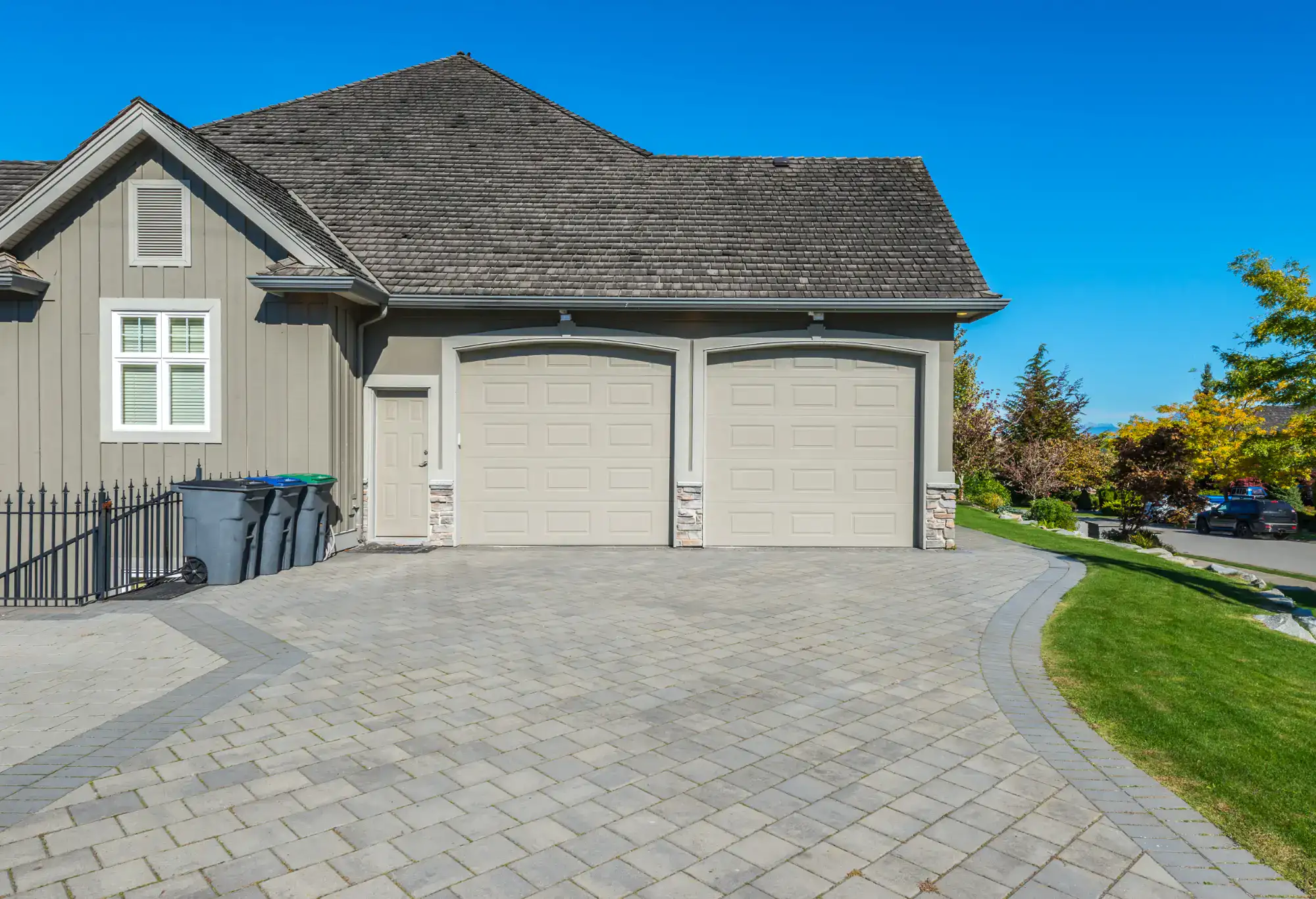
Driveway repaving and sidewalk replacement also require permits throughout Suffolk County — something that surprises a lot of homeowners who assume paving is purely cosmetic. If you’re replacing an old asphalt driveway or putting in a new walkway, you’ll need to file before work begins.
Some projects don’t require permits: painting, wallpapering, replacing flooring without structural changes, and swapping out windows or doors of the same size in the same opening are generally exempt. The distinction usually comes down to whether the work is structural, electrical, plumbing-related, or changes the footprint of the home.
Suffolk County’s coastal geography adds another layer for some properties. Work within 300 feet of tidal wetlands or 100 feet of freshwater wetlands may also require approval from the NYS Department of Environmental Conservation, separate from the town building permit. If your property backs up to a bay, creek, or pond — common throughout eastern Suffolk County and parts of Islip and Babylon — that’s worth factoring in before you start planning.
When you’re unsure whether a project needs a permit, assume it does and verify with your town’s building department. The cost of confirming is zero. The cost of finding out later that you needed one is not.
For most straightforward residential projects, expect a processing time of two to four weeks from the time of a complete application submission. That timeline assumes your paperwork is in order — signed and notarized application, a site plan drawn to scale, architectural drawings bearing the seal of a licensed New York State engineer or architect where required, and proof of contractor licensing and insurance. An incomplete application restarts the clock.
Eastern Suffolk County towns tend to run slower. In communities like East Hampton, Southampton, Southold, and Shelter Island, additional review layers often apply — historic district overlays, Architectural Review Board jurisdiction, scenic preservation designations. A project that takes two weeks to approve in Islip might take two months in Southampton. That’s not a complaint about those towns; it’s the reality of doing work in areas with significant historic and environmental protections.
Spring and early summer are peak seasons for permit applications in Suffolk County, which can push timelines out further. If you’re planning a deck, patio, or driveway project for summer use, filing in early spring gives you a real buffer. Waiting until May to apply for a June start date is a gamble.
Retroactive permits — getting approval after work is already done — take longer than upfront permits, typically four to eight weeks, and often require partial deconstruction so inspectors can review what’s behind the finished surfaces. That alone is a strong argument for handling permits before the first shovel goes in the ground.
Want live answers?
Connect with a Corsino Construction expert for fast, friendly support.
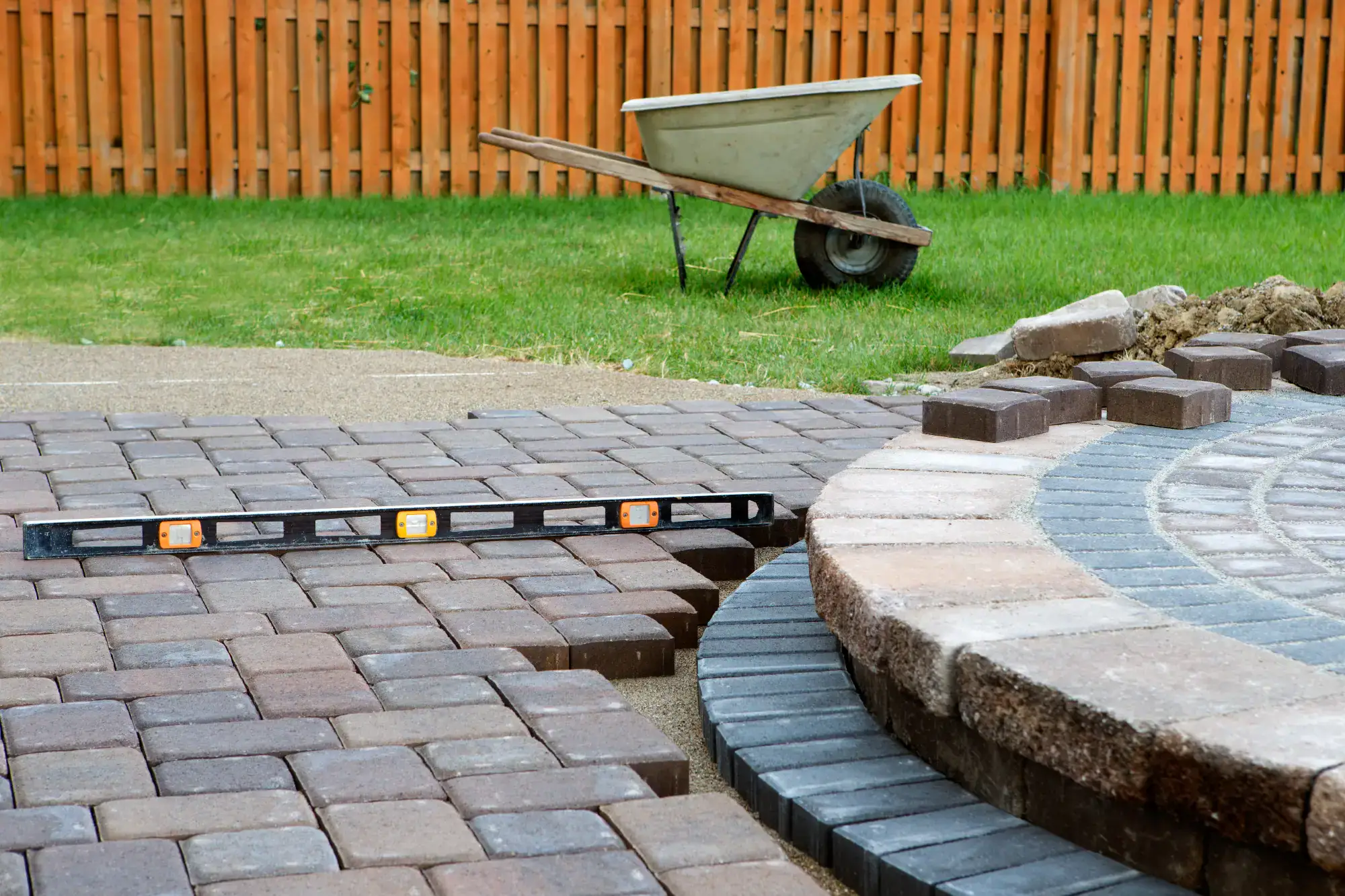
Patios and driveways occupy a gray area that trips up a lot of homeowners. The assumption is that because they’re ground-level and not attached to the house, they don’t need permits. In Suffolk County, that assumption is often wrong.
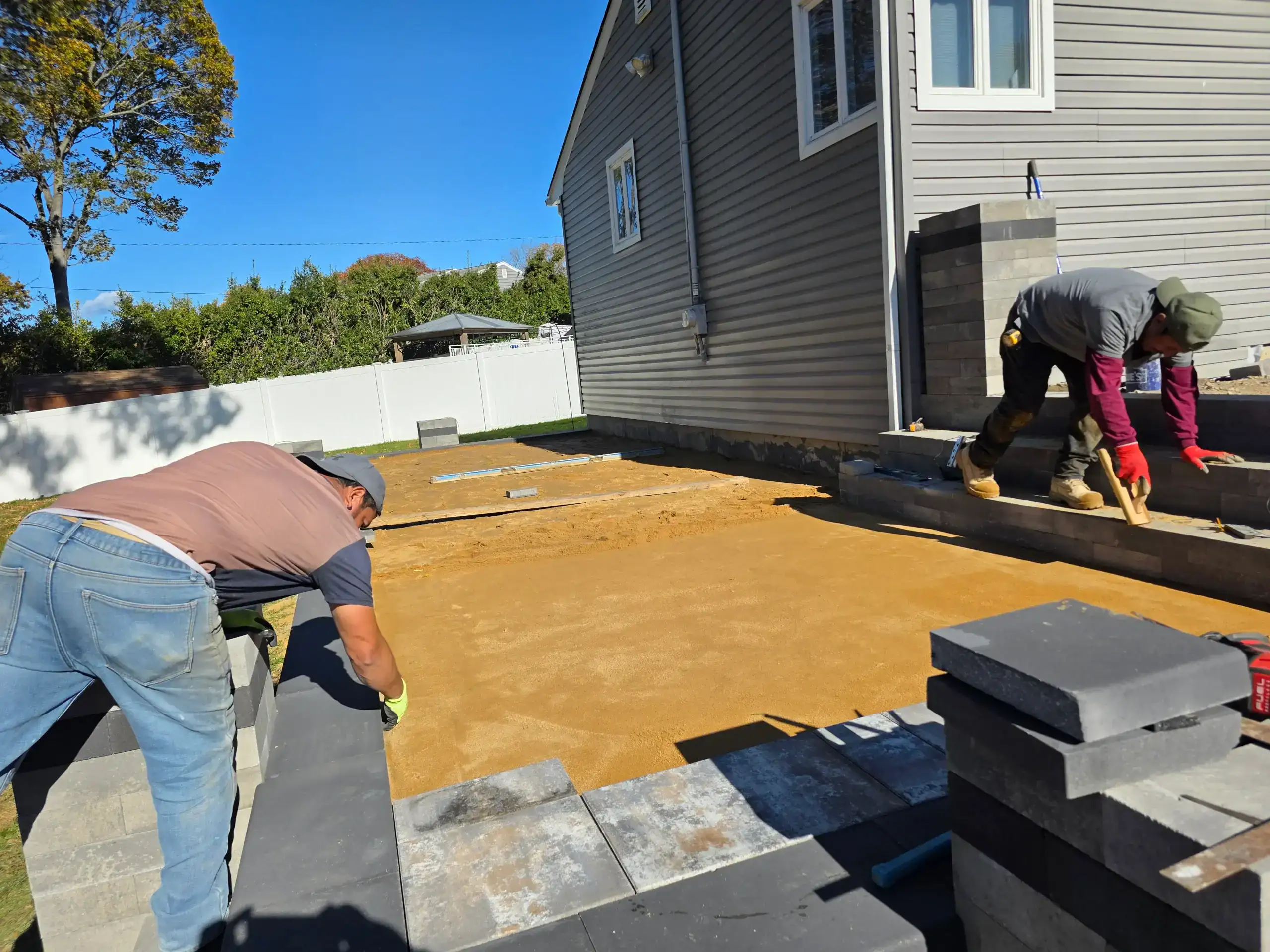
Paving permits are required for driveway repaving or replacement and for sidewalk replacement throughout the county. A patio that’s attached to the home, elevated, or part of a larger outdoor structure will almost certainly need a permit. Even a freestanding ground-level patio may require one depending on size, materials, and the specific town’s rules.

Fines for unpermitted work on Long Island range from $500 to $5,000 per violation. That’s the immediate financial hit. But the longer-term consequences tend to be worse.
Unpermitted work shows up — or rather, doesn’t show up — in permit records. When a buyer’s attorney runs a search on your property before closing, they’re looking at what was built and what was permitted. A patio, driveway, or addition that has no permit on file raises an immediate question about what else might have been done without one. Deals slow down. Buyers ask for price reductions. Some walk away entirely.
New York law requires sellers to complete a Seller’s Disclosure Statement that includes questions about unpermitted work. Failing to disclose it isn’t just ethically problematic — it can result in legal action after closing, demands for compensation, or a buyer unwinding the transaction entirely.
There’s also the insurance angle. If unpermitted work is involved in a claim — a deck collapses, a driveway floods a neighbor’s property, a patio causes a structural issue — your insurer has grounds to deny coverage. The permit isn’t just bureaucratic paperwork. It’s the documentation that says the work was reviewed, inspected, and meets code. Without it, you’re carrying risk that most homeowners don’t realize they’ve taken on.
The retroactive path is available, but it’s not the easy out it sounds like. Getting a permit after the fact in Suffolk County typically takes four to eight weeks, costs more than an upfront permit, and may require tearing open finished work so an inspector can see what’s underneath. If the work doesn’t meet current code, you may be required to bring it into compliance before a permit can be issued — which means additional cost on top of everything else.
The moment unpermitted work surfaces in a real estate transaction, the seller’s position weakens. Buyers negotiate harder. Lenders sometimes refuse to finance properties with open or missing permits. Title insurance can become complicated. And if the seller didn’t disclose the issue, the legal exposure follows them past closing.
This scenario plays out regularly in Suffolk County, where the housing stock includes a significant number of post-war homes — ranch houses, Cape Cods, split-levels — that have been added onto, finished, and modified over decades. Basements converted to living space, garages turned into rooms, decks and patios added without permits. Sometimes the current owner did the work. Often they inherited the problem from a previous owner.
If you’re planning to sell and suspect there’s unpermitted work, the earlier you address it, the better your position. A retroactive permit, while slower and more expensive than an upfront one, puts you back on solid ground. A licensed contractor who knows the local building department process can help you understand what’s involved before you’re under contract and racing against a closing date.
If you’re planning a renovation now and wondering whether to pull a permit, the calculus is straightforward. The permit process takes a few weeks and costs a fraction of what unpermitted work can cost you when it surfaces — either in fines, forced remediation, or a reduced sale price down the road. Suffolk County’s real estate market is active, buyers are informed, and their attorneys are thorough. Work that was done right, with permits and final inspections on file, is an asset. Work that wasn’t is a liability.
The permit process in Suffolk County is manageable — but it’s not simple, and it’s not the same from one town to the next. Getting it right means knowing which department to file with, what documentation is required, and how to keep a project moving through inspections without delays. That’s work a licensed contractor should be doing on your behalf, not something you should be figuring out on your own after signing a contract.
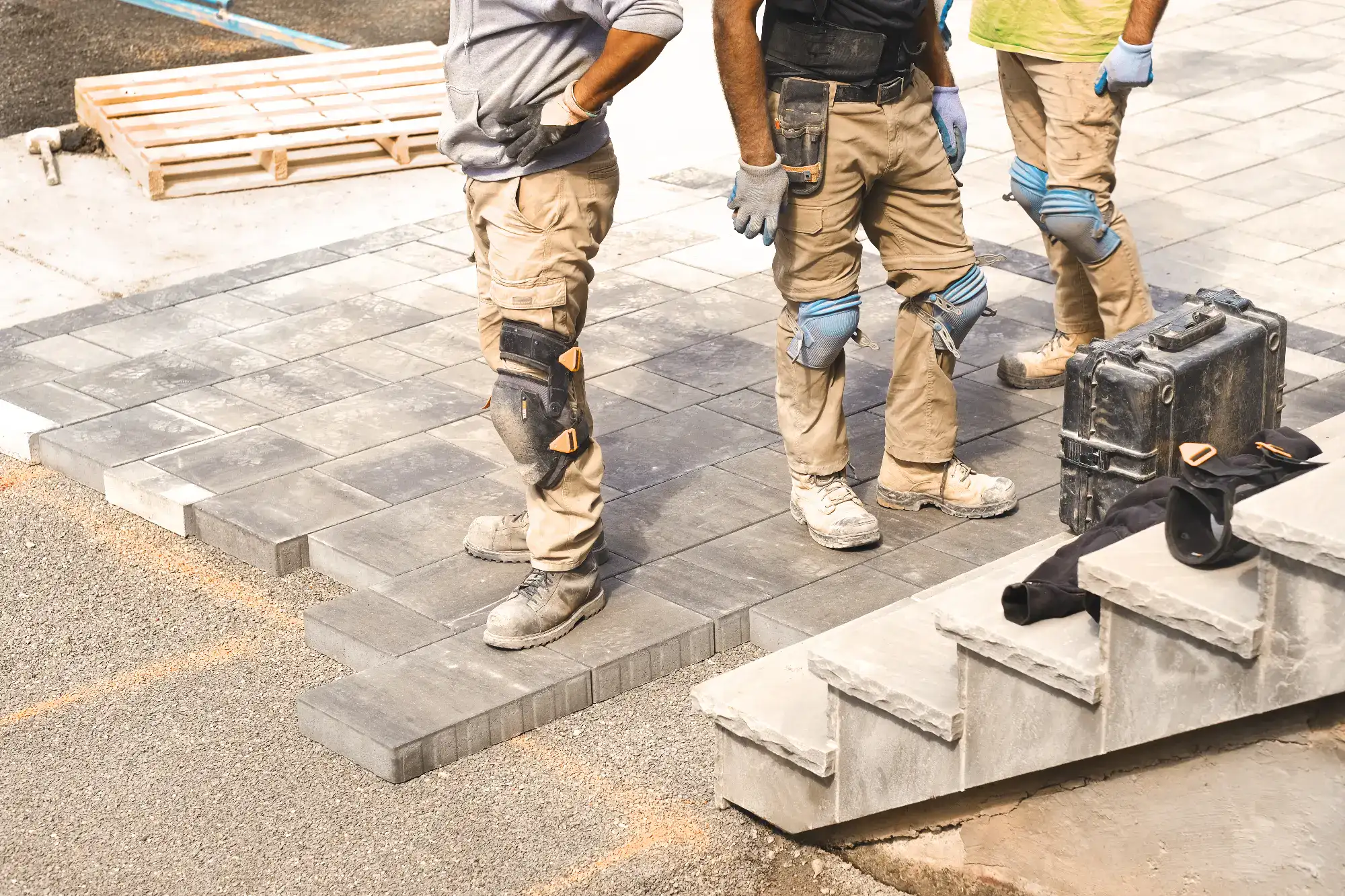
We’ve been working with Suffolk County building departments since 2000. We handle the full permit process — application, plans, inspections, final sign-off — as part of every project. Our crew members are licensed and insured, which is what makes it possible to pull permits legally in the first place. And because we use in-house professionals rather than rotating subcontractors, the same people who built the project are accountable when the inspector shows up.
If you’re planning a deck, patio, driveway, or any renovation that touches the structure of your home, reach out to Corsino Construction Corp before you start. We’ll give you a clear picture of what’s required and a fixed estimate that doesn’t change once work begins.
Article details:
Share:
Continue learning: