Not all driveways survive Long Island winters the same way. Here's what the pavers vs. concrete debate actually looks like in Suffolk County.
Share:
Summary:
Every spring, it’s the same story across Suffolk County. The snow melts, the temperatures climb, and homeowners walk outside to find their concrete driveway looking worse than it did in October. New cracks. Wider gaps. Maybe a section that’s starting to heave near the garage.
If you’re at the point where you’re done patching and ready to make a real decision, this guide is for you. We’ll walk through how pavers and concrete actually compare — on cost, durability, maintenance, and long-term value — with a focus on what those materials actually do when they’re sitting under a Long Island winter for 20 or 30 years.
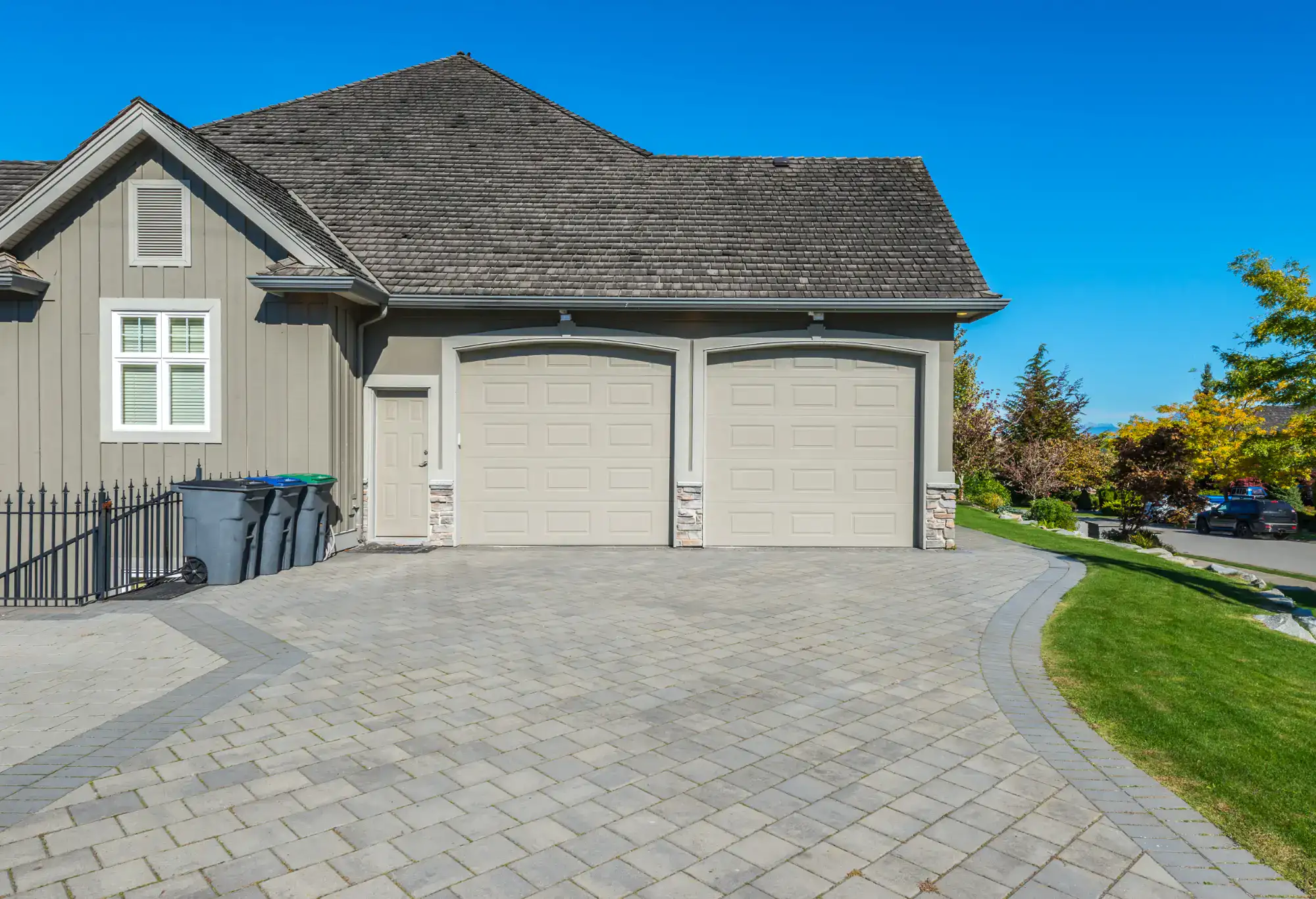
The number homeowners usually see first is the upfront installation price, and yes — concrete costs less to install than pavers. In Suffolk County, concrete driveways typically run $12–$25 per square foot installed. Pavers come in at $20–$35 per square foot. For a standard two-car driveway around 600 square feet, that’s roughly $7,200–$15,000 for concrete versus $12,000–$21,000 for pavers.
That gap is real, and we’re not going to pretend it isn’t. But the upfront price is only part of the comparison. The more honest question is: what does each option cost you over 20 or 30 years?
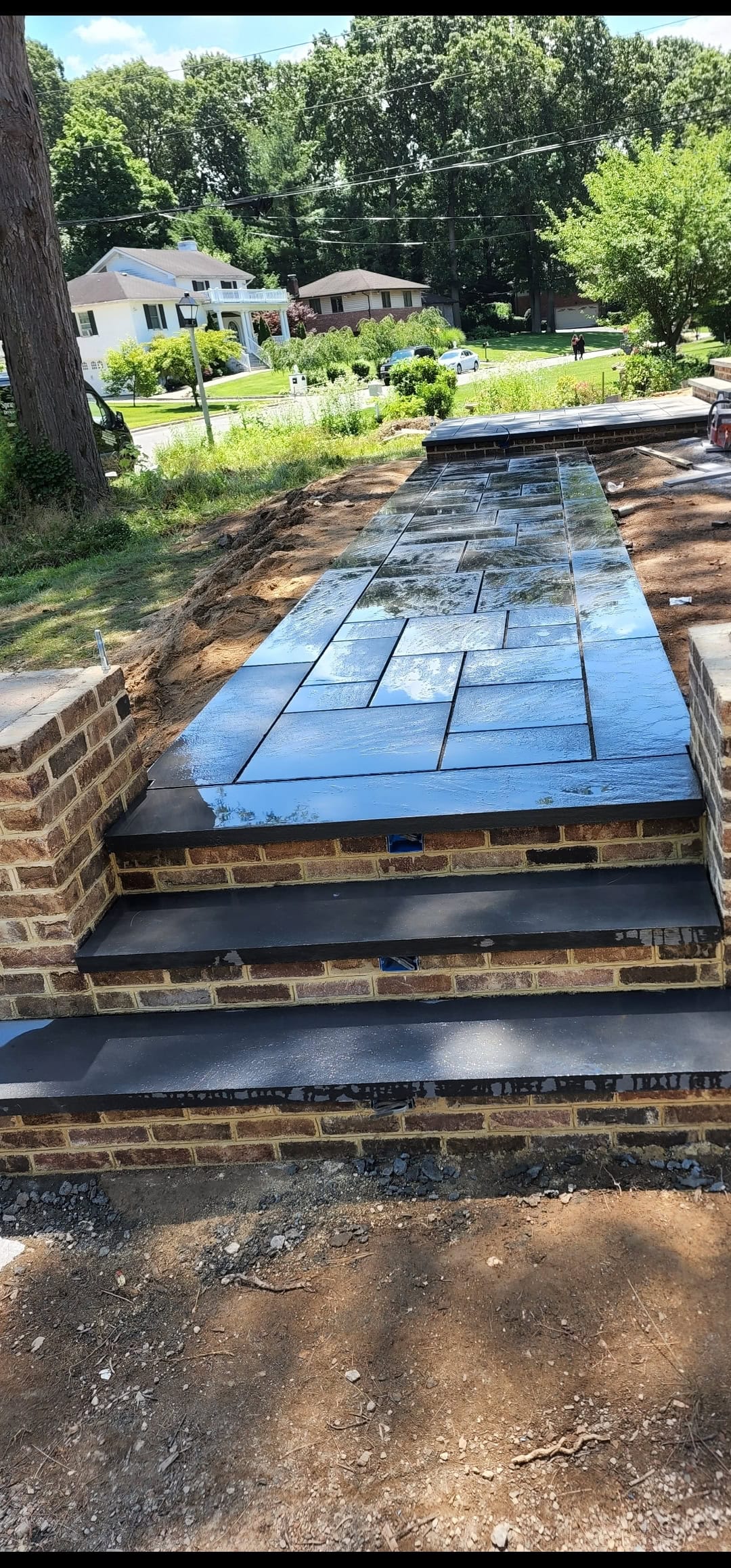
Concrete driveways typically last 20–30 years before they need major repair or full replacement. Paver driveways, when properly installed, last 25–75 years — and when individual units are damaged, you replace those specific pieces rather than resurfacing the whole surface. That difference in repairability changes the long-term math significantly, especially when you factor in what concrete repairs actually cost and what they look like when they’re done.
Here’s something most cost comparisons skip over: concrete patches never match the original surface. Once you’ve patched a crack or a spalled section, that repair is visible. The color is off, the texture is different, and over time you end up with a driveway that looks like a patchwork of fixes rather than a finished surface.
That matters for curb appeal, and it matters even more if you’re thinking about selling. Beyond appearance, the repair costs themselves accumulate. A small crack gets patched. Then the patch edges start to lift. Then a new crack opens nearby. Each repair is a few hundred dollars, but you’re doing it every few years rather than once in a while.
Eventually, the cost of repeated patching approaches the cost of resurfacing — and resurfacing concrete is not a cheap project. With pavers, the repair equation is different. If a paver cracks or shifts, you pull that unit out and replace it. The replacement is virtually invisible if the same material is used, and the cost is a fraction of any concrete repair job.
That’s not a minor convenience — it’s a structural advantage that compounds over time. A paver driveway that’s been well-maintained for 30 years can still look like it was installed last season. A concrete driveway at 30 years is usually showing its age in ways that are difficult and expensive to reverse.
Real estate agents across Nassau and Suffolk County consistently point to paver driveways as one of the highest-impact exterior upgrades a homeowner can make. Homeowners can recoup 50–80% or more of their investment at resale, with paver driveways landing at the higher end of that range because buyers perceive them as a premium feature rather than a standard one. Concrete in good condition adds value too, but it’s seen as expected — not as a selling point.
A lot of homeowners consider stamped concrete as a middle-ground option — you get the look of pavers at a lower price point. It’s worth addressing directly, because it comes up constantly and the answer matters for anyone dealing with Long Island winters.
Stamped concrete is still a rigid slab. It has the same structural weakness as plain concrete when it comes to freeze-thaw stress: it resists movement rather than accommodating it, and eventually it cracks. The difference is that when stamped concrete cracks, repairs are more expensive than standard concrete because the decorative pattern has to be matched. You’re not just patching a crack — you’re trying to replicate a surface texture and color that has aged and faded since it was first poured. It rarely looks right.
The visual appeal of stamped concrete also tends to degrade faster than pavers. The surface layer that carries the color and texture is the first thing to show wear, salt damage, and UV fading. After a few Long Island winters with heavy road salt runoff, a stamped concrete driveway can look noticeably worn while a quality paver driveway still looks sharp.
If the goal is a driveway that looks good and holds up, stamped concrete asks you to accept the downsides of both concrete and pavers without the full benefits of either. We install all three — concrete, pavers, and asphalt — and we’ll give you an honest recommendation based on your property and your goals. But for most Suffolk County homeowners who are choosing between pavers and stamped concrete for aesthetic reasons, the long-term performance argument points clearly toward pavers.
Want live answers?
Connect with a Corsino Construction expert for fast, friendly support.
Pavers have real advantages — but they also come with honest tradeoffs, and you deserve a clear picture of both before you commit to anything.
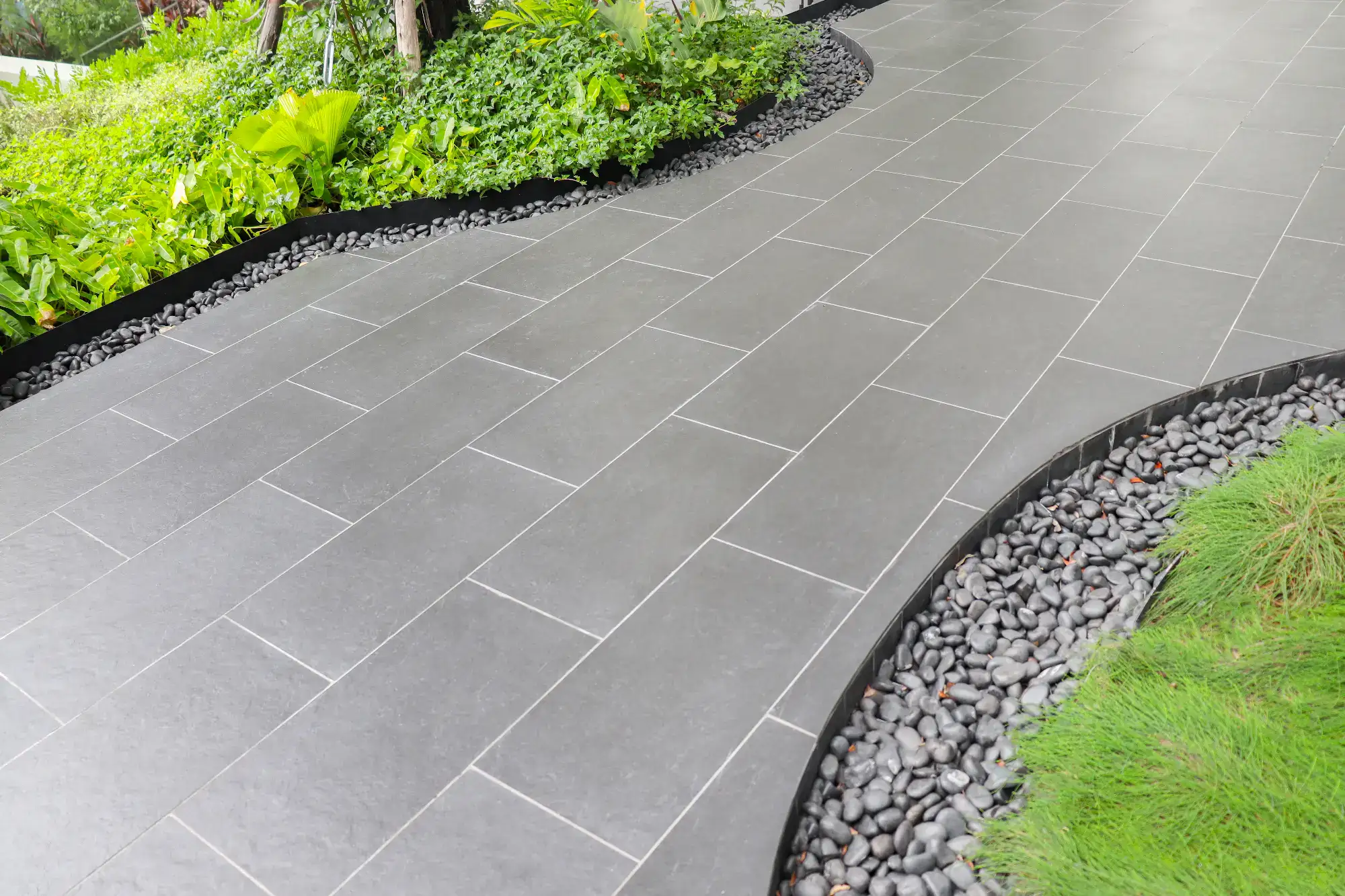
On the upside: pavers handle freeze-thaw cycles better than any rigid surface material, they’re repairable at the individual unit level, they offer design flexibility that concrete can’t match, and they tend to hold their value and appearance longer. For properties with drainage challenges — something we see regularly across parts of Suffolk County with clay-heavy soil — permeable pavers can actually help manage stormwater runoff and reduce puddling near foundations.
The tradeoffs are real too. Pavers cost more upfront. Installation takes longer than a concrete pour. And they do require some maintenance over time — specifically, polymeric sand in the joints needs to be replenished periodically, and sealing every few years keeps the surface protected and looking its best.
This is the question that matters most for anyone in Suffolk County, and the answer comes down to physics more than preference.
Long Island experiences approximately 90 or more freeze-thaw cycles per winter. That means temperatures cross the 32°F threshold — freezing and thawing — roughly 90 times between November and March. Each time that happens, any water that has worked its way into a crack or micro-fracture in a rigid surface expands when it freezes, widening the crack slightly. When it thaws, more water enters. The next freeze widens it further. Repeat that 90 times in a single winter, and you understand why concrete driveways in this climate deteriorate faster than the national averages suggest.
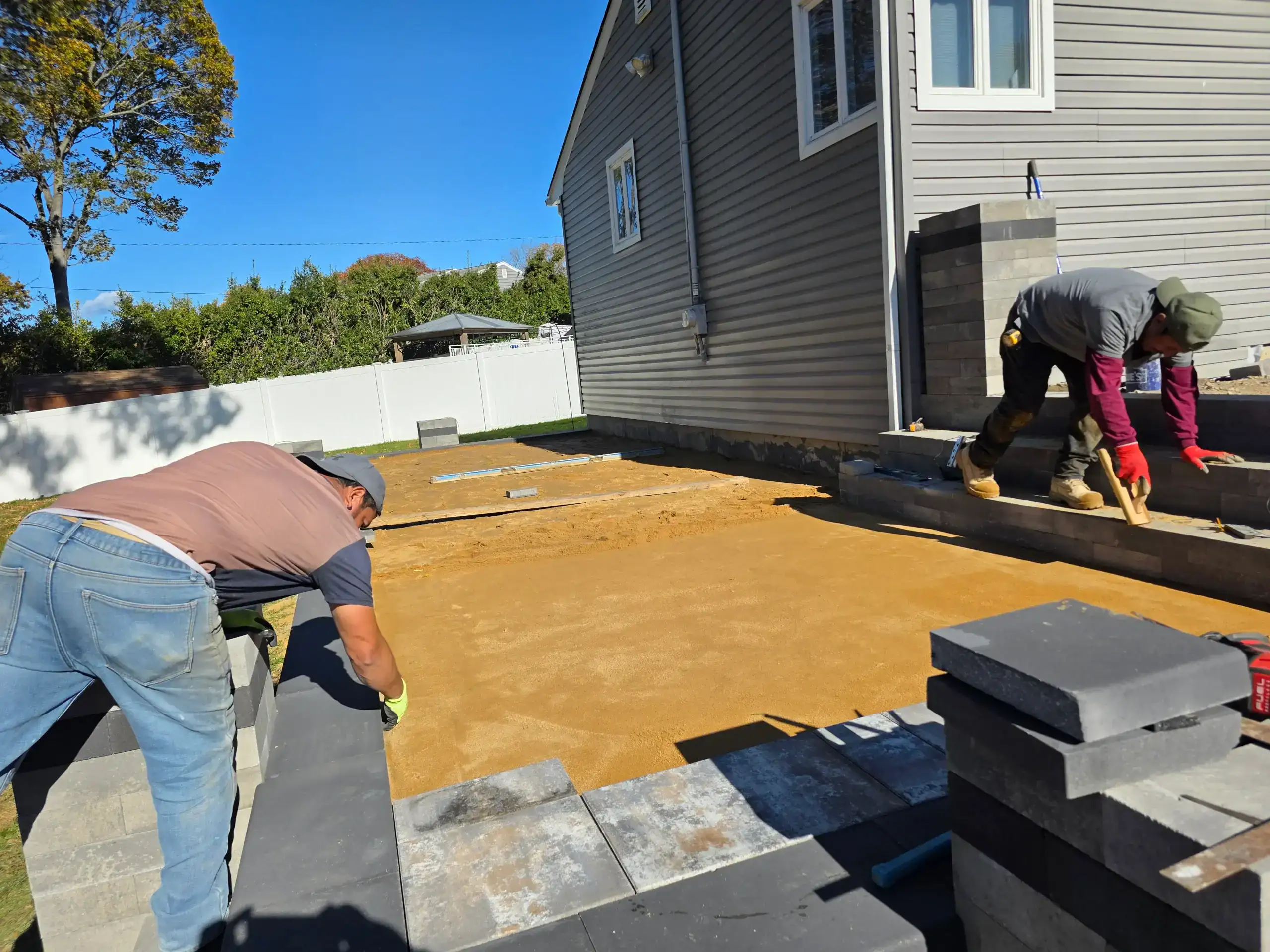
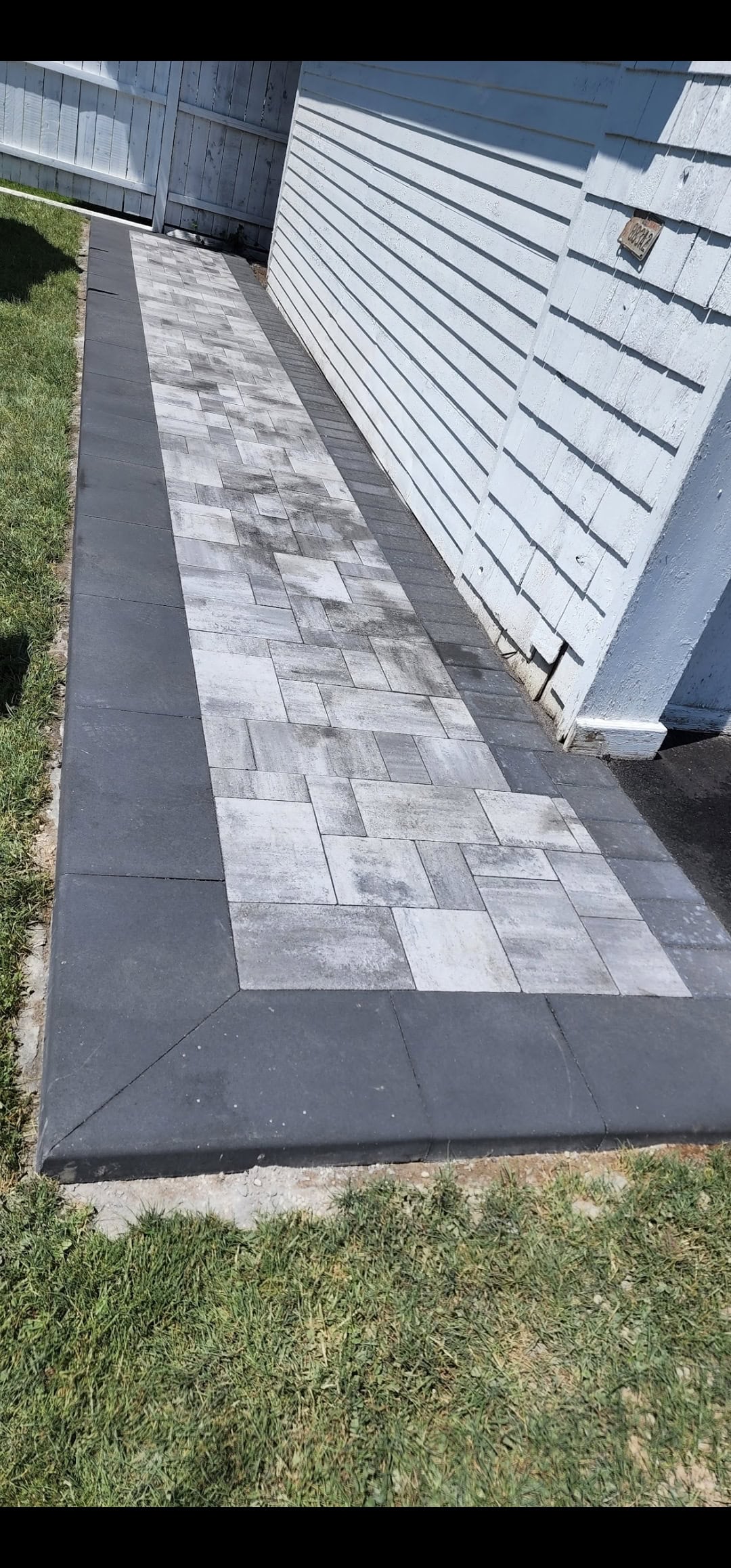
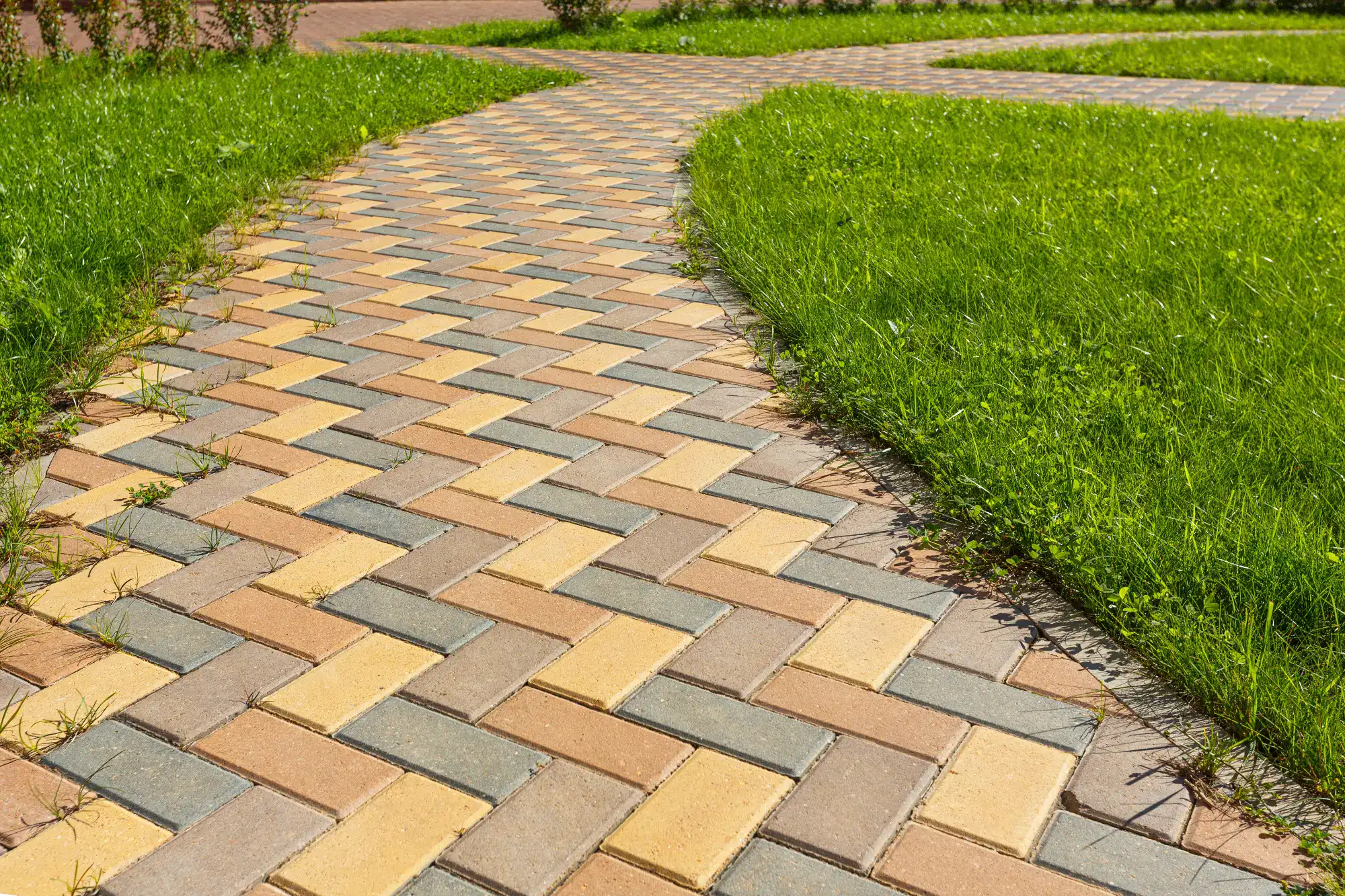
Interlocking pavers are designed around a different principle entirely. Instead of trying to resist movement — which is what a rigid concrete slab does — a paver system accepts movement and controls it. The individual units are set in a compacted aggregate base with sand-filled joints between them. When the ground shifts or expands under freeze-thaw pressure, the system flexes rather than fractures. No single point bears all the stress. That’s why paver driveways in cold climates routinely outlast concrete by decades.
It’s also worth noting that not all pavers perform equally in freeze-thaw conditions. High-density concrete pavers with low water absorption rates hold up significantly better than lower-quality alternatives. This is one of the reasons material sourcing matters — pavers designed for Northeast climates behave differently than what you’d find at a big-box home improvement store. When we spec materials for a Suffolk County driveway, we’re choosing for this climate specifically, not just for appearance.
Concrete has earned its reputation as a durable, reliable driveway material — and in the right conditions, it is. The honest version of this comparison gives concrete its due.
The genuine advantages: concrete costs less to install, it goes in faster, and it’s a familiar, proven material that most contractors know how to work with. A properly installed concrete driveway on a well-prepared base can look clean and hold up reasonably well for 15–20 years before showing significant wear. For homeowners on a tighter budget who plan to sell within the next decade, concrete can be a reasonable choice if the installation is done right.
Where concrete struggles in Suffolk County specifically comes down to a few compounding factors. The freeze-thaw issue we described above is the biggest one — rigid slabs and repeated thermal stress are not a good combination over time. But there’s also the salt problem. Winter road salting is heavy on Long Island, and salt runoff reaches driveways. Salt accelerates a process called spalling, where the concrete surface deteriorates from the top down — pitting, flaking, and eventually crumbling in ways that can’t be reversed without resurfacing. If your driveway is close to the street or in a low spot where runoff collects, this process happens faster than you’d expect.
There’s also the drainage question. Concrete is an impermeable surface. Water that falls on it has to go somewhere — usually toward your foundation, your lawn, or the street. For properties in parts of Suffolk County where clay soil already creates drainage challenges, adding a large impermeable surface can make an existing problem worse. Permeable pavers address this directly by allowing water to drain through the joints rather than run off the surface. It’s a specific local condition worth factoring into your decision, particularly if you’ve already noticed pooling near your garage or along your foundation.
For most Suffolk County homeowners, the honest answer is that pavers hold up better over time in this climate — but the material is only part of what determines whether a driveway lasts. The base preparation, the drainage design, the compaction work, the edge restraints — those are what separate a driveway that looks great for 30 years from one that starts showing problems in year three. We’ve seen well-installed concrete driveways outlast poorly installed paver jobs. The installer’s knowledge of local soil conditions, freeze-thaw behavior, and proper base work matters as much as the material itself.
If you’re weighing this decision for a home in Coram, Islip, Huntington, Lake Ronkonkoma, or anywhere else across Suffolk County, we’re happy to walk through the specifics with you — what your property’s drainage looks like, what the soil conditions are in your area, and what material makes the most sense for your goals and your budget. No pressure, no overselling.
Corsino Construction Corp has been doing this work in Suffolk County since 2000. Reach out by phone or text at 516-693-4270, Monday through Friday, 9am–5pm, and we’ll give you a straight answer and a detailed estimate that doesn’t change.
Article details:
Share:
Continue learning: