Thinking about updating your home's exterior? Here's what Suffolk County homeowners should know before they start: from ROI to materials to permits.
Share:
Summary:
Most Suffolk County homeowners don’t think of their deck, patio, or walkway as an investment. They think of it as an expense, seeing it as something they’ll get to eventually when the timing is right and the budget is comfortable. But here’s what the data shows: exterior home improvements are, category for category, the highest-returning projects you can make on your home. Nine out of the top ten home improvements with the best ROI in 2024 were exterior projects.
If you’ve been putting off a deck, a patio, a pool surround, or a walkway refresh, this page is worth your time.
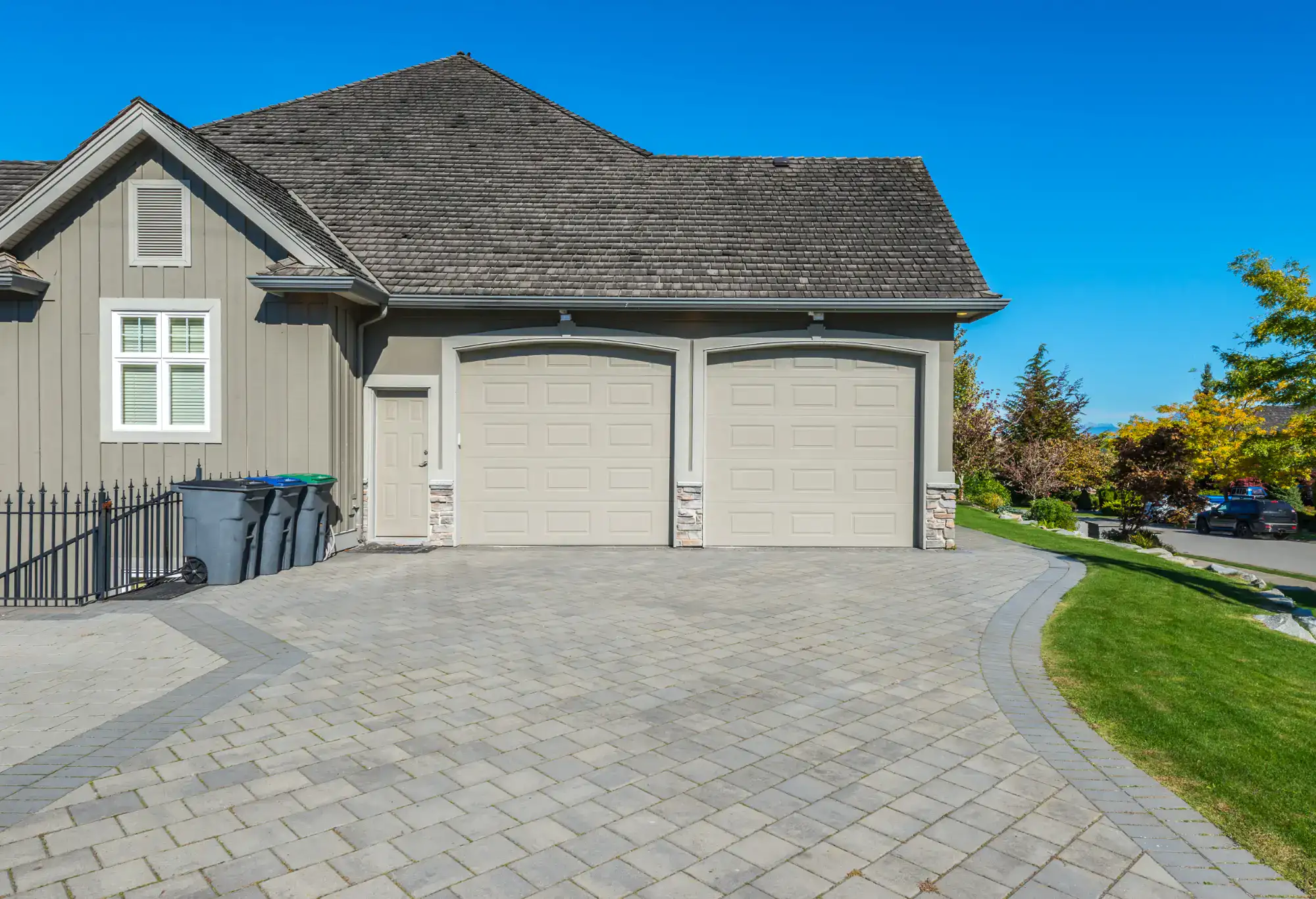
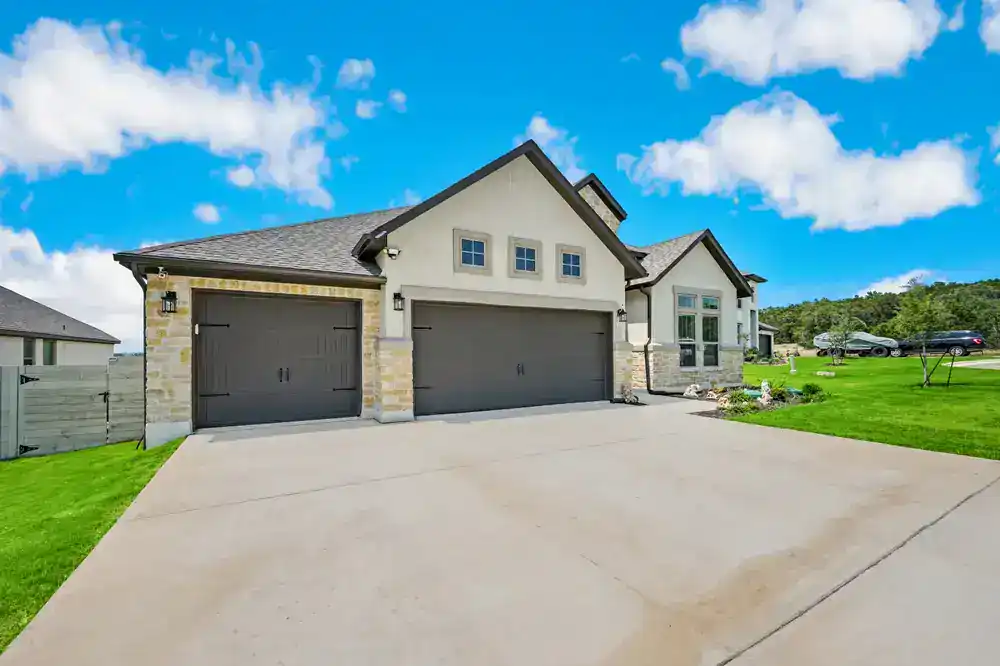
There’s a reason real estate agents talk about first impressions. Buyers form an opinion about a home before they ever walk through the front door, and that perception directly affects what they’re willing to pay. A Michigan State University study found that curb appeal alone can increase a home’s perceived value by 5 to 11 percent. On a $400,000 home, that’s up to $44,000 in added perceived value before anyone sees the kitchen.
But the return on exterior renovations isn’t just about perception. According to the NAR Remodeling Impact Report, a professionally installed patio can recover up to 95 percent of its cost. A new wood deck can recover up to 89 percent. A yard upgrade that includes a natural walkway was expected to recover 100 percent of cost for sellers. These aren’t marketing claims; they’re figures from appraisers and real estate professionals.
The honest answer is that it depends on your home, your goals, and how long you plan to stay. But some projects consistently outperform others, and in Suffolk County specifically, a few stand out.
Decks are one of the most requested exterior projects we handle, and for good reason. A well-built deck extends your living space into the backyard without the cost of a full addition. In communities like Bay Shore, Huntington, and Brookhaven, where backyards are a genuine part of daily life from May through October, a deck isn’t a luxury. It is expected.
The key is material selection. Composite decking performs best in Suffolk County’s coastal climate because it resists moisture, salt air, and temperature swings without warping or splitting the way untreated wood can. Pressure-treated lumber has its place, but in neighborhoods close to the water, composite is the smarter long-term choice.
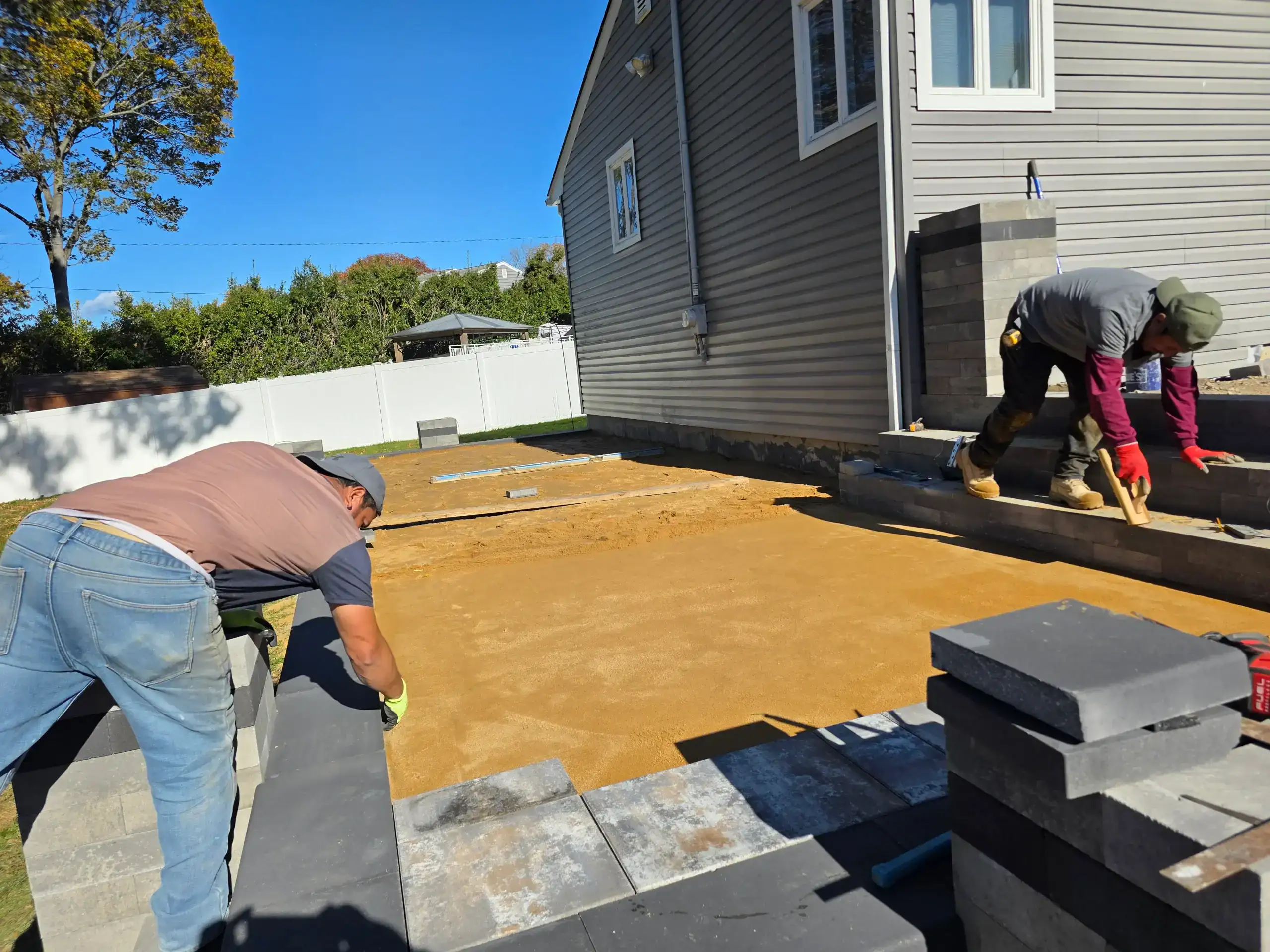
Patio installation is another high-return project, and it’s more versatile than most homeowners realize. A paver patio can serve as a dining area, a fire pit space, or a seamless transition from the deck to the yard. Standard patio installation typically runs $15 to $25 per square foot for concrete pavers, with a basic 12-by-16 patio coming in around $3,000 to $4,500. More elaborate designs with natural stone or complex patterns can reach $8,000 to $12,000.
The range is wide because the variables are real. Base preparation, drainage planning, material grade, and site conditions all affect the final number.
Pool patios deserve their own mention because they’re genuinely common in Suffolk County. Many of the homes we work on, particularly in Medford, West Islip, West Babylon, and Oakdale, have in-ground pools that were installed decades ago with concrete surrounds that are now cracked, stained, or just dated. Replacing or upgrading a pool patio with pavers dramatically changes how the entire backyard looks and functions. It is one of the projects where the visual impact is immediate.
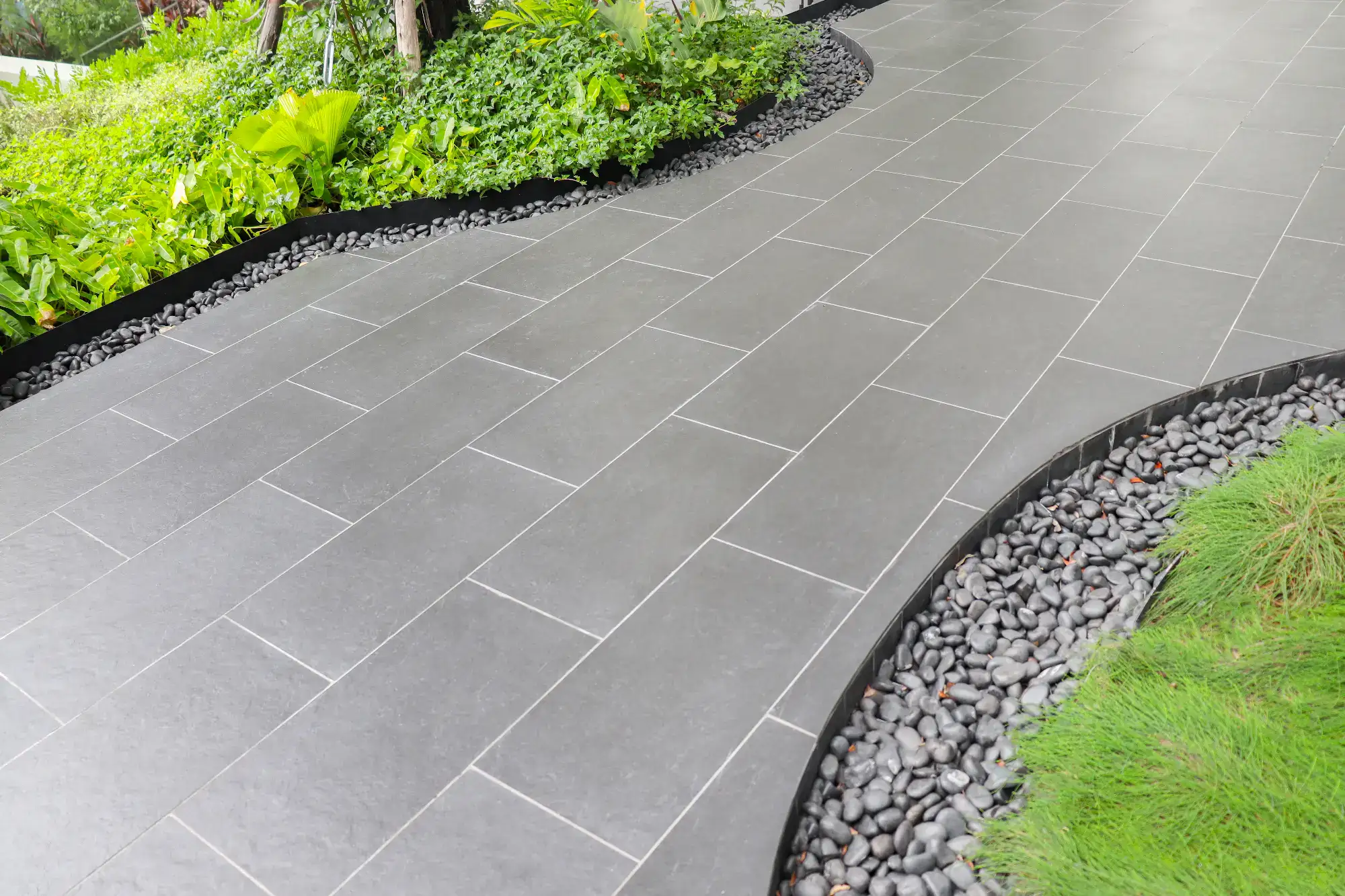
Walkway paving is often the last thing homeowners think about and the first thing visitors notice. A crumbling or uneven front walkway undermines everything else you’ve done to the exterior. Paver walkways, in particular, hold up well to Long Island’s freeze-thaw cycles when they’re installed with the right base depth and drainage. This is the part most homeowners can’t see but matters most.
This is where a lot of exterior renovation projects go wrong, and it’s something that doesn’t come up enough in contractor conversations. Long Island isn’t just “the Northeast.” It is a coastal environment with specific conditions that wear down exterior materials faster than most of the country. Salt air accelerates corrosion and deterioration in wood, metal fasteners, and certain composite products. Freeze-thaw cycles, where moisture gets into porous materials, freezes, expands, and thaws repeatedly over a winter, crack concrete, heave paver bases, and split untreated wood.
The soil conditions in Suffolk County add another layer. Long Island’s glacially deposited sandy soil shifts and settles differently than dense clay soils you’d find in other parts of New York. A patio or walkway base that isn’t built to account for that movement will show it within a few years through uneven pavers, gaps at the edges, and drainage problems that weren’t there at installation.
We’ve been working in Suffolk County since 2000, and the material and base preparation decisions we make on every project are informed by what we’ve seen hold up and what hasn’t. We use composite decking instead of untreated pine in coastal neighborhoods. Proper base depth and compaction are required for every patio, regardless of size. Drainage planning needs to account for where the water ends up, because in Suffolk County, that matters for your foundation, not just the surface. These aren’t upsells. They’re the difference between a project that looks the same in ten years and one that needs to be redone in five.
The other thing worth knowing is that material selection affects your permit and inspection process. Suffolk County building departments have specific requirements for structural exterior work like decks, retaining walls, and certain patio configurations, and the materials you use have to meet those standards. We handle all permit applications and coordinate inspections with Suffolk County on every project, so the work is done to code from the start. That matters when it comes time to sell your home. Unpermitted exterior work can complicate or delay a sale, and it’s a problem that’s entirely avoidable.
Want live answers?
Connect with a Corsino Construction expert for fast, friendly support.
One of the most common frustrations we hear from homeowners is that they didn’t know what they were getting into. They aren’t worried about the cost, but rather the process. How long does it take? Who is doing the work? What happens if it rains for a week? These are fair questions, and they deserve straight answers.
Most complete exterior renovations take two to four weeks, depending on scope. Siding replacement on an average home typically takes five to seven days. A deck or patio installation can range from a few days for a straightforward project to two weeks for something more complex.
One thing to factor in: Suffolk County permit processing can add one to two weeks to your start date. We account for that upfront in every project schedule, so there are no surprises.
The contractor you hire matters more than almost any other decision in this process. Two contractors can use the same materials on the same project and produce results that look completely different five years later. This happens because the difference is in the prep work, the base construction, the drainage planning, and the details that aren’t visible when the job is done.
There are a few things worth asking any contractor before you sign anything. Do they use in-house crews, or do they subcontract the work? This matters more than most homeowners realize. When a contractor subs out the labor, the people showing up to your job site aren’t that company’s employees. They are simply whoever was available. Quality standards, communication, and accountability all get diluted.
We use in-house licensed crews on every project, which means the same standards apply from the first day to the last.
Ask about permits. Any contractor who tells you a deck or structural patio doesn’t need a permit in Suffolk County is either wrong or cutting corners. Permitted work protects you. It means the project was inspected and meets code, which matters both for safety and for your home’s resale value. We manage the entire permit process, from application through final inspection.
Ask for a written estimate with a fixed price. Do not accept a range or a “we’ll know more once we start” promise; get a real number that reflects the true scope of work. We provide detailed written estimates before any project begins, and that price doesn’t change unless you change the scope. If a contractor can’t give you a fixed number after walking your property, that’s worth paying attention to.
Finally, ask how long they’ve been working specifically in Suffolk County. Local experience isn’t just a marketing line. It means we know the soil conditions, the permit requirements, the material performance in this climate, and the specific challenges that come with the housing stock here. A lot of Suffolk County homes were built in the 1970s and 1980s, and they come with their own set of considerations that a contractor who primarily works elsewhere may not anticipate.
Timing matters more than most homeowners account for. The practical window for major exterior work in Suffolk County runs from April through November. Winter weather creates real constraints for base preparation, paver installation, and deck construction, and rushing a project before the ground is ready affects the finished result.
Spring is the busiest season for exterior renovation contractors, and the demand is real. Homeowners who start planning in late winter by getting quotes, finalizing designs, and submitting permits are the ones whose projects are complete and ready to use by Memorial Day weekend. Homeowners who wait until May to start the process often find themselves scheduled for July or August, which is fine, but it’s worth knowing upfront.
The permit timeline is the piece most people don’t account for. Suffolk County permit processing typically adds one to two weeks to a project’s start date. That’s not a problem if you know about it in advance. It only becomes a problem if you’re expecting to break ground the week after signing a contract. We factor permit lead times into every project schedule from the first conversation, so the timeline you’re given is the timeline we expect to meet.
It’s also worth thinking about sequencing if you’re planning multiple exterior projects. A deck, a patio, a walkway, and a pool surround all interact with each other. The order in which they’re done affects the finished result and the overall cost. Doing them with one contractor and one crew means the sequencing is coordinated from the start, the site is managed consistently, and you’re not trying to schedule four separate companies around each other. That’s how most of our larger exterior projects work, and it’s one of the reasons most of our new work comes from referrals, with neighbors recommending us to neighbors because the process went the way it was supposed to.
If you’re thinking about listing your home in the next year or two, the timing conversation is especially important. Exterior renovations that are permitted, inspected, and documented add value to a sale. Rushed, unpermitted work creates complications. Starting the planning process early gives you time to do it right.
Exterior renovations are some of the best-returning projects you can put money into, and in Suffolk County, where the outdoor living season is real and home values are high, that’s especially true. The right deck, patio, walkway, or pool surround doesn’t just change how your home looks, it changes how you use it while protecting the equity you’ve built. The difference between a project that holds up and one that doesn’t comes down to material selection, base preparation, permit compliance, and the people doing the work. Those things aren’t visible when the job is done, but they show up over time. If you are planning exterior work and want an honest conversation about the process, costs, and timeline, reach out to Corsino Construction Corp today.
Article details:
Share:
Continue learning: