Cracked walkway, aging deck, faded siding, and no idea where to begin? This guide breaks down what exterior remodeling costs on Long Island and how to prioritize it.
Share:

Summary:
You already know something needs to be done. Maybe the deck has seen better days, the walkway is cracking after another rough winter, or the pool patio is starting to shift and settle. The problem isn’t that you don’t want to fix it. It is that you don’t know where to start, what it is going to cost, or how to find someone you can fully trust to do it right.
That feeling is more common than you might think, especially here in Suffolk County where homes are a serious investment and contractors aren’t always easy to vet. So let’s cut through the noise and give you something useful.
“Exterior remodeling” means something different depending on who you ask. For some homeowners, it means replacing faded siding or upgrading windows. For others, it means building a new deck, repaving a crumbling walkway, or finally doing something about the pool patio that has been a tripping hazard for two summers.
In practice, a full exterior renovation can cover siding replacement, window and door upgrades, roofing work, deck and patio installation, pool patio construction, driveway and walkway paving, exterior painting, and facade improvements. These projects don’t all have to happen at once, but understanding what falls under the umbrella helps you plan smarter and budget more realistically from the start.

This is the question most homeowners struggle with, and it is the right one to ask before you call anyone. The honest answer is that sequencing matters, and the order isn’t always what you would expect.
Start with the roof if there is any question about its condition. A failing roof doesn’t just cause roof problems. It causes wall problems, insulation problems, and eventually interior damage. Everything underneath it is at risk. Once the roof is sound, siding is next. Compromised siding lets moisture into your wall structure, which leads to rot, mold, and repair costs that dwarf what you would have paid to replace the siding in the first place. Windows come after that, partly for energy efficiency and partly because replacing windows after new siding is installed is a cleaner process than doing it the other way around.
After the envelope of the house is addressed, outdoor living projects like decks, patios, pool patios, and walkways make sense to prioritize based on safety, use, and condition. A deck with structural issues isn’t just an eyesore; it is a liability. A heaving pool patio creates real slip and fall risk. These aren’t cosmetic concerns.
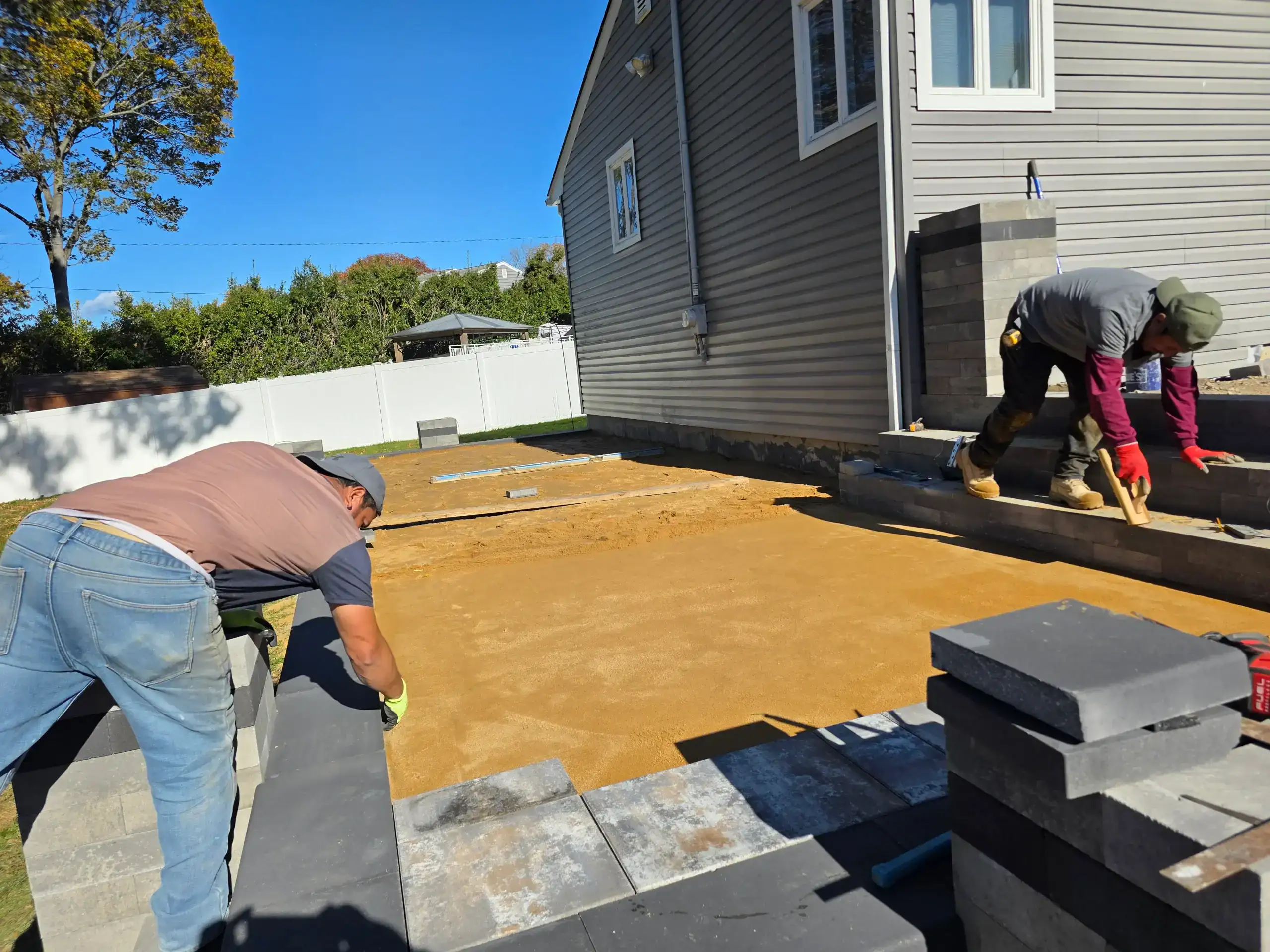
Here in Suffolk County, the sequencing conversation has a local layer to it. Long Island winters are hard on exterior surfaces. The freeze-thaw cycles that repeat throughout the season are particularly brutal on concrete and paver surfaces that weren’t installed with proper base preparation. A walkway or pool patio that was laid without accounting for the soil conditions and drainage underneath it will heave, crack, and fail faster than you might expect. Many homes in communities like West Islip, Babylon, and Medford sit on clay-heavy soil that compounds the drainage challenge. Getting the base right the first time isn’t a luxury. It is the difference between a surface that lasts and one you are replacing in five years.
The coastal exposure across much of Suffolk County adds another layer. Salt air from the Great South Bay, Long Island Sound, and the Atlantic accelerates wear on inferior siding materials and metal fixtures in ways that homeowners further inland don’t deal with. If you live in a waterfront or near-coastal community, material selection matters more than it would in a landlocked suburb. That is a conversation worth having before any exterior project begins.
It depends, but more often than not, bundling makes financial and logistical sense. When you are already mobilizing a crew, pulling permits, and coordinating material deliveries for one exterior project, adding a second or third project to the same contract often costs less than scheduling them separately. You avoid paying duplicate mobilization costs, the permitting process can sometimes be consolidated, and you are not dealing with the disruption of two or three separate construction windows spread across different months.
That said, bundling only works if you are working with a contractor who can handle the full scope. A deck specialist who also handles patios but subs out the paving work to someone they’ve never worked with before isn’t the same as a contractor who manages all of it with their own crew. The distinction matters more than most homeowners realize.
The other practical consideration is timing. Spring and summer are peak seasons for exterior work on Long Island, and quality contractors book up quickly, sometimes four to eight weeks out by the time late spring arrives. If you are thinking about a deck, a walkway, and a pool patio, getting all three into one contract with one contractor in early spring is almost always smoother than trying to schedule them piecemeal through the summer.
From a cost standpoint, exterior remodeling projects in Suffolk County can range widely. Siding replacement typically runs $10,000 to $30,000 or more depending on the material and the size of the home. A full exterior transformation with new siding, roofing, windows, and structural improvements can exceed $75,000. These aren’t small numbers, which is exactly why getting the sequencing and the contractor selection right matters so much. On a home worth $650,000 to $725,000 or more, which is the median range in Suffolk County right now, exterior remodeling isn’t optional maintenance. It is asset protection.
Want live answers?
Connect with a Corsino Construction expert for fast, friendly support.
The cost of exterior remodeling is one thing. The cost of hiring the wrong contractor is another. More than 60% of homeowner remodeling complaints come down to poor scheduling and coordination, not the quality of the work itself. That means most renovation regrets aren’t about craftsmanship. They are about communication, accountability, and what happens when something doesn’t go according to plan.
Knowing what to look for before you sign anything is the single most valuable thing you can do. The right contractor isn’t always the cheapest one, and it is not always the one with the flashiest website. It is the one who shows up, does what they say, and is still reachable after the job is done.

Start with licensing. In New York, there is no statewide general contractor license. Licensing is handled locally. Suffolk County has its own home improvement contractor licensing requirements, and they are separate from what is required at the town level. A 2024 court decision confirmed that a contractor licensed only by their town, but not by Suffolk County, couldn’t enforce their contract when a dispute arose. That means if something goes wrong with an improperly licensed contractor, you may have no legal recourse. Ask for their Suffolk County license number and verify it.
Ask if they use in-house crews or subcontractors. This question makes a lot of contractors uncomfortable, which is telling. When a company uses their own employees for every phase of the project, you get direct accountability. You have one company responsible for everything, with no finger-pointing between trades when something doesn’t line up. When subcontractors are involved, you often don’t know who is showing up at your house, what their standards are, or who is ultimately responsible if there is a problem.
Ask about permits. Any reputable contractor will pull the required permits for exterior work. Decks, structural patios, and many paving projects require them in Suffolk County. A contractor who suggests skipping permits to save time or money is creating a problem you will inherit. Unpermitted work can surface during a home sale inspection and create real complications.
Ask for a written, itemized estimate. Under New York’s General Business Law, any home improvement contract at $500 or more must be in writing and include start and completion dates, a description of the work, the contractor’s license number, and a payment schedule. This isn’t just a legal formality. It is the foundation of a project that goes the way you planned. If a contractor is hesitant to put specifics in writing, that tells you something important before you have spent a dollar.
Finally, ask about warranty terms. You want to know what is covered, for how long, and how you reach them if something needs attention after the job is done. A contractor who has been operating in Suffolk County for 25 years is going to be there to honor that warranty. One who arrived last spring may not be.
A well-run exterior remodeling project doesn’t feel chaotic. You know what is happening and when. You are not chasing your contractor for updates or wondering who is showing up tomorrow morning. The job site gets cleaned up at the end of each workday because you still have to live there during construction. The number in your estimate is the number on your invoice.
That is not a high bar. But it is one that a surprising number of contractors in this market don’t clear.
The process should start with a thorough site assessment instead of a five-minute walkthrough followed by a vague estimate. For exterior projects in Suffolk County, that means looking at drainage, soil conditions, existing structural conditions, and what materials are appropriate for the specific location and climate exposure of the home. A deck installation in a waterfront community near the Great South Bay involves different material considerations than the same project in a more inland neighborhood like Commack or Medford. A contractor who treats every job the same regardless of location isn’t paying close enough attention.
From there, the process should include a clear, written scope of work, a realistic timeline with regular updates, and a crew that shows up consistently and works to a defined standard. Daily cleanup isn’t just about aesthetics. It signals that the contractor respects the fact that your home is still your home during construction, not just a job site.
We have been doing this work in Suffolk County since 2000. Most of what we know about what goes wrong and how to prevent it comes from 25 years of working in this specific market, dealing with its specific soil conditions, its coastal weather patterns, and its homeowners who have often been through a difficult contractor experience before. That experience shapes how we approach every project, from the materials we specify to the way we communicate throughout the job. We source materials from Long Island suppliers who understand what performs here, because generic materials that work fine inland don’t always hold up the same way against salt air and freeze-thaw cycles on the South Shore or the North Fork.
If you are getting multiple quotes, that is smart. Just make sure you are comparing the same things, like crew type, permit handling, warranty terms, and what the contract explicitly says, instead of just looking at the bottom line number.
The biggest mistake most homeowners make isn’t choosing the wrong materials or skipping a project. It is waiting too long to get organized and then rushing the contractor selection when the season arrives. If you know something needs attention outside, the time to start thinking about it is before every good contractor in the county is booked solid.
Figure out your priorities, get your questions ready, and look for a contractor who can handle the full scope with their own crew, put everything in writing, and has a track record in this specific market. Those things matter more than a polished sales pitch.
If you are in Suffolk County and want to talk through what your project involves, from a deck to a patio, a pool patio, a walkway, or a combination of all of them, Corsino Construction Corp is happy to take a look and give you a straight answer on what it takes and what it costs. Call us today to schedule your consultation and get a clear plan for your exterior remodel.
Article details:
Share:
Continue learning: