Replacing your driveway in Suffolk County? Here's what asphalt, concrete, and pavers actually cost on Long Island in 2026 — and which material makes sense for your home.
Share:
Summary:
If you’ve been patching the same cracks for three springs in a row, you already know the answer. It’s time to replace the driveway — not fix it again.
The question now is what that actually costs, and which material makes sense for a Long Island home dealing with real winters, flat terrain, and soil that doesn’t always behave. This guide covers 2026 driveway replacement costs across all three main material options — asphalt, concrete, and pavers — with pricing specific to Suffolk County.
By the end, you’ll have a clear picture of what to budget, what to expect, and what questions to ask before anyone breaks ground.
Asphalt is the most common choice for Suffolk County driveways, and the pricing reflects that — it’s the most accessible entry point for full replacement. On Long Island, asphalt runs between $7 and $15 per square foot installed.
For a standard two-car driveway at roughly 600 square feet, that puts the total between $4,200 and $9,000, including demolition and removal of the existing surface. That range exists because not every job is the same. Drainage conditions, site access, the depth of excavation required, and the condition of the existing sub-base all affect the final number.
A driveway in Coram, NY with straightforward access and stable soil is a different job than one in a waterfront community like Islip, NY where the grade needs to be carefully engineered to move water away from the foundation. These factors can make driveway replacement more complex than a standard paving project.
The honest answer is: it depends on how it was installed and how well it’s maintained. A properly installed asphalt driveway in Suffolk County — with a compacted crushed stone sub-base, correct grading, and regular sealing — can last 20 to 25 years.
Cut corners on the base preparation, skip the sealcoating, and you’re looking at 12 to 15 years before you’re back in the same conversation. Long Island’s winters are the main variable here. The New York metro area sees upward of 70 freeze-thaw cycles in a typical winter — temperatures oscillating above and below 32°F, sometimes multiple times in a single week.
Every time that happens, water that’s worked its way into a crack or the sub-base freezes, expands by about 9%, and pries the surface a little further apart. That’s not a material defect. That’s physics doing exactly what physics does.
Asphalt handles freeze-thaw better than concrete in one important way: it’s flexible. It can move with the ground to some degree without cracking the way a rigid slab would. That’s why it’s been the default for Long Island driveways for decades. But flexibility doesn’t mean invincible.
If the sub-base isn’t properly compacted — if a crew rushed the prep work or skimped on the depth — the surface above it will fail regardless of how good the asphalt itself is. The maintenance side matters too. Asphalt needs to be sealed every two to three years to protect the binder from UV exposure, water infiltration, and the salt that gets tracked onto driveways from Long Island roads every winter.
That’s a real ongoing cost to factor into your budget. Around the 15-year mark, many homeowners opt for a resurfacing layer — a new course of asphalt over the existing base — which runs roughly $1,500 to $3,000 for a standard two-car driveway and can extend the life another 10 to 15 years without a full replacement.
This is where a lot of homeowners get tripped up. Two quotes can be hundreds or thousands of dollars apart and technically cover the same job — or they can cover completely different scopes and look similar on paper.
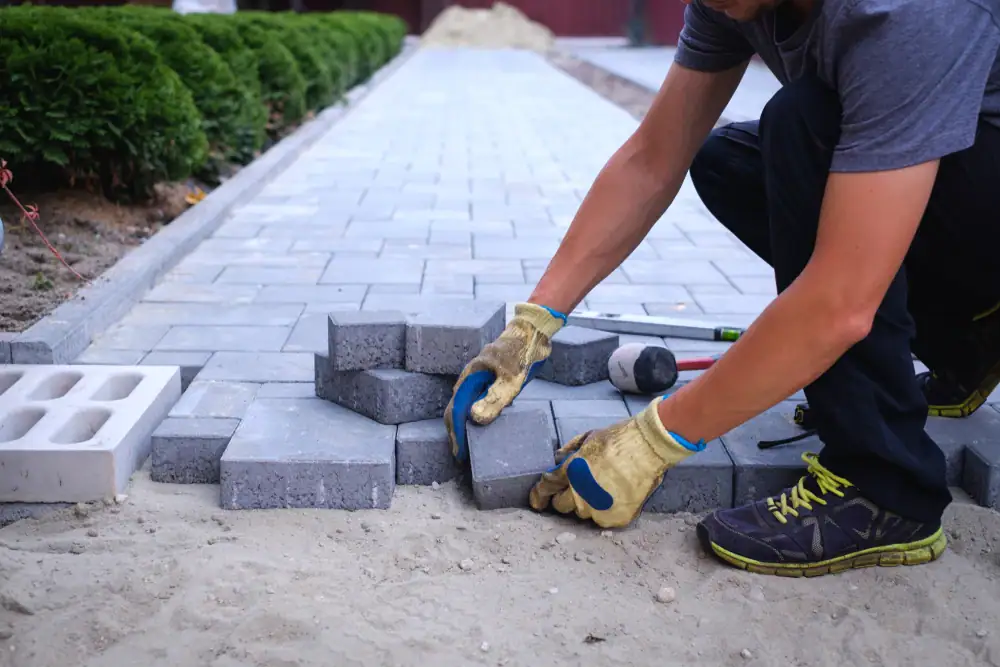
Before you compare numbers, you need to know what each number includes. A complete asphalt driveway replacement should include demolition and removal of the existing surface, excavation to the appropriate depth, installation of a compacted crushed stone sub-base (typically 6 to 8 inches for Long Island conditions), asphalt installation per manufacturer specifications, proper grading for water runoff, and full cleanup when the job is done.
If drainage is a concern — and on the flat terrain of communities like West Babylon, NY, Bay Shore, NY, or Patchogue, NY, it often is — a French drain or catch basin may be part of the scope as well. What a low bid often leaves out is the sub-base work. It’s invisible once the driveway is down, which makes it easy to skip or underbuild.
A crew that charges less because they’re laying asphalt over a compromised base isn’t saving you money — they’re just moving the failure date forward by a few years. When you get a quote, ask specifically what depth of sub-base is being installed and whether the price includes demolition and haul-away of the existing material.
Those details tell you a lot about whether you’re comparing apples to apples. A fixed, written estimate that doesn’t change unless you change the scope is the clearest sign that a contractor is being straight with you. That’s how we quote every job at Corsino Construction Corp — one number, in writing, before we start. No adjustments mid-project, no line items that appear after the fact.
Want live answers?
Connect with a Corsino Construction expert for fast, friendly support.
Concrete costs more upfront than asphalt, but the math changes when you look at it over 20 or 30 years. On Long Island, concrete driveway installation runs between $12 and $25 per square foot installed — putting a standard two-car driveway between $7,200 and $15,000 in 2026.
That’s a meaningful jump from asphalt, and it’s worth understanding what you’re actually paying for. Concrete’s main advantage is longevity. A properly installed concrete driveway in Suffolk County can last 30 to 40 years with minimal maintenance.
No sealcoating every few years, no resurfacing at the 15-year mark. The surface holds its appearance longer and requires less ongoing attention. For homeowners who plan to stay in their home for the long term, that lifecycle changes the cost comparison significantly.
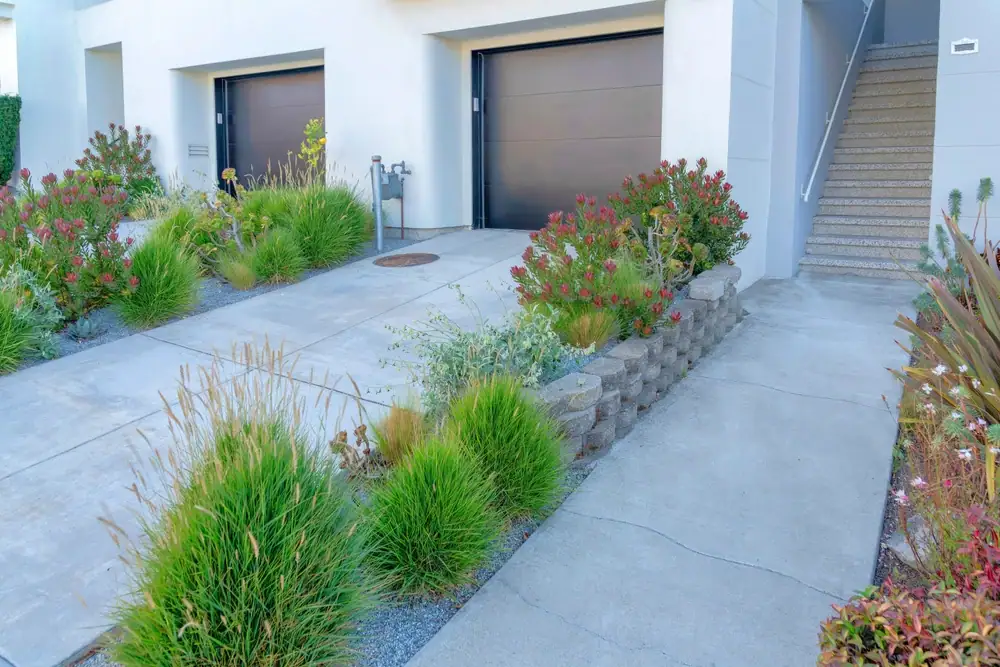
This is the question that stops a lot of Suffolk County homeowners from choosing concrete, and it deserves a direct answer. The short version: concrete installed correctly for a freeze-thaw climate performs very well. Concrete installed the way it would be in a warmer, drier market will crack, spall, and deteriorate faster than asphalt would.
The key is air entrainment. In a freeze-thaw climate like Long Island’s, concrete needs to be mixed with an air-entraining admixture — tiny air bubbles engineered into the mix that give the material room to expand when water freezes inside it. Without that, the freeze-thaw cycle attacks the slab the same way it attacks a crack in asphalt, just with less flexibility to absorb the stress.
The result is surface spalling, which looks like the top layer of the concrete is flaking off, and eventually deeper structural cracking. Control joints matter too. These are the intentional cuts made in a concrete slab at regular intervals — they’re not decorative, they’re structural.
They give the slab a predetermined place to flex and crack if it needs to, rather than cracking unpredictably across the surface. A contractor who skips control joints or spaces them too far apart is setting up a slab for early failure in a Suffolk County winter.
Coastal proximity adds another variable. In communities along the South Shore — Amityville, NY, Copiague, NY, Bay Shore, NY, Islip, NY — salt air accelerates the deterioration of concrete surfaces, particularly if the slab isn’t properly sealed after installation. The same applies to road salt, which gets tracked onto driveways from the LIE, Sunrise Highway, and local roads every winter.
Sealing a concrete driveway every few years in a coastal environment isn’t optional maintenance — it’s what protects the surface investment you’ve made. When all of that is done right, concrete is an excellent choice for Long Island. When it’s rushed or installed without the right mix design for the climate, it’s an expensive disappointment.
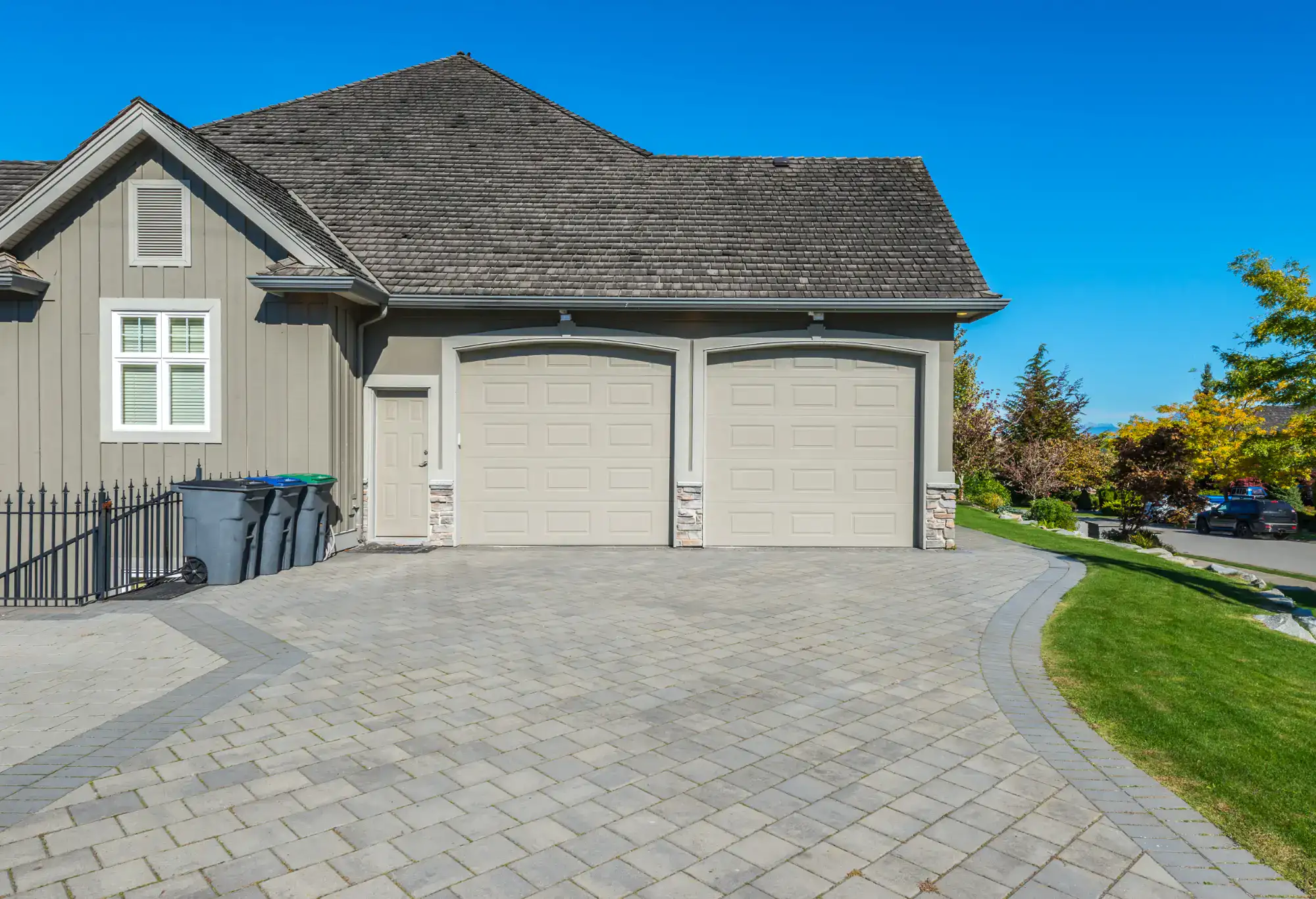
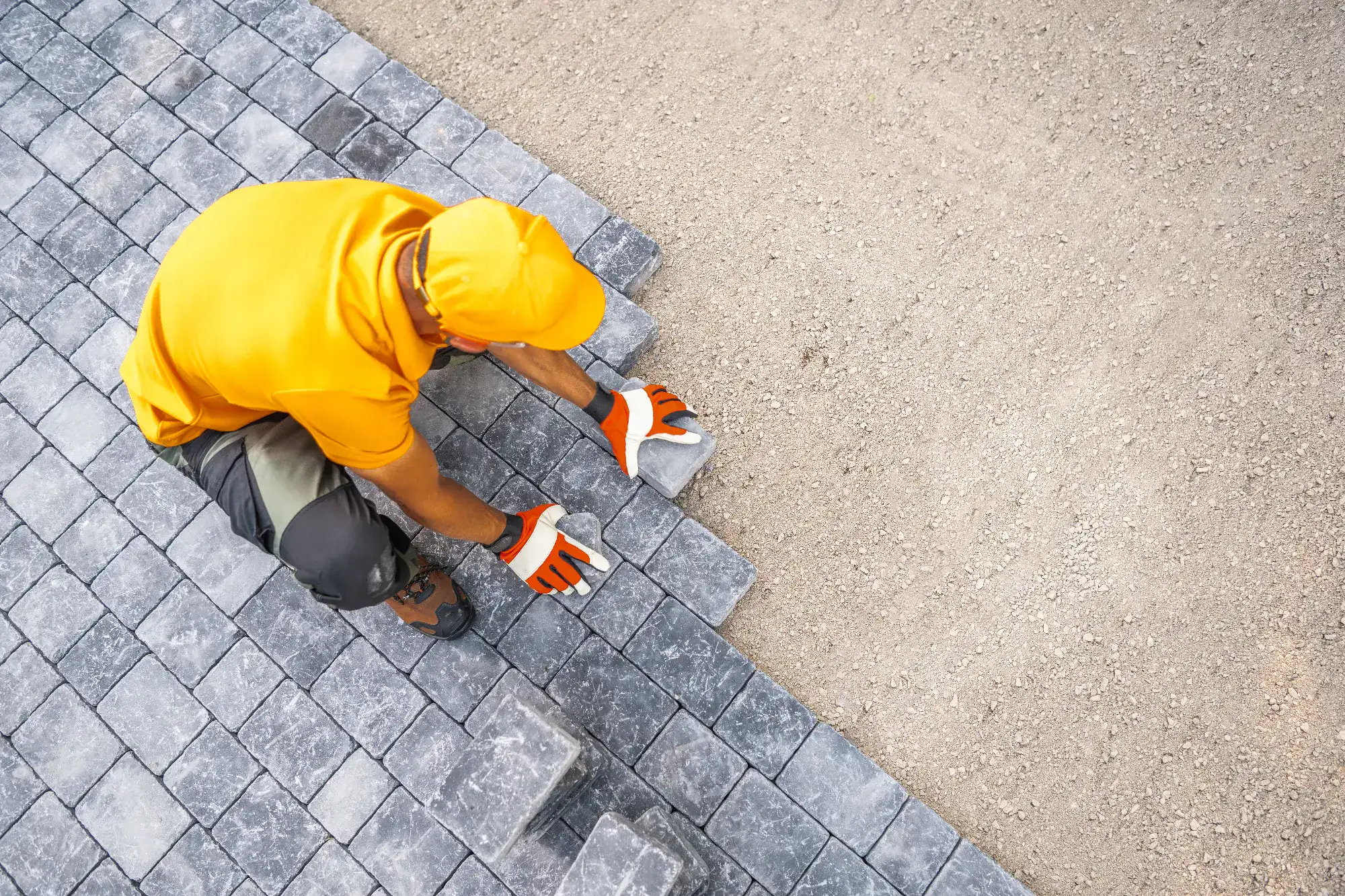
Paver driveways represent the top of the cost range, and also the top of the lifespan range. On Long Island, paver installation runs between $20 and $35 per square foot installed — meaning a two-car driveway typically falls between $11,400 and $21,000.
Premium materials like Belgian block can push that number higher, sometimes to $30 to $70 per square foot, and it’s a popular choice in certain Suffolk County neighborhoods where the aesthetic carries real weight. The lifespan argument for pavers is genuinely compelling. Well-maintained paver driveways last 25 to 75 years.
Individual pavers can be lifted and replaced if one settles, cracks, or gets damaged — without resurfacing the entire driveway. That repairability is something neither asphalt nor concrete can match. If a tree root shifts a section of your driveway five years from now, a paver installation means a targeted repair, not a patch that looks out of place or a full replacement conversation.
Pavers also handle drainage differently than poured surfaces. Permeable paver systems allow water to pass through the joints and into a prepared aggregate base beneath, reducing runoff and the pooling issues that plague flat driveways across the South Shore. For properties in Holbrook, NY, Coram, NY, or Selden, NY where drainage is a chronic concern, that’s not a small consideration.
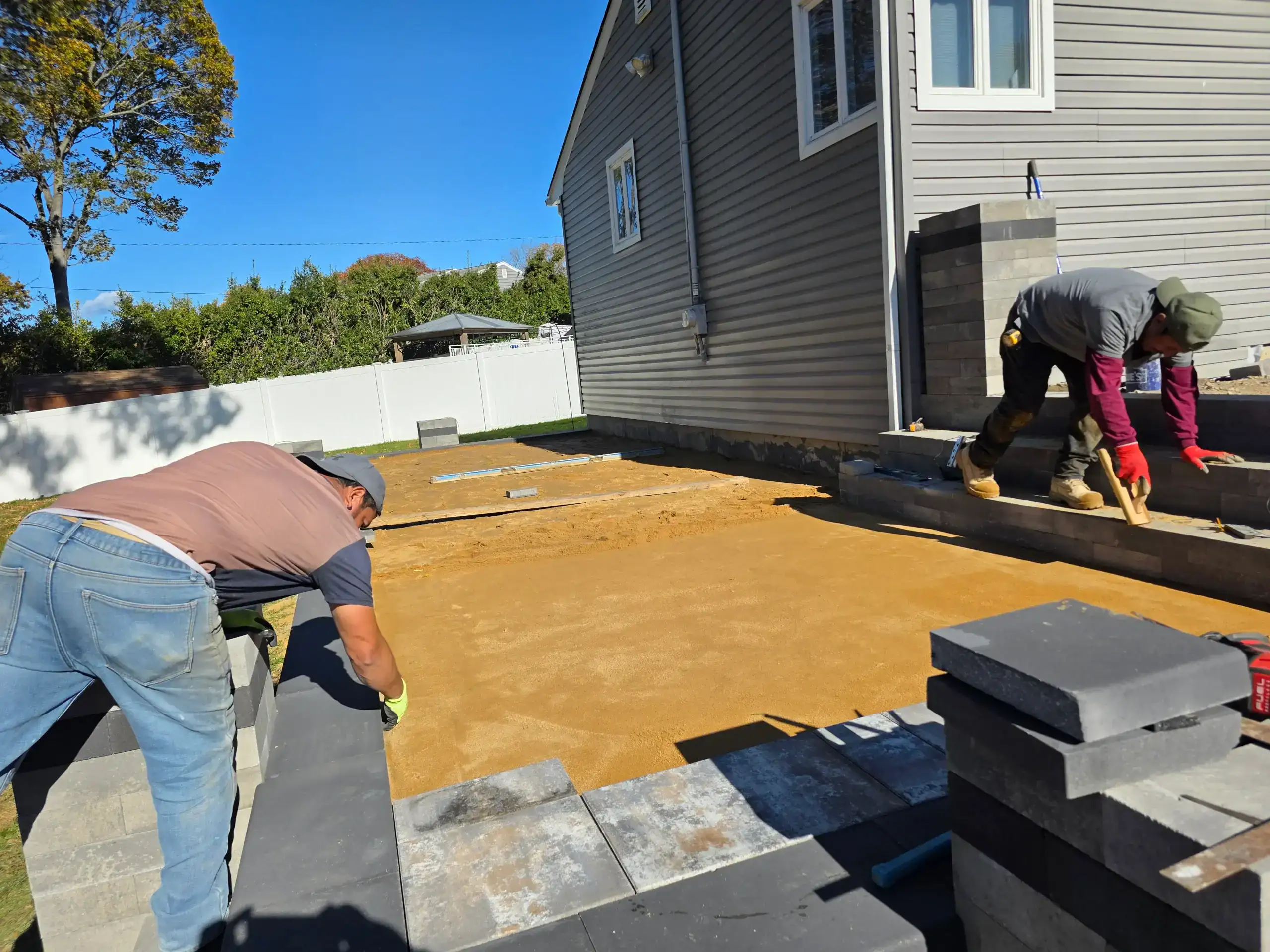
The honest caveat is that pavers require proper base preparation just as much as asphalt or concrete — more so, in some respects, because the individual units need a stable, level foundation to stay in alignment over time. A paver driveway installed over an inadequate base will shift, heave, and develop uneven surfaces faster than a poured alternative would.
The surface material is only as good as what’s underneath it. That’s true for every material on this page, but it’s most visible with pavers because the joints make any movement apparent. For homeowners who are planning to stay in their Suffolk County home for 20 or more years and want a driveway that adds genuine curb appeal and holds its value in a competitive real estate market, pavers are worth the upfront investment.
For someone who needs a functional, durable driveway at the most accessible price point, asphalt with proper installation and maintenance is still a strong answer.
The cost ranges on this page are real — but your actual number depends on your specific property, your drainage situation, your soil conditions, and the time of year. Asphalt can’t be properly installed once ground temperatures drop below 50°F, which means the pre-winter window in October and early November is genuinely finite.
Homeowners who wait past that window are looking at spring — and another full winter of freeze-thaw damage on a driveway that’s already past its limit. What makes the biggest difference in the final result isn’t which material you choose. It’s whether the base preparation is done right, the drainage is properly engineered, and the crew doing the work is accountable for all of it from start to finish.
Those aren’t details you can see in a finished driveway — which is exactly why they’re the first things worth asking about. If you’re ready to get a clear, written estimate with no moving parts, we at Corsino Construction Corp have been doing this work in Suffolk County since 2000. Reach out and we’ll get back to you within 24 to 48 hours.
Article details:
Share:
Continue learning: