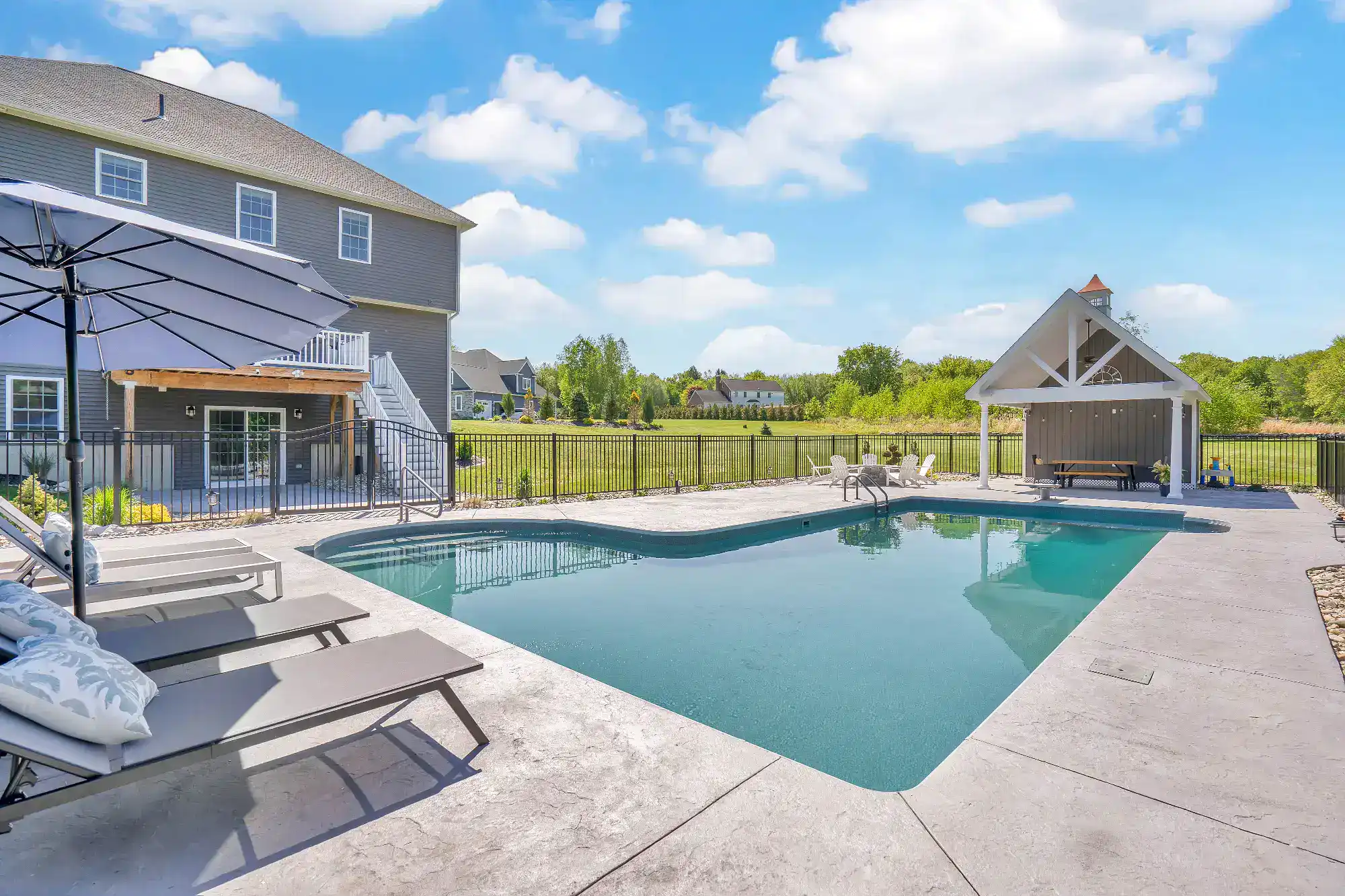
Expert pool patio design and installation in Centereach, NY. Custom solutions with proper drainage and materials built for Long Island's climate.
Share:
Summary:
Not all patio materials are created equal, especially when you’re dealing with Long Island’s demanding weather conditions. Your material choice affects everything from slip resistance to long-term maintenance costs.
The key is matching your material to both your budget and Centereach’s specific challenges. Clay soil that doesn’t drain well, freeze-thaw cycles that crack inferior materials, and constant moisture from pool splash-out all factor into what will actually perform in your backyard.
Let’s break down your options so you can make an informed decision that fits your lifestyle and investment goals.
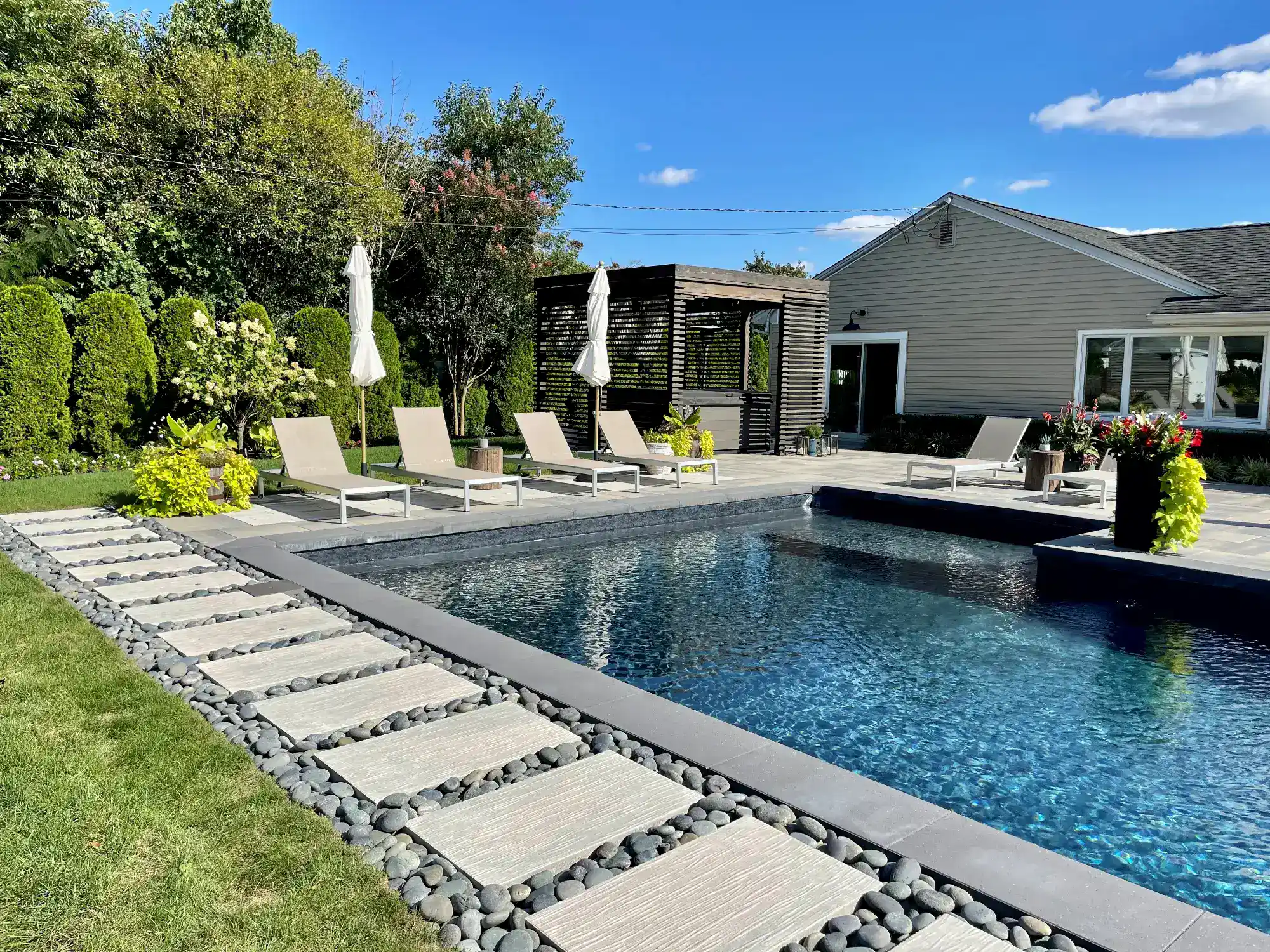
Concrete offers the most budget-friendly upfront cost, typically running $8-15 per square foot installed. It provides a clean, uniform appearance and can be stamped or stained for added visual interest. However, concrete’s biggest weakness around pools is its tendency to crack from ground movement and freeze-thaw cycles.
When concrete does crack—and in Centereach’s climate, it eventually will—you’re looking at visible repair lines or complete replacement. The smooth surface also becomes slippery when wet, requiring textured finishes or regular treatments to maintain safety around your pool.
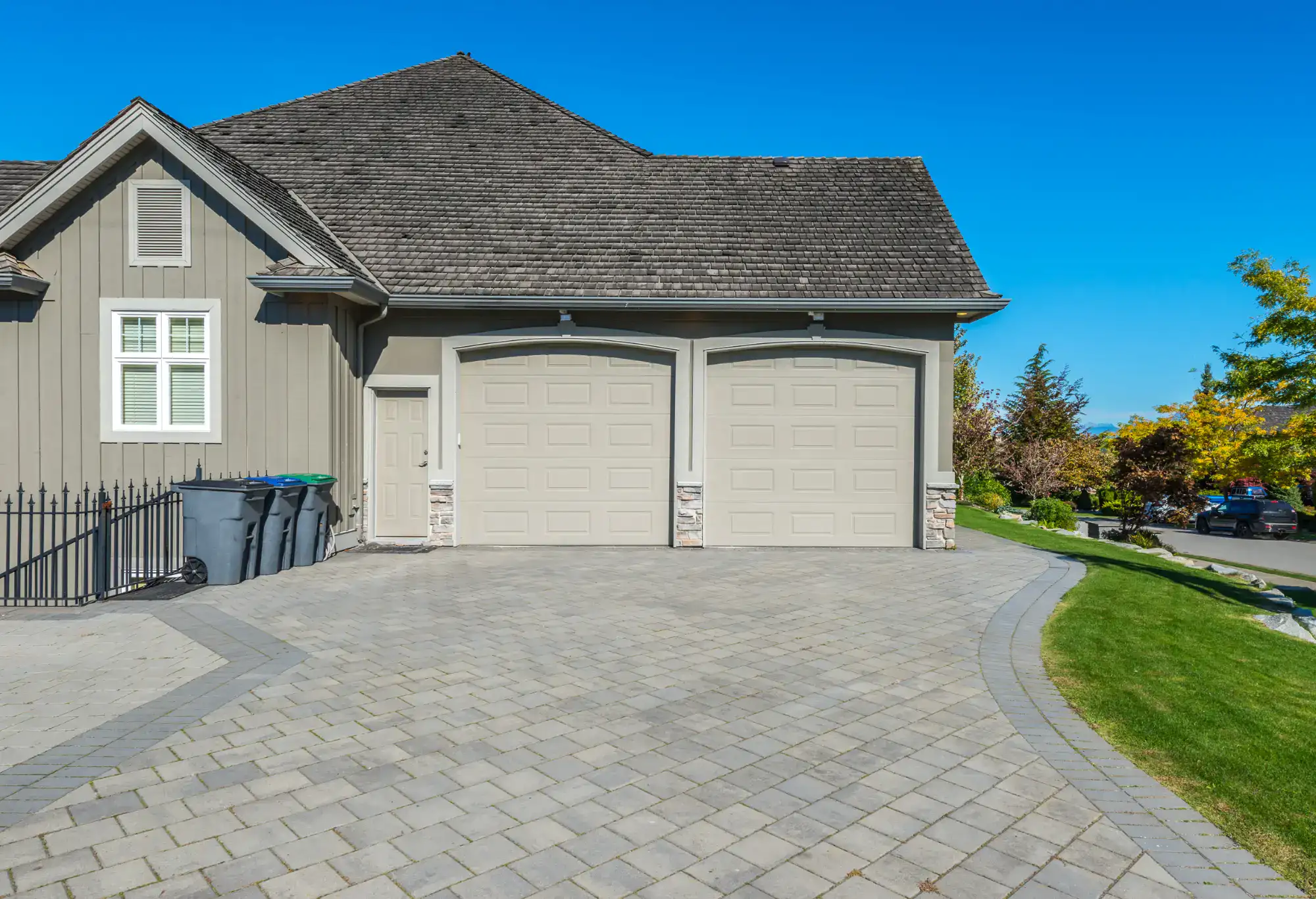
Pavers strike a balance between cost and performance, running $12-25 per square foot depending on quality and style. Individual pavers can flex with ground movement instead of cracking like solid concrete. If damage does occur, you can replace individual pavers without affecting the entire surface.
The joints between pavers also provide natural drainage and slip resistance. Cambridge Pavers, popular in the Long Island market, come with lifetime warranties and are specifically engineered for freeze-thaw resistance. The variety of colors, sizes, and patterns lets you create custom designs that complement your home’s architecture.
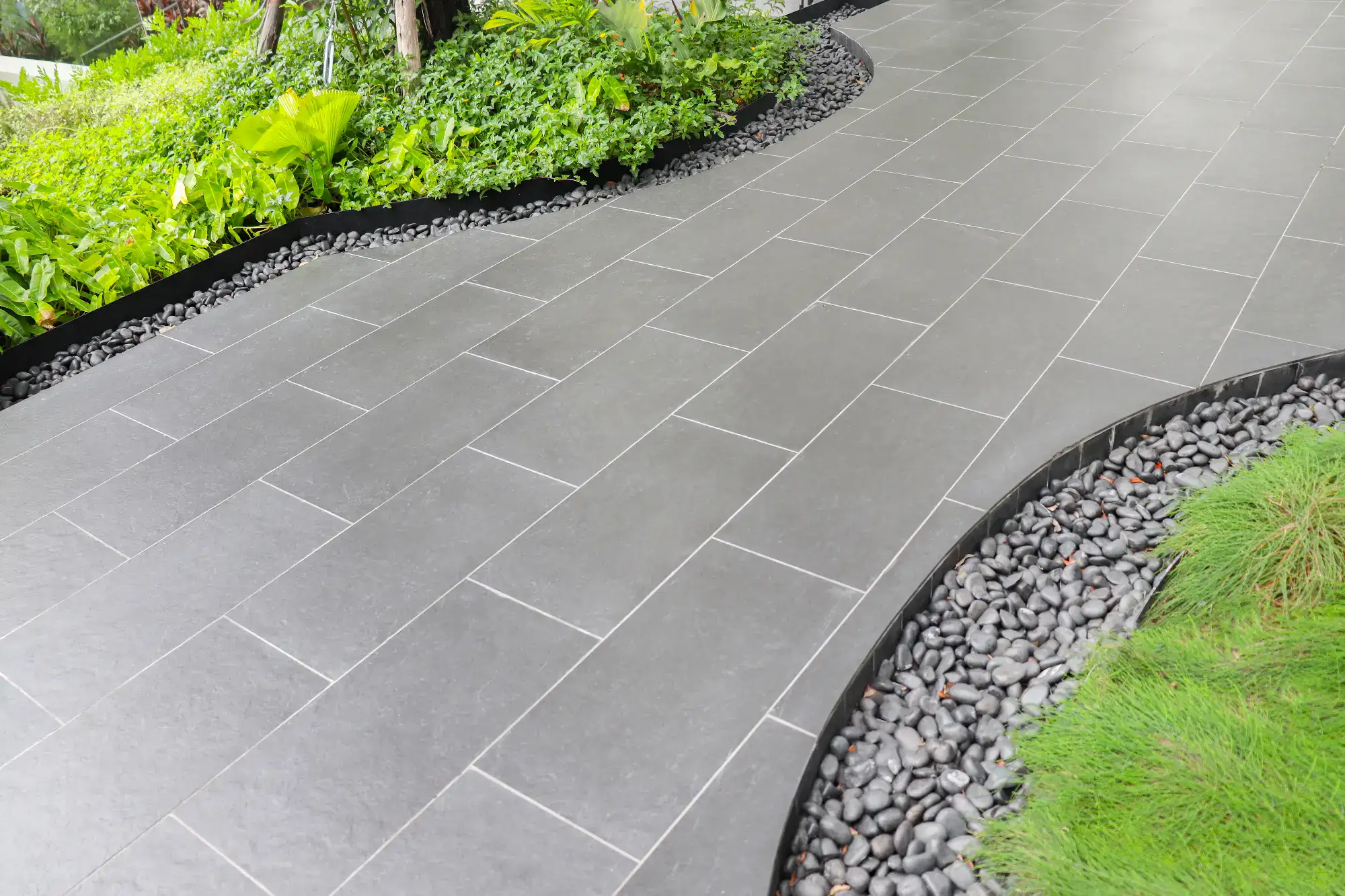
Natural stone represents the premium option at $15-35 per square foot, with materials like bluestone and travertine offering unmatched durability and timeless appeal. Stone handles temperature changes exceptionally well and provides excellent slip resistance even when wet.
The investment pays off in longevity—properly installed natural stone patios can last 50+ years with minimal maintenance. The natural variation in color and texture creates visual interest that actually improves with age, unlike manufactured materials that can look dated over time.
Even premium materials will fail if not installed correctly for Long Island’s soil and climate conditions. The foundation work determines whether your patio lasts 5 years or 50 years, regardless of what’s on the surface.
Centereach’s clay soil presents unique challenges that many contractors don’t understand. Clay doesn’t drain well naturally, expanding when wet and contracting when dry. This constant movement puts stress on patio surfaces, causing cracks, settling, and drainage problems.
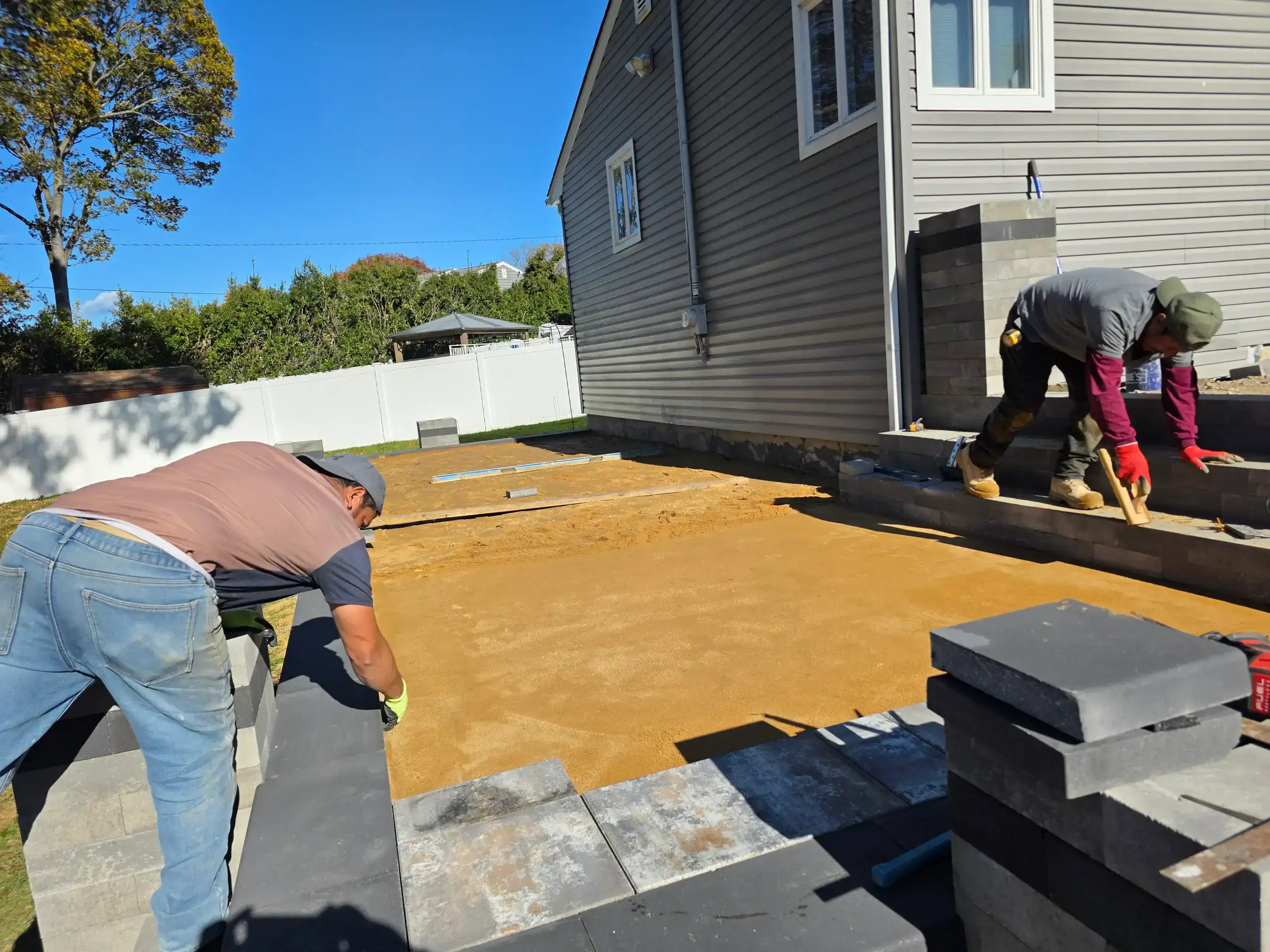
Proper excavation depth matters more than most homeowners realize. We typically excavate 8-12 inches deep, removing unstable soil and replacing it with properly graded stone base material. This base must be compacted in lifts using specialized equipment—not just smoothed with a rake like some contractors do.
The stone base acts as a stable foundation that won’t shift with ground movement. It also provides drainage, allowing water to move through rather than sitting on the surface. Without this proper base preparation, even expensive materials will develop problems within a few years.
Drainage design starts during excavation, not after materials are installed. We evaluate your property’s natural water flow, existing drainage systems, and potential problem areas before creating a grading plan. The goal is moving water away from your pool, pool equipment, and house foundation while preventing standing water anywhere on the patio surface.
This might involve installing French drains, channel drains, or adjusting grades to work with your property’s natural slope. Getting drainage right during initial installation prevents the water damage, ice hazards, and foundation problems that can cost thousands to fix later.
Want live answers?
Connect with a Corsino Construction expert for fast, friendly support.
Your pool patio should do more than just provide a place to walk. It’s an extension of your indoor living space and the foundation for outdoor entertaining, relaxation, and family time.
The best designs balance functionality with aesthetics, creating distinct areas for different activities while maintaining visual flow. This means thinking beyond basic rectangles to consider how you actually use your pool area throughout the season.
Smart design choices can also solve common problems like limited space, privacy concerns, or challenging site conditions that are common in established Centereach neighborhoods.
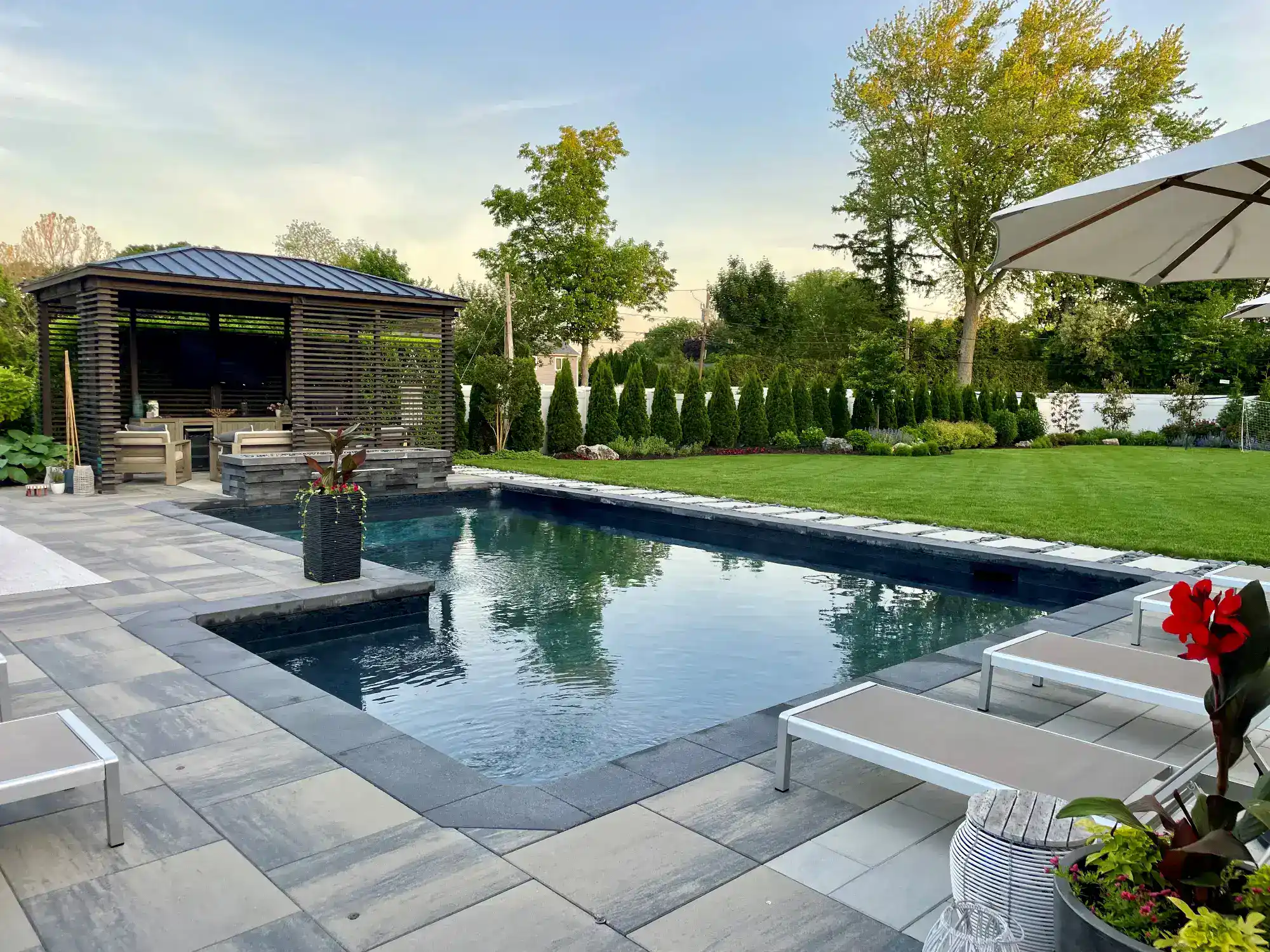
Think of your pool patio as having different zones, each serving a specific purpose. The immediate pool deck needs slip-resistant materials and proper drainage since it gets the most water exposure. This area should be wide enough for safe walking but not so large that it overwhelms your yard.
A lounging zone positioned to catch morning or afternoon sun (depending on your preference) provides space for chairs, umbrellas, and relaxation. This area can use different materials or patterns to visually separate it from the active pool deck while maintaining design continuity.
An entertaining zone might include space for outdoor dining, grilling, or fire features. This area benefits from being slightly elevated or separated from the pool deck to keep furniture dry and create distinct spaces for different activities.
Consider traffic flow between these zones and from your house to the pool. You want clear, safe pathways that don’t require guests to navigate around furniture or equipment. Wide openings between zones prevent bottlenecks during parties or family gatherings.
Storage considerations often get overlooked during design but become important once you’re using the space regularly. Built-in benches with storage, equipment enclosures, or dedicated areas for pool maintenance supplies keep your patio looking clean and organized.
Lighting design should be planned during construction, not added later. Low-voltage LED systems can highlight pathways, accent landscaping, and provide safety lighting without the harsh glare of traditional flood lights. Solar options work well for accent lighting but may not provide enough illumination for safety in high-traffic areas.
Your pool patio doesn’t exist in isolation—it’s part of your overall backyard environment. Thoughtful landscaping integration makes the space feel natural and provides practical benefits like privacy, wind protection, and visual interest.
Privacy screening becomes especially important in Centereach’s established neighborhoods where homes are often close together. Strategic placement of evergreen shrubs, decorative fencing, or pergola structures can create intimate spaces without making your yard feel closed off.
Plant selection around pools requires special consideration since chlorine and salt can damage sensitive species. Choose plants that tolerate occasional chemical exposure and don’t drop excessive leaves or debris into your pool. Native Long Island plants often work best since they’re adapted to local soil and climate conditions.
Drainage integration between hardscape and landscape prevents water from pooling in planted areas or washing soil onto your patio. This might involve creating swales, installing landscape drainage, or adjusting grades so water moves naturally through your yard.
Consider maintenance access when planning landscaping. You’ll need space to clean your pool, service equipment, and maintain planted areas without damaging either hardscape or landscape elements. This planning prevents future conflicts between different aspects of your outdoor space.
Seasonal interest keeps your pool area attractive year-round, not just during swimming season. Evergreen structure plants, winter-flowering shrubs, and hardscape elements like fire features or decorative walls provide visual appeal even when the pool is covered.
The goal is creating a cohesive outdoor environment where pool, patio, and landscaping work together rather than competing for attention. This integration adds value to your property and creates outdoor living space you’ll enjoy beyond just pool season.
Your pool deserves a patio that enhances rather than detracts from your outdoor experience. The difference between a successful project and a costly headache comes down to choosing contractors who understand Centereach’s unique challenges and have the experience to handle them properly.
Remember that the cheapest bid rarely delivers the best value when dealing with complex drainage, soil conditions, and weather exposure that pool patios face. Focus on contractors who can explain their process, show examples of similar work, and provide transparent pricing that includes all necessary permits and site preparation.
At Corsino Construction Corp, we bring over two decades of local experience to every pool patio project. We handle everything from initial design through final cleanup, ensuring your investment enhances your property for years to come.
Article details:
Share:
Continue learning: