Deck costs on Long Island run higher than national guides suggest. Here's what you actually need to know before requesting a single quote.
Share:
Summary:
You searched “cost to build a deck,” landed on a national guide, and saw something like $8,000 as the average. Then you called a couple of contractors in Suffolk County and got quotes closer to $15,000 or $20,000. Now you’re wondering if someone’s trying to take advantage of you.
They’re probably not. Long Island is just a different market — different labor rates, different permit requirements, and a climate that demands more from outdoor materials than most of the country deals with. We’ve been building decks in Suffolk County since 2000, and we’ve learned exactly what it takes to build one that lasts. This guide gives you the real numbers for 2026, explains what actually drives deck costs here, and helps you figure out what a fair quote looks like before you sign anything.
Nationally, the average cost to build a deck lands somewhere around $7,000 to $8,000. On Long Island, that number climbs — often significantly. For a standard pressure-treated wood deck in Suffolk County, you’re typically looking at $25 to $30 per square foot installed. Composite decking runs $49 to $60 per square foot.
A 300-square-foot pressure-treated deck comes in around $8,000; the same footprint in composite is closer to $12,000 to $15,000. A 20-by-20 deck — 400 square feet — generally falls between $20,000 and $26,000 depending on materials, design complexity, and what features you add. Railings, stairs, built-in benches, and lighting all move the number. So does the specific town you’re in, since permit timelines and requirements vary across Suffolk County’s ten towns.
The gap between what national guides say and what we quote isn’t a mystery — it’s geography and climate doing their job.
Start with labor. Long Island labor rates are meaningfully higher than the national average, and that’s baked into every quote we provide. A contractor operating out of Coram or Huntington has different overhead than one working in a lower cost-of-living market. That’s not padding — it’s the actual cost of running a licensed, insured operation on Long Island.
Then there’s the permit. In Suffolk County, building a deck requires a building permit without exception. The plan review fee alone is $300, and that’s before you factor in the time it takes for each town’s building department to process the application. Some towns move faster than others. If you’re in Brookhaven, Islip, or Smithtown, the timeline and requirements differ slightly. A contractor who knows the local process — who has pulled permits in your specific town before — can save you weeks of back-and-forth.
The bigger cost driver that most people don’t think about is what Long Island’s environment does to outdoor materials. Homes near the Great South Bay, Peconic Bay, Long Island Sound, or the Atlantic coast deal with salt air year-round. Standard deck hardware corrodes faster in that environment than it would inland. Proper builds in coastal Suffolk County require stainless steel or hot-dipped galvanized fasteners — and contractors who skip that detail are setting you up for a deck that looks fine at first and falls apart within a few years.
Finally, there’s frost depth. Long Island’s freeze-thaw cycle runs from roughly December through March. Building code requires footings dug below the frost line — typically 36 to 42 inches in this region. That’s more excavation, more concrete, and more labor than a deck footing in a warmer climate would require. It’s also non-negotiable if you want the structure to stay level after a few winters. Contractors who quote significantly below the market rate are often cutting corners here, and it shows up in heaving posts and cracked framing within a few seasons.
When you get a quote that seems high, it helps to understand what a complete, above-board deck project actually includes — because not every quote covers the same scope.
A full-service deck quote should include the permit application and filing fees, design and planning, all materials (framing, decking boards, hardware, railings, stairs), labor for excavation and footing installation, and final cleanup. It should also include the inspection process — scheduling the required inspections with the town’s building department and obtaining the Certificate of Occupancy at the end.
When a quote comes in noticeably lower than others, the first thing to ask is what’s missing. Is the permit included? Is the contractor licensed in Suffolk County? Are they using in-house labor or subcontracting the framing to one crew and the finish work to another? These aren’t hypothetical concerns — they’re the most common sources of cost overruns, accountability gaps, and quality inconsistencies in the deck building industry.
At Corsino Construction Corp, every quote we provide is detailed and fixed before work begins. The price we give you is the price you pay — it doesn’t change unless you change the scope. We handle the permit process with Suffolk County directly, including plan submission and inspection scheduling, so you’re not navigating the town building department on your own. And because we don’t use subcontractors, the same licensed crew that starts your deck finishes it. There’s no handoff, no finger-pointing, and no gaps in accountability.
Want live answers?
Connect with a Corsino Construction expert for fast, friendly support.
The material choice is where most of the cost variation lives — and on Long Island, it’s a more consequential decision than it is in most other markets. The climate here puts outdoor materials under real stress: summer humidity, salt air in coastal areas, and freeze-thaw cycling every winter. What holds up well in a drier, milder climate may not perform the same way in Suffolk County.
Pressure-treated pine is the most affordable starting point, running $25 to $30 per square foot installed. Cedar costs more for materials but offers natural rot resistance. Composite decking — brands like Trex and TimberTech — runs $49 to $60 per square foot installed, but comes with 25- to 50-year warranties and is engineered to resist moisture, rot, and insect damage without annual maintenance.
For a lot of Suffolk County homeowners, the answer is yes — but it depends on where you live and how long you plan to stay.
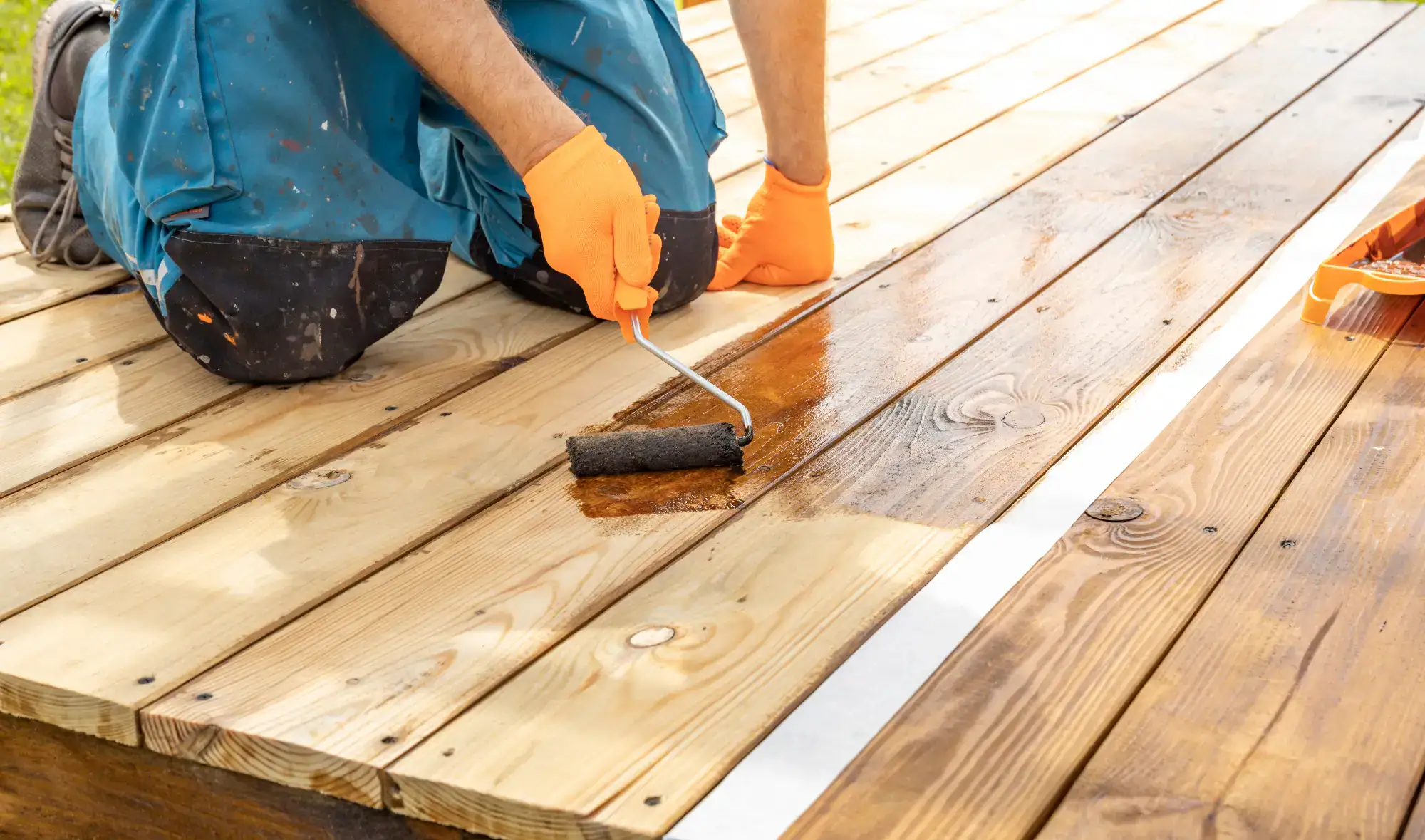
The upfront cost difference between pressure-treated wood and composite is real. A 300-square-foot wood deck might cost $8,000; the same deck in composite runs closer to $12,000 to $15,000. That’s a meaningful gap. But the long-term math changes when you factor in maintenance. A pressure-treated wood deck needs to be cleaned, sealed, and stained every one to three years to stay in good condition. Skip a few maintenance cycles — which most homeowners do — and you’re looking at warping, cracking, and surface degradation within a decade.
Composite decking doesn’t require that ongoing maintenance. It holds its appearance without sealing or staining, resists moisture and insects, and is specifically engineered not to warp or crack under the kind of humidity and temperature swings Long Island sees every year. The lifespan is 25 to 30 years for quality composite products, compared to 10 to 15 years for pressure-treated wood that’s been properly maintained. When you spread the cost over the life of the deck, composite often comes out ahead.
For homes near the water — anywhere with direct exposure to bay or ocean air — the case for composite gets even stronger. Salt air accelerates the deterioration of wood surfaces and standard hardware. Composite materials aren’t affected the same way. If your home sits near the Great South Bay, the Peconic, or the Sound, composite isn’t just a luxury upgrade; it’s a practical decision that reduces long-term cost and hassle.
Pressure-treated wood is a legitimate choice for the right project. If budget is the primary constraint, or if you’re planning to sell within a few years and want to maximize ROI, a well-built wood deck is a solid option. The 2024 Cost vs. Value Report puts wood deck ROI at approximately 83% — meaning a well-built wood deck returns most of its cost at resale.
Labor typically accounts for a significant portion of your total deck cost — and the spread between contractors can be wide. On Long Island, legitimate deck labor runs $8 to $22 per square foot depending on complexity, crew experience, and what the project requires. When you see quotes that fall well below that range, it’s worth asking why.
The most common reason for a low labor quote is subcontracting. A general contractor takes your deposit, then hires out the framing to one crew and the finish work to another. Each handoff creates an opportunity for miscommunication, inconsistent quality, and diffused accountability. When something goes wrong — and on complex projects, something usually does — the contractor blames the sub and the sub has already moved on to the next job.
The other common reason is unlicensed labor. In New York, performing home improvement work without a proper license is illegal, and in Suffolk County, the licensing requirements are specific: general liability insurance at a minimum of $500,000, workers’ compensation coverage, a written exam, and registration with the county’s Department of Labor, Licensing & Consumer Affairs. An unlicensed contractor can’t legally pull a permit — which means either you pull it yourself (creating liability) or the deck goes up without one (creating bigger problems at resale and with your insurance).
We’ve been building in Suffolk County since 2000, and we’ve seen what happens when these corners get cut. Decks that heave after one winter because the footings weren’t dug deep enough. Hardware that rusts through within a few years in a coastal neighborhood. Homeowners who can’t sell their house because the deck doesn’t have a Certificate of Occupancy on record. These aren’t rare edge cases — they’re the predictable result of prioritizing the lowest number on a quote sheet.
When you hire a contractor, you’re not just paying for lumber and labor. You’re paying for the permit to be handled correctly, the footings to be dug to the right depth, the hardware to be specified for your environment, and someone to be accountable from the first day to the last inspection.
The most important thing you can take from this guide is that the price gap between national averages and Long Island quotes is real, explainable, and not a sign that someone is overcharging you. Higher labor rates, permit requirements, frost-depth footings, and coastal material standards all contribute — and a contractor who accounts for all of them is giving you a more accurate picture than one who doesn’t.
Before you commit to any quote, confirm the permit is included, ask whether the crew is in-house or subcontracted, and make sure the price you’re seeing is the price that won’t change once work starts. Those three questions will tell you a lot about who you’re dealing with.
If you’re ready to get a straight answer on what your specific deck will cost, Corsino Construction Corp has been doing this work in Suffolk County for over 20 years. Reach us by phone or text at 516-693-4270, Monday through Friday, 9am to 5pm.
Article details:
Share:
Continue learning: