The term "home restoration contractor" gets used loosely. Here's what it actually means — and how to find the right one for your project in Suffolk County.
Share:

Summary:
You searched “home restoration contractors” and got a mix of water damage companies, general remodelers, and everything in between. That’s not a coincidence — the term is used loosely, and it can mean very different things depending on who’s using it. Before you call anyone, it helps to understand what you’re actually looking for. Whether you’re dealing with years of deferred maintenance, a kitchen that hasn’t been touched since 1987, or an exterior that’s taken one too many Long Island winters, the right contractor makes all the difference. Here’s how to cut through the noise and find someone who knows how to work in Suffolk County.
The phrase gets used two different ways, and mixing them up can send you down the wrong path entirely. In the strictest sense, a restoration contractor handles damage recovery — water intrusion, fire and smoke damage, mold remediation. These companies typically work alongside insurance adjusters and are certified through organizations like the IICRC. They’re built for emergency response, not planned renovations.
The more common use of the term, though, is essentially a synonym for a home remodeling or general contractor — someone who restores a home to a better version of itself through planned renovation work. Kitchens, bathrooms, additions, siding, windows, roofing. That’s the category most homeowners in Suffolk County are actually looking for when they type “home restoration contractors” into a search engine.
Knowing the difference matters because you’ll get very different results — and very different conversations — depending on which type of company you contact first.

If your home sustained damage — a burst pipe, storm flooding, a fire — you need a true restoration contractor with insurance claim experience and IICRC certification. They’re equipped to document damage, coordinate with your insurer, and handle the specific remediation work required before rebuilding can begin.
If your bathroom is outdated, your kitchen layout has never worked, your siding is showing its age, or you want to add a room, you need a licensed general remodeling contractor. That’s the category that covers the overwhelming majority of what Suffolk County homeowners are searching for when they use the word “restoration.” They want their home brought back — or brought forward — to where it should be.
The confusion is understandable. A lot of remodeling contractors use “restoration” in their branding because it resonates. It implies bringing something back to life, which is exactly what a good kitchen or bathroom renovation does. But the licensing requirements, the process, and the type of work are meaningfully different between the two.
In Suffolk County specifically, the distinction matters from a licensing standpoint. Home improvement contractors operating here are required to hold a Suffolk County home improvement contractor license — separate from the licensing requirements in Nassau County or New York City. If you’re hiring someone for renovation work, verify that license before anyone sets foot in your home. New York State law is clear: an unlicensed contractor can be legally barred from enforcing payment under the contract, which creates real financial and legal exposure for you as the homeowner.
The practical takeaway is simple. Ask yourself what triggered the project. If it was a disaster or an insurance claim, call a certified restoration company. If it was a long-overdue renovation, a layout that’s never worked, or an exterior that’s finally showing its age — call a licensed general remodeling contractor who knows Suffolk County’s permit process, material requirements, and local building codes.
A full-service residential remodeling contractor handles far more than most homeowners expect when they first start looking. The scope typically includes everything from the initial consultation and design planning through permit acquisition, material sourcing, construction, and final walkthrough. One contractor, one point of contact, one accountability chain.
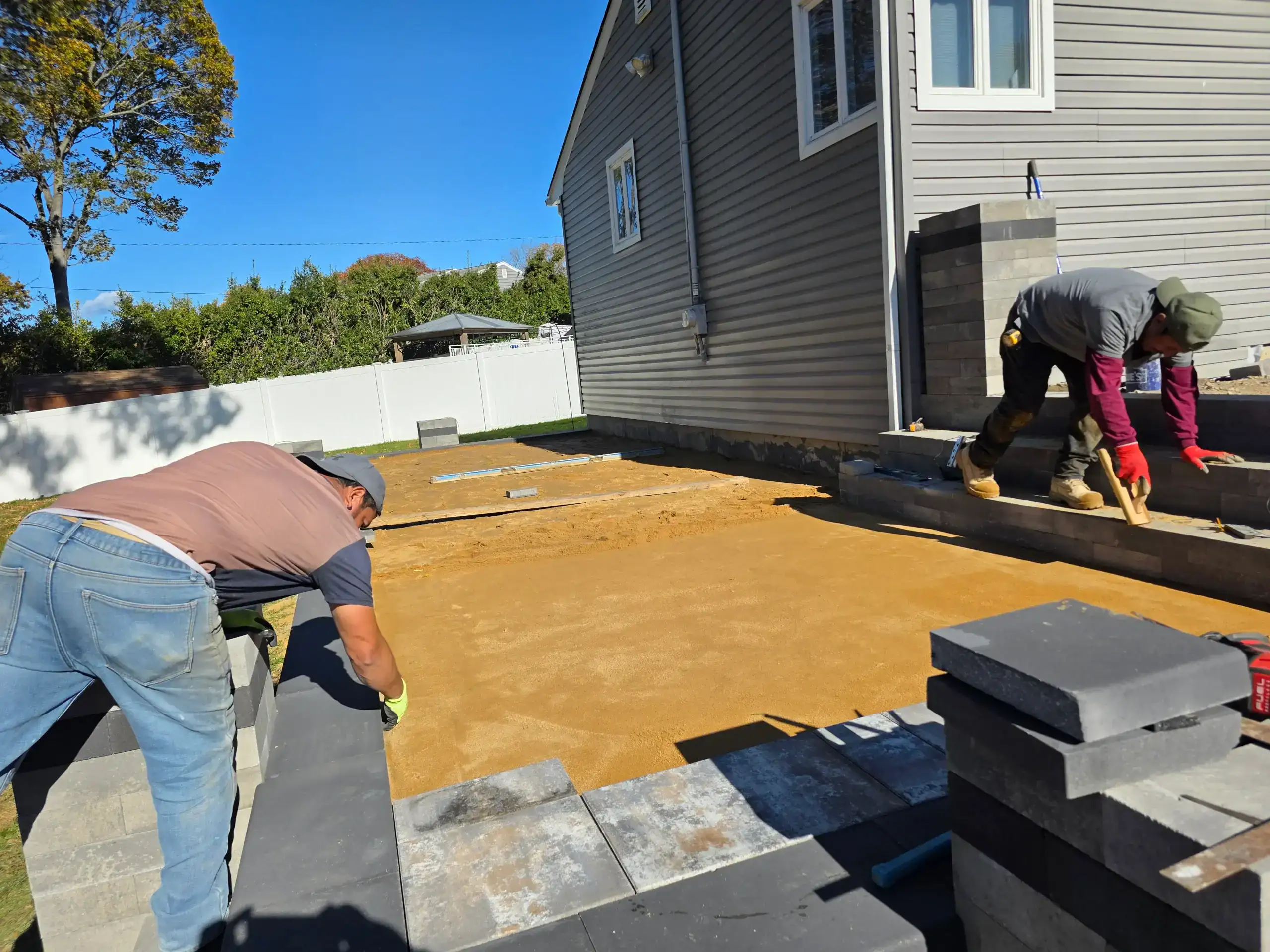
On the interior side, that means kitchen remodels — cabinetry, countertops, layout changes, the works. Bathroom renovations, from a simple fixture update to a full gut-and-rebuild. Basement finishing. Room additions. Custom carpentry, drywall, painting. On the exterior, it means siding replacement, window and door installation, roofing, deck construction, and driveway and walkway paving.
What separates a strong general contractor from a mediocre one isn’t the list of services — most will tell you they do all of this. The difference is in how they manage the process. Do they handle permits, or do they leave that to you? Do they use their own licensed crew, or do they subcontract the work to whoever’s available? Do they give you a fixed estimate upfront, or do they leave room for the number to shift once they’re already in your walls?
These questions matter because the answers determine your actual experience — not just the finished product, but the weeks or months you spend living through the project. In Suffolk County, where permit processing through local building departments can add one to two weeks to a project start date, and where town-specific requirements vary between places like Huntington and Brookhaven, you want a contractor who already knows the process and has built it into the timeline.
A contractor who’s been doing this work in Suffolk County for 25 years knows which materials hold up against salt air on the South Shore, which towns have specific setback requirements, and how to schedule a project around the realities of Long Island winters. That local knowledge isn’t something you can import from a national franchise.
Want live answers?
Connect with a Corsino Construction expert for fast, friendly support.
Suffolk County has no shortage of contractors. The harder part is finding one worth trusting. The market is crowded, the quality varies widely, and homeowners who’ve been through a bad renovation experience — cost overruns, rotating crews of strangers, a job site left in chaos every night — tend to approach the next project with a lot more skepticism.
That skepticism is well-earned. The most common complaints in the renovation industry aren’t about craftsmanship. They’re about communication, accountability, and pricing. The quote that changed once the work started. The contractor who went silent for a week. The crew that showed up and turned out to be subcontractors the homeowner had never met.

Here’s something most contractor websites won’t tell you: a large portion of the industry operates on a subcontractor model. The company you hire acts as a coordinator, and the actual work is done by a rotating cast of tradespeople they’ve brought in for that specific job. Sometimes those subcontractors are excellent. Sometimes they’re whoever was available.
The problem isn’t just quality — it’s accountability. When something goes wrong mid-project, or the work doesn’t match what was agreed to, the contractor can point to the subcontractor and the subcontractor has no direct relationship with you. You’re left in the middle trying to sort it out.
An in-house model works differently. When every person on the job site is a direct employee of the company — licensed, insured, and accountable to the same owner — there’s nowhere for responsibility to diffuse. The person who gave you the estimate is responsible for the person swinging the hammer. That consistency shows up in the finished product, but it also shows up in the day-to-day experience: the same faces showing up each morning, people who know your project without needing to be caught up, and a crew that treats your home like a job they’re proud of rather than one they’re passing through.
For homeowners in Suffolk County who are already navigating the stress of living through a renovation — whether that’s a kitchen remodel in Commack, a bathroom overhaul in Huntington, or a full exterior update in Holbrook — the last thing you need is to become the project manager between a contractor and their subcontractors. One team, one set of standards, one person to call.
We’ve operated this way since 2000. Every crew member who works on your home is a Corsino Construction Corp employee — licensed, insured, and part of a team that’s been doing this work in Suffolk County for over two decades. It’s not a policy we advertise as a feature. It’s just how we think renovation work should be done.
Room additions are one of the more complex renovation projects a Suffolk County homeowner can take on — and one of the most rewarding when they’re done right. Adding a bedroom, expanding a living space, or building out a two-bedroom apartment addition involves structural work, foundation considerations, permit requirements, and coordination across multiple trades. It’s not a project where you want to find out mid-construction that your contractor has never navigated a Town of Brookhaven structural permit before.
Before hiring any addition contractor, ask these questions directly. First: do they handle all permits, or do they expect you to? In Suffolk County, permits for structural additions go through the relevant town building department — not just the county — and the process involves inspections at multiple stages. A contractor who’s done this work locally knows the sequence, knows the inspectors, and has already factored permit processing time into the project timeline. One who hasn’t will often underestimate how long that process takes, and you’ll be the one waiting.
Second: who actually does the work? As covered above, the subcontractor question is especially relevant for additions, where structural integrity and code compliance aren’t negotiable. You want to know that the crew on your job site is the same crew the contractor is fully responsible for.
Third: what does the estimate actually include? A detailed, fixed-price estimate for an addition should break out materials and labor clearly, include permit costs, and specify what happens if you want to make a change mid-project. The answer should be: you get the cost of that change in writing before any work proceeds. If an estimate is vague, or if the contractor can’t explain what’s included and what isn’t, that’s worth paying attention to.
Kitchen remodels in Suffolk County typically run between $25,000 and $75,000 depending on size, layout changes, and finish selections. Bathroom renovations generally start around $15,000 for budget work and climb from there for mid-grade and luxury finishes. Additions vary significantly based on scope and structural requirements. Whatever the number, you should know it — and be confident it won’t change — before anyone breaks ground.
The right contractor for your Suffolk County home renovation is licensed, uses their own crew, gives you a fixed estimate in writing, handles your permits, and has been doing this work locally long enough to know the difference between a Huntington setback requirement and a Brookhaven permit process. That’s not a high bar — but it does narrow the field considerably.
Start by clarifying what you actually need: disaster recovery or planned renovation. Verify the Suffolk County home improvement contractor license before any conversation goes further. Ask directly whether the crew is in-house or subcontracted. Read the reviews closely — not just the star rating, but the specific details. A review that mentions a named crew member and a specific project outcome tells you a lot more than a generic five stars.
If you’re ready to talk through a project, we’ve been serving Suffolk County homeowners since 2000. Reach out by phone or text and you’ll get a straight conversation — no pressure, no vague estimates, just honest information about what your project involves and what it will cost.
Article details:
Share:
Continue learning: