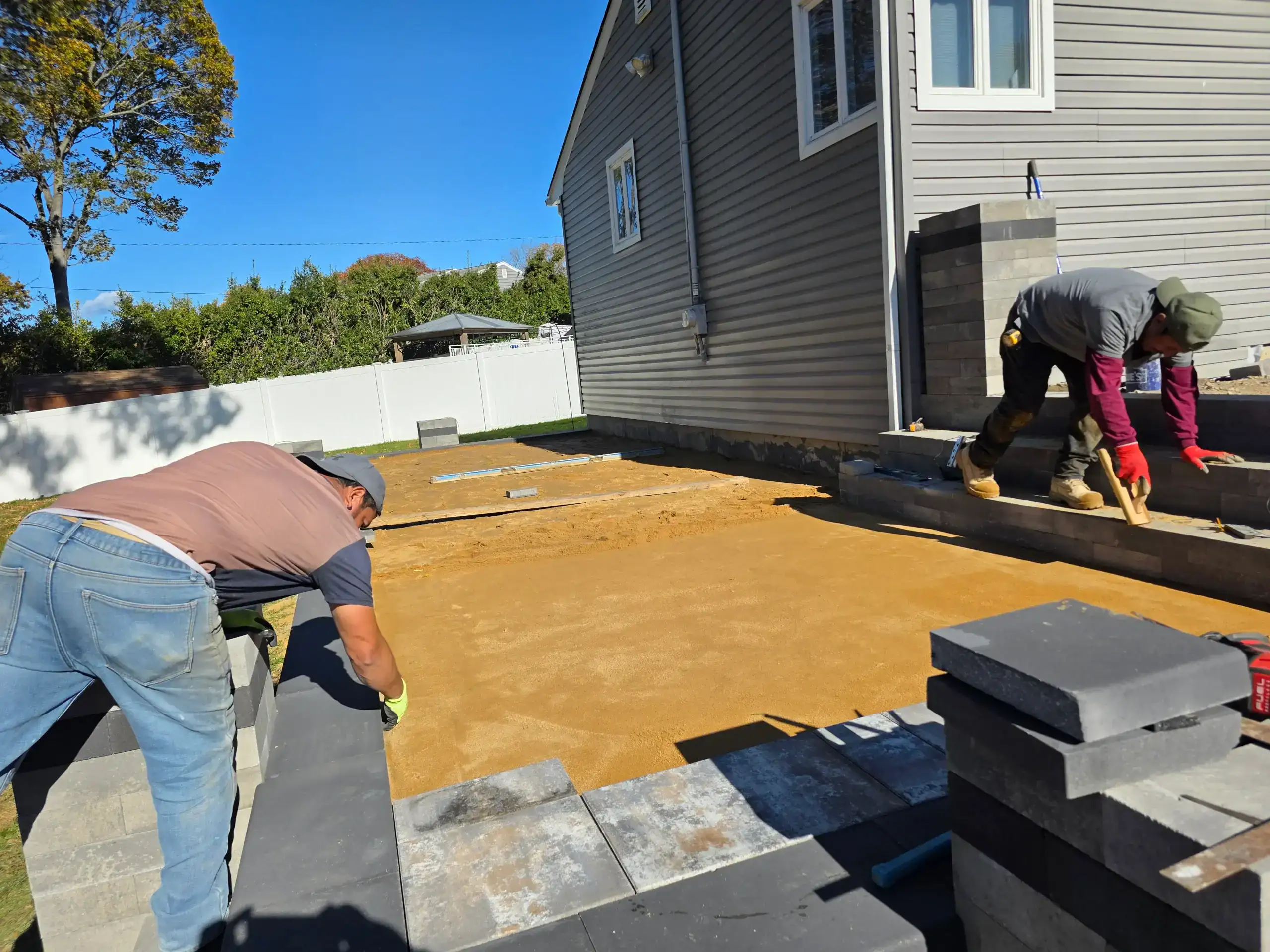
Before you sign anything or hand over a deposit, these are the questions that separate reliable contractors from the ones you'll regret hiring.
Share:

Summary:
You’ve decided to renovate. Maybe it’s the kitchen you’ve been tolerating for fifteen years, or a bathroom that needs more than a fresh coat of paint. You’ve got a budget in mind, maybe a few ideas pulled from a home design site, and now you need to find someone to do the work. That’s where most people start to feel uneasy — because you’ve probably heard at least one story about a contractor who took the deposit and went quiet, or a project that dragged on twice as long as promised. Those stories are real. But the right questions, asked before you sign anything, go a long way toward making sure your renovation project doesn’t become one of them.
There’s a version of this question list that every home improvement website publishes — license, insurance, references, timeline. Those things matter, and we’ll get to them. But the questions that most homeowners never think to ask are the ones that reveal the most about how a contractor actually operates. The goal isn’t to interrogate someone. It’s to have a real conversation that tells you whether this person is going to show up, do the work they said they’d do, at the price they quoted, without turning your home into a construction zone you can’t live in.
Start with the basics, but push past them. Anyone can say they’re licensed and insured. What you want to know is whether they can prove it, explain it, and back it up with specifics.

In Suffolk County, home improvement contractors are required to hold a valid license issued by the Suffolk County Department of Labor, Licensing & Consumer Affairs under Suffolk County Code 563. This isn’t a formality — it’s a legal requirement, and it’s one of the most important filters you have as a homeowner. Ask any contractor you’re considering for their Suffolk County home improvement license number, and then verify it. You can do that by calling the Consumer Affairs office at 631-853-4600 or searching the Suffolk County Citizen’s Portal online. It takes five minutes and it’s worth doing.
Why does it matter so much? Because hiring an unlicensed contractor in New York exposes you to risks most homeowners don’t think about until it’s too late. If an unlicensed worker is injured on your property, you can be held personally liable for their medical costs and lost wages under New York Labor Law. Your homeowner’s insurance may not cover damage caused by unlicensed work. And if work is done without the proper permits — which unlicensed contractors typically can’t obtain — you could face serious complications when you go to sell the home. Buyers’ attorneys and home inspectors flag unpermitted work, and fixing it after the fact is expensive.
Beyond licensing, ask to see a certificate of liability insurance and proof of workers’ compensation coverage. Don’t just take their word for it — ask to be listed as an additional insured on the policy, or at minimum, confirm the policy is current. A legitimate contractor won’t hesitate. Someone who gets defensive about this question is telling you something important.
On permits: ask directly whether the contractor will handle all permit applications and inspections as part of the project. In Suffolk County, the permitting process runs through the building department of whichever of the county’s ten towns your home is in — Babylon, Brookhaven, Huntington, Islip, Smithtown, and the others each have their own requirements. Some towns have additional licensing steps beyond the county level. An experienced local contractor knows this. One who asks you to pull your own permits is shifting liability onto you, and that’s a red flag worth taking seriously.
Most homeowners ask for references. Far fewer know what to actually ask once they have them on the phone. A reference who says “the work looked great” is helpful, but it doesn’t tell you what you really need to know before you commit.
When you reach out to a past client, ask them how closely the final cost matched the original estimate. Did the price hold, or were there change orders that added up? Ask whether the project finished on time, and if not, how the contractor communicated about delays. Ask who was on the job site every day — was it the same crew throughout, or did different people show up at different stages? Ask whether the contractor was easy to reach when questions came up, and whether they left the job site clean at the end of each workday.
That last one might sound minor, but it isn’t. A renovation that goes on for weeks or months while you’re living in the home is genuinely disruptive. Dust, debris, tools left out overnight — these things affect your family’s daily routine in real ways. A contractor who takes cleanup seriously is a contractor who respects the fact that it’s your home, not just their job site.
Also ask the reference: would you hire them again? And would you recommend them to a close friend? Those two questions together tell you more than almost anything else. Someone who says “the work was fine but I’d probably look around next time” is giving you a different answer than someone who says “absolutely, without hesitation.”
If a contractor is reluctant to provide references, or offers only names you can’t independently verify, take note. A company with a genuine track record in Suffolk County — one that’s been working on Long Island since 2000, for example — should have no trouble connecting you with past clients who are happy to talk.
Want live answers?
Connect with a Corsino Construction expert for fast, friendly support.
This is the question most homeowners don’t know to ask, and it’s arguably the most important one on the list. When you hire a general contractor, you’re hiring someone to manage the entire project — planning, permitting, scheduling, materials, and the people doing the actual work. The question is: who are those people?
Some contractors run their own licensed, insured in-house crews. Others hire subcontractors — outside tradespeople brought in for specific parts of the job. Neither arrangement is automatically wrong, but the difference has real consequences for accountability, communication, and the consistency of the work being done in your home.

When a general contractor uses subcontractors, the chain of accountability gets longer and less direct. You hired the GC. The GC hired the sub. If something goes wrong — a timeline slips, a finish doesn’t match what was specified, a trade shows up late and throws off the whole schedule — you’re not dealing with the person who made the mistake. You’re dealing with the GC, who is dealing with the sub, who may or may not be reachable that day.
There’s also a licensing question that most homeowners never think to raise. In Suffolk County, subcontractors performing home improvement work are required to hold their own valid license. A general contractor cannot legally shield an unlicensed subcontractor under their own license. So when you ask “are you licensed and insured?”, the follow-up question is: “Are all the tradespeople working on my project licensed and insured as well?”
Beyond the legal angle, there’s a practical one. When you hire a contractor whose crew has worked together for years — people who know each other’s standards, who have a consistent approach to quality, and who answer to the same person — the work tends to reflect that consistency. When a project is assembled from different subcontractors who may never have worked together before, quality control becomes harder to maintain, and communication gaps are more likely to appear.
Ask any contractor you’re evaluating directly: will you use subcontractors on this project? If yes, who are they, and can you confirm they’re licensed and insured? A contractor who uses their own in-house professionals will answer this question without hesitation. One who gets vague about it is worth pressing further.
We use licensed in-house professionals on every project. No subcontractors, no strangers brought in to fill gaps. The crew that starts your renovation is the crew that finishes it, and every one of them is someone we’ve worked with and vouched for directly.
The fear of a ballooning estimate is one of the most common reasons homeowners hesitate to start a renovation at all. It’s a legitimate fear — and the way to address it is to ask specific questions before you sign anything, not after work has already begun.
Ask whether the estimate is fixed or whether it’s an approximation that could change. There’s a meaningful difference between a contractor who says “this is what it will cost” and one who says “this is what we think it will cost, subject to what we find once we open the walls.” Both answers can be honest, but they carry different levels of risk. Ask how the contractor handles change orders — situations where something unexpected comes up mid-project. A straightforward contractor will tell you that any change to the scope gets priced out and approved by you before work proceeds. That’s how it should work.
Ask about the payment schedule. New York State law requires that any home improvement contract over $500 be in writing, and progress payments should bear a reasonable relationship to the work actually completed. Be cautious about any contractor who asks for a large upfront payment before work begins, or who prefers cash. These are patterns that show up consistently in contractor complaints.
On timeline: ask for a realistic start date and a projected completion window, and ask what factors could extend it. A contractor who’s booked out a few weeks is often a better sign than one who can start tomorrow — demand is usually a reflection of reputation. Ask who your point of contact will be throughout the project, and how often you’ll receive updates on progress.
In Suffolk County, where median home values reached $660,000 in 2025, a renovation isn’t just a home improvement — it’s a financial decision with real stakes. The questions you ask before work begins determine whether that investment holds up over time, or creates problems you’ll be dealing with for years.
We provide written, fixed-price estimates on every project. If you want to add scope during the work, we give you the cost before anything proceeds. No surprises, no pressure, just a clear picture of what you’re agreeing to.
The right contractor for a renovation in Suffolk County is one who can answer every question on this list clearly, in writing, and without getting defensive about it. Licensed through Suffolk County’s Consumer Affairs office. Carrying current liability insurance and workers’ comp. Handling all permits through your town’s building department. Using their own licensed crew — not whoever’s available that week. Providing a fixed price in writing before a single tool comes out.
That’s not a high bar. It’s just what professional renovation work looks like when it’s done right.
If you’re planning a kitchen, bathroom, addition, or any other renovation project in Suffolk County and want to talk through what the process actually looks like — timeline, scope, what to expect — we’ve been doing this work on Long Island since 2000. Reach out and we’ll give you straight answers.
Article details:
Share:
Continue learning: