A contractor warranty sounds reassuring — until something goes wrong and the fine print says otherwise. Here's what you actually need to know before signing anything.
Share:

Summary:
You’ve done the research, gotten the estimates, and you’re close to pulling the trigger on a renovation. Then someone asks: “What’s their warranty?” And suddenly you realize you don’t actually know. The contractor mentioned something about standing behind their work, but nothing was spelled out. That vague reassurance might be fine. Or it might be the thing you regret not pinning down.
A contractor warranty isn’t just a nice-to-have — it’s the document that determines whether someone shows up to fix a problem six months after the job is done. Here’s what it should actually say.
There are two types of protection that come with most home renovation projects, and they cover very different things.
The manufacturer’s warranty covers the materials themselves — the windows, the siding, the roofing products — against factory defects. The workmanship warranty covers how those materials were installed. That distinction matters more than most homeowners realize.
Industry data suggests that roughly 95% of post-project failures — leaks, materials pulling away, surfaces failing prematurely — are installation errors, not defective products. The window didn’t fail because it left the factory wrong. It failed because it wasn’t flashed, sealed, or fastened correctly. That’s a workmanship issue, and it’s only covered if the contractor’s warranty says it is.
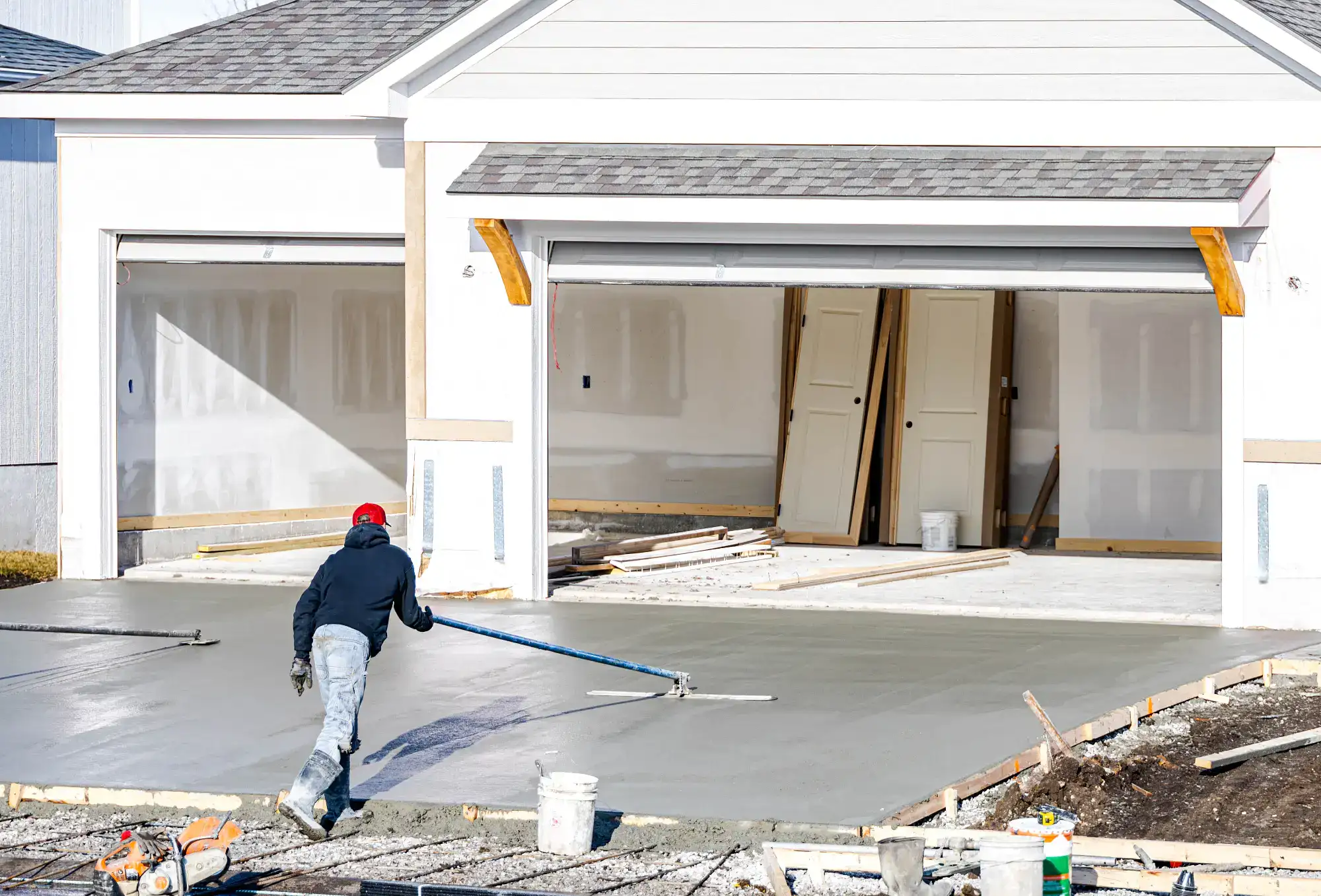
A workmanship warranty is the contractor’s commitment that the installation itself was done correctly — and that if it wasn’t, they’ll come back and fix it at no charge. That covers improper fastening, misaligned materials, inadequate sealing, structural issues that develop after completion, and any failure that traces back to how the work was performed rather than what it was performed with.
The standard duration in the home improvement industry is one year. Some contractors offer longer terms — two, five, even ten years — as a differentiator. What matters more than the number, though, is what the warranty actually says in writing. A one-year written warranty with clear terms is worth considerably more than a five-year verbal promise from a contractor who can’t be reached after the job is done.
For Suffolk County homeowners, this matters in a specific way. The county’s Home Improvement Law requires written contracts that specify the scope of work, materials, timeline, and payment schedule. It does not automatically require contractors to spell out warranty terms in detail — that’s something you have to ask for and confirm is in the contract before you sign. If a contractor gives you a written estimate but hands you a vague warranty clause, that’s a gap worth closing.
One more thing the workmanship warranty should address: who is actually responsible for the work. If a general contractor used subcontractors on your project — which is common in the industry — the warranty chain gets complicated fast. The GC is legally liable for subcontractor work, but what happens in practice is often a different story. A problem surfaces, you call the GC, the GC calls the sub, the sub disputes the claim, and you’re left waiting while two businesses figure out whose problem it is.
Several conditions can void a workmanship warranty, and most homeowners don’t find out about them until after a claim is denied.
The most common one: hiring another contractor to fix the issue before giving the original contractor a chance to address it. Most warranty clauses include what’s called a “right to cure” — the original contractor has to be notified and given a reasonable opportunity to correct the problem first. If you bring in someone else before that happens, you may have forfeited your coverage entirely.
Homeowner modifications are another common voidance trigger. If you paint over a surface, adjust a built-in, or alter any part of the completed work — even something that seems minor — it can affect warranty coverage on that scope. The same goes for using non-approved materials or products on areas the contractor finished.
Failing to report problems promptly is a third. Most warranty clauses have an implied or explicit expectation that you’ll flag issues within a reasonable timeframe. Waiting too long to report a problem — especially one that gets worse over time — gives the contractor grounds to argue the damage was caused by neglect, not their workmanship.
Understanding these conditions upfront puts you in a much stronger position. A contractor who walks you through these terms before the project starts — rather than hiding them in the fine print — is telling you something important about how they operate.
Want live answers?
Connect with a Corsino Construction expert for fast, friendly support.
When you hire a general contractor, you’re hiring them to be accountable for the outcome. But a significant portion of GCs in the home improvement industry build their business model around subcontracting the actual work — bringing in separate crews for framing, electrical, plumbing, siding, and so on. That’s not inherently wrong, but it creates an accountability structure that can work against you when something goes wrong after the job.
The warranty a GC offers should cover all the work performed on your project, regardless of who physically did it. In practice, that coverage is only as reliable as the GC’s ability and willingness to pursue the subcontractor on your behalf. When that chain breaks down, the homeowner is the one left holding the problem.

The simplest way to eliminate the subcontractor accountability gap is to hire a contractor who doesn’t use subcontractors. When one licensed team performs all the work — from permits through final cleanup — there’s no chain of responsibility to navigate. If something needs attention after the job is done, there’s one phone number to call and one company that owns the outcome.
At Corsino Construction Corp, every project is handled by our in-house licensed professionals. We don’t bring in outside crews to handle portions of the work and then step back. That means when we put a warranty on a project, we’re not hedging it against a subcontractor’s performance — we’re standing behind our own work, directly and without qualification.
For homeowners in Suffolk County, this matters in a specific way. The county’s coastal environment — salt air, freeze-thaw cycles, the kind of wind exposure that comes with nor’easters moving up the coast — puts real stress on exterior installations. Windows, siding, paving, and roofing all take more punishment here than they would in a sheltered inland market. That means installation quality isn’t just a craftsmanship consideration; it’s a durability consideration. Work that’s done right holds up. Work that’s done carelessly fails faster, and in this climate, it tends to fail more dramatically.
When the same team that installed your siding is the team standing behind the warranty, the incentive structure is different. They know the work. They know what they did and how they did it. There’s no finger-pointing, no subcontractor to track down, no dispute about whose scope covers the problem. That directness is what a warranty is supposed to feel like.
Before you sign anything, a few questions are worth asking directly — and the answers will tell you more than the estimate itself.
First: is the warranty in writing, and what does it specifically cover? “We stand behind our work” is not a warranty. It’s a sentiment. You want to see duration, scope, and the process for filing a claim documented in the contract. Suffolk County’s Home Improvement Law requires written contracts — but it doesn’t write the warranty terms for you. That’s your job to confirm.
Second: is the contractor licensed through the Suffolk County Office of Consumer Affairs? Licensing in Suffolk County isn’t optional. Contractors are required to pass a written exam, carry a minimum of $500,000 in general liability insurance, and maintain workers’ compensation coverage. You can verify any contractor’s license and check their complaint history by calling the Office of Consumer Affairs at 631-853-4600. If a contractor can’t provide their license number, that’s a hard stop — and it also means any warranty they offer has significantly less legal weight behind it.
Third: who is actually doing the work? Ask whether the contractor uses in-house crews or subcontractors, and ask specifically how warranty claims are handled if a problem involves work performed by a subcontractor. The answer will tell you a lot about how clean the accountability structure actually is.
Fourth: what does the final walkthrough include? A contractor who takes warranty seriously will provide warranty documentation at project close — not just a verbal summary, but written terms and maintenance guidelines specific to the materials installed and the local climate conditions. In a coastal market like Suffolk County, that documentation should reflect the environment the work is going into.
We provide all of this as standard practice. Written warranty terms in the contract, permit handling from start to finish, and a final walkthrough that includes documentation you can actually reference if something comes up. No fine print surprises, and no excuses when something needs attention after completion.
A contractor warranty is only as good as the specificity behind it and the company standing behind it. Verbal promises don’t hold up. Vague language in a contract doesn’t protect you. And a warranty backed by a business that uses subcontractors introduces a layer of accountability risk that most homeowners don’t discover until they need to file a claim.
What you’re looking for is straightforward: written warranty terms in the signed contract, a licensed contractor whose work you can verify, in-house crews with direct accountability, and a company that’s been operating locally long enough to actually be there when you need them.
If you’re planning a renovation in Suffolk County and want to know exactly what our warranty covers before you commit to anything, reach out to Corsino Construction Corp. We’ll walk you through the terms, answer your questions, and give you a detailed written estimate — so you know what you’re getting into from day one, not after the job is done.
Article details:
Share:
Continue learning: