Walkway costs in Suffolk County vary more than most guides admit. Here's what actually drives the price — and what to watch out for before you sign anything.
Share:
Summary:
If you’ve started pricing out a new walkway in Suffolk County, you’ve probably already noticed that the numbers vary wildly depending on who you ask. One contractor quotes $6,000. Another quotes $12,000. A cost guide says the national average is around $2,500. None of it quite lines up.
That gap isn’t random — and it’s not just contractors trying to upsell you. In Suffolk County, walkway installation involves conditions that most national cost guides don’t account for. The soil moves here. The winters are hard on hardscape. And the difference between a walkway that lasts 25 years and one that starts cracking in three often comes down to decisions made before a single paver is set.
Here’s what you actually need to know before you commit to a contractor.
Nationally, paver walkway installation averages around $2,480, with most projects falling somewhere between $1,430 and $3,530. In Suffolk County, the realistic range runs higher — typically $13 to $27 per square foot installed, and a new walkway can cost anywhere from $5,000 to $20,000 or more depending on material, size, and design complexity.
That gap between national and local pricing isn’t contractor markup. It’s the reality of building something that will survive Long Island winters. Proper base preparation for Suffolk County’s freeze-thaw climate takes more material, more labor, and more time than what a warmer-climate installation requires. That’s the first thing the low bids tend to skip.
Here’s the thing most cost guides won’t tell you: in Suffolk County, the price gap between a $7,000 quote and a $12,000 quote is almost always explained by what’s happening underground — not on top.
Long Island’s soil, particularly in central Suffolk towns like Coram, Holbrook, and Holtsville, has significant clay content. Clay retains moisture. When temperatures drop in January and February, that moisture freezes, expands, and pushes against whatever is sitting on top of it. When it thaws, it contracts. A walkway base that wasn’t excavated deep enough, wasn’t compacted properly, or wasn’t pitched correctly for drainage will move with those cycles — and within three or four winters, you’ll see the results in shifted pavers, cracked concrete, and uneven surfaces that become a tripping hazard.
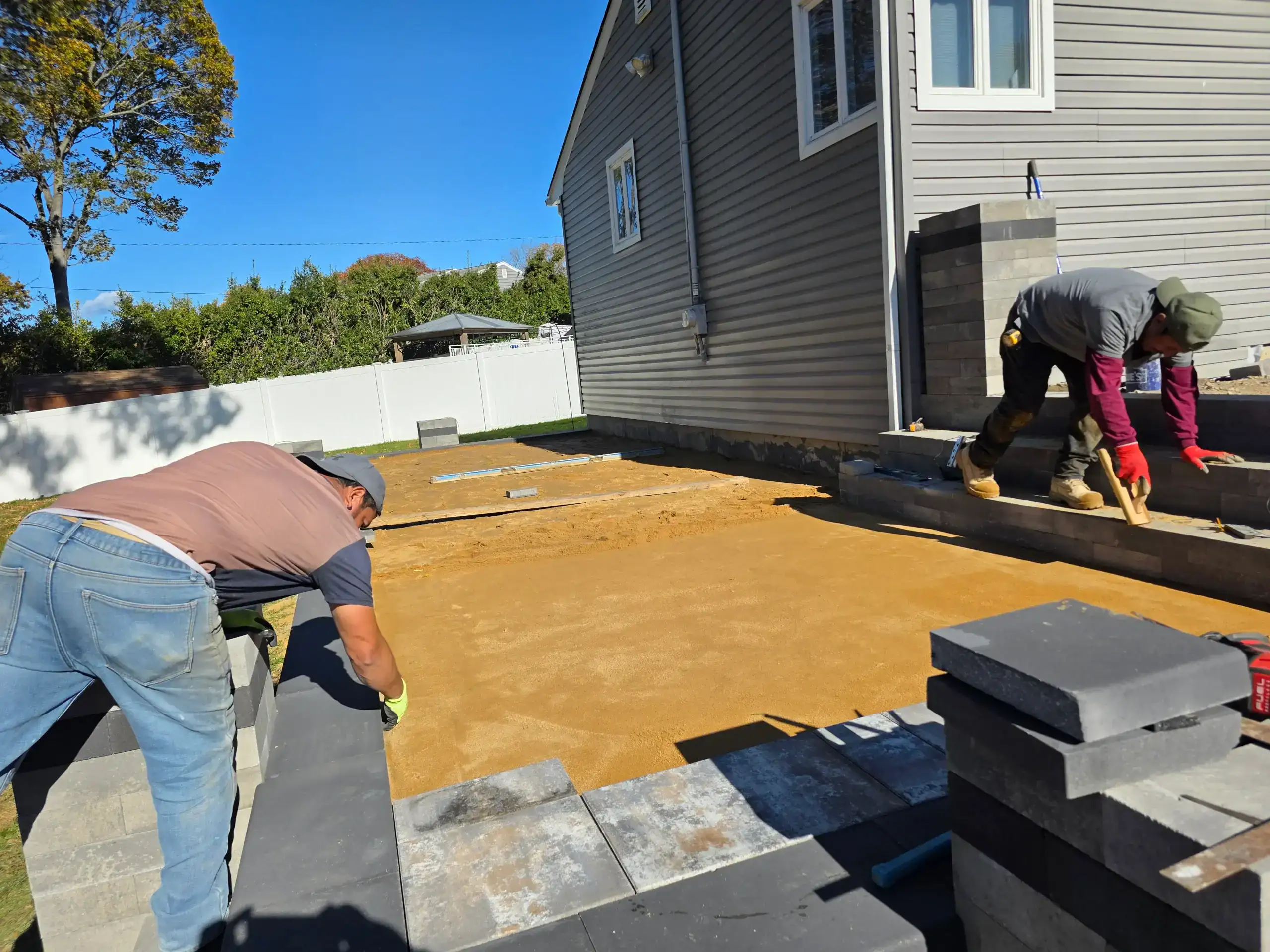
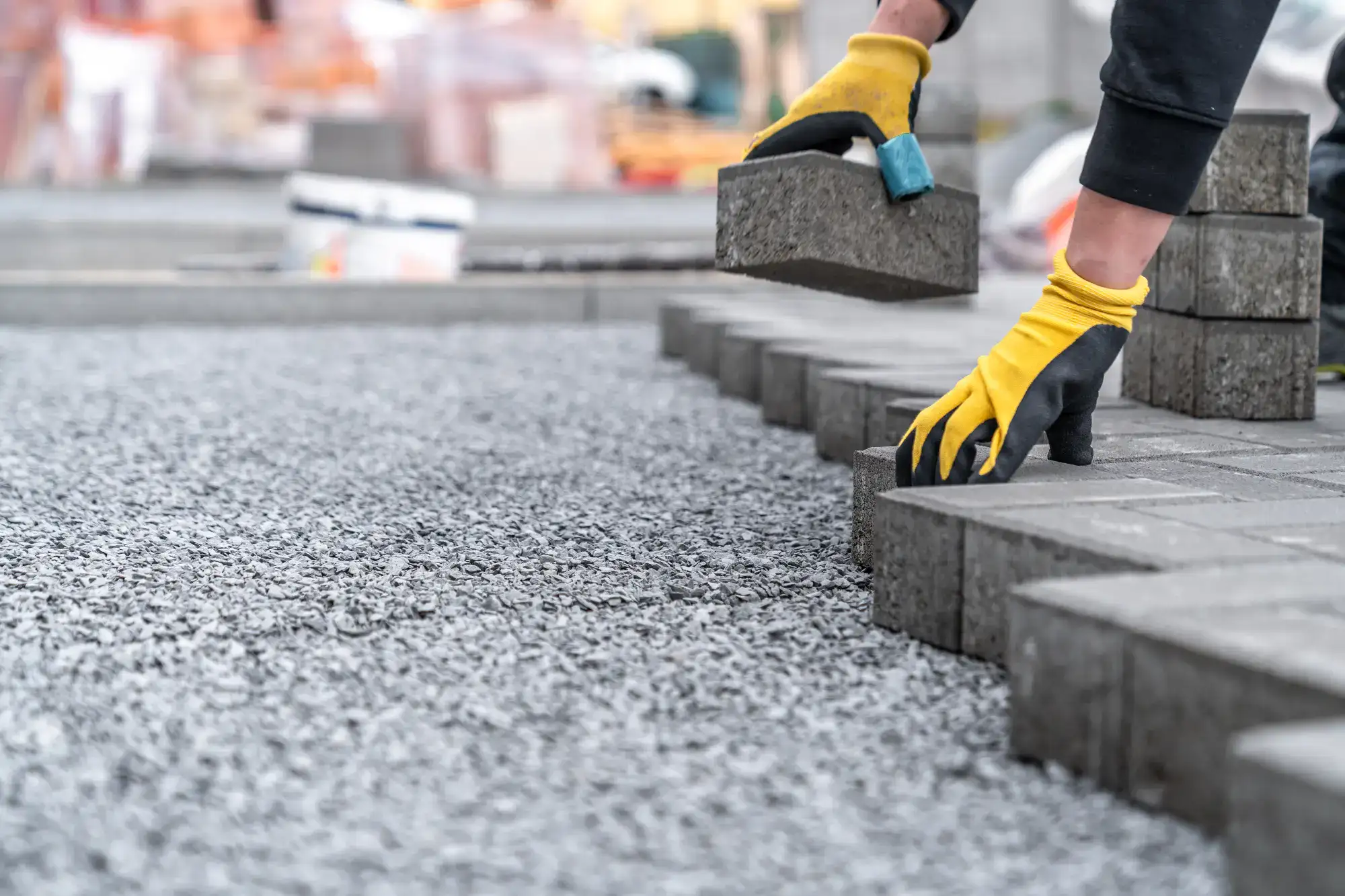
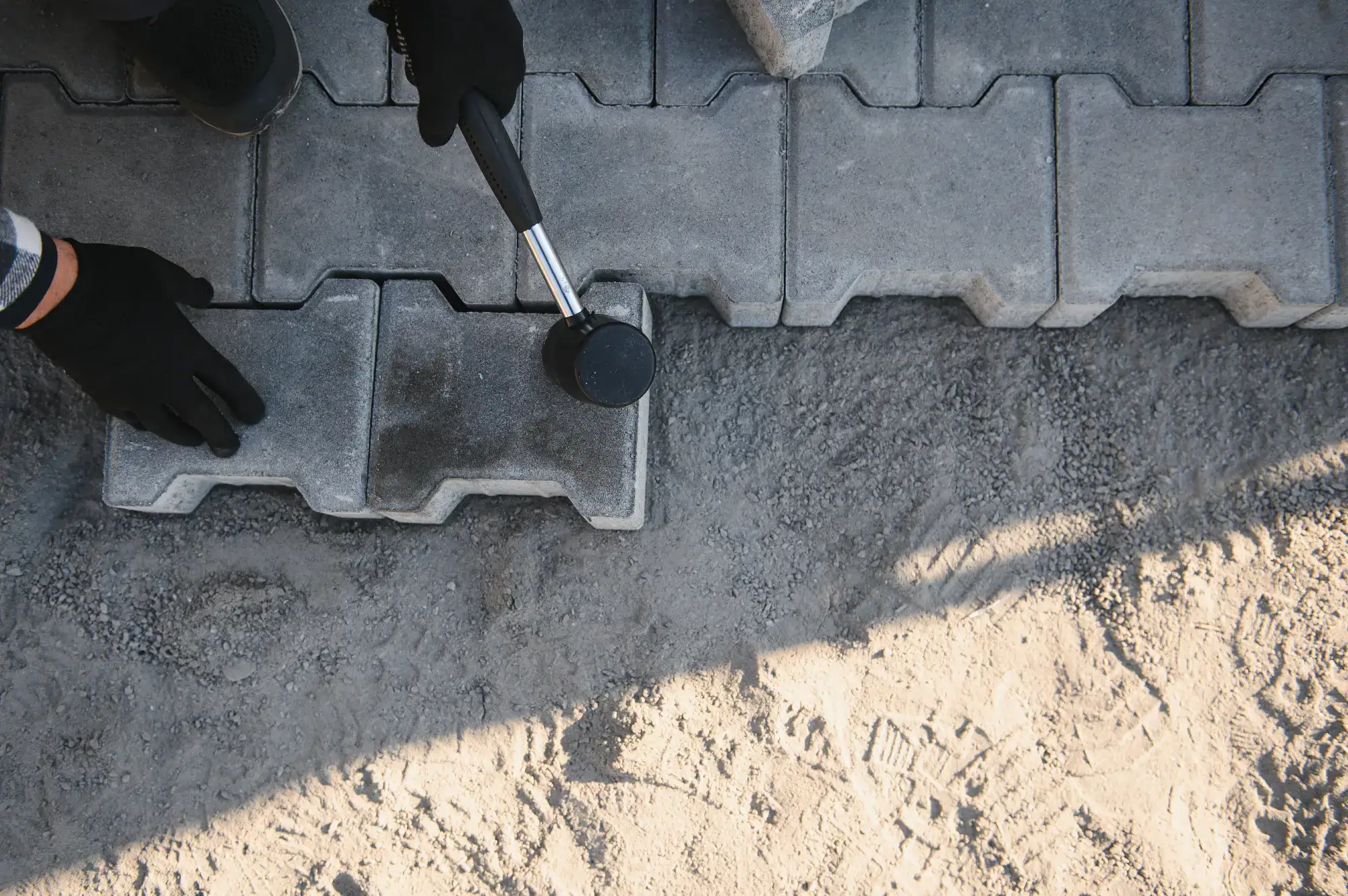
A quality paver installation in Suffolk County starts with proper excavation, a compacted gravel base built to the right depth for this climate, a sand leveling layer, and hand-set pavers with proper spacing and alignment. That process takes time. It costs more than a crew that skips the base work and lays pavers directly onto whatever’s already there.
The contractors who underbid aren’t necessarily dishonest — some just aren’t building for Long Island winters. The ones who are will tell you exactly what’s going into the ground before a single paver gets set. If a contractor can’t explain their base preparation process, that’s worth noting before you sign anything.
Most residential paver walkway projects we complete take two to four days. That timeline reflects doing the base work correctly — not rushing through it to get to the next job.
Square footage is the biggest single cost driver — more surface area means more material, more labor, and more base preparation. But beyond size, a few factors consistently move the number in one direction or the other.
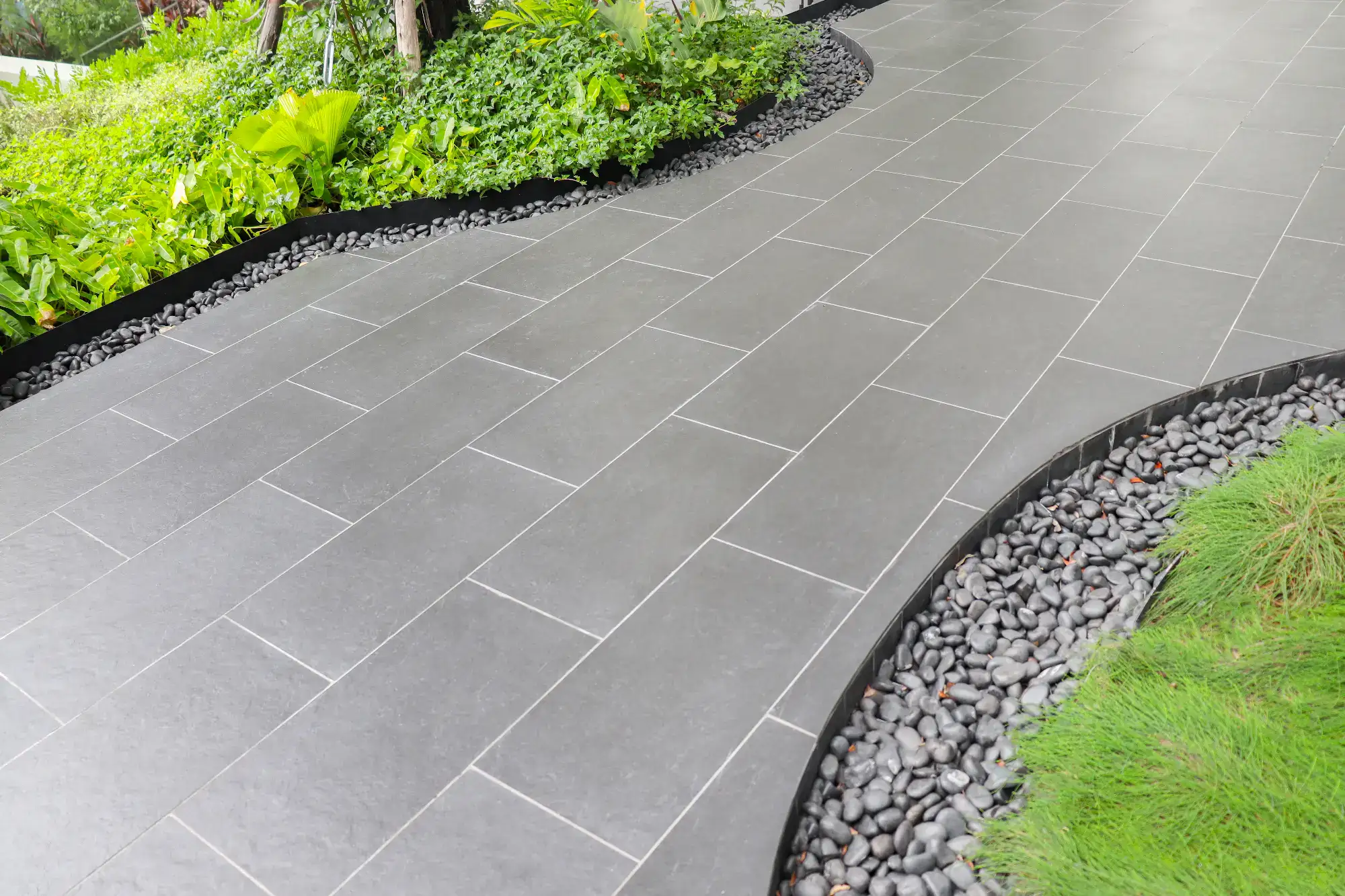
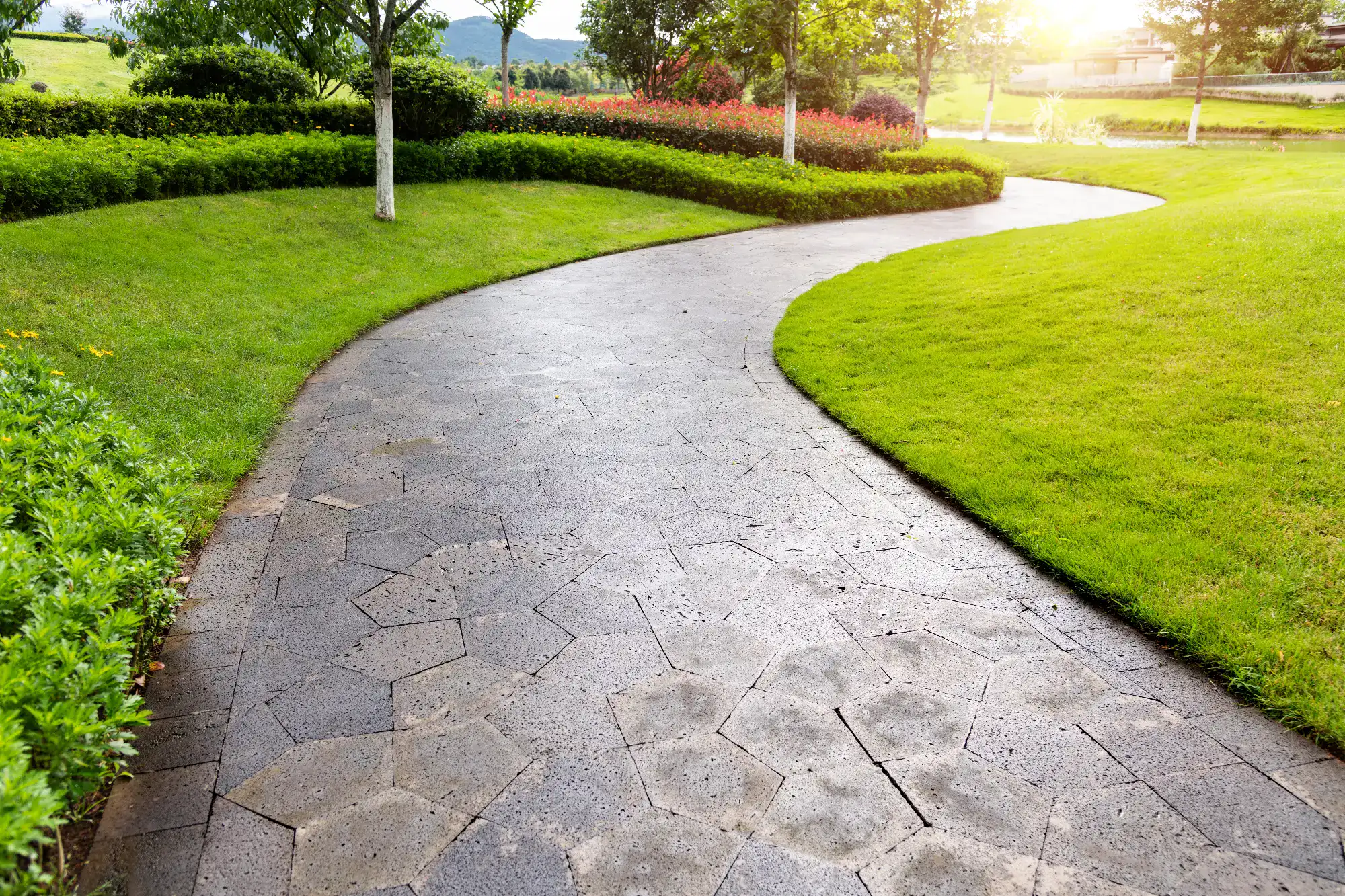
Design complexity matters more than most homeowners expect. A straight walkway in a running bond pattern is faster to install than a curved path in a herringbone or basketweave layout. Curves require more cutting, more precision, and more time — all of which show up in the final price. That’s not a reason to avoid them; a curved walkway with a decorative border can genuinely transform the front of a house. It’s just worth understanding what you’re paying for.
Site access and existing conditions also affect cost. If there’s an old concrete walkway to remove and haul away, that adds to the total. If the crew has limited access to the work area — tight side yards, landscaping that needs to be worked around — that adds labor time. And if the ground needs significant grading to get the drainage pitch right, that’s additional prep work before installation even begins.
Permit requirements vary by town within Suffolk County. Some municipalities require permits for hardscape work; others don’t. It’s worth confirming before your project starts, because unpermitted work can create complications if you sell the home down the road. We handle the permit paperwork directly, so that’s one less thing on your plate.
One thing that doesn’t drive the cost up: using our own licensed crew instead of subcontractors. That’s just how we work. The same team that gives you the estimate is the team that shows up on day one.
Want live answers?
Connect with a Corsino Construction expert for fast, friendly support.
Concrete has a lower upfront cost — typically $1,600 to $2,400 for a standard 200-square-foot path at the national level, though Suffolk County pricing runs higher. That makes it an appealing option if you’re working with a tighter budget. But in this climate, the upfront savings often don’t last.
Concrete walkways in Suffolk County typically start showing cracks within two to three years. The same freeze-thaw cycling that demands careful base preparation for pavers also works against concrete’s rigid structure. Once it cracks, you’re patching, sealing, and eventually replacing — costs that add up quickly over a decade of ownership.
Brick walkways run $15 to $30 per square foot installed, with a typical project landing somewhere between $2,500 and $8,000 depending on size and complexity. That puts brick in a similar range to quality concrete pavers, and for good reason — both materials perform well in freeze-thaw climates when installed correctly.
The appeal of brick is largely aesthetic. It has a traditional, established look that suits a lot of Suffolk County homes, particularly older colonial and Cape Cod-style houses that are common throughout towns like Huntington, Islip, and Smithtown. The warm, familiar appearance of brick tends to age well and complements mature landscaping in a way that some modern paver styles don’t.
From a durability standpoint, brick holds up well on Long Island as long as the base preparation is done right. The same principles apply: proper excavation depth, compacted gravel base, adequate drainage pitch. A brick walkway installed on a solid foundation will last for decades. One laid on a shallow or poorly compacted base will start shifting within a few winters, and individual brick replacement — while possible — gets tedious fast.
One practical advantage of any modular material, whether brick or concrete pavers, is repairability. If a section does shift or a unit cracks, you can lift and reset the affected area without tearing out the entire walkway. That’s not an option with poured concrete, where a crack often means patching that never quite matches — or eventually, full replacement.
One of the most common frustrations homeowners in Suffolk County describe isn’t the initial quote — it’s the final bill. You agree on a number, the work starts, and somewhere along the way the price changes. A “site condition” gets discovered. A material costs more than expected. The scope “expanded slightly.” By the time the project wraps up, you’re paying significantly more than you planned.
This happens often enough in the contractor market that it’s worth asking directly before you commit: is this price fixed, or is it an estimate that can change? Those are two very different things, and the answer tells you a lot about how the project will go.
We provide upfront, detailed estimates that don’t change unless you change the scope. When you know what you’re paying before the first shovel goes in the ground, you can actually plan around it. No surprises, no mid-project conversations about additional costs.
Getting to a fixed price requires a contractor who’s willing to assess your specific site conditions before quoting — not someone who gives you a number over the phone based on rough square footage. The soil conditions in Lake Ronkonkoma differ from those in West Islip. A front walkway with a steep grade presents different drainage considerations than a flat path in Hauppauge. A real estimate accounts for those variables upfront so they don’t become surprises later.
We’re also licensed and insured in Suffolk County, which matters for reasons beyond just compliance. If something goes wrong on a job site — and in 20-plus years, we’ve seen what can happen when it does — you want a contractor whose insurance actually covers it. Verifying a contractor’s Suffolk County Home Improvement Contractor license takes about two minutes and is worth doing before you sign anything.
Walkway installation cost in Suffolk County comes down to more than just material and square footage. The climate here demands a level of base preparation that cheaper quotes often skip, and the difference between a walkway that holds up for 25 years and one that starts failing after a few winters is almost always in what happens underground before installation begins.
Pavers tend to be the most durable long-term option for Long Island’s freeze-thaw conditions. Brick is a solid choice for the right aesthetic. Concrete costs less upfront but carries real maintenance risk in this climate. Whichever material makes sense for your property, the installation process matters as much as the material itself.
If you’re ready to get a real number — one that accounts for your specific site and doesn’t change once the work starts — reach out to Corsino Construction Corp. We’re based in Coram and serve homeowners across Suffolk County. Monday through Friday, 9am to 5pm, by phone or text at 516-693-4270.
Article details:
Share:
Continue learning: