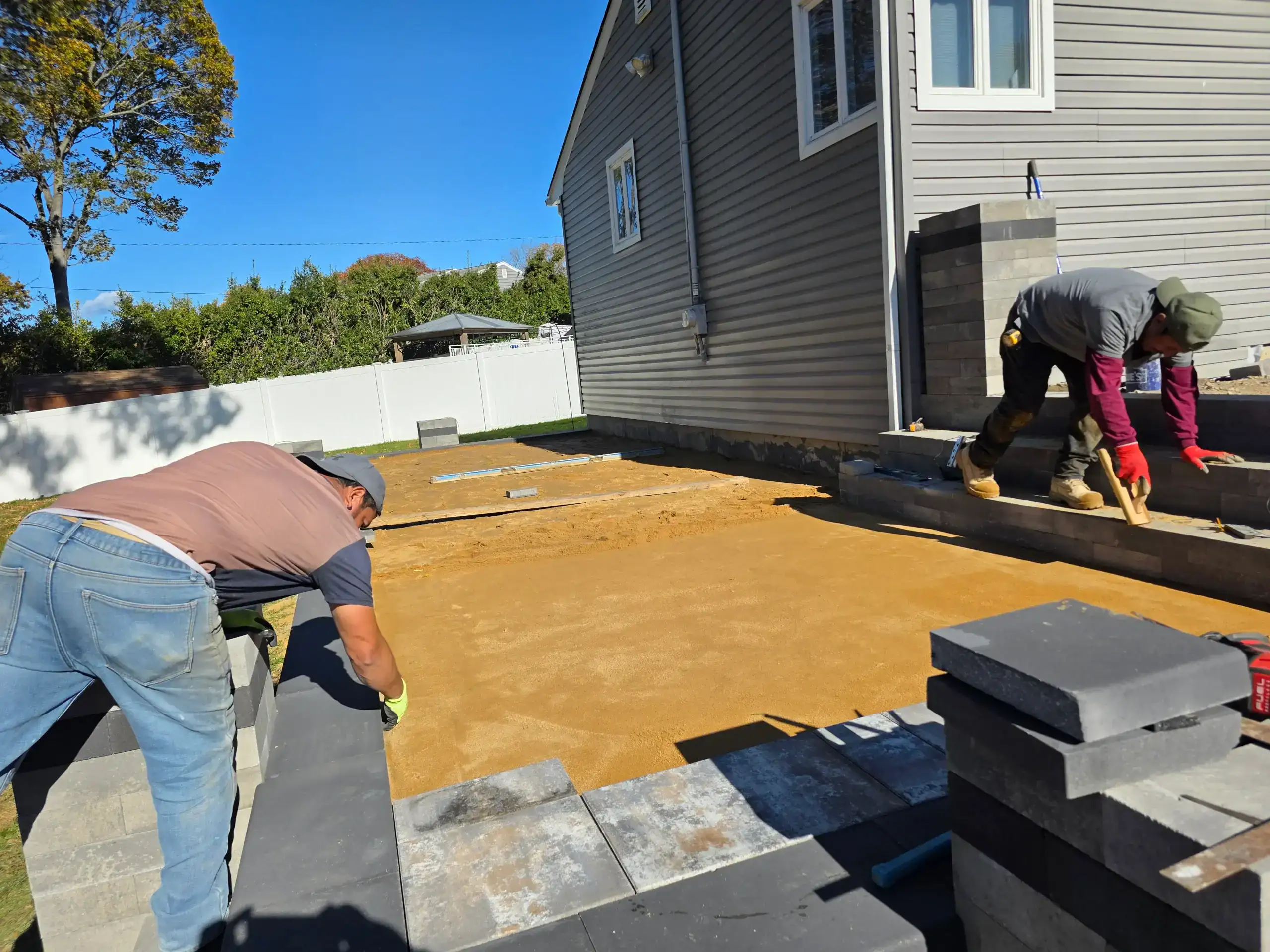
"Licensed contractor" sounds straightforward — but in New York, it's more complicated than most homeowners realize. Here's what the credential actually covers.
Share:
Summary:
Most homeowners assume “licensed contractor” is a simple, checkable fact. Either someone has it or they don’t. But in New York, the reality is messier than that — and if you’re planning a renovation in Suffolk County, the details matter more than you might expect.
New York doesn’t issue a statewide contractor license. There’s no single database you can search to confirm someone is qualified to work on your home. What exists instead is a patchwork of county-level licensing programs — and Suffolk County runs its own. Knowing what that license actually requires, what it protects, and where it falls short is the kind of information that can save you from a very expensive lesson when hiring a licensed contractor.
New York State does not license general contractors or home improvement contractors at the state level. The New York State Department of State is explicit about this — it refers homeowners directly to their local jurisdiction instead. That means the credential you’re looking for depends entirely on where the work is being done.
In Suffolk County, the relevant license is a Home Improvement Contractor (HIC) license issued by the Suffolk County Department of Labor, Licensing & Consumer Affairs. This is a separate credential from what a contractor would need to work in New York City, Nassau County, or Westchester. A NYC DCWP license does not cover work done in Suffolk County — and vice versa. If a contractor worked in the city for years and recently started taking jobs on Long Island, that’s a question worth asking directly.
Getting licensed in Suffolk County isn’t just a matter of filling out a form. The application requires proof of identity and business registration, a background check, a passing score on a written exam, and proof of active general liability insurance — at a minimum of $500,000 in combined bodily injury and property damage coverage. Workers’ compensation insurance is also required, or a formal exemption. The application fee is $200, followed by a $500 license and restoration fund fee once approved. Applications are reviewed by the Construction and Home Improvement Advisory Board, which meets monthly.
That’s a meaningful bar. It’s not just a business registration with a different name. A contractor who has gone through this process has been vetted, tested, and financially bonded to Suffolk County’s consumer protection framework.
There’s also a layer of complexity that most homeowners don’t know about: if your project is in East Hampton, Southampton, or Shelter Island, those townships require their own Home Improvement Contractor licenses on top of the Suffolk County credential. A contractor who holds a Suffolk County HIC license isn’t automatically cleared to work in those towns. If you’re in one of those areas, it’s worth asking specifically.
What the license doesn’t guarantee, though, is quality of work, reliability, or who actually shows up to do the job. The license establishes legal eligibility to work — it’s the floor, not the ceiling. A licensed contractor can legally subcontract work to other people, including people who aren’t licensed themselves. That’s a gap worth understanding before you assume the credential covers everything.
Suffolk County homeowners can verify a contractor’s HIC license status through the Office of Consumer Affairs on the county’s official website at suffolkcountyny.gov. The lookup is free and takes about two minutes. You’ll want to confirm the license is active — not expired — and that the name on the license matches the contractor or business you’re hiring.
While you’re at it, ask for a current certificate of general liability insurance and a workers’ compensation certificate. These are separate from the license itself, and a contractor can hold a valid license while carrying lapsed or insufficient insurance. The two credentials don’t automatically update together. If a contractor hesitates to provide current insurance documentation, that’s a red flag worth paying attention to.
Under New York Labor Law, if an uninsured worker is injured on your property, you — the homeowner — can be held personally liable for their medical bills and lost wages, regardless of whether you did anything wrong. Most standard homeowners insurance policies don’t cover damages caused by unlicensed or uninsured contractors. That’s a documented exposure that comes up in New York courts with regularity. The simplest protection is a verified license and a current insurance certificate before anyone sets foot on your property.
One more thing worth knowing: New York General Business Law requires a written contract for any home improvement work over $500, and a three-day window to cancel after signing. If a contractor pushes back on putting things in writing, that’s a problem regardless of their license status.
Want live answers?
Connect with a Corsino Construction expert for fast, friendly support.
Here’s the part most contractor websites don’t tell you. A company can hold a valid Suffolk County HIC license while sending unlicensed workers to your home. The license belongs to the business entity — not necessarily to every person doing the actual work. Subcontracting is common in the industry, and it creates a real accountability gap that the license alone doesn’t close.
This is the specific problem that an in-house licensed crew model is designed to solve. When the licensed professionals are employees — not subcontractors — the credential is attached to the actual hands doing the work, not just the name on the contract.

When a contractor uses subcontractors, you often don’t know who’s going to show up. You may have vetted the company, checked the license, read the reviews — and then a crew you’ve never met arrives on Monday morning. If something goes wrong with the work, accountability gets murky fast. The licensed contractor points to the sub. The sub is harder to reach. You’re left in the middle.
This is one of the more common complaints in residential renovation — not that the contractor was unlicensed, but that the people doing the work weren’t the people who sold the job. Quality can vary. Communication breaks down. The homeowner who thought they were getting one team ends up with a rotating cast of unfamiliar faces.
At Corsino Construction Corp, we don’t use subcontractors. Every person working on your project is a licensed, in-house professional — someone we’ve hired, trained, and stand behind directly. We’ve been operating this way in Suffolk County since 2000, and it’s not a marketing point so much as a practical decision: when the people doing the work are our employees, we’re accountable for everything they do. There’s no diffusion of responsibility, no finger-pointing, and no surprises about who shows up.
For homeowners in Suffolk County who’ve dealt with the subcontractor shuffle before, this distinction is usually the one that matters most. The license is necessary — but the model behind it is what makes the license meaningful.
One of the practical benefits of hiring a properly licensed contractor in Suffolk County — beyond the legal protections — is permit handling. Only a licensed contractor can pull permits in Suffolk County towns, and most major renovation work requires them. Structural changes, electrical upgrades, plumbing relocation, additions — these aren’t optional. Work done without the required permits can create serious problems when you go to sell your home, and it can void your homeowners insurance coverage for anything related to that work.
Experienced local contractors know the permit process well enough to factor it into the schedule from day one. Suffolk County permit processing typically adds one to two weeks to project start dates. A contractor who’s been through this process hundreds of times — across multiple towns and building departments — builds that window into the timeline rather than treating it as a surprise.
There’s also the material side of things. Suffolk County’s coastal geography — the salt air off the Sound and the Atlantic, the freeze-thaw cycles, the clay soil conditions — affects how exterior work holds up over time. Siding, windows, decking, driveways — the right material choices for a home in Coram or Holbrook aren’t necessarily the same as what works inland. A licensed contractor with genuine local experience knows the difference. Someone who just picked up a Suffolk County license last year may not.
With median home values in Suffolk County reaching $660,000 in 2025, the stakes of a renovation decision are real. A project that’s done right, permitted correctly, and built with materials suited to Long Island’s climate adds lasting value. One that cuts corners on any of those fronts can cost more to fix than it would have cost to do right the first time.
Before any renovation project starts, verify the license at suffolkcountyny.gov, ask for current insurance certificates, and get the full scope of work in writing. Confirm that the people doing the work are licensed — not just the company name on the contract. And if you’re in East Hampton, Southampton, or Shelter Island, ask specifically about the local township license, not just the county credential.
The license is the starting point, not the finish line. What it tells you is that a contractor met a minimum legal standard. What it doesn’t tell you is whether they’ll communicate clearly, show up consistently, do the work themselves, or stand behind it when something needs attention after the job is done.
If you’re planning a renovation in Suffolk County and want to talk through what a project actually involves — permits, timeline, materials, and all of it — we at Corsino Construction Corp have been doing this work locally since 2000. Reach out and we’ll give you straight answers.
Article details:
Share:
Continue learning: