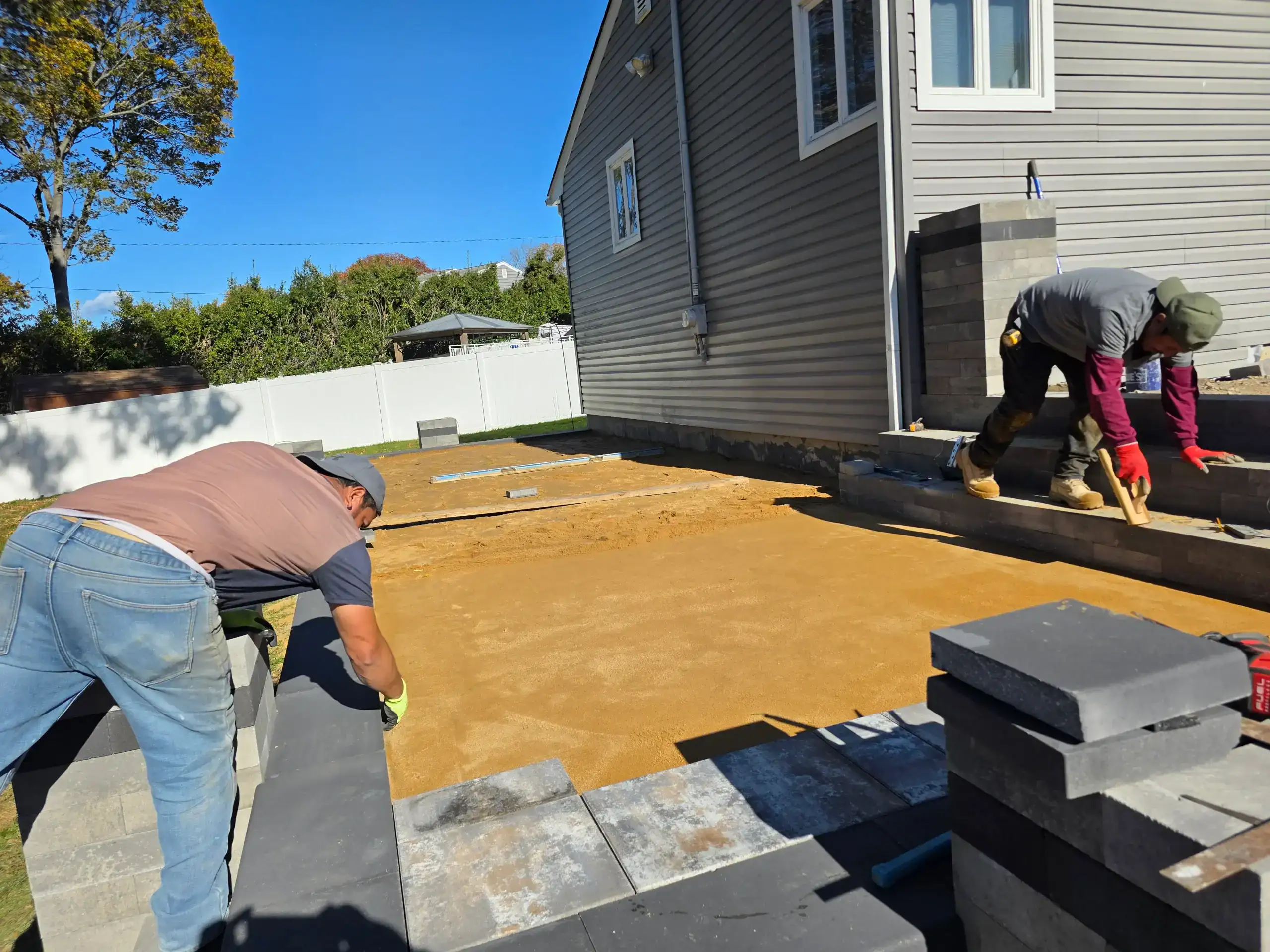
Most homeowners assume one person is responsible for their renovation. The reality is more complicated — and more important to understand before you hire anyone.
Share:

Summary:
You’ve decided it’s time to renovate. Maybe it’s the kitchen that hasn’t been touched since the ’90s, a bathroom that’s seen better days, or an addition you’ve been putting off for years. You start looking for a general contractor, get a few names, maybe check a couple of websites — and then comes the question nobody warns you about: when something goes wrong mid-project, who exactly is responsible?
It’s not a hypothetical. It’s the question Suffolk County homeowners wish they’d asked before signing anything. This post walks you through how general contracting services actually work, what to watch for, and why the accountability structure matters more than most people realize.
A general contractor is supposed to be the single point of accountability on a renovation project — the person who manages the work, coordinates the trades, pulls the permits, and makes sure everything comes together on time and within budget. In theory, it’s a clean arrangement. In practice, it depends entirely on how that contractor actually runs their business.
The scope of general contracting services can range from a single-room remodel to a full home addition. What stays consistent — or should — is that one contractor holds the contract, manages the timeline, and is responsible for the outcome. The problem is that “responsible” gets murky fast when the people doing the actual work aren’t employees of the contractor you hired.

Here’s something most homeowners don’t find out until it’s too late: in the standard general contracting model, the contractor you sign with often isn’t the one doing the work. They hire subcontractors — independent tradespeople or crews — to handle the actual construction. Framing, electrical, plumbing, tile work, painting — any or all of it might be handed off to people you’ve never met, never vetted, and whose work standards you have no way of knowing in advance.
This isn’t inherently illegal or even unusual. It’s how a large portion of the home improvement industry operates. But it creates a real accountability gap. When something goes wrong — and on complex renovation projects, something almost always needs to be addressed — the GC can point to the sub, the sub may be unreachable or already on another job, and you’re left in the middle of it. Home improvement contracting has been the top consumer complaint category reported by state and local consumer protection agencies for over a decade. That’s not a coincidence.
The other issue is quality consistency. Subcontractors work across multiple job sites, for multiple contractors, under varying standards. The person who tiled your neighbor’s bathroom beautifully last month might be rushing through yours this week to make it to the next job. You have no way of knowing, because you didn’t hire them — your contractor did.
This is why the question “who is actually doing the work?” is one of the most important things you can ask before signing a contract. If the answer is vague, or involves a network of independent tradespeople, that’s worth understanding before you hand over a deposit.
New York State does not issue a statewide general contractor license. That surprises a lot of people. What looks like a legitimate, licensed contractor operating in Suffolk County, NY may or may not hold the specific credential required to legally do home improvement work here: the Suffolk County Home Improvement Contractor License, issued through the county’s Department of Labor, Licensing & Consumer Affairs.
Getting that license isn’t just paperwork. It requires passing a written exam based on Chapter 563 of the Suffolk County Home Improvement Law and Article 36-A of New York State General Business Law. It requires carrying general liability insurance with a minimum of $500,000 in coverage, plus workers’ compensation insurance. These aren’t optional — they’re legal requirements.
Why does this matter so much? Because New York courts have consistently held that unlicensed contractors cannot enforce a home improvement contract. If an unlicensed contractor takes your deposit, does substandard work, or walks off the job, you may have no legal recourse at all. No contract to lean on. No lien to fight. Just a mess and a bill.
You can verify any contractor’s Suffolk County license through the searchable database at ca.suffolkcountyny.gov. It takes about two minutes and it’s one of the most useful things you can do before any conversation goes further. If you’re working on a property in Southampton, East Hampton, or Shelter Island, note that those towns have their own separate licensing requirements on top of the county’s — something even experienced homeowners often don’t realize until it becomes a problem.
The bottom line: licensing in Suffolk County, NY is specific, verifiable, and consequential. Don’t assume “licensed and insured” on a website means the contractor actually holds the right credentials for your town and your project.
Want live answers?
Connect with a Corsino Construction expert for fast, friendly support.
When you’re evaluating home improvement companies, the credentials are the floor — not the ceiling. A contractor can be fully licensed, carry the right insurance, and still run a project poorly. What separates a good experience from a frustrating one usually comes down to a few specific practices that most contractors either skip or handle inconsistently.
The things that actually protect you are less glamorous than a polished website: a detailed written estimate that doesn’t change, clear permit management, daily job site cleanup, and one consistent point of contact from start to finish. These aren’t extras. They’re the difference between a renovation that fits your life and one that takes over it.

Nearly 40% of homeowners exceed their renovation budget. That number isn’t driven by homeowners who decided to upgrade mid-project — it’s largely driven by change orders, vague estimates, and contractors who quote low to win the job and make up the difference once work has started and you’re committed.
A detailed, written, line-item estimate isn’t just a courtesy. It’s a commitment. It tells you exactly what you’re paying for, what materials are being used, and what the project will cost — before a single wall comes down. When a contractor is willing to put that in writing and stand behind it, it signals something meaningful about how they run their business.
Permit management is the other piece most homeowners don’t think about until they’re selling the house. Unpermitted work in Suffolk County, NY can create real problems at closing — buyers’ attorneys flag it, appraisers discount it, and in some cases you’re required to remediate before the sale can go through. A contractor who handles all permit applications and inspections as part of the project isn’t doing you a favor. They’re doing their job. But it’s worth confirming upfront that it’s actually included, because not everyone handles it the same way.
We’ve been managing permits for Suffolk County projects since 2000. We know the local requirements, the inspection process, and what each town expects — because we’ve been through it hundreds of times across communities from Coram and Medford to Huntington and West Islip. That’s not something you build overnight.
Here’s the part of home improvements that doesn’t show up in the before-and-after photos: you still have to live in the house while the work is happening. For most Suffolk County families, that means weeks or months of navigating around construction, managing dust, and trying to maintain some version of a normal routine while your home is partially dismantled.
Most contractors do a single cleanup at the end of a project — or close to it. That means you’re living with the accumulation of daily construction debris, tools left in the walkway, and dust migrating into rooms that aren’t supposed to be touched. For families with young kids, people with allergies, or anyone working from home, it’s a real daily disruption.
Daily cleanup isn’t a luxury. It’s a sign of a contractor who understands that you’re not handing them an empty building — you’re handing them your home. The same goes for communication. Knowing when workers will arrive, what’s happening that day, and where the project stands isn’t asking for too much. It’s the minimum you should expect.
When contractors fail to communicate, homeowners fill the gap with anxiety — which is why “I had no idea what was happening” shows up consistently in renovation complaints alongside “they disappeared” and “the price changed.” We clean up every day. Not because it’s a selling point, but because you have to live there. And we communicate throughout the project because we’ve seen firsthand what happens when homeowners are left guessing.
Suffolk County homes — especially the older post-war stock you find throughout Babylon, Selden, and Brookhaven — often have surprises behind the walls. When something unexpected comes up, you should hear about it from us the same day, not when you notice something looks off.
The short version: verify the license, ask who’s doing the work, and get everything in writing before anything starts. If a contractor can’t tell you clearly who will be on your job site, won’t provide a detailed written estimate, or gets vague when you ask about permits — those aren’t minor concerns. They’re previews of how the project will be managed.
Suffolk County homeowners deserve contractors who show up, communicate, and finish what they start. That sounds like a low bar, but given how common the opposite experience is, it’s worth saying plainly.
If you’re starting to research general contracting services for a project in Suffolk County, NY and want to talk through what the process actually looks like — what’s involved, what it takes, and what questions you should be asking anyone you’re considering — Corsino Construction Corp is happy to be that conversation. No pressure, no overselling. Just a straight answer from a team that’s been doing this work here since 2000.
Article details:
Share:
Continue learning: