Before you hire a paving contractor in Suffolk County, NY, here's what separates a driveway that lasts 20 years from one that needs patching by year three.
Share:
Summary:
Your driveway survived another Long Island winter — barely. The cracks are wider than last year, water pools near the garage every time it rains, and you’ve patched the same spot twice already. At some point, patching stops making sense.
If you’re thinking about hiring a general contractor in Suffolk County, NY, this guide is for you. We’ll walk through the materials, the real costs, what the installation process actually looks like, and — most importantly — the questions you should ask before you let anyone near your driveway. No fluff, no sales pitch. Just the information you need to make a smart decision.
The most common question homeowners ask before a driveway project isn’t “who should I hire” — it’s “what should I use?” And in Suffolk County, NY, that question matters more than it does in most other markets. Our freeze-thaw cycles, clay soil in towns like Coram and Ridge, and salt air exposure along the South Shore all affect how different materials perform over time.
Asphalt is the most budget-friendly option, typically running $6 to $12 per square foot installed. It handles freeze-thaw cycles well because it flexes rather than cracks under ground movement — which is a real advantage here. The tradeoff is maintenance: asphalt needs to be sealed every two to three years to protect against water damage and UV degradation, and it will eventually need resurfacing or replacement after 15 to 20 years.
Concrete falls in the mid-range at $10 to $15 per square foot. It’s more durable over the long haul, but it’s less forgiving when the ground shifts — and in areas with heavy clay soil, it will crack if the base isn’t done right. Repairs are also more involved than asphalt patching, which is worth factoring into your long-term cost picture.
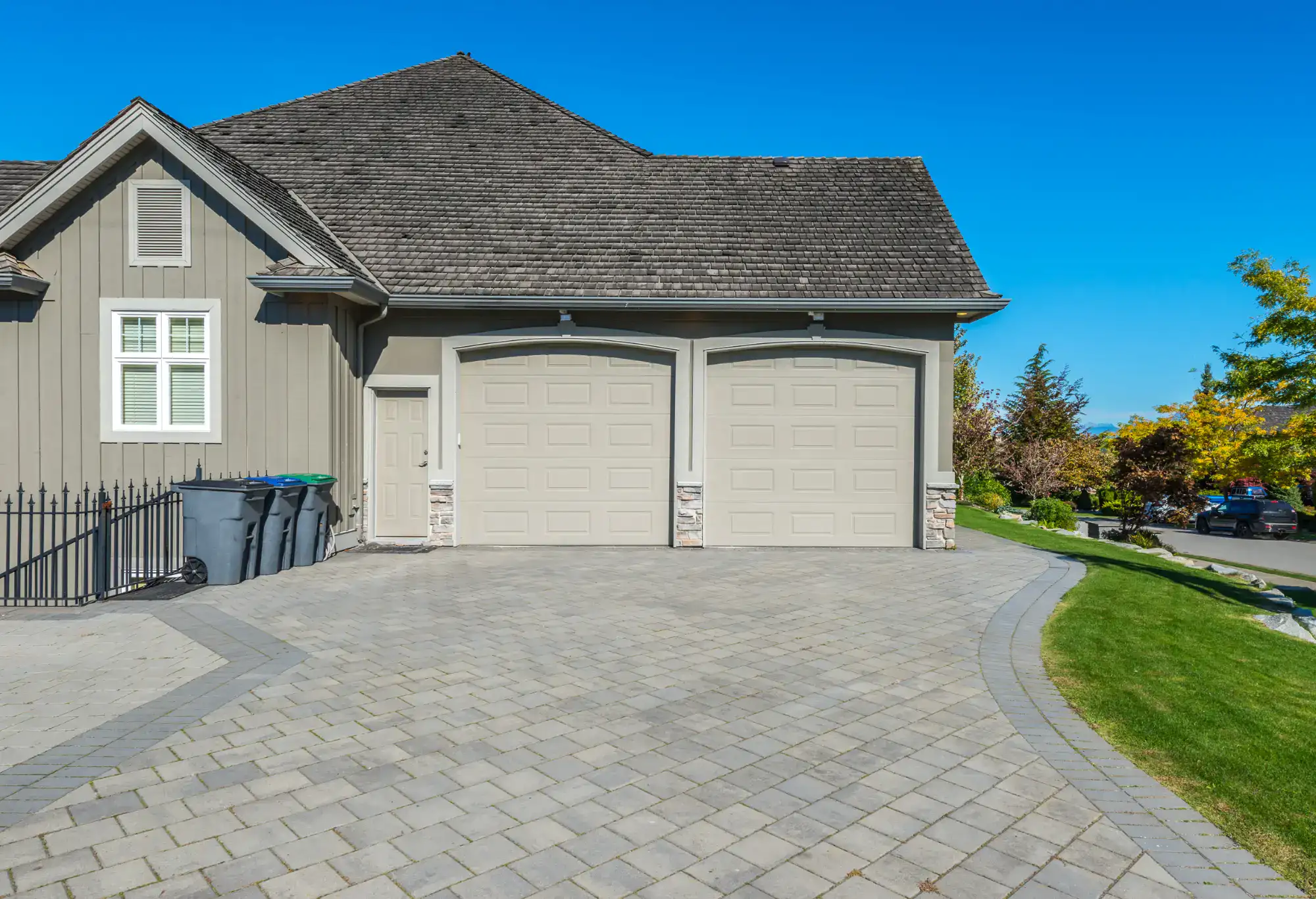
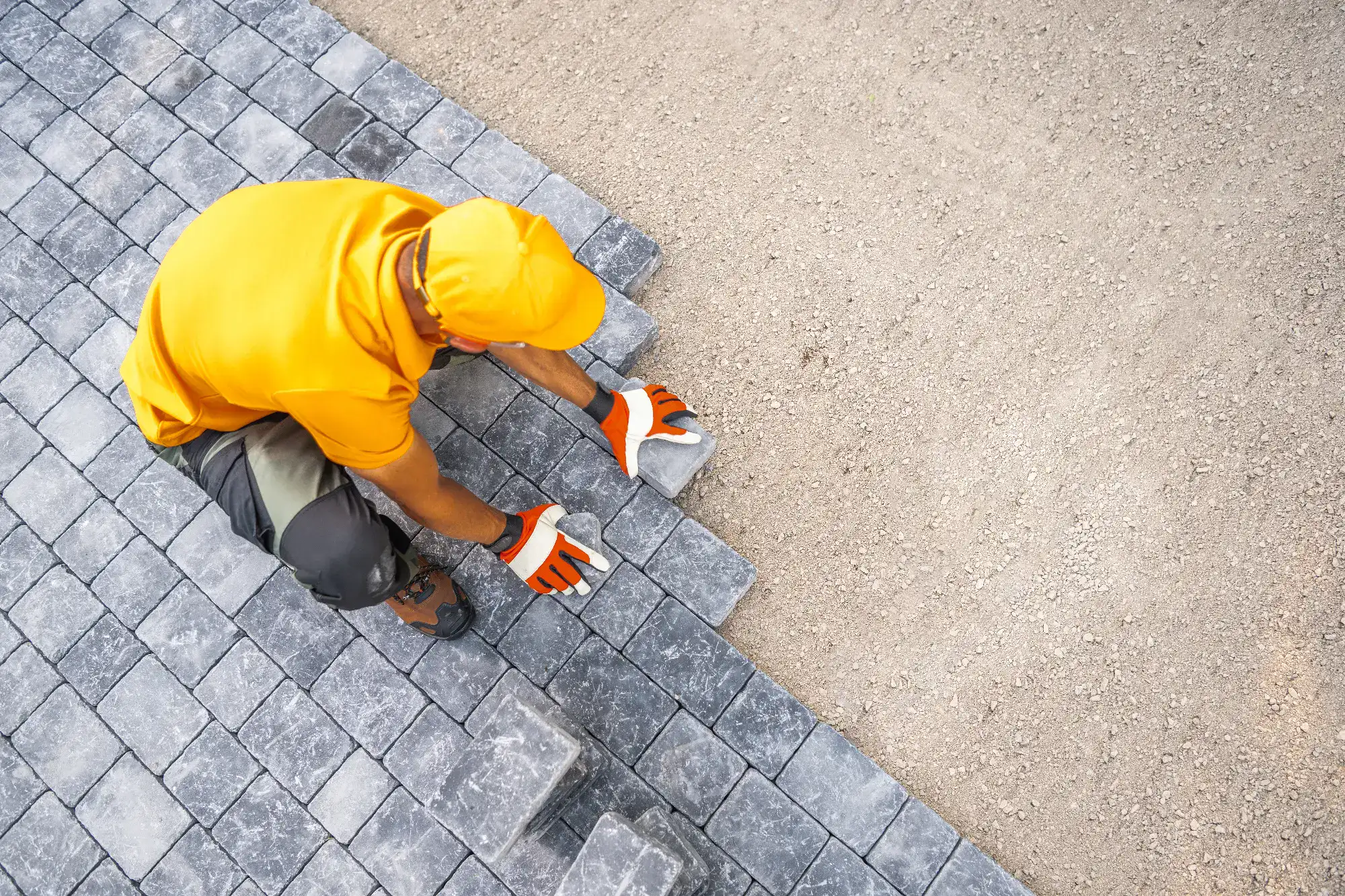
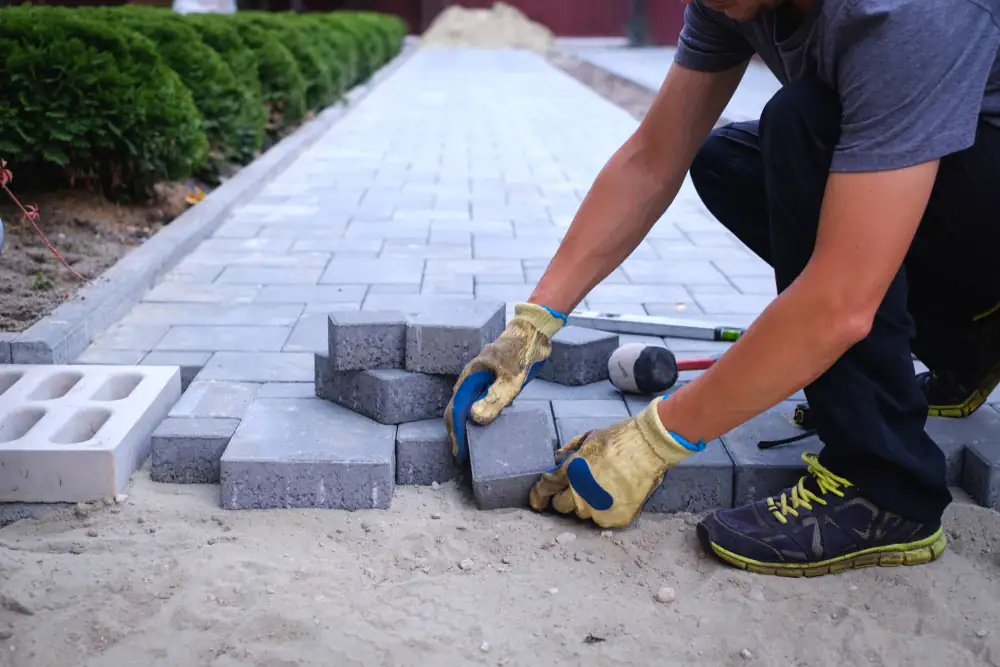
Paver driveways sit at the higher end, typically $18 to $25 per square foot installed. The upfront cost is real, but so are the benefits: no sealcoating required, individual pavers can be replaced without redoing the whole surface, and quality pavers often carry manufacturer warranties exceeding 25 years. For homeowners who want a driveway they won’t have to think about again, pavers often make sense over time.
For a standard two-car driveway — roughly 640 square feet — asphalt driveway replacement typically runs between $4,500 and $14,000 depending on material choice, site conditions, and what the existing driveway requires before new paving can go down. The national average for asphalt specifically lands around $5,337, though Suffolk County, NY labor rates and material costs tend to push that number toward the higher end of the range.
What most homeowners don’t realize is that labor can account for up to 50% of the total project cost. That’s not a contractor markup — it’s a reflection of the work involved. Excavation, base preparation, grading for drainage, and proper compaction with the right equipment all take time and skill. When you see a quote that seems unusually low, it usually means something in that process is being skipped or rushed.
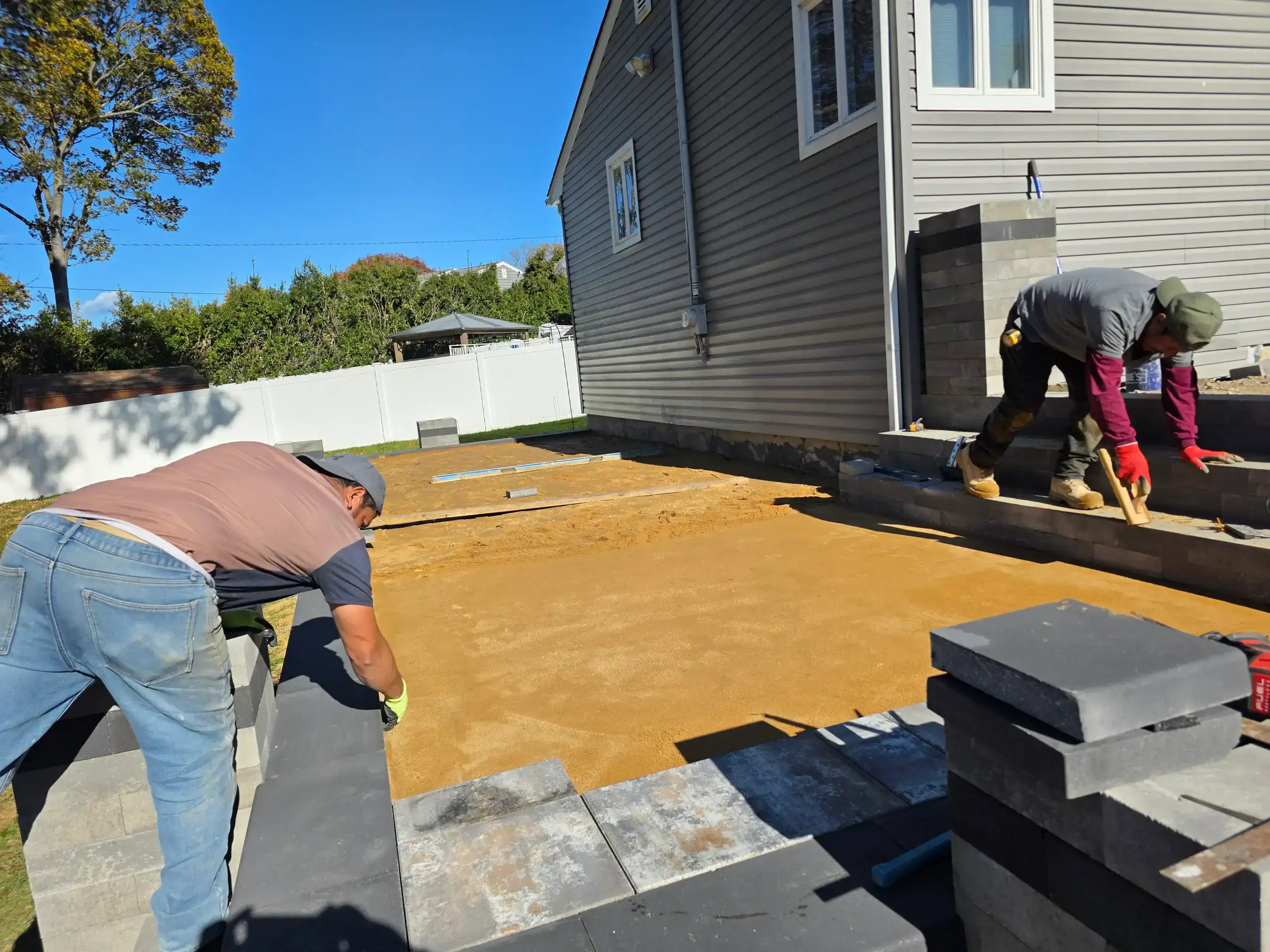
The part of the job you’ll never see — the 10 to 12 inches of compacted crushed stone that forms the base — is also the part that determines whether your driveway lasts 5 years or 25. That base distributes vehicle weight, allows proper drainage, and prevents the settling and cracking that show up a few winters after a cheap installation. It’s not glamorous, and you can’t photograph it for a before-and-after, but it’s the most important work on the entire job.
Asphalt resurfacing — laying a new layer of asphalt over an existing surface — is a middle option when the base is still in good shape but the surface has deteriorated. Resurfacing costs less than full replacement, but it’s only appropriate when the underlying structure is sound. A contractor who recommends resurfacing on a driveway with a compromised base is setting you up for the same problem in a few years.
One more thing worth knowing: most residential driveway replacements within an existing footprint don’t require a permit in Suffolk County, NY. If you’re expanding the driveway, changing how water drains off the property, or connecting to a county road, that changes — but a straightforward like-for-like replacement typically doesn’t trigger a permit requirement. We handle permit applications when they are required, so you don’t have to navigate town building departments on your own.
The cost per square foot number is useful for rough comparisons, but it doesn’t tell the whole story. Two contractors can quote the same square footage at the same per-foot rate and deliver completely different results — because the difference is in what they do before the surface material goes down.
Proper asphalt paving is a race against time. Hot-mix asphalt has to be laid and compacted before it cools below a certain temperature. If a crew is rushing, understaffed, or using equipment that isn’t up to the job, the material doesn’t bond correctly. The result is a porous, weak surface that looks fine on day one and starts failing within a few seasons. A self-propelled paver — not hand-laying — is the right tool for a consistent finish on a residential driveway. If a contractor mentions hand-laying the entire surface, that’s worth a follow-up question.
Blacktop driveway cost also varies based on whether the price includes debris removal, grading, and the apron — the transition area between your driveway and the road. Some contractors quote the driveway surface only and add those items as line items later. Getting an itemized written estimate before any work begins is the only way to know what you’re actually comparing between bids.
For asphalt sealing, plan on a separate cost every two to three years after installation. Driveway sealcoating contractors typically charge based on square footage, and it’s a maintenance step worth budgeting for if you want your asphalt to reach the upper end of its lifespan. Skipping sealing accelerates oxidation — the surface dries out, becomes brittle, and starts cracking from the top down rather than from freeze-thaw pressure below.
Want live answers?
Connect with a Corsino Construction expert for fast, friendly support.
The BBB has documented homeowner losses of more than $8,000 in paving scams — and those aren’t all fly-by-night operators who disappeared overnight. Some of them looked professional, gave reasonable quotes, and still delivered work that failed within a year or wasn’t finished at all. The best protection isn’t suspicion — it’s asking the right questions before any money changes hands.
Start with the basics: Are you licensed in Suffolk County, NY? Can you provide proof of general liability insurance and workers’ compensation? A Suffolk County, NY Home Improvement Contractor license is verifiable, and any legitimate contractor will hand over their certificate of insurance without hesitation. If there’s any resistance to either request, that’s your answer.
Then ask about the work itself. How deep will you excavate? What base material are you using, and how will it be compacted? Will the crew doing the work be your own employees, or subcontractors? These aren’t trick questions — they’re the questions that separate contractors who know what they’re doing from those who don’t.
Suffolk County, NY has no shortage of asphalt driveway paving companies. Some have been here for decades. Some showed up last spring. The challenge is that most of them look similar from the outside — a website, some photos, a phone number. The differences that actually matter aren’t visible until the job is done.
One of the most important questions you can ask is whether the crew doing your project will be our company’s own employees or subcontractors. Subcontracting isn’t automatically bad, but it introduces a layer of inconsistency that’s hard to control. When a company uses its own licensed, trained crew on every job, there’s direct accountability from the first day of excavation to the final cleanup. You’re not dealing with whoever was available that week.
Ask about the written estimate process. A contractor who gives you a number verbally and adjusts it after the job starts is a pattern that generates more complaints than any other issue in residential contracting. A detailed written estimate — one that specifies materials, scope, timeline, and a fixed total — is the baseline you should expect before agreeing to anything. If the estimate is vague or verbal, ask for it in writing. If that request is met with resistance, move on.
Experience in Suffolk County, NY specifically also matters in ways that aren’t obvious. Long Island’s soil conditions, coastal moisture levels, and local permit requirements aren’t the same as upstate New York or New Jersey. A contractor who has been working in this county for 20-plus years has navigated those conditions repeatedly. We know which materials hold up in coastal communities, how deep to go in clay soil areas, and when a project needs a permit versus when it doesn’t. That local knowledge shows in the work.
Finally, check reviews — but look past the star rating. Reviews that mention specific details, name the crew or owner, and describe what the project actually involved carry far more weight than a stack of generic five-star ratings. A contractor with 21 detailed, consistent five-star Google reviews in Suffolk County, NY is telling you something meaningful about how they actually operate.
Not every damaged driveway needs to be replaced. The question is whether the damage is surface-level or structural — and that distinction makes a significant difference in both cost and long-term outcome.
Surface cracks that are isolated, narrow, and haven’t been there long are generally good candidates for repair. Crack filling and patching can extend a driveway’s life meaningfully when the base is still sound. Resurfacing — applying a fresh layer of asphalt over the existing surface — is a reasonable option when the top layer has deteriorated but the foundation beneath it is still stable and properly graded.
The case for replacement is stronger when cracking is widespread rather than isolated, when you’re seeing alligator cracking (the interconnected web pattern that signals base failure), when the surface has significant depressions where water pools, or when the driveway is simply old enough that the base material has broken down. Patching a driveway with a compromised base is like painting over rot — it looks fine briefly and costs you more in the long run.
Long Island’s freeze-thaw cycles accelerate the timeline on all of this. A crack that seems minor in October can be significantly wider by March after a winter of water freezing and expanding inside it. If you’re on the fence about whether to repair or replace, getting a professional assessment before winter is better than waiting until spring to find out the decision was made for you.
For driveways that are 20 years or older — which describes a significant portion of Suffolk County, NY’s housing stock, given that most of the county’s residential neighborhoods developed between the 1950s and 1980s — replacement is usually the more cost-effective long-term choice. The math on continued patching eventually tips in favor of starting fresh with a properly installed base that will last another two decades.
Hiring the right paving contractor comes down to a few things: knowing what material makes sense for your property, understanding what a quality installation actually involves, and asking the questions that reveal whether a contractor can deliver it. The price on the quote matters — but it’s a distant third behind those two.
The driveways that fail early almost always have the same story: the base wasn’t deep enough, the wrong material was used for the conditions, or the crew that showed up wasn’t the one who gave the estimate. None of those problems are visible on day one. They show up in year two or three, after the contractor is long gone.
If you’re in Suffolk County, NY and ready to have a real conversation about your driveway, walkway, or pool patio, we’re based right here in Coram and have been doing this work since 2000. Reach out by phone or text at 516-693-4270, Monday through Friday, 9am to 5pm. We’ll come out, look at what you’ve got, and give you a written estimate with a fixed price — no surprises after the job starts.
—
**Frequently Asked Questions**
**What questions should I ask a paving contractor before hiring?** Ask whether they’re licensed in Suffolk County, NY and insured, whether the crew is in-house or subcontracted, how deep they’ll excavate, what base material they’ll use, and whether the estimate is written and fixed. Also ask how they handle permits if needed, and what their cleanup process looks like during the job. A contractor who answers all of these clearly and without hesitation is worth taking seriously.
**Do I need a permit to pave my driveway in Suffolk County, NY?** Most straightforward driveway replacements within an existing footprint don’t require a permit in Suffolk County, NY. If you’re expanding the driveway, altering drainage patterns, or connecting to a county road, a permit from your town or Suffolk County DPW may be required. We handle permit applications when they’re needed — it’s part of the process, not an added hassle for you.
**How much does pool patio installation cost?** Pool patio installation cost depends on the material you choose, the size of the area, and the complexity of the layout. Concrete, pavers, and natural stone all have different price points and performance characteristics. Pavers are a popular choice for pool patios because they stay cooler underfoot, drain well, and individual pieces can be replaced if one is damaged. For an accurate number, the best starting point is a site visit so we can assess your specific space and give you a fixed written estimate.
**What are the deck permit requirements in Suffolk County, NY?** Deck permit requirements vary by town within Suffolk County, NY. Most towns require a building permit for any new deck construction, and some require permits for significant repairs or modifications to existing decks. Requirements typically cover structural plans, setback distances from property lines, and load-bearing specifications. We’re familiar with the permit processes across Suffolk County’s towns and handle the application work when it’s part of a project we’re managing.
**Is chip seal a good option for driveways on Long Island?** Tar and chip — sometimes called chip seal — is a surface treatment that applies a layer of liquid asphalt topped with stone aggregate. It costs less than standard asphalt per square foot and has a more textured, natural appearance. However, it’s less common in Suffolk County, NY’s residential market and can be harder to find qualified tar and chip driveway contractors for. It also requires a different maintenance approach than standard asphalt. For most Long Island homeowners, standard asphalt or pavers are the more practical choices given local climate conditions and contractor availability.
Article details:
Share:
Continue learning: