Summary:
If you’re looking at your cracked walkway and wondering whether to patch it again or finally replace it, you’re asking the right question. Concrete walkways in Centereach and Farmingville face constant freeze-thaw cycles that create cracks faster than you can seal them. The patches never match. The surface stays uneven. And every winter, the problem gets worse. There’s a better approach—one that handles Suffolk County’s climate without the maintenance cycle. Here’s what actually works for walkway and driveway paving in this area, and why the material you choose matters more than you think.
Concrete seems like the obvious choice until you understand what happens beneath the surface. Suffolk County’s sandy soil drains well, but it also shifts easily when saturated. That movement creates voids under concrete slabs. Add freeze-thaw cycles, and water seeps into those hairline cracks, expands when it freezes, and breaks the concrete apart from the inside.
Most concrete walkways here start showing cracks within 2-3 years. You patch them. They crack again. The color never matches, and the surface becomes increasingly uneven, creating tripping hazards that put your family and guests at risk. That’s not a maintenance issue—it’s a material problem.
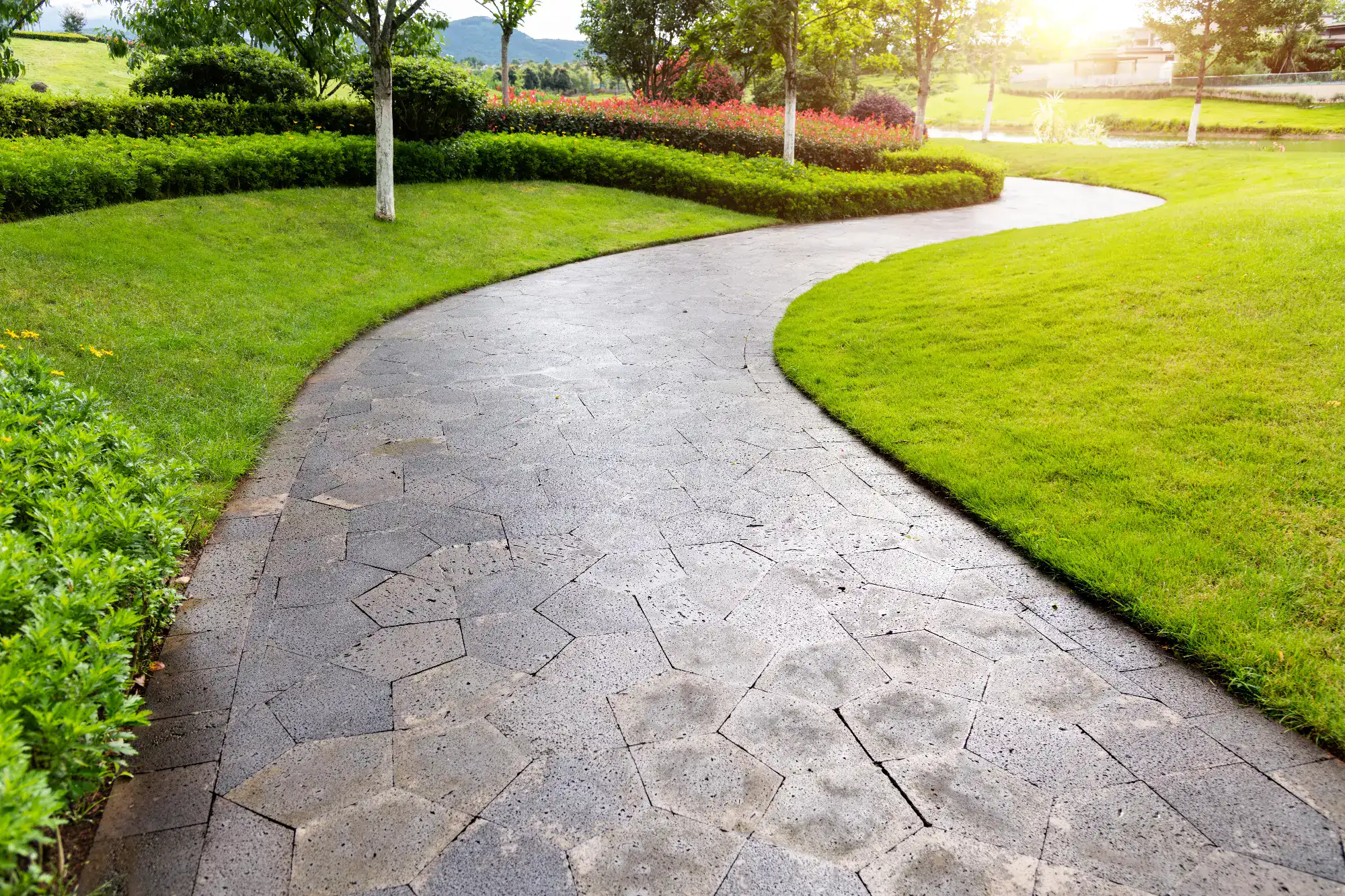
Water is concrete’s worst enemy in climates like ours. When temperatures drop below freezing, any moisture trapped in concrete expands by about 9%. That expansion creates pressure that concrete can’t handle, leading to surface spalling where the top layer flakes away, and deeper cracks that spread across the slab.
In Centereach and Farmingville, we see this cycle repeat 20-30 times each winter. Every freeze creates micro-damage. Over time, those small cracks connect, and suddenly you’re looking at a walkway that’s not just ugly—it’s dangerous.
The problem isn’t just winter, either. Coastal moisture from Long Island’s proximity to water means surfaces stay damp longer. That extended exposure gives water more opportunities to penetrate concrete before temperatures drop. Even well-sealed concrete eventually develops cracks at expansion joints, and once water finds a way in, the damage accelerates.
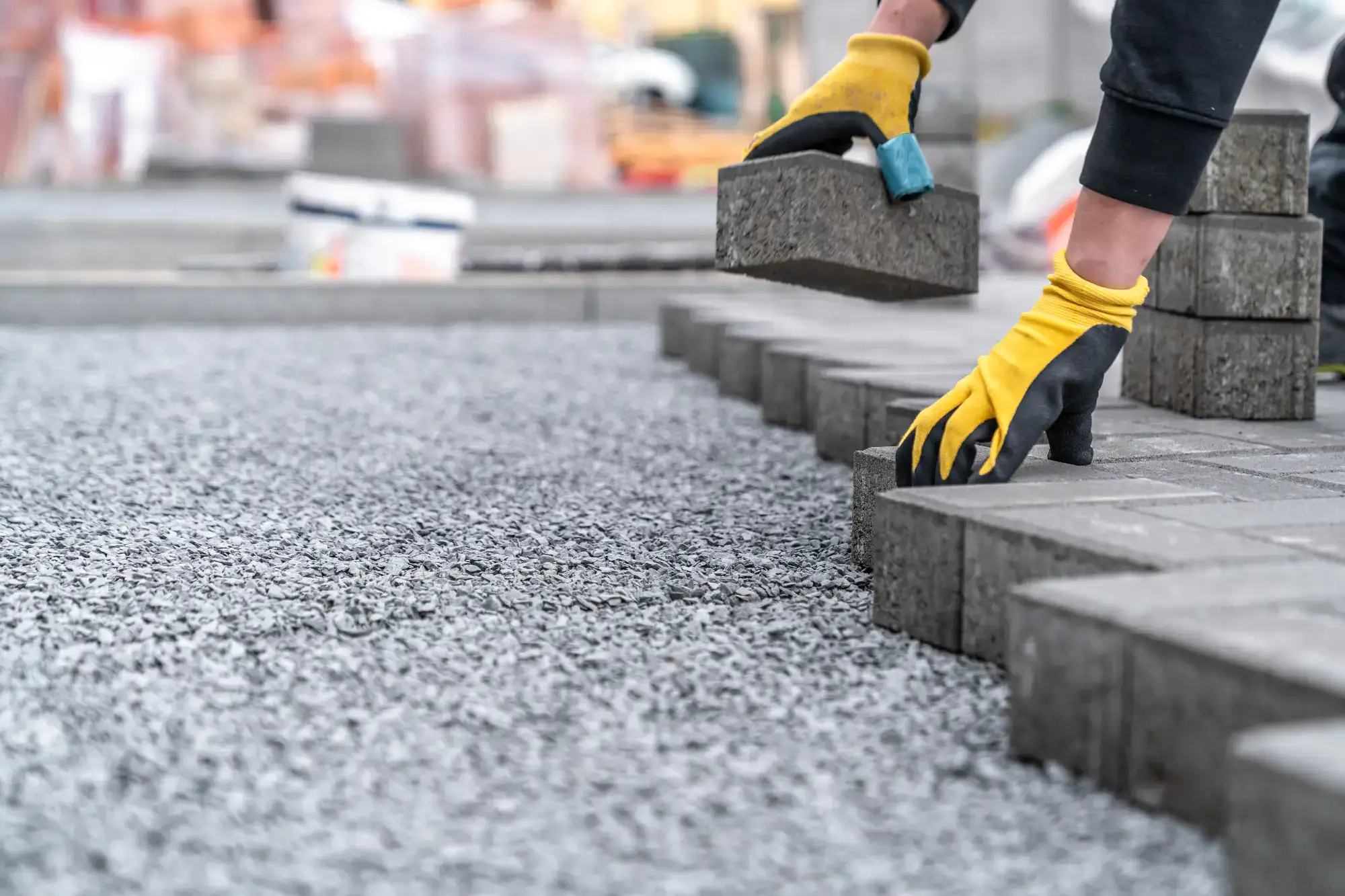
Pavers handle this differently. Because they’re individual units with joints between them, they can expand and contract without cracking. The joints act as built-in expansion space, and the sand between pavers allows for slight movement that rigid concrete can’t accommodate. That flexibility is what separates a walkway that lasts 3 years from one that lasts 30.
Sandy soil is great for drainage but terrible for stability. When rainwater saturates the ground beneath your walkway, that sand shifts. Concrete poured directly on shifting soil settles unevenly, creating the dips and raised sections that turn into tripping hazards.
The clay content in some areas of Suffolk County adds another layer of complexity. Clay expands when wet and contracts when dry, creating a constant push-and-pull that concrete can’t flex with. That’s why you see walkways that tilt toward foundations instead of away from them—the soil underneath has shifted, but the concrete hasn’t adjusted.
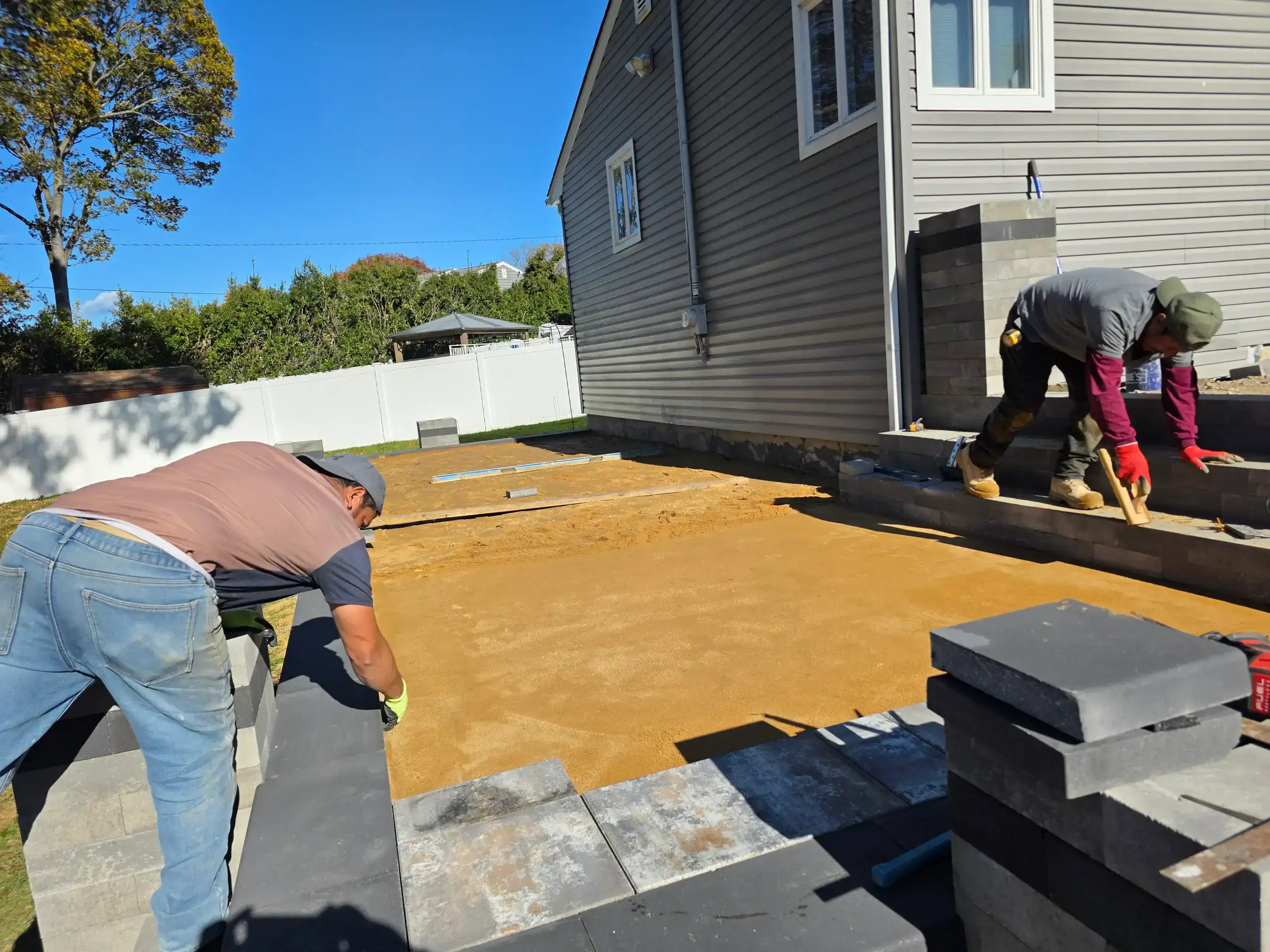
Professional walkway paving accounts for these conditions before installation begins. That means excavating deep enough to get below the frost line, installing 4-6 inches of compacted crushed stone base, and ensuring proper drainage so water moves away from the walkway instead of pooling underneath it.
Most DIY installations and budget contractors skip this step. They pour concrete on 2 inches of base or directly on soil, and within a year, you’re dealing with settlement. The base preparation you can’t see determines whether your walkway stays level for decades or starts sinking within months. It’s not the part anyone wants to pay for, but it’s the part that actually matters.
Want live answers?
Connect with a Corsino Construction expert for fast, friendly support.
Pavers offer design flexibility that concrete can’t match, but not every pattern works for every home. The key is choosing designs that complement your architecture without overwhelming it. Modern homes in Centereach and Farmingville benefit from clean, geometric patterns that create visual interest without looking busy.
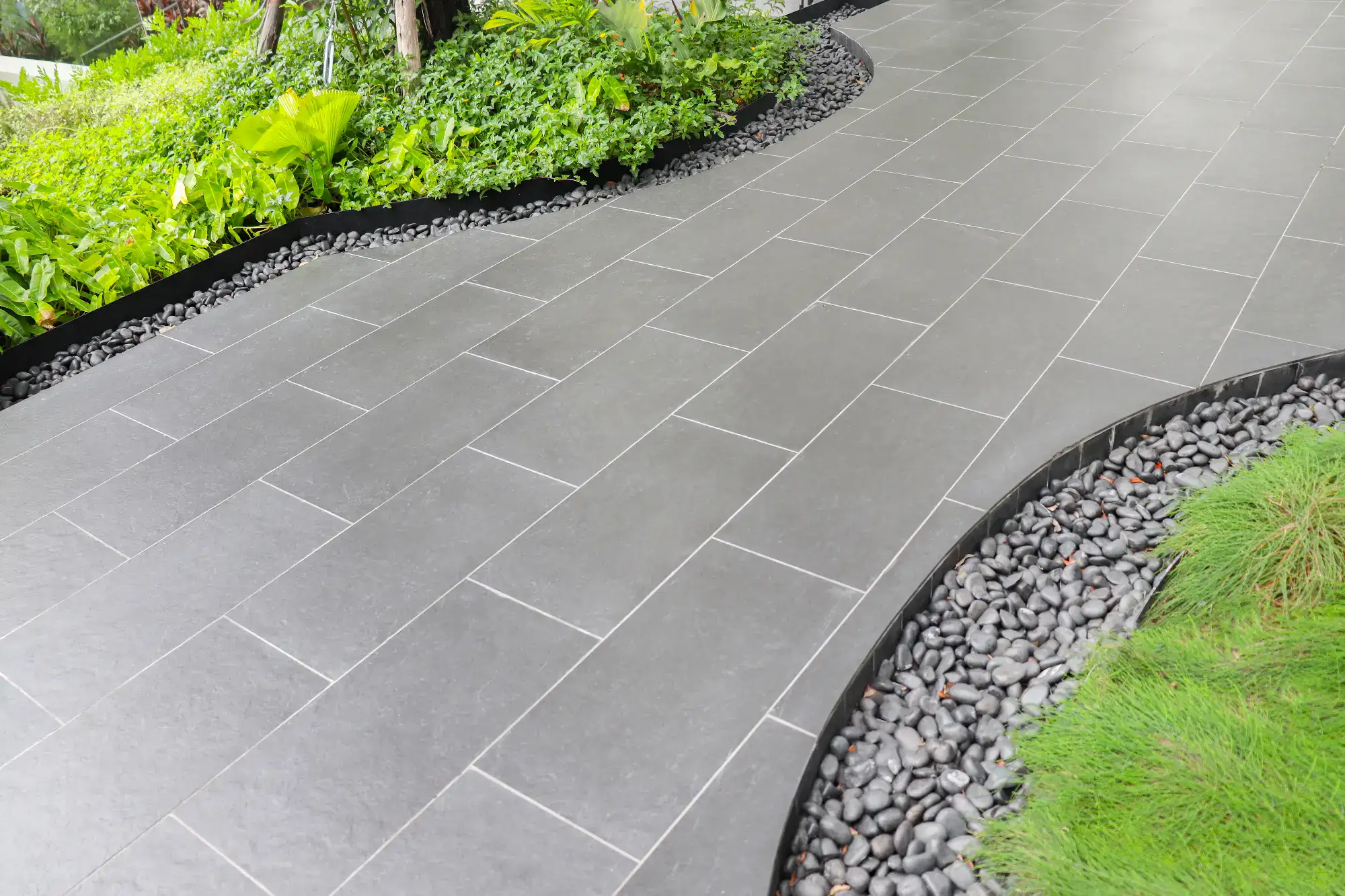
Large-format pavers in neutral tones create a contemporary look that works with most architectural styles. These oversized units reduce visible joint lines, giving you a smooth, streamlined appearance while maintaining the durability advantages of individual pavers. They’re particularly effective for front walkways where you want impact without distraction.
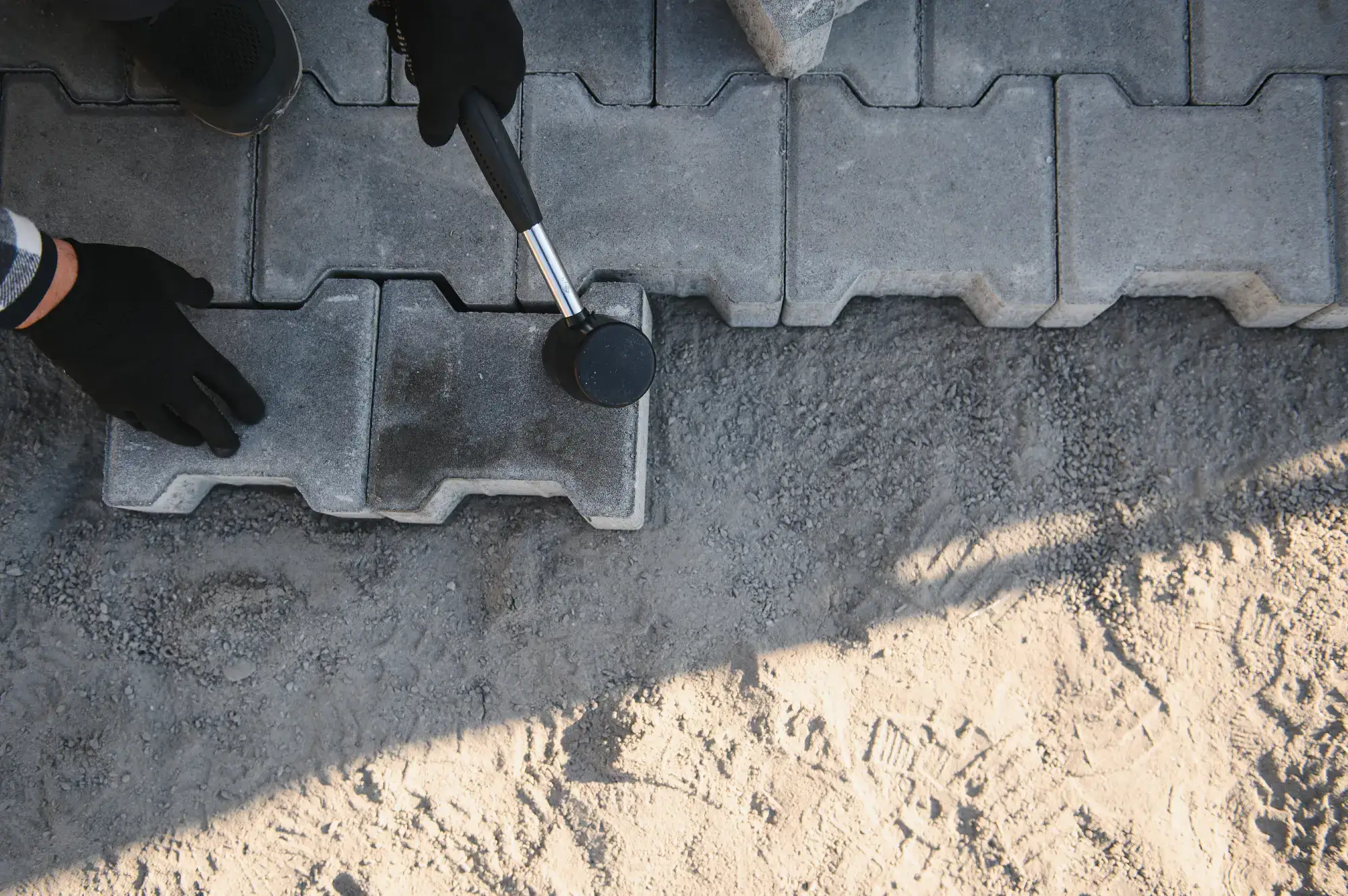
Herringbone patterns deliver both visual appeal and structural strength. The interlocking V-shape distributes weight evenly across the surface, making this pattern ideal for driveways and high-traffic walkways. It’s been used for centuries because it works—the design prevents individual pavers from shifting under pressure.
Running bond patterns, where pavers are staggered like bricks, offer a classic look that suits traditional and transitional homes. This layout is straightforward to install and creates strong horizontal lines that make narrow walkways feel wider. It’s a practical choice that doesn’t sacrifice aesthetics.
Stack bond patterns align pavers in a grid without staggering, creating clean, modern lines that work well with contemporary architecture. This pattern emphasizes the geometric nature of pavers and pairs beautifully with minimalist landscaping. The trade-off is slightly less structural interlock than herringbone, but for walkways (as opposed to driveways), that’s rarely an issue.
Borders and inlays add definition without requiring complex patterns across the entire surface. A contrasting border along the edges frames your walkway and creates visual separation from surrounding landscaping. Inlays—small sections of contrasting color or pattern—can mark entrances or transitions between spaces. The key is restraint. One well-placed accent makes a statement; multiple competing elements create visual chaos.
Color choice affects both aesthetics and practicality. Warm tones—terracotta, sandstone, tan—create inviting atmospheres and hide dirt better than stark whites or blacks. These earth tones also complement the natural landscaping common in Suffolk County, creating cohesion between your hardscape and plantings.
Cooler grays and charcoals deliver a modern aesthetic that works with contemporary architecture. They create sharp contrast against greenery and provide a neutral backdrop that lets other design elements shine. The downside is that lighter grays show stains more readily, particularly in areas with heavy tree coverage where organic debris accumulates.
Material selection matters as much as color. Concrete pavers offer the widest range of colors and shapes at the most accessible price point. They’re manufactured to consistent specifications, which means uniform size and color across your project. Quality concrete pavers rated for freeze-thaw conditions will last 25-30 years with minimal maintenance.
Natural stone pavers—bluestone, granite, limestone—provide unique texture and color variation that manufactured pavers can’t replicate. Each stone is slightly different, creating an organic, high-end appearance. The trade-off is higher cost and less color consistency. Natural stone also requires sealing to prevent staining and moisture absorption, adding to long-term maintenance.
Porcelain pavers represent the premium option, offering exceptional durability, stain resistance, and color stability. They don’t fade in UV exposure and handle freeze-thaw cycles without surface damage. The cost is significantly higher than concrete pavers, but for homeowners prioritizing longevity and minimal maintenance, the investment pays off over decades of use.
Your walkway does more than connect your driveway to your front door. It sets the tone for your entire property and directly impacts your home’s value. Homes with strong curb appeal sell for 7% more than comparable properties, and walkways rank as the most-liked feature among homebuyers.
The difference between a walkway that enhances your home and one that detracts from it comes down to proper installation. Base preparation, drainage, material selection, and attention to local soil conditions separate professional results from amateur work. When you’re ready to replace that cracked concrete with a walkway that actually lasts, we bring over 20 years of experience serving Centereach, Farmingville, and throughout Suffolk County with the craftsmanship and transparency your project deserves.
Article details:
Share:
Continue learning: