Thinking about patio installation in Holbrook? This guide walks you through planning, materials, the installation process, and what to expect when working with professional contractors in Suffolk County.
Share:
Summary:
You’ve been thinking about it for months. Maybe longer. That cracked concrete slab out back currently looks like a tectonic plate boundary, and it isn’t cutting it anymore. A proper patio changes how you use your backyard—it’s where summer dinners happen, where you finally win the neighborhood BBQ war, and where you want to spend time outside instead of just mowing the lawn.
But if you’ve started looking into patio installation in Holbrook, NY, you’ve probably realized it’s more complicated than a 1,000-piece puzzle of a clear blue sky. Between drainage concerns, base preparation, and trying to decipher the 50 shades of gray in a paver catalog, it adds up fast. In Suffolk County, where our weather swings from “sub-arctic” to “tropical sauna,” doing it right the first time is the only way to avoid a very expensive outdoor disaster.
This guide breaks down what you need to know about patio installation, from the initial “Pinterest dream” stage through material selection and the actual construction process. We promise to keep it grounded—much like your future patio.
Before you call a single contractor or start haunting the aisles of a landscape supply yard, you need to answer a few questions about how you actually live. Are you hosting 50-person family reunions, or are you just looking for a quiet spot to hide from your kids with a cup of coffee? The size of your guest list directly affects the size of your budget (and your stress levels).
Start with the physical basics: how much space do you actually have versus how much space does your spouse think you have? Your design needs to breathe, otherwise your patio will feel less like a backyard oasis and more like a crowded elevator. Your goals shape the materials, the layout, and even the “please-don’t-rain” timeline.
Then there’s your actual property—the silent partner in this deal. Suffolk County soil is like a box of chocolates; you never know what you’re going to get until you start digging. Drainage is the most unglamorous part of the project, but if you ignore it, your new patio will double as a very shallow, very expensive koi pond the next time we get a Long Island downpour.
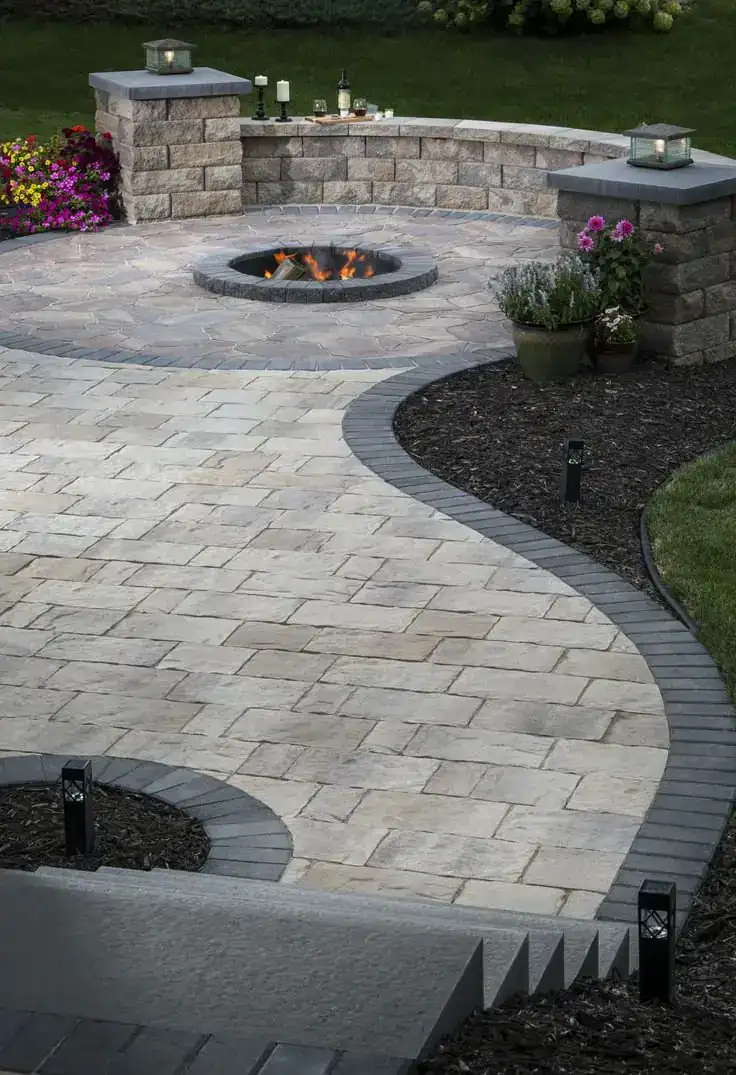
Walking into a landscape yard is like walking into a candy store, except the candy weighs 20 pounds a piece and requires a forklift. You’ve got pavers, natural stone, porcelain, and concrete all staring at you. It’s enough to make anyone want to just stick with the grass and buy a really big rug.
For Holbrook homeowners, your materials need to be tougher than a Long Island commuter in a snowstorm. They have to survive our “freeze-thaw” cycles, which are basically nature’s way of trying to pry your patio apart with invisible crowbars. You want something that looks as good after five years of North Shore winters as it did on the day it was installed.
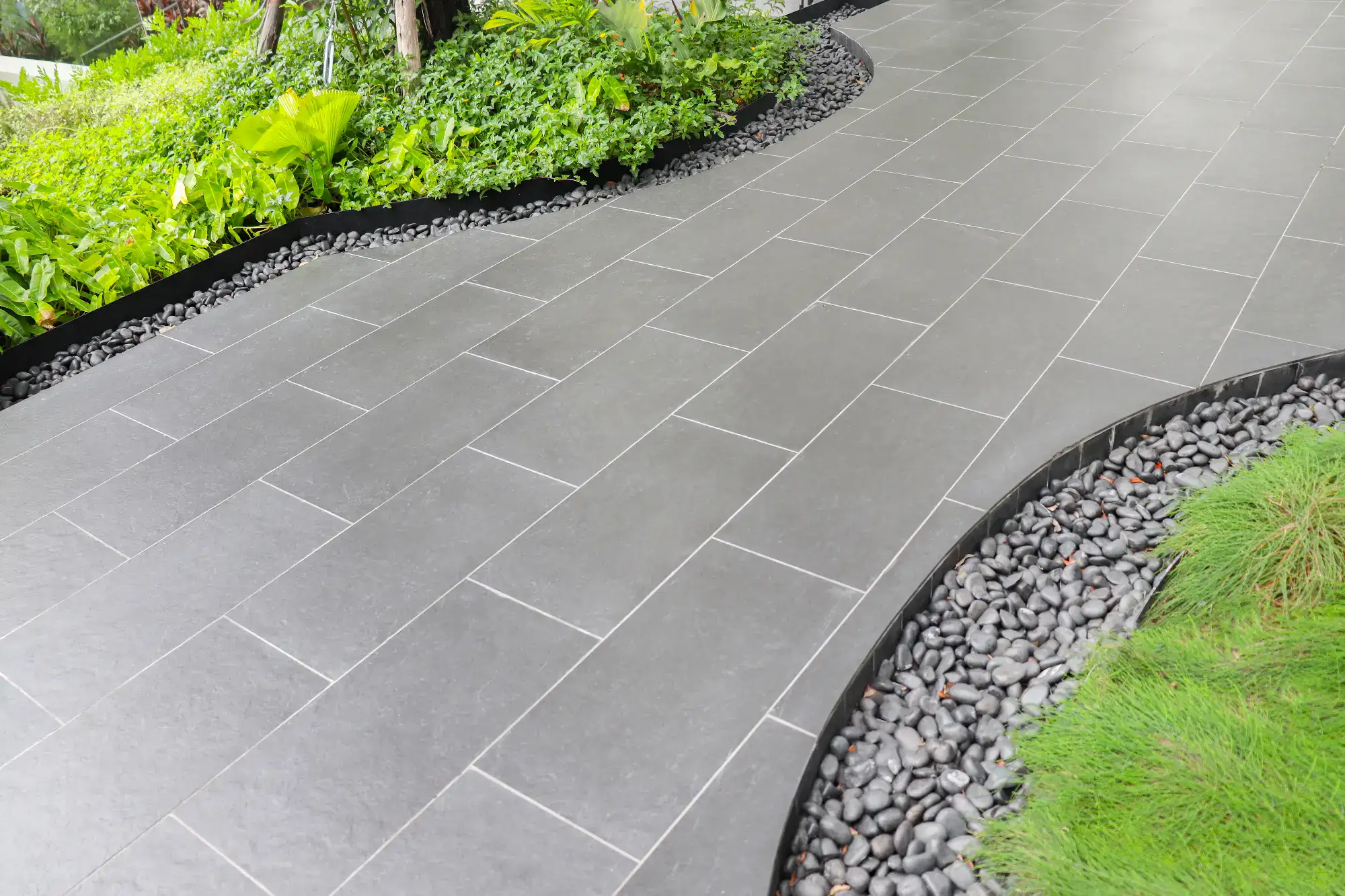
Interlocking pavers are the “Lego” of the hardscape world—flexible, durable, and surprisingly forgiving. If one section shifts or someone drops a literal flaming grill on it, you can replace individual pieces without tearing up the whole backyard. Natural stone, like bluestone, gives you that “old money” Hamptons look, but it requires a surgeon’s touch during installation to keep it level.
Let’s talk about the elephant in the backyard: the price tag. Professional patio installation in Holbrook typically runs $30 to $45 per square foot, which means a standard 300-square-foot space costs about as much as a decent used car. If a guy with a truck and a shovel quotes you half that price, he’s probably planning on skipping the base prep—which is like building a skyscraper on a foundation of marshmallows.
Your final cost is a cocktail of material choices, site conditions, and how many “extras” you want to throw in. If your yard currently looks like a small mountain range, expect to pay more for excavation. If you want curves that would make a race car driver nervous or multiple levels for “zones,” the labor costs will naturally climb higher.
Hidden costs are the unwanted guests of every renovation. Permits in Suffolk County aren’t just a suggestion; they are a legal requirement that comes with a fee and a fair amount of paperwork. Professional contractors at Corsino Construction handle the “red tape” so you don’t have to spend your Saturday morning at Town Hall wondering why you’re in line for an “accessory structure” permit.
Want live answers?
Connect with a Corsino Construction expert for fast, friendly support.
Once the contract is signed, the real fun (and noise) begins. Understanding the installation sequence is vital so you don’t panic when you see a giant hole in your yard where your lawn used to be. It’s a bit like baking a cake: if you skip the eggs, you’re going to have a bad time, no matter how much frosting you put on top.
The process is a hierarchy of work: site prep, base construction, and then the “pretty” surface stuff. If the base is built by someone who thinks “close enough” is a measurement, your pavers will eventually start to resemble a skate park. We believe in doing the boring stuff perfectly so the fun stuff stays perfect for twenty years.
At Corsino Construction Corp, we’ve seen plenty of “DIY-gone-wrong” stories that usually start with someone trying to save money on gravel. We’ve been called in to rescue patios that were sinking faster than a lead balloon because the base wasn’t compacted. We don’t do shortcuts; we do “long-term stability.”
This is the part of the job that you’ll never see again, but it’s actually the most important thing we do. Site prep is the “bones” of your patio. We dig down 6 to 8 inches—which is a lot of dirt, in case you were wondering—to make room for the base material that keeps everything from shifting when the ground freezes.
The base material (crushed stone) is the real MVP. We add it in layers and hit it with a plate compactor that vibrates so hard it’ll shake the fillings out of your teeth. This guarantees the ground is as solid as a rock. If you skip the compaction, your patio will settle in all the wrong places, creating a lovely trip hazard for your mother-in-law.
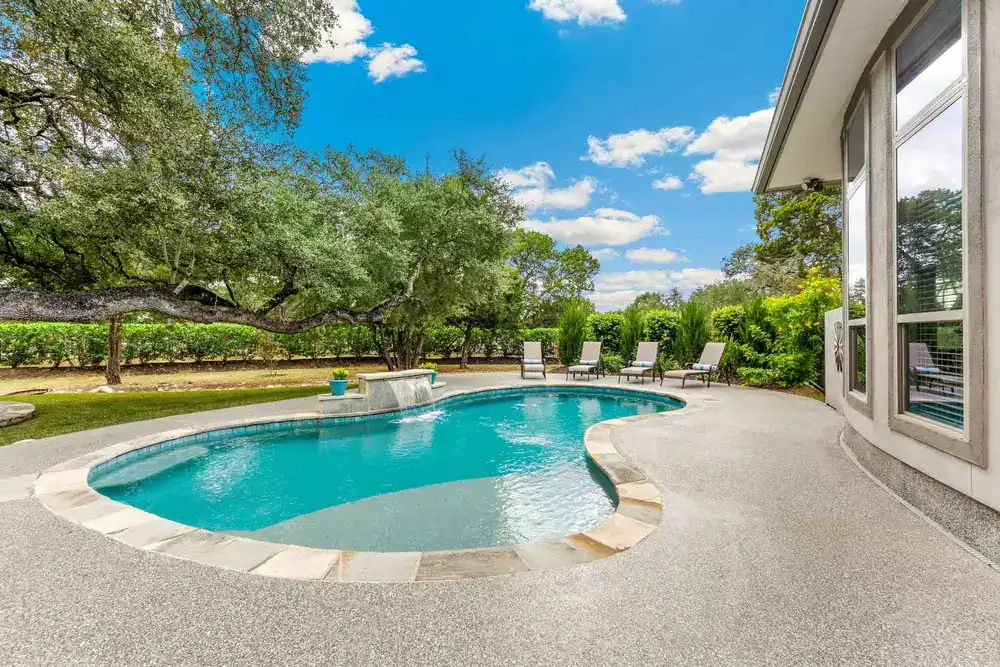
Drainage is also baked in at this stage. We build in a slight slope—about a quarter-inch per foot—so rainwater knows exactly where to go. Without this, your patio becomes a swimming pool for mosquitoes. For actual pool patios, this is even more critical, as we have to make sure the water flows away from both the house and the pool’s edge.
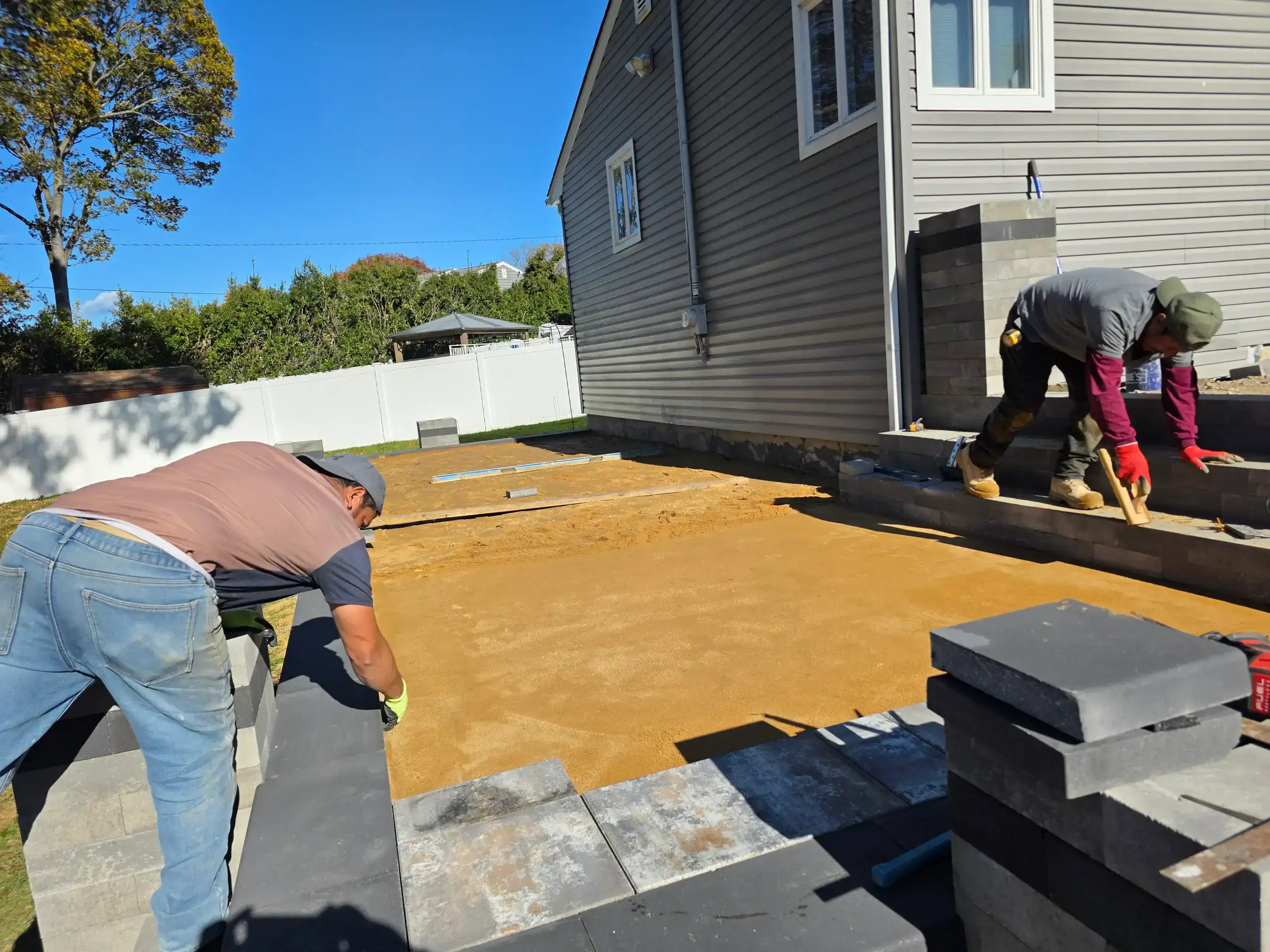
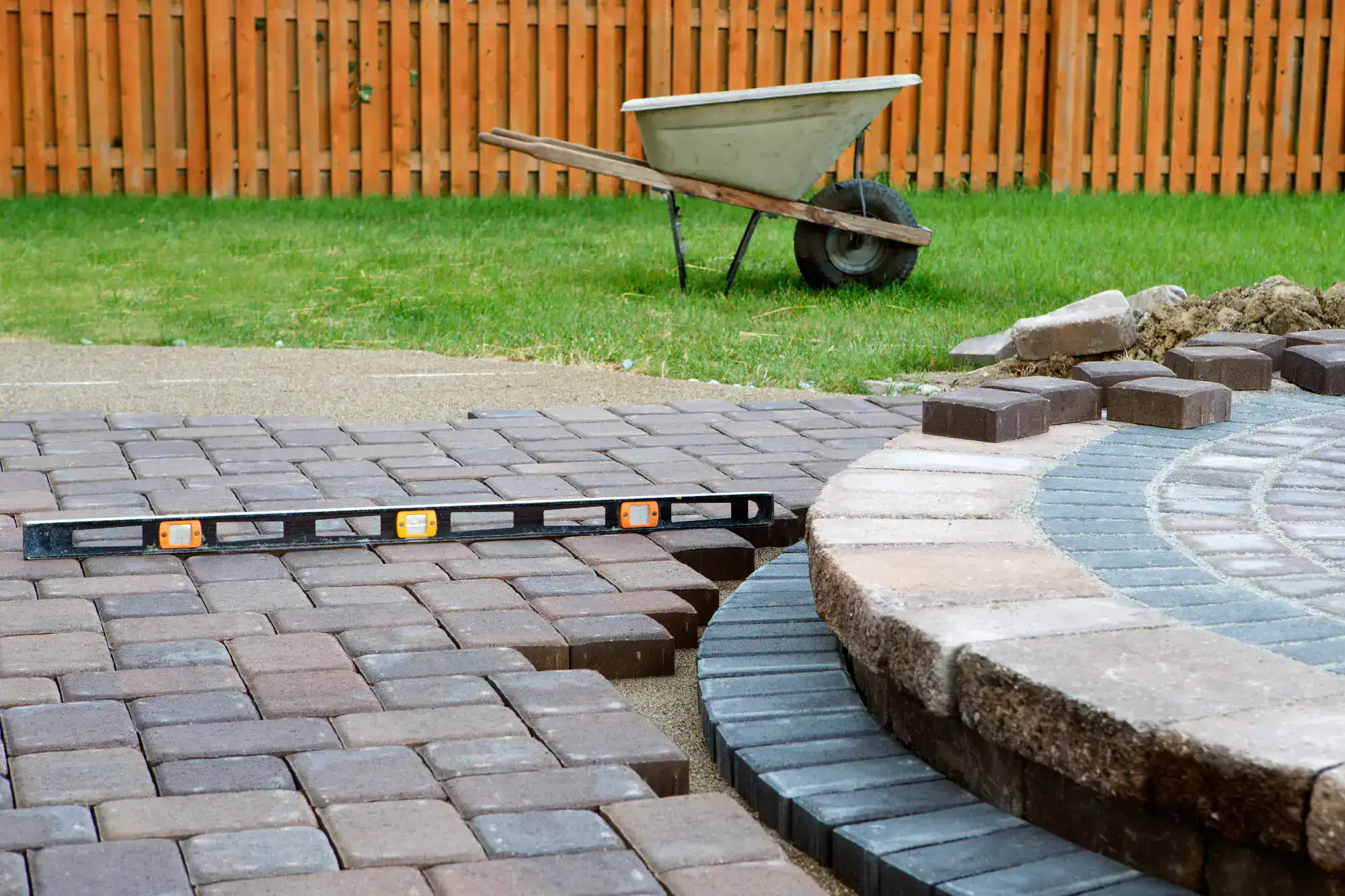
Now for the satisfying part: the “Tetris” stage. Once the base is rock-solid, we lay a bedding of sand and start placing your chosen pavers. We use string lines to keep everything straighter than a ruler, ensuring your rows don’t start wandering off toward the neighbor’s fence. It’s a game of precision, patience, and very tired knees.
Cuts are where the pros are separated from the amateurs. We use wet saws to make clean, surgical cuts around corners and obstacles. If a contractor is just “hacking” at stones with a hammer, you’re going to end up with gaps large enough to lose a set of car keys in. We aim for a tight, seamless fit that looks like it was grown in place.
The final touch is the polymeric sand. This isn’t your kid’s sandbox sand; it contains a special glue that activates with water. We sweep it into the cracks, vibrate the pavers one last time to settle them, and then “mist” it with water. Once it hardens, it locks the pavers together, prevents weeds from turning your patio into a jungle, and stops ants from making your backyard their new headquarters.
A well-executed patio installation is a total game-changer for your Holbrook home. It’s an investment that pays you back every time you step outside with a cold drink and a steak. But the difference between a patio you love and a patio you regret comes down to the team you choose to build it.
You want the guys who obsessed over the slope, who compacted the gravel until it was as hard as a diamond, and who didn’t roll their eyes when you asked 50 questions about paver colors. A good patio should be a “set it and forget it” part of your home—something that stands strong against Long Island’s moody weather for decades.
At Corsino Construction Corp, we’ve been the “hardscape heroes” for Suffolk County since 2006. We handle the design, the permits, and the back-breaking labor so you can just focus on which outdoor furniture looks best on your new stone.
Article details:
Share:
Continue learning: