Professional walkway paving eliminates concrete cracking, boosts property value by up to 10%, and creates lasting first impressions that matter in Suffolk County's competitive market.
Share:
Summary:
Concrete gets poured, it hardens, and then Suffolk County’s weather goes to work on it. Within two to three years, you’re looking at cracks. Walkway paving uses individual pavers installed over a properly prepared base, and that changes everything.
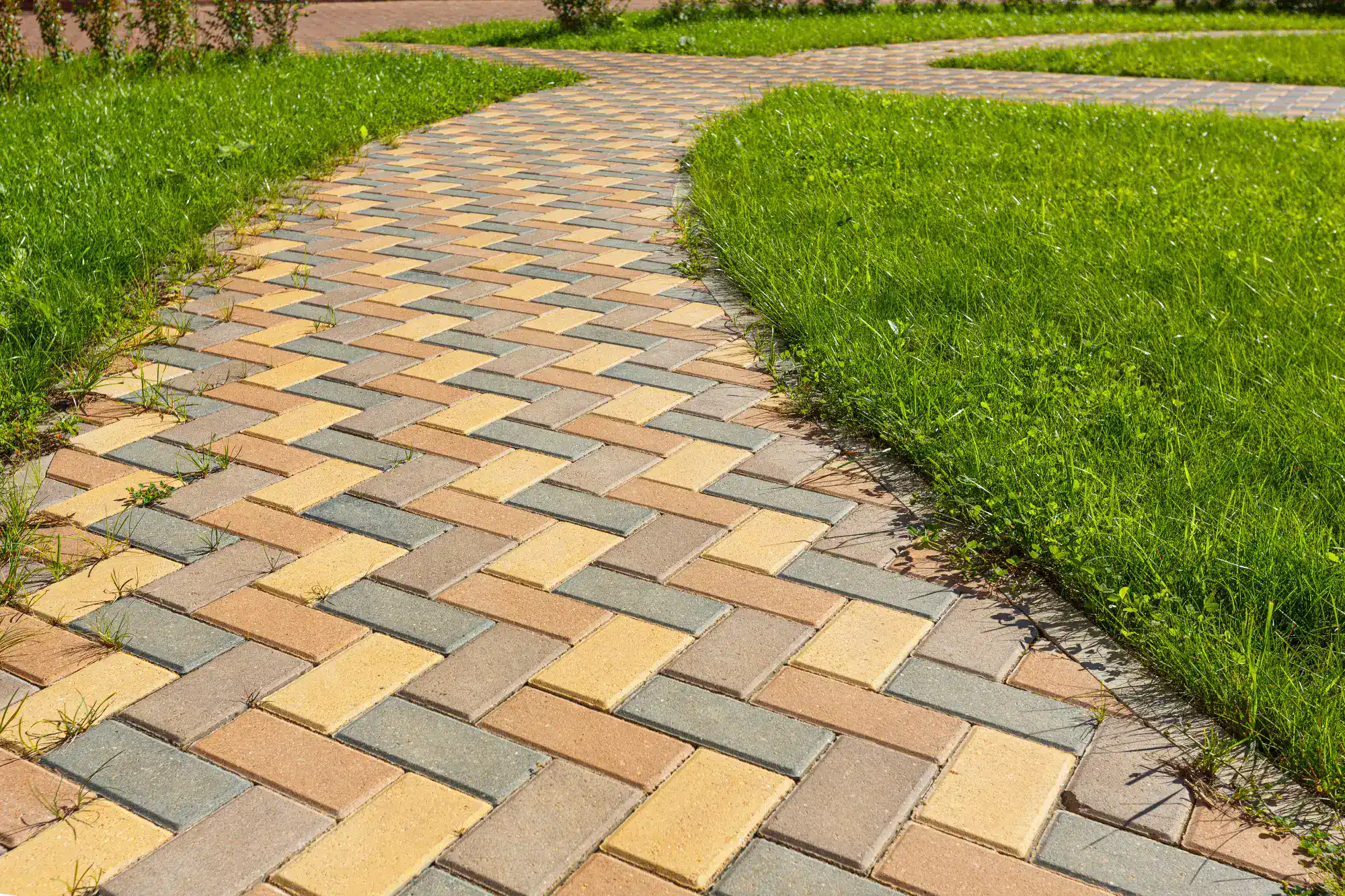
The pavers themselves interlock to create a flexible surface that moves with soil shifts instead of cracking apart. When the ground freezes and thaws, when clay soil expands, when tree roots push up from below, pavers adjust. Concrete doesn’t have that option.
Drainage is the other major difference. Water pools on concrete, seeps into cracks, freezes, and makes those cracks worse. Paver joints allow water to drain through the surface, preventing ice buildup and foundation water issues that cost thousands to fix later.
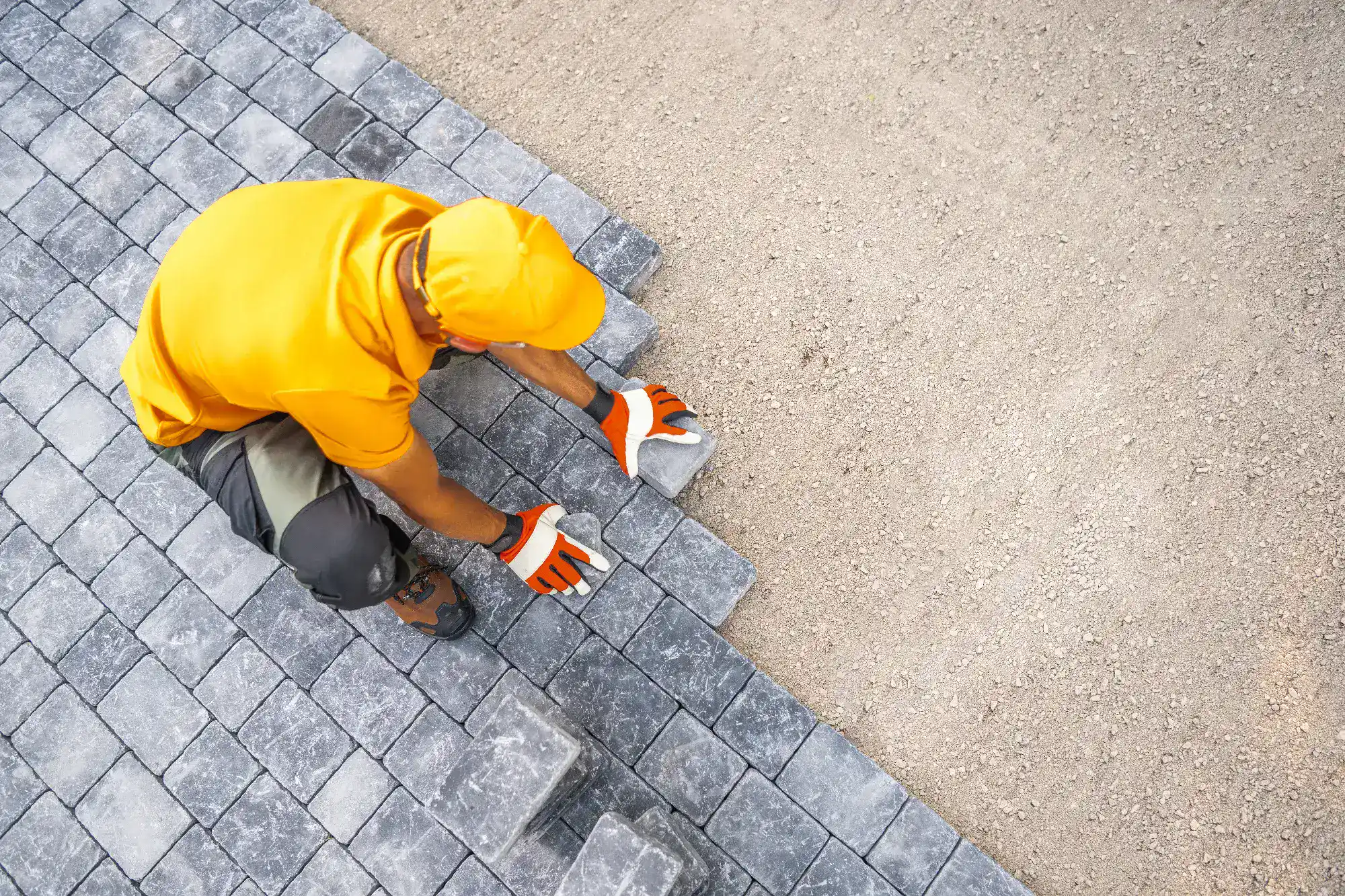
Most walkway failures happen because of what you can’t see. The base matters more than the pavers themselves.
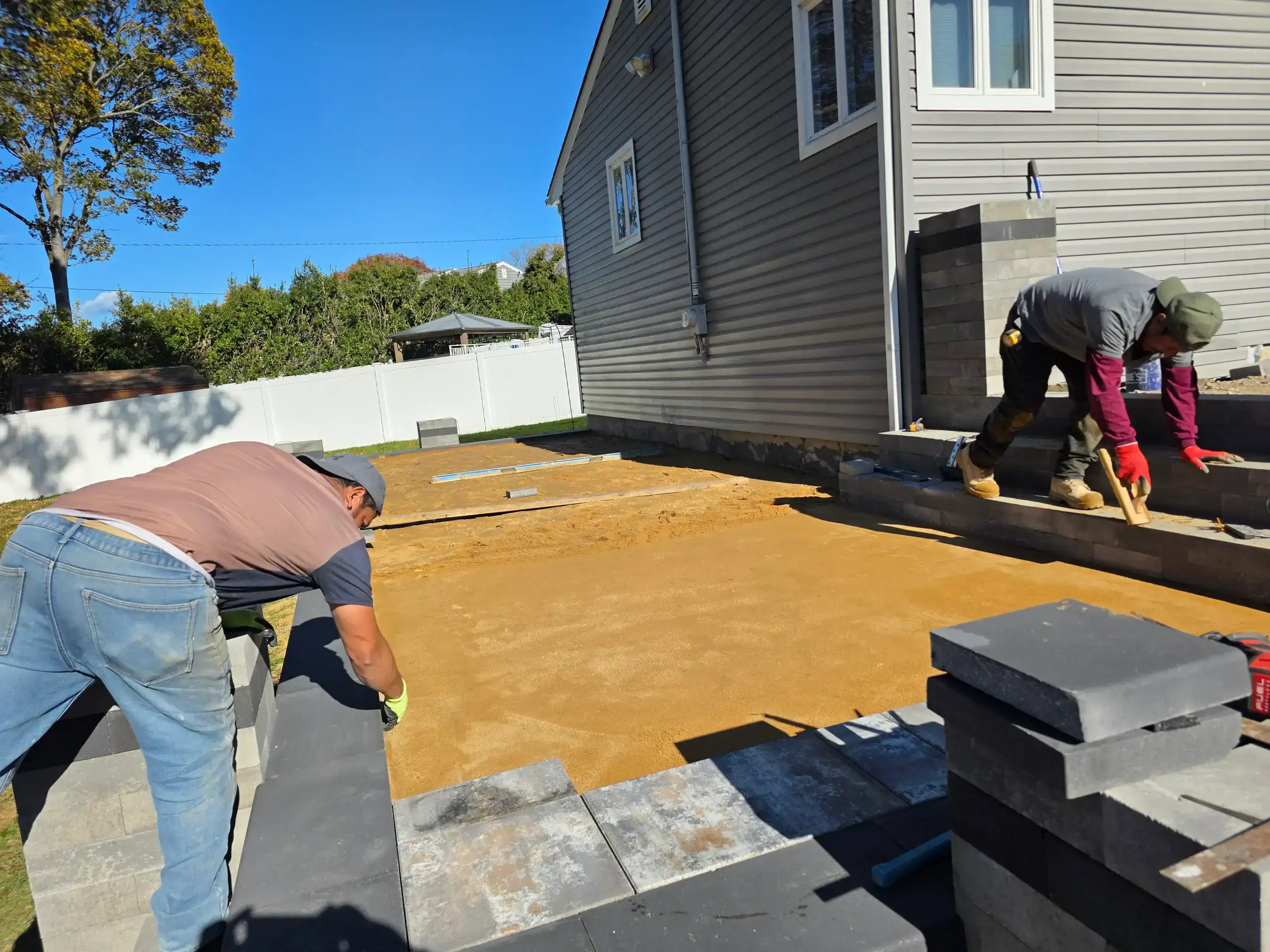
Professional installation starts with excavation to the correct depth. For Suffolk County conditions, that typically means removing 6-8 inches of soil to accommodate the base layers. Then comes 4-6 inches of crushed concrete or stone, compacted in lifts with a gas-powered plate compactor. This isn’t optional equipment. Hand tamping doesn’t create the density needed to prevent settling.
The base gets graded with a 1.5-inch drop every 10 feet, sloped away from your home. This pitch keeps water moving away from your foundation instead of pooling against it. A quarter-inch layer of fine mason sand goes on top of the compacted base to create a level bed for the pavers.
Edge restraints get installed to lock everything in place. Without proper edging, pavers shift outward over time, creating gaps and uneven surfaces. The restraints are typically concrete or plastic edging systems that get anchored into the base.
After pavers are set, polymeric sand gets swept into the joints and activated with water. This sand hardens to lock pavers together while still allowing flexibility and drainage. It also prevents ants and weeds from growing between pavers.
Suffolk County’s clay soil presents specific challenges. Clay expands when wet and contracts when dry, creating movement that destroys poorly installed walkways. The proper base depth and compaction are what separate installations that last from ones that fail within a few years. We understand these soil characteristics and adjust our installation methods accordingly to ensure your walkway stands the test of time.
You have three main material categories for paver walkways, each with different characteristics for Long Island’s climate.
Concrete pavers are manufactured in controlled conditions, which means consistent sizing and strength. They’re rated by PSI (pounds per square inch), and for walkways, you want pavers rated at minimum 8,000 PSI. These pavers come in dozens of colors, textures, and patterns. You can get pavers that look like natural stone, brick, or wood without the maintenance those materials require. Concrete pavers typically cost $10-20 per square foot installed.
Natural stone pavers include flagstone, bluestone, and granite. These materials offer unique coloring and texture that manufactured products can’t fully replicate. Stone pavers generally cost $25-50 per square foot installed. They’re heavier and more expensive, but some homeowners prefer the authentic look. Stone also tends to stay cooler underfoot during summer months.
Brick pavers create a traditional appearance that works well with colonial and historic home styles. Real clay brick pavers are more expensive than concrete but offer a classic aesthetic. They’re available in traditional red, as well as brown, tan, and charcoal tones.
For Suffolk County specifically, any paver you choose needs to be rated for freeze-thaw conditions. This rating means the paver has been tested to withstand repeated freezing and thawing without cracking or spalling. Manufacturers provide this information in their product specifications.
Texture matters for safety. Smooth pavers can become slippery when wet or icy. Textured surfaces provide better traction year-round. Most manufacturers offer multiple texture options within the same paver style.
Color choice affects more than aesthetics. Darker pavers absorb heat and can become uncomfortably hot during summer. Lighter colors reflect heat but may show stains more readily. Many homeowners choose mid-tone colors that balance these considerations.
The pattern you select changes the visual impact of your walkway. Running bond patterns create a traditional brick appearance. Herringbone patterns offer visual interest and structural strength. Random patterns work well with irregular stone shapes. We can show you samples laid out in different patterns to help you visualize the finished result.
Want live answers?
Connect with a Corsino Construction expert for fast, friendly support.
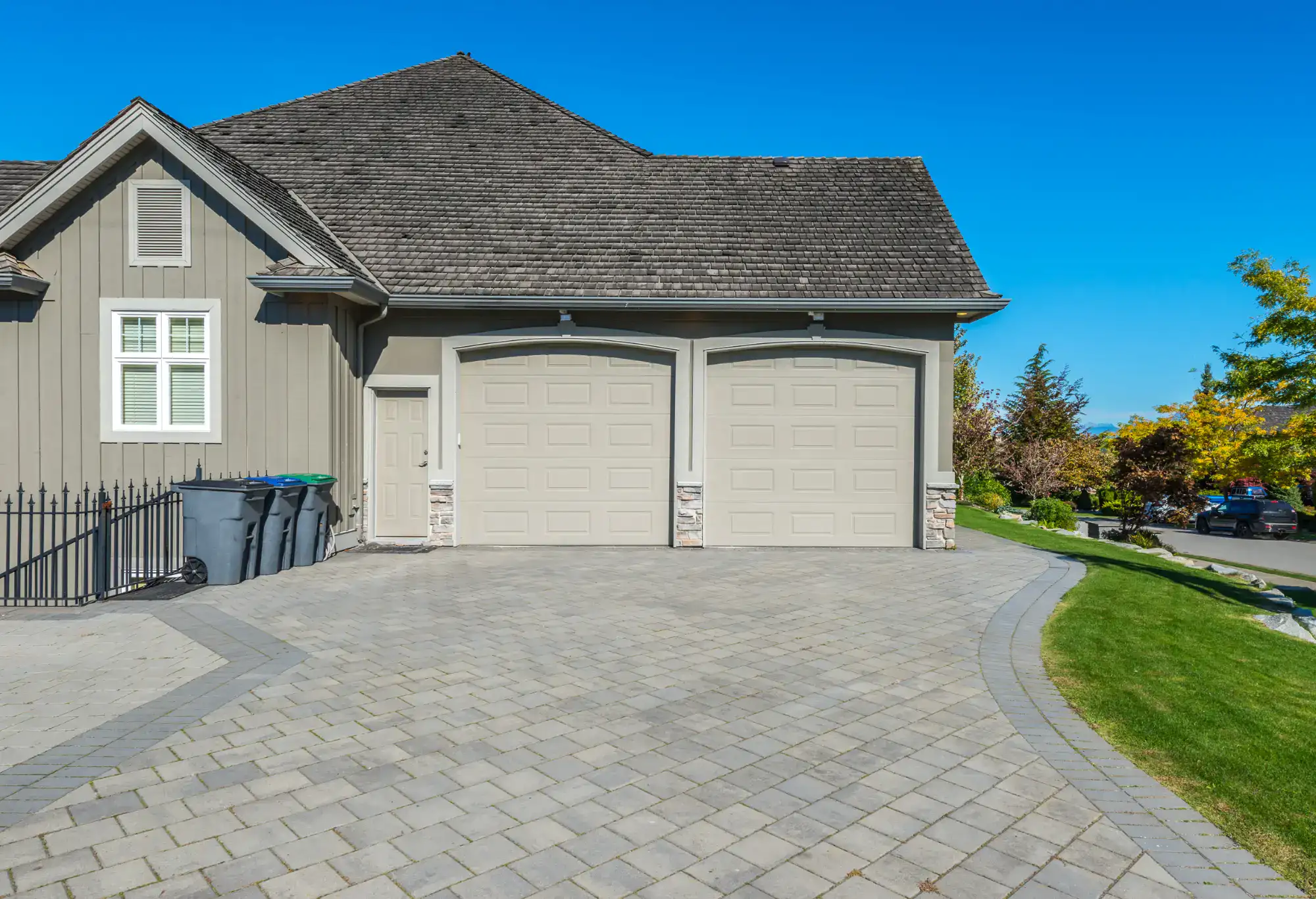
Curb appeal accounts for about 7% of your home’s sale price according to research. Your walkway is a major component of that first impression.
When buyers pull up to a property, they’re forming opinions before they get out of the car. A well-maintained walkway signals that the home has been cared for. Cracked, patched concrete suggests deferred maintenance and makes buyers wonder what else has been neglected. Real estate agents consistently report that homes with quality hardscaping sell faster and often receive higher offers than comparable properties with worn walkways.
Multiple studies have quantified the value increase from paver installations. HomeLight survey data shows pavers can bring a 109% return on investment, with an average value increase of $3,563. Other research indicates professional paver pathways can increase home value by 10%.
In Suffolk County’s current market, where median home prices sit between $649,000 and $680,000, a 10% value increase translates to $64,900 to $68,000. Even if your walkway project costs $15,000, you’re looking at a substantial return when you sell.
The National Association of Realtors reports that outdoor space ranks as the third most-prioritized feature for homebuyers. Buyers are specifically looking for well-maintained exterior spaces that won’t require immediate work. A quality paver walkway checks that box.
But the value isn’t just about resale. You’re living with this walkway every day. The difference between constantly patching concrete and walking on a stable, attractive surface affects your daily experience of your home. There’s value in not having to think about your walkway, in knowing guests won’t trip on uneven concrete, in not scheduling concrete repair contractors every couple years.
The maintenance cost savings add up over time. Concrete walkways in Suffolk County typically need patching within 2-3 years and full replacement within 10-15 years. Properly installed paver walkways last 25-30 years with minimal maintenance beyond occasional joint sand replenishment every 3-5 years. Over a 30-year period, you’re likely spending less on a paver installation than you would on multiple concrete replacements.
Property value also relates to neighborhood context. If surrounding homes have upgraded their walkways and driveways, keeping worn concrete puts your property at a disadvantage. Buyers compare properties within neighborhoods, and exterior improvements are immediately visible in those comparisons.
Design trends for 2026 emphasize bold, statement-making entrances that reflect personal style rather than builder-grade uniformity. This shift affects walkway design in several ways.
Width matters more than it used to. Narrow 3-foot walkways feel cramped and dated. Current designs favor wider pathways, often 4-5 feet, that create a more welcoming approach. Wider walkways also allow for border treatments, integrated planters, or lighting elements that enhance the overall design.
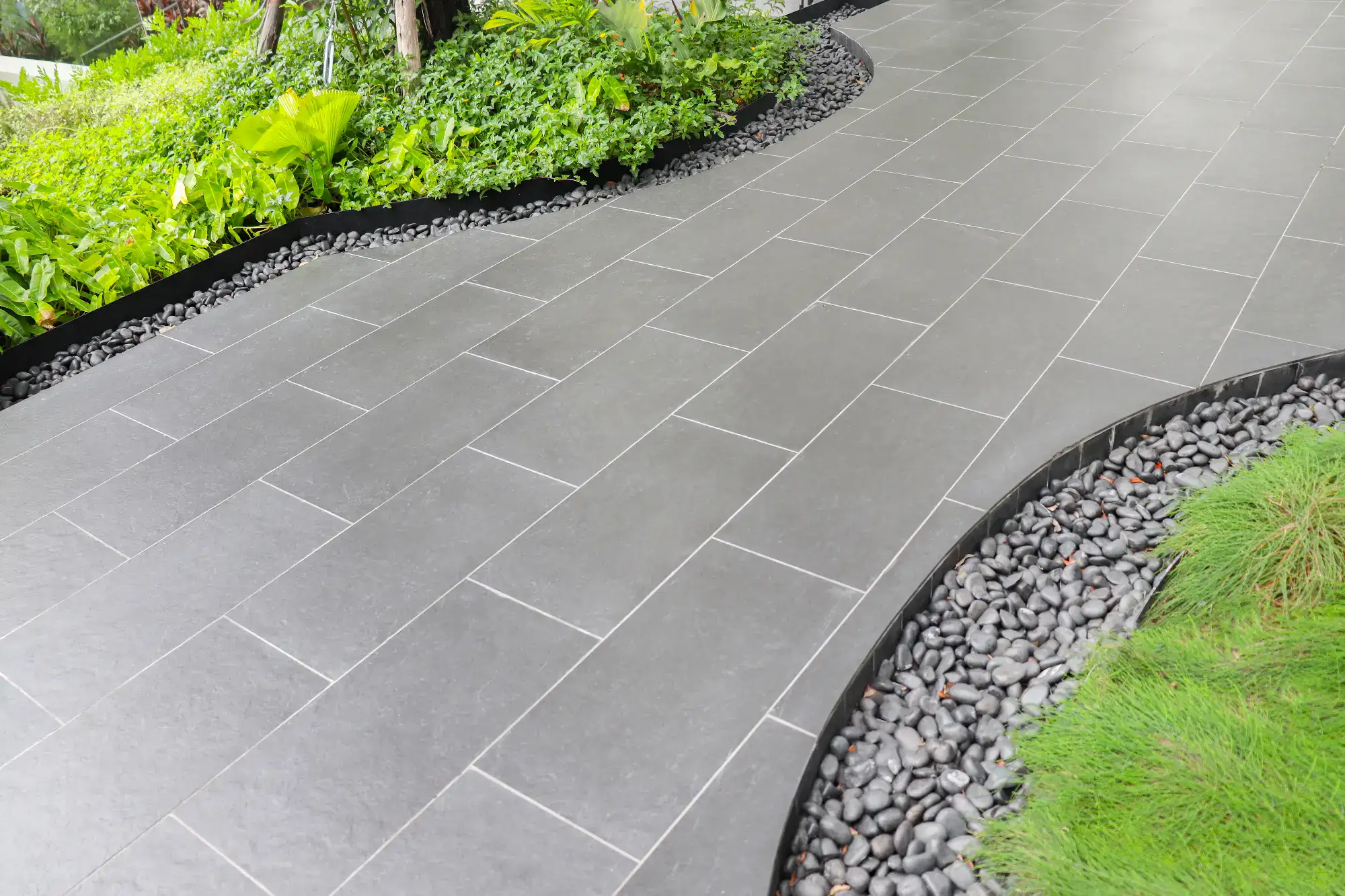
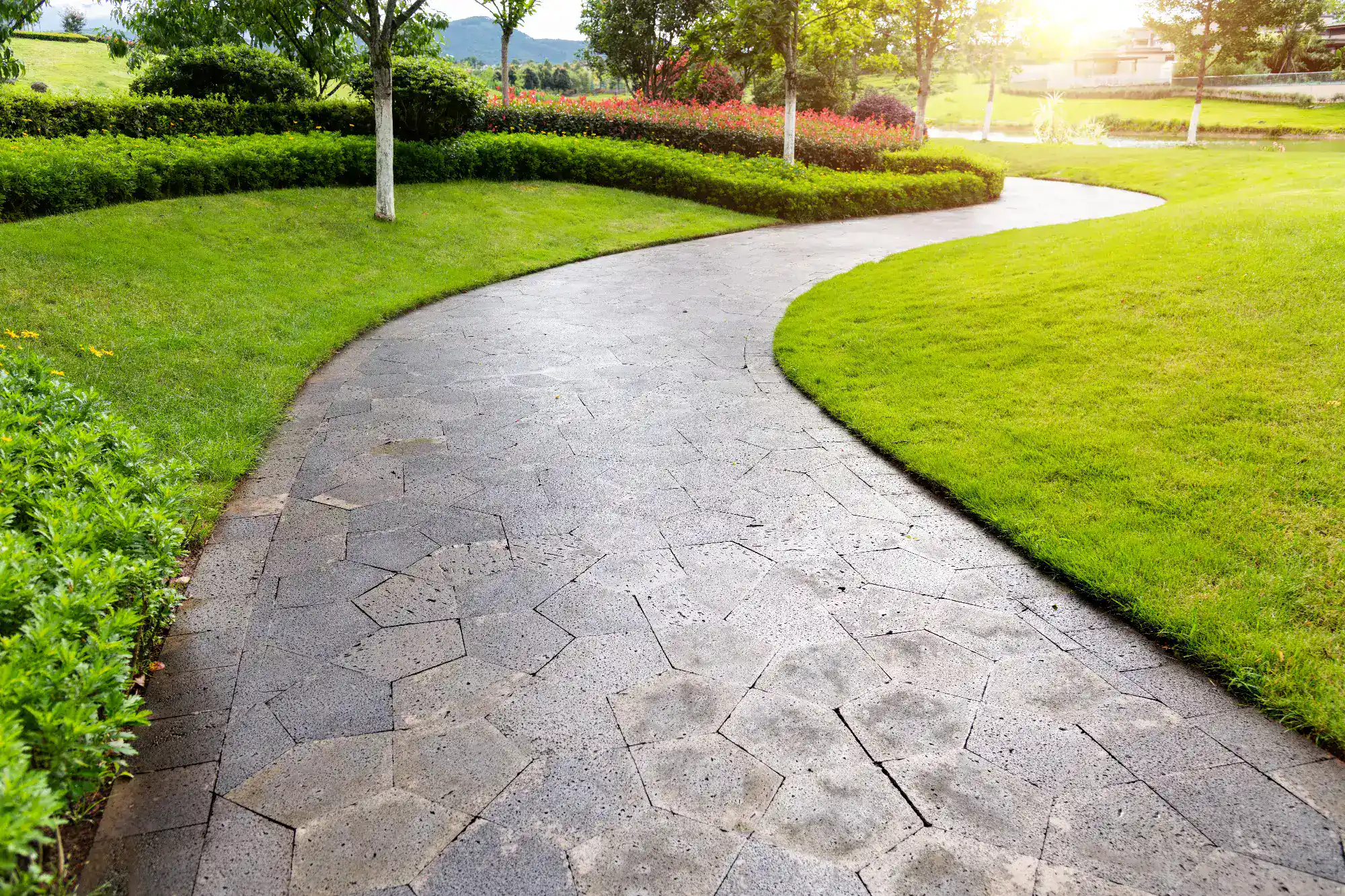
Curves and angles are replacing straight, utilitarian paths. A gently curving walkway creates visual interest and makes the journey to your front door feel more intentional. Angular designs with geometric patterns suit modern and contemporary homes.
Lighting integration has become standard rather than optional. Low-voltage LED lights built into the walkway edges or between pavers provide safety and ambiance. These systems extend usability after sunset and add dramatic visual impact that increases curb appeal for evening drive-bys.
Material mixing is trending. Many homeowners are combining paver types, using one material for the main walkway and another for borders or accents. This creates visual definition and allows for customization that reflects your home’s architecture.
Natural and earthy tones dominate color choices in 2026. Deep grays, warm browns, and sandy beiges work with most home exteriors while feeling current. Bold accent colors can work for borders or small sections but often feel dated more quickly than neutral palettes.
Texture has become more important as homeowners recognize that visual appeal and functionality both matter. Smooth pavers photograph well but become slippery. Textured surfaces provide traction while still looking refined. Many current installations use subtly textured pavers that balance these considerations.
Sustainability considerations are influencing material choices. Permeable pavers that allow water infiltration appeal to environmentally conscious homeowners. These pavers reduce runoff, help prevent flooding, and may qualify for stormwater management credits in some municipalities.
The overall trend is toward walkways that feel custom and intentional rather than generic. Cookie-cutter approaches don’t match 2026 design preferences. Homeowners want their front entrance to reflect their style while providing the practical benefits of professional installation.
Your walkway is working every day, either adding to your home’s value and appeal or quietly undermining it. In Suffolk County’s climate, concrete walkways are fighting a losing battle against freeze-thaw cycles. Professional paver installation solves that problem while increasing your property value and eliminating the maintenance cycle you’re probably tired of dealing with.
The difference between a walkway that lasts and one that fails comes down to proper installation. Base preparation, material selection for local conditions, and attention to drainage determine whether you’re looking at 25-30 years of reliable service or another round of repairs in a few years. If you’re ready to invest in a first impression that actually pays returns, reach out to us at Corsino Construction Corporation to discuss what makes sense for your property and budget.
Article details:
Share:
Continue learning: