Choosing between composite and wood for your custom deck? Learn why composite materials deliver better value, durability, and performance for Suffolk County homeowners.
Share:

Summary:
The sticker shock is real when you first see composite pricing. Wood decking runs $15 to $30 per square foot installed, while composite sits at $30 to $60 per square foot. That gap makes wood look like the obvious winner.
But that’s only half the story. The number that matters isn’t what you pay at installation—it’s what you spend over the life of your deck.
Wood requires annual maintenance. You’re looking at $450 to $850 every year for cleaning, staining, sealing, and repairs. Composite needs soap and water twice a year, running you about $5 to $15 annually. Over a 30-year period, wood’s maintenance costs typically exceed the initial price premium you’d pay for composite.
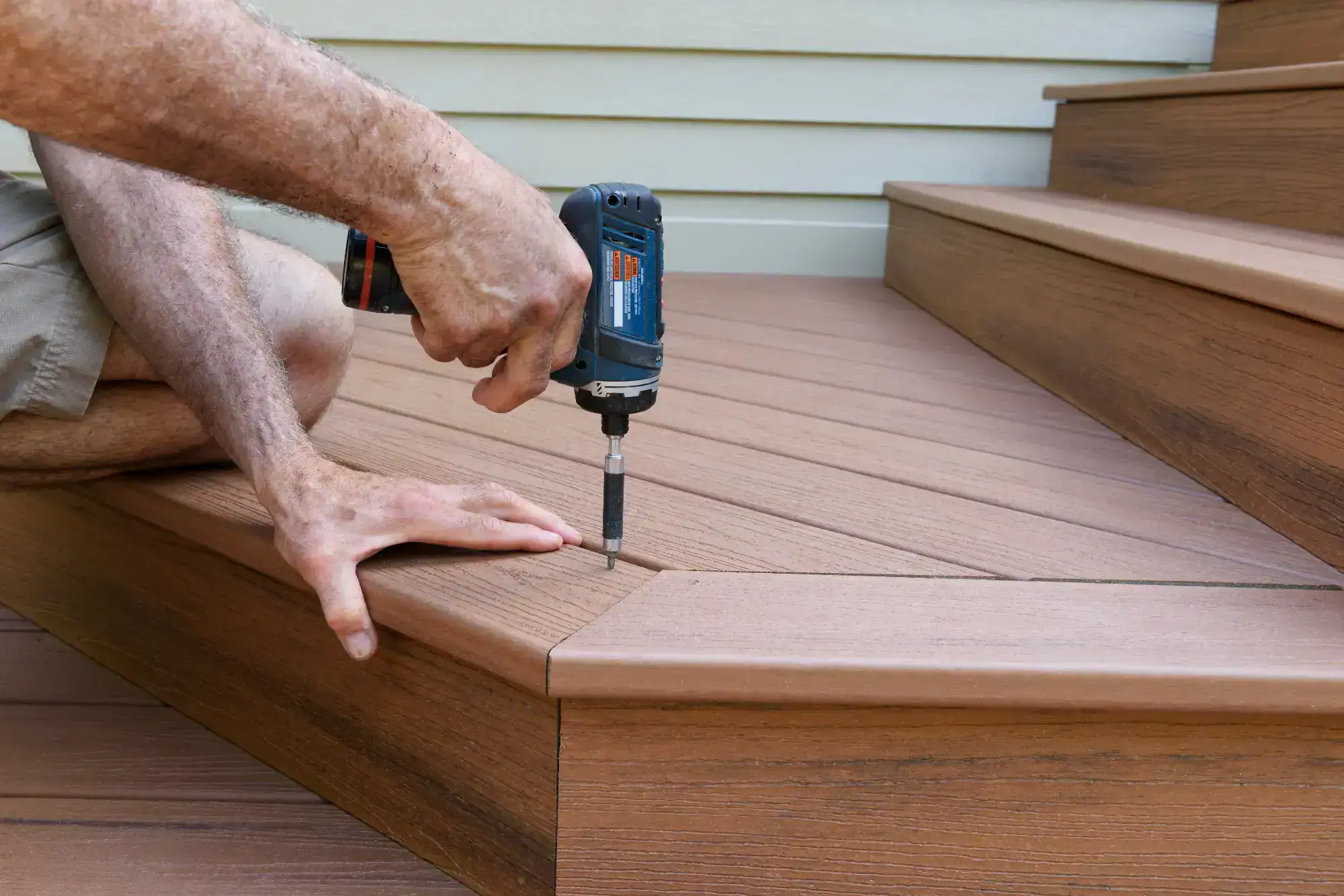
Wood decks last 10 to 15 years with diligent maintenance. Miss a year of sealing or let repairs slide, and that timeline shrinks. Composite decking lasts 25 to 30 years minimum, with many premium brands engineered to perform for 50 years.
That longevity gap changes the math completely. When you factor in replacement costs, wood often requires you to rebuild your entire deck at least once during the time a composite deck is still going strong.
The difference comes down to how the materials handle exposure. Wood absorbs moisture, which leads to rot, warping, and cracking. It’s also vulnerable to insects and mold. Composite materials are engineered with a protective cap that shields the core from moisture, UV rays, and temperature swings.
In Suffolk County, where you deal with freeze-thaw cycles, humidity, and salt air if you’re near the coast, those protective features matter. Wood expands and contracts with temperature changes, which accelerates wear. Composite materials are designed to resist those issues, maintaining their structural integrity and appearance year after year.
The warranties back this up. Most composite manufacturers offer 25 to 50-year limited residential warranties covering material defects, rot, and termite damage. Many also include fade and stain warranties for 25 years. Wood doesn’t come with any manufacturer warranty because the material itself can’t be guaranteed against natural deterioration.
When you’re planning a deck, you want to know it’ll still look good and function safely when your kids are old enough to host their own gatherings on it. Composite gives you that confidence. Wood requires you to stay on top of maintenance constantly or accept that it won’t last.
One of the biggest misconceptions about composite decking is that it’s completely maintenance-free. It’s not. Nothing you install outdoors is truly zero-maintenance. But the difference between composite and wood maintenance is the difference between a quick cleanup and a weekend project that repeats every year.
Composite decking needs to be cleaned twice a year. You sweep off leaves and debris, then wash the surface with soap and water or a mild composite deck cleaner. That’s it. No sanding, no staining, no sealing. You’re not spending your spring weekends prepping and refinishing your deck.
Wood decking requires deep cleaning annually, plus staining or sealing every one to two years. You’ll also need to replace boards that crack, warp, or rot over time. Each of those tasks takes time and costs money, and if you skip them, your deck deteriorates faster.
The maintenance difference also affects how you use your outdoor space. With wood, you’re always thinking about protecting the surface—worrying about spills, checking for splinters, watching for early signs of rot. With composite, you use your deck without constantly monitoring its condition.
For homeowners in Suffolk County who want to actually enjoy their outdoor living space instead of maintaining it, that shift matters. Your deck becomes a place you use, not a project you manage. You’re not calling contractors for board replacements or spending money on stains and sealers that need reapplication before you’ve even finished enjoying the last application.
Composite also stays safer for bare feet. Wood splinters as it ages, which means shoes become mandatory after a few years. Composite doesn’t splinter, so your kids can run around without you worrying about pulling splinters out later. That’s a small detail that becomes a big quality-of-life improvement when you’re using your deck daily during summer.
Want live answers?
Connect with a Corsino Construction expert for fast, friendly support.
Composite decking isn’t just recycled plastic shaped to look like wood. The engineering behind premium composite materials like Trex involves layered protection designed specifically to handle outdoor exposure.
Most quality composite boards feature a protective cap on all four sides. That cap shields the core material from moisture, UV rays, stains, and scratches. It’s what allows composite to resist fading, prevent mold growth, and maintain its color for decades.
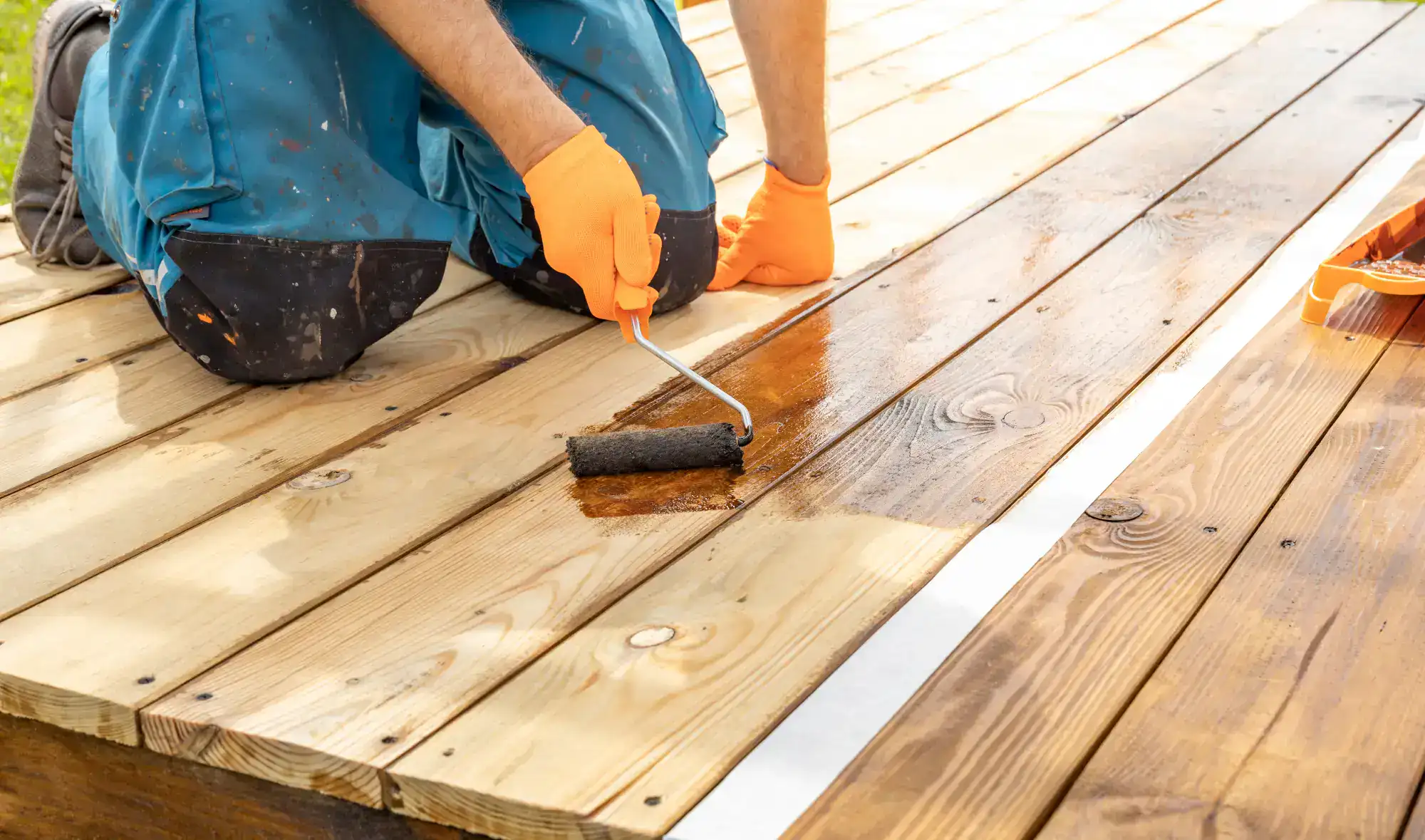
Wood has no such protection. Even pressure-treated lumber, which is treated to resist rot and insects, still absorbs moisture and requires regular sealing to maintain any level of protection. Once that seal breaks down—and it will, usually within a year—the wood is vulnerable again.
If environmental impact matters to you, composite decking offers a clear advantage. Most composite deck boards are made from 95% recycled materials, including reclaimed wood fiber and recycled plastic film. That plastic comes from sources like grocery bags, sandwich bags, and packaging film that would otherwise end up in landfills.
Trex alone recycles about 1 billion pounds of plastic film and reclaimed wood annually. A standard 20×20-foot deck contains more than 1,500 pounds of recycled materials. No trees are cut down to produce composite decking—the wood fiber used is sawdust and scrap from lumber mills.
Wood decking, even when sourced from sustainably managed forests, still requires cutting down trees. And pressure-treated wood introduces chemicals into the environment. The treatments used to protect wood from rot and insects can leach into soil and water over time.
Beyond the materials themselves, composite decking’s longevity reduces environmental impact. When your deck lasts 30 years instead of 15, you’re using half the resources over that period. You’re not generating construction waste from tear-outs and replacements, and you’re not consuming the energy and materials needed to manufacture and transport new decking twice as often.
The maintenance difference also has environmental implications. Wood decking requires stains, sealers, and cleaners—chemicals that run off into your yard and eventually into local water systems. Composite requires only soap and water for cleaning, eliminating that chemical runoff.
For homeowners in Suffolk County who want to reduce their environmental footprint without sacrificing quality or performance, composite materials deliver. You get a deck that performs better and lasts longer while using recycled materials and eliminating the need for harsh chemical treatments.
Suffolk County weather tests outdoor materials. You get hot, humid summers. Cold winters with freeze-thaw cycles. Salt air if you’re near the water. All of it takes a toll on decking materials, and wood struggles with every one of those conditions.
Moisture is wood’s biggest enemy. When wood absorbs water, it swells. When it dries out, it contracts. Repeat that cycle through seasons, and you get warping, cracking, and splitting. In humid Long Island summers, wood also becomes a breeding ground for mold and mildew.
Composite materials are engineered to resist moisture absorption. The protective capping prevents water from penetrating the core, which means no swelling, no warping, and significantly less risk of mold growth. That moisture resistance also protects against rot, which is wood’s inevitable fate once water gets in and stays in.
Temperature swings cause similar problems for wood. Expansion and contraction from temperature changes stress the material and accelerate deterioration. Composite materials are formulated to minimize expansion and contraction, maintaining dimensional stability through temperature extremes.
Salt air, if you’re close to the coast, accelerates corrosion on fasteners and hardware in wood decks. It also dries out wood faster, requiring more frequent sealing. Composite decking paired with corrosion-resistant fasteners handles salt exposure better, maintaining appearance and structural integrity with less intervention.
UV exposure fades wood quickly unless you stay on top of staining and sealing. Even then, you’re fighting a losing battle. Composite decking includes UV inhibitors in the capping layer, which protects against fading for decades. Most premium brands back this up with 25-year fade warranties.
When you’re investing in a custom deck in Suffolk County, you need materials that can handle what Long Island throws at them. Composite materials are specifically engineered for durability in challenging climates. Wood requires constant attention to survive those same conditions, and even with that attention, it won’t last as long.
Choosing composite over wood isn’t about paying more for the same thing. It’s about paying once for a deck that lasts decades instead of paying less upfront and then spending more over time on maintenance and eventual replacement.
The math favors composite when you look at total cost of ownership. The durability favors composite when you consider Long Island’s weather. The convenience favors composite when you’d rather use your deck than maintain it.
If you’re ready to move forward with a custom deck that delivers long-term value without constant upkeep, the material choice is clear. Composite materials like Trex offer the performance, longevity, and low maintenance that make sense for homeowners who want to invest once and enjoy the results for decades.
We’ve been building custom decks throughout Suffolk County, NY since 2000, and we’ve seen firsthand how material choices impact homeowner satisfaction years down the line. When you’re ready to discuss your project, we’ll give you straight answers about what works, what doesn’t, and what makes sense for your specific situation.
Article details:
Share:
Continue learning: