Professional pool patio installation in Suffolk County with weather-resistant materials, proper drainage, and comprehensive warranties for lasting results.
Share:
Summary:
Not all pool patio materials survive Long Island’s coastal conditions. You’ve probably seen swimming pool patios that looked great when new but cracked, faded, or became slippery within a few years.
The problem isn’t just the material—it’s choosing the wrong material for our specific environment. Suffolk County’s salt air, humidity, and dramatic temperature changes eliminate many options that work fine in other climates.
Smart material selection means understanding what actually performs here for pool deck applications, not just what looks good in a showroom or costs the least upfront.
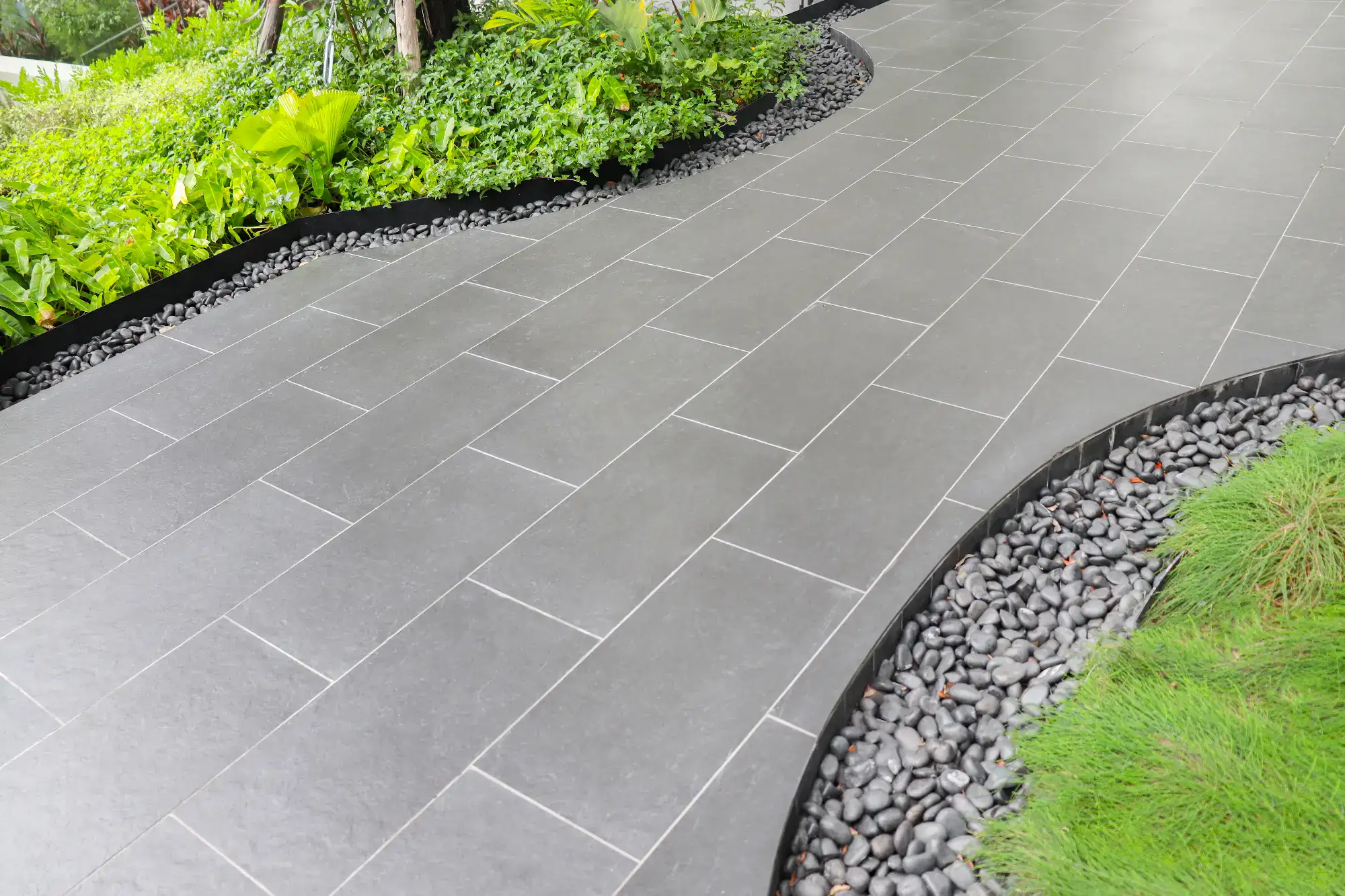
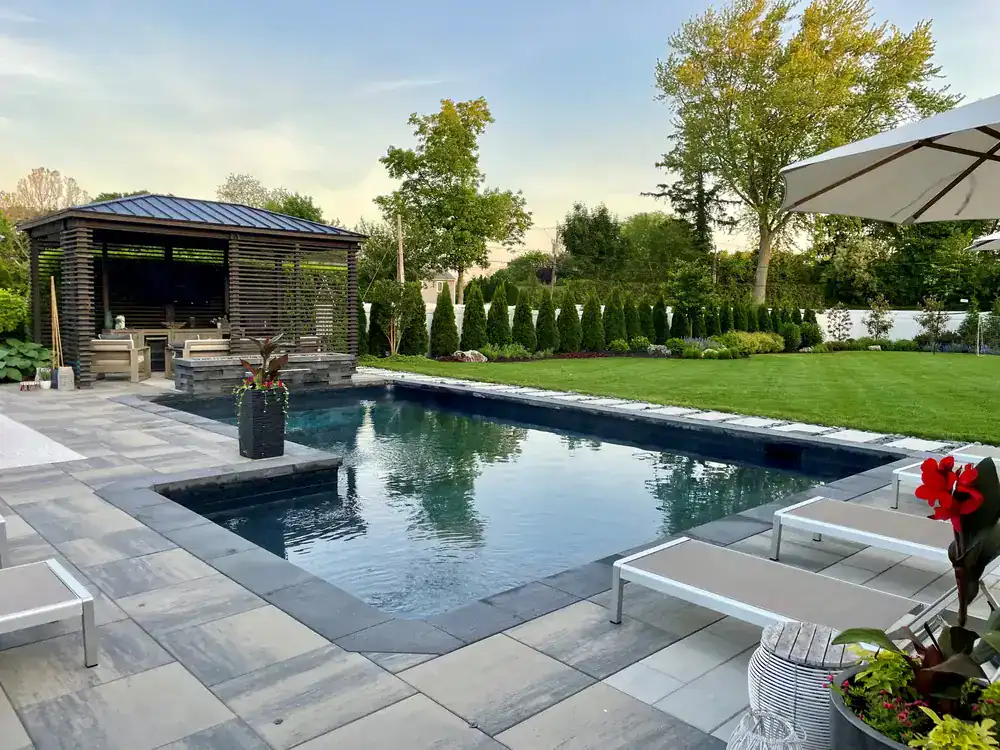
Natural stone like bluestone and travertine handles Suffolk County’s weather extremes better than most pool patio alternatives. These materials resist freeze-thaw damage while providing excellent slip resistance when wet—crucial around swimming pools. The natural texture stays cooler underfoot during summer heat waves, and the material actually improves with age rather than deteriorating.
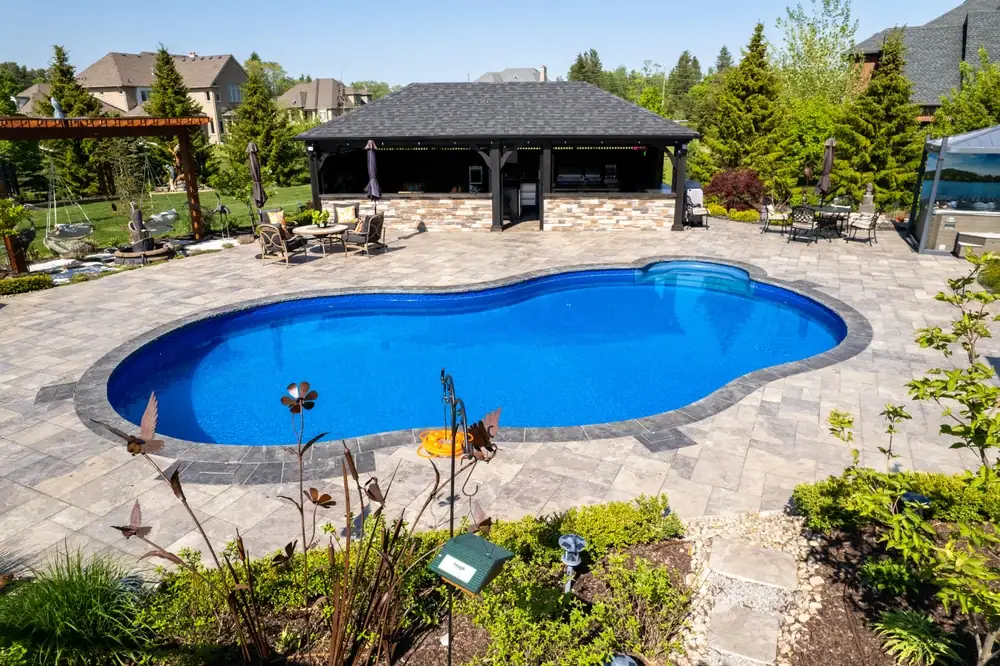
Concrete pavers offer more design flexibility for your pool patio and typically cost less than natural stone. High-quality pavers designed for freeze-thaw resistance perform well in Suffolk County, but thickness matters for pool deck applications. Standard residential pavers work for most pool patios, but you need proper sealing and installation to prevent water infiltration during winter months.
Stamped concrete provides the most pool patio design options at the lowest initial cost. However, concrete requires careful attention to expansion joints and proper curing to prevent the cracking that’s common with temperature fluctuations around pools. When done right, stamped concrete pool patios can last decades, but poor installation shows problems within the first few seasons.
The key is matching your pool patio material choice to your specific site conditions, usage patterns, and long-term maintenance preferences. What works for your neighbor’s swimming pool might not be the best choice for your situation, especially if you have different drainage challenges or soil conditions in Suffolk County.
Pool patios face challenges that regular patios never encounter. Constant splash-out, pool chemicals, and the need for specific drainage patterns require different installation techniques and materials. Most pool patio contractors treat swimming pool areas like regular walkways, which leads to problems within a few years.
The base preparation makes the biggest difference for pool deck installations. Pool patios typically require a concrete sub-base rather than the standard gravel base used for regular patios. This concrete foundation provides the stability needed around pools while creating proper drainage slopes away from both your home and the pool itself. Getting this wrong means dealing with standing water, ice formation, and potential foundation issues.
Pool deck maintenance becomes easier when drainage is handled correctly during installation. You’re managing water from multiple sources—rain, splash-out, and potential groundwater issues. The patio surface needs to slope away from your pool to prevent debris from washing into the water during Suffolk County storms, but it also needs to direct water away from your home’s foundation.
Chemical resistance matters more for pool patios than most people realize. Pool chemicals, salt systems, and cleaning products can damage or discolor certain materials over time. Professional pool patio installation includes selecting materials and sealers that handle these exposures without staining or deteriorating. The wrong material choice might look fine initially but show problems after a season of normal pool maintenance.
Temperature considerations also differ around swimming pools. The combination of water, concrete, and direct sun exposure creates temperature variations that can stress materials and joints. Proper pool patio installation accounts for these thermal movements with appropriate expansion joints and material specifications designed for Suffolk County’s climate conditions.
Want live answers?
Connect with a Corsino Construction expert for fast, friendly support.
Professional pool patio installation starts with proper excavation and site preparation, not just laying materials over existing surfaces. You need adequate depth for base materials, proper compaction, and drainage systems that prevent future pool deck maintenance issues.
The installation sequence matters for swimming pool patios. Rushing any step or skipping proper curing times creates weak points that fail under normal use. Quality pool patio installation takes time because each layer needs to cure or settle properly before adding the next component.
Understanding Suffolk County’s soil conditions and permit requirements prevents delays and ensures your pool patio meets local building codes from day one.
The foundation determines whether your pool patio lasts five years or fifty years. Poor base preparation causes most pool deck failures, including settling, cracking, and drainage problems that create safety hazards and expensive pool patio repair costs.
Proper excavation for pool patios removes all organic material and unstable soil down to a predetermined depth based on Suffolk County soil conditions and expected load requirements. Long Island’s clay soil presents unique challenges because it expands and contracts with moisture changes. We account for this movement with proper base thickness and compaction techniques.
The concrete sub-base provides stability that regular gravel bases can’t match around swimming pools. This concrete foundation needs to cure properly while maintaining the precise slopes required for drainage around pool areas. Getting the elevation and grade right during this stage prevents water pooling and ice formation that damages both the pool patio surface and underlying structure.
Compaction becomes critical for pool deck installations because disturbed soil around new pools contains air pockets that cause settling over time. You’ve probably seen pool patios that sink below the pool coping level—that’s inadequate compaction during installation. We use mechanical compaction of all base layers with specific equipment designed for this purpose.
Drainage planning for pool patios starts during excavation, not as an afterthought. The base needs to direct water away from your pool and foundation while preventing erosion or washout during heavy Suffolk County rains. This might include subsurface drainage systems, proper grading, or permeable base materials depending on your specific site conditions.
Edge restraints and borders get installed during base preparation to prevent lateral movement of pavers or stones over time around pool areas. These systems need to handle the thermal expansion and ground movement common in Suffolk County without creating trip hazards or allowing pool patio materials to shift.
Material installation for pool patios requires precision and attention to details that separate professional work from DIY attempts. The leveling layer, joint spacing, and finishing techniques determine both appearance and long-term performance of your swimming pool patio.
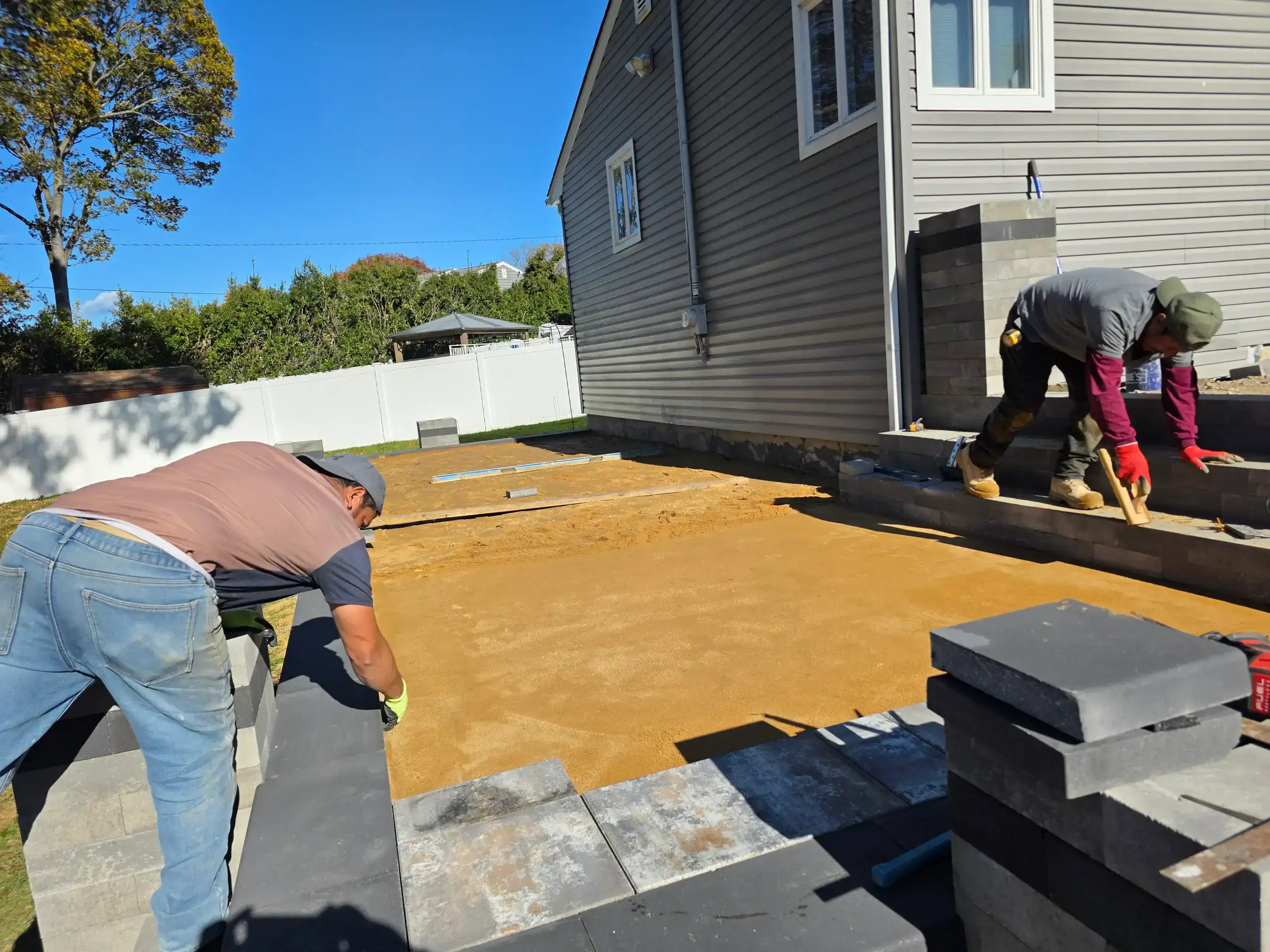
Sand bedding provides the fine adjustment layer that accommodates slight variations in material thickness while creating a smooth, level pool deck surface. This sand needs to be the right type and moisture content for proper compaction and stability around pools. Too much moisture creates soft spots, while too little prevents proper leveling and joint stability for your pool patio.
Pattern layout and cutting for pool patios require planning to minimize waste while creating attractive sight lines from your home and pool area. We include dry-fitting materials to verify the pattern works with your space before permanent installation. This prevents awkward cuts at visible edges and ensures consistent joint spacing throughout the pool deck project.
Joint filling and sealing protect pool patios against water infiltration, weed growth, and material movement. Polymeric sand systems work well for most Suffolk County pool patio installations because they resist washout while allow slight movement during freeze-thaw cycles. However, application timing and weather conditions affect performance, so professional installation includes proper curing and protection during the critical first few days.
Edge finishing and transitions create clean connections between your pool patio and existing surfaces like pool coping, lawn areas, or other hardscaping. These details require custom cutting and fitting to prevent water infiltration and create attractive appearance from all viewing angles around your swimming pool. Poor edge work shows immediately and creates pool deck maintenance problems later.
Final cleanup and protection ensure your new pool patio is ready for immediate use while protecting the installation during the critical curing period. This includes removing construction debris from your pool, protecting surfaces from foot traffic, and providing pool deck maintenance instructions specific to your material choices and Suffolk County conditions.
Your pool patio investment deserves installation that handles Suffolk County’s unique challenges while creating the outdoor space your family will use for decades. The difference between professional work and corner-cutting shows up in performance, appearance, and long-term pool deck maintenance costs.
Quality pool patio installation prevents the drainage problems, cracking, and safety issues that plague many swimming pool patios within a few years. When you choose experienced pool patio contractors who understand local conditions and proper installation techniques, you get results that improve your property value and provide reliable enjoyment.
Ready to discuss your pool patio project? We handle everything from design and permits through final cleanup, ensuring your Suffolk County pool patio investment delivers the results you expect from day one through decades of Long Island weather.
Article details:
Share:
Continue learning: