
Hear from Our Customers
Your driveway handles everything Long Island throws at it. A well-built paver patio or walkway gives you functional space that works for entertaining, relaxing, or just enjoying your property without worrying about uneven surfaces or maintenance headaches.
When Suffolk County winters cause soil to freeze and expand, properly installed pavers adjust naturally. No more watching cracks spread across your driveway every spring or dealing with water pooling near your foundation.
The difference is in the foundation work. We understand Suffolk County soil conditions and how to prepare foundations that won’t shift or settle. Long Island’s clay soil presents unique challenges that require proper base depth and drainage considerations. Most contractors skip this step because it takes time and knowledge you can’t see from the surface.
Corsino Construction Corp has been handling paving projects throughout Farmingville and Suffolk County for years. Established in 2000, we’ve built a reputation by understanding what works in this specific climate and soil conditions.
We understand how Long Island soil conditions affect foundation stability and how local weather patterns impact material choices. This isn’t general contracting knowledge—it’s experience gained from hundreds of projects in Suffolk County’s unique environment.
We’re licensed, insured, and focused on getting the job done right the first time. You’re working with people who live and work in this area. We know the local requirements, the best materials for our climate, and what it takes to create paving that lasts.
We start with a site evaluation to understand your property’s drainage, soil conditions, and any specific requirements. This step determines whether your project succeeds or fails in five years.
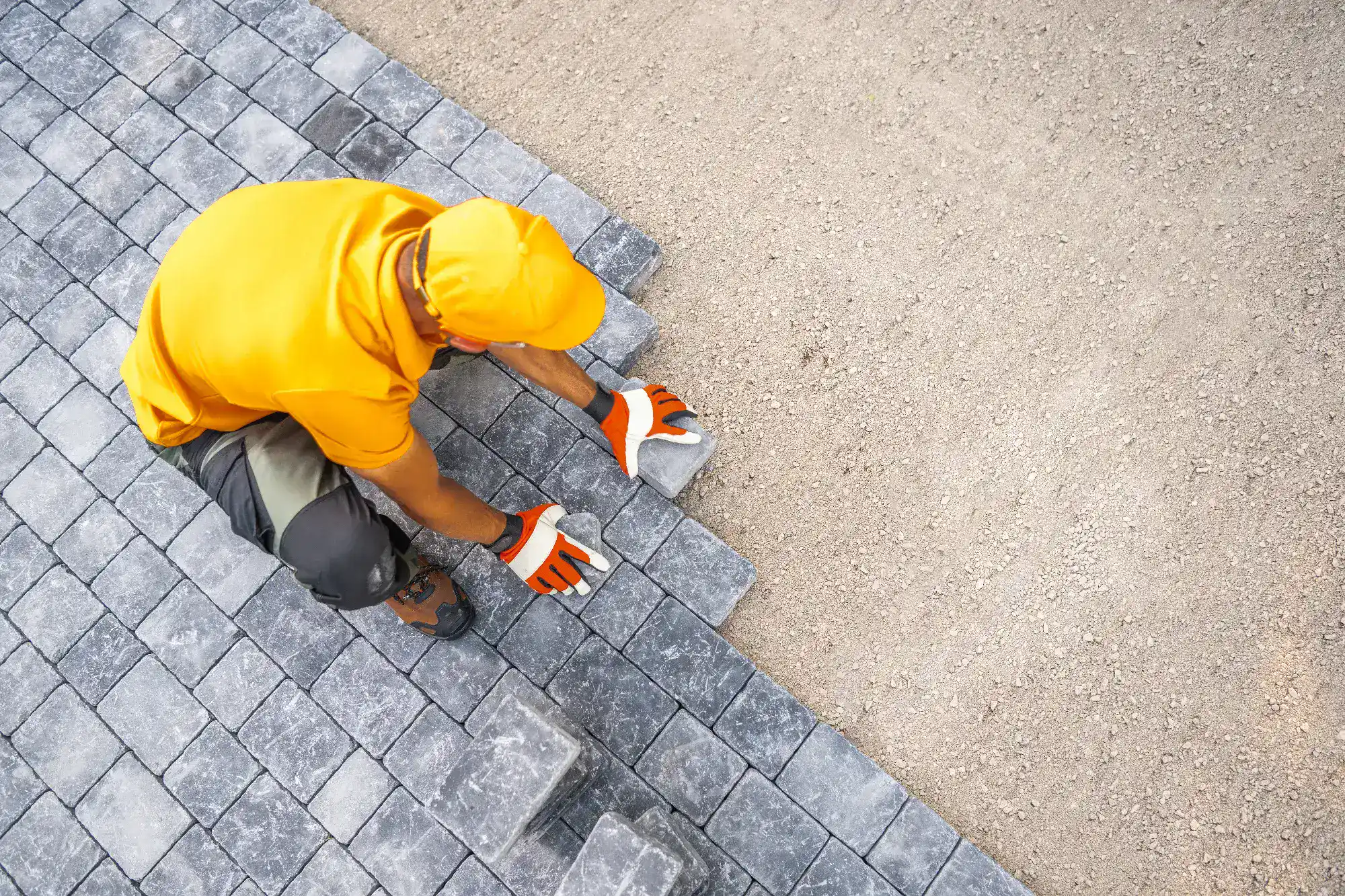
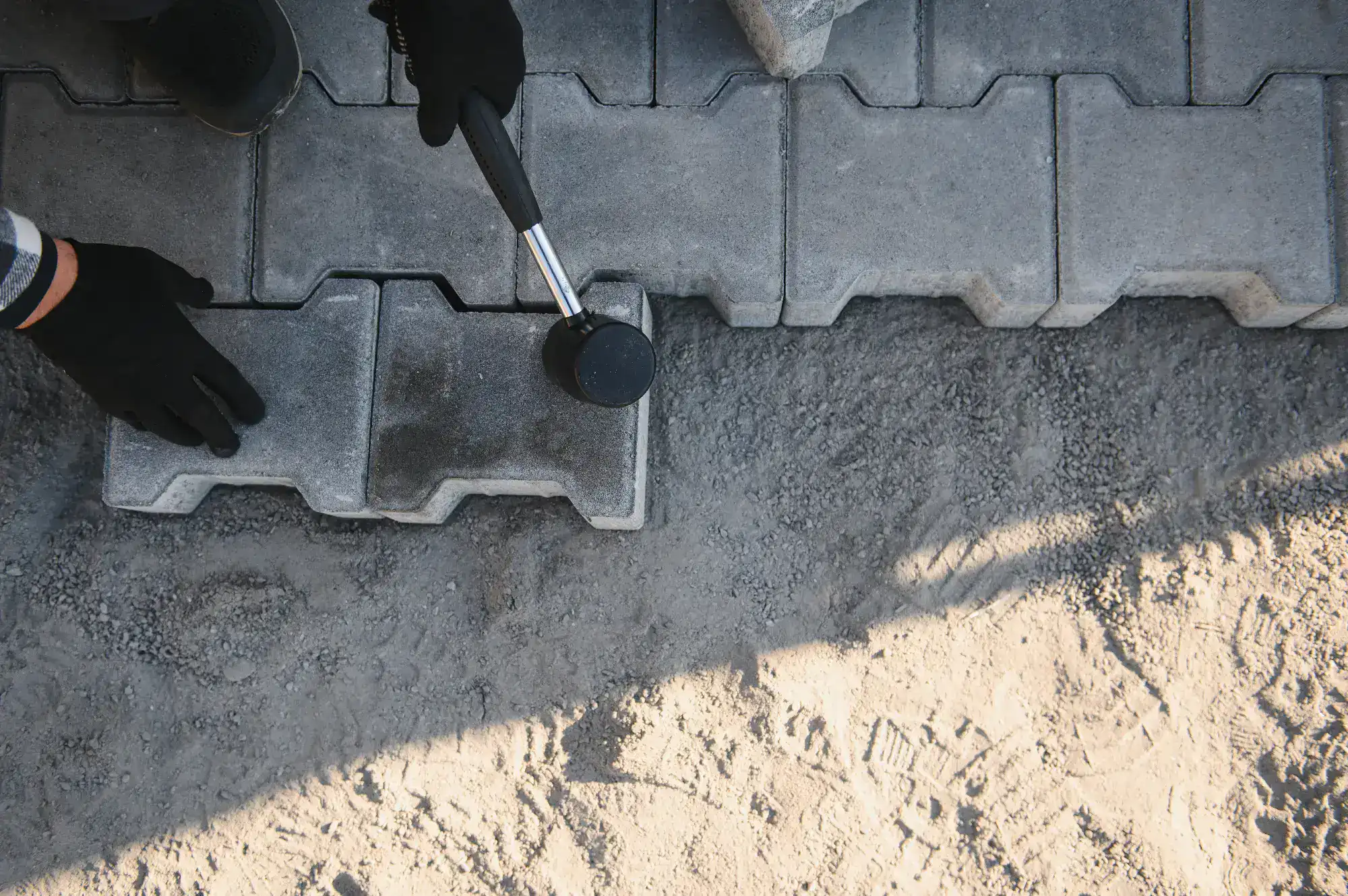
Every project starts with proper excavation to remove existing concrete or unstable soil, then installing a compacted gravel base with the right depth for Long Island conditions. Day one involves excavation and base preparation. The excavation depth depends on your paver thickness plus base requirements.
Proper drainage starts with site evaluation before any work begins. We identify where water currently flows and any problem areas where it pools or causes issues. The base preparation includes proper grading to direct water away from structures and toward appropriate drainage points. We install drainage systems when needed, including catch basins or French drains for properties with challenging water management needs.
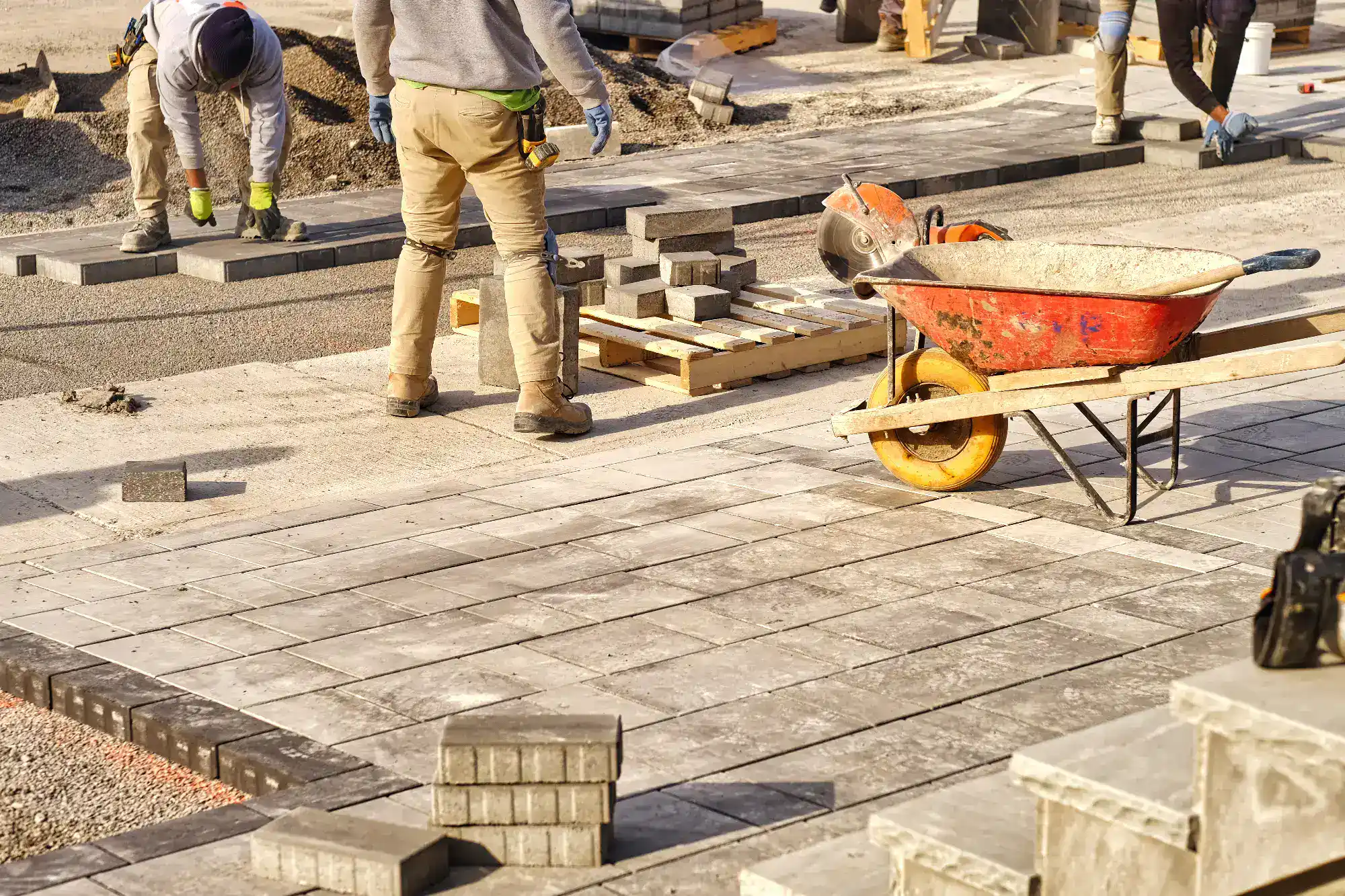
Material installation follows with attention to Suffolk County’s specific requirements. Most residential driveway projects take 2-4 days depending on size and complexity. Day one usually involves excavation and base preparation. Day two focuses on material installation, with additional time for curing if needed. Weather can affect the timeline, especially with asphalt work that requires specific temperature conditions. We’ll give you a realistic schedule upfront and keep you updated if anything changes.
Ready to get started?
Asphalt typically costs less upfront and handles freeze-thaw cycles well, but needs periodic sealing every 3-5 years. It’s easier to repair if damage occurs and provides good traction in winter conditions. Concrete lasts longer with minimal maintenance but costs more initially and can crack if not properly installed with adequate base preparation. Both work well in Farmingville’s climate when installed correctly. Your choice often comes down to budget, maintenance preferences, and aesthetic goals for your property.
Paver patios and walkways give you design flexibility with materials that can handle freeze-thaw cycles. Choose from various styles and colors that complement your home while creating functional outdoor spaces. While concrete typically handles around 3,000-4,000 pounds per square inch, quality brick pavers are tested to withstand over 12,000 pounds per square inch. That means your driveway won’t just survive daily use—it’ll thrive under it.
Farmingville homeowners deal with specific challenges that require local knowledge. Your driveway faces unique challenges here in Suffolk County – from beach sand tracked in during summer visits to road salt residue after winter storms. The materials and installation methods need to account for these conditions from day one.
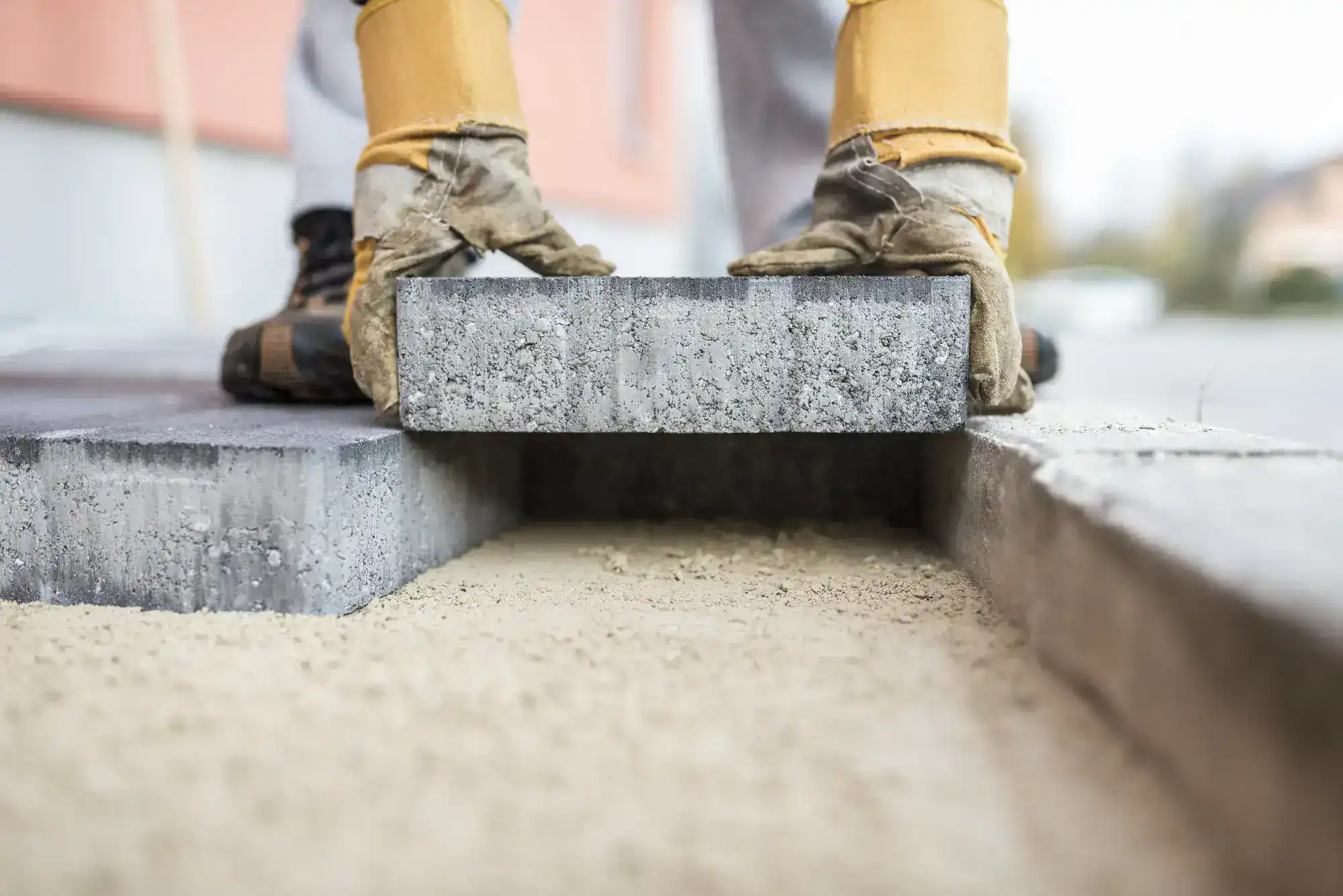
A well-installed asphalt driveway typically lasts 15-20 years in Suffolk County’s climate, while concrete can last 25-30 years with proper maintenance. The key is proper base preparation and drainage – most driveways that fail early have foundation issues, not surface problems. Paver driveways can last even longer since individual pavers can be replaced if damaged. The harsh freeze-thaw cycles here make quality installation critical for longevity.
The lifespan depends entirely on the foundation work you can’t see. Without this knowledge, even high-quality pavers can fail prematurely. Suffolk County’s clay soil and weather patterns require specific preparation methods that general contractors often skip.
A well-maintained asphalt driveway can last up to 20 years, while a concrete driveway can last up to 30 years or more. But these numbers assume professional installation with proper drainage and base preparation designed for Long Island conditions.
Paving costs depend on project size, materials chosen, site conditions, and any drainage work needed. Asphalt driveways typically range from $3-7 per square foot installed, while concrete runs $4-8 per square foot. Paver patios start around $10-15 per square foot depending on material selection and complexity. These ranges include proper base preparation and professional installation. We provide detailed estimates that break down all costs so you understand exactly what you’re paying for and why.
The upfront cost isn’t the whole story. Asphalt typically costs less upfront and handles freeze-thaw cycles well, but needs periodic sealing every 3-5 years. Concrete costs more initially but requires less maintenance if installed correctly with adequate base preparation.
When you factor in the longer lifespan and easier maintenance, it’s often the most cost-effective choice over time. The key is working with experienced professionals who understand both the material and local conditions. Cheap installation always costs more in the long run.
At Corsino Construction, we take drainage seriously during every driveway installation to prevent future water-related issues. Our team begins by thoroughly evaluating the slope, soil, and surrounding landscape to identify potential problem areas.
Proper drainage starts with site evaluation before any work begins. We identify where water currently flows and any problem areas where it pools or causes issues. The base preparation includes proper grading to direct water away from structures and toward appropriate drainage points.
Suffolk County’s clay soil makes drainage even more critical. Long Island’s clay soil presents unique challenges that require proper base depth and drainage considerations. We install drainage systems when needed, including catch basins or French drains for properties with challenging water management needs. Most contractors treat drainage as an afterthought, but it determines whether your investment lasts five years or twenty-five.
Sometimes, if the base is solid. The existing concrete needs to be structurally sound, properly drained, and free from major cracks or settling issues. If the foundation is compromised, installing pavers over it just transfers the problems to your new surface.
Every walkway project starts with proper excavation to remove existing concrete or unstable soil, then installing a compacted gravel base with the right depth for Long Island conditions. In most cases, complete removal and proper base preparation deliver better long-term results than overlay installations.
Suffolk County’s freeze-thaw cycles are particularly hard on overlay installations. Concrete walkways in Suffolk County face constant freeze-thaw cycles that create cracks within a few years. If the existing concrete is already showing these stress patterns, covering it won’t solve the underlying problem. We evaluate each situation individually and recommend the approach that gives you the best value for your investment.
Most driveway replacements in Farmingville don’t require permits if you’re staying within the existing footprint. However, if you’re expanding the driveway, changing drainage patterns, or connecting to county roads, you may need permits from your town or Suffolk County. We handle permit applications when required and ensure all work meets local codes. Some homeowner associations also have approval requirements for driveway changes, which we can help navigate.
Any changes to size, drainage, or connection to public roads trigger permit requirements that vary by location within Suffolk County.
In Suffolk County, New York, determining whether you need a permit for a paving project hinges on several factors. The specific requirements depend on your property’s location, the scope of work, and local zoning regulations. We handle this research and application process so you don’t have to navigate the bureaucracy yourself. Getting permits right the first time prevents delays and ensures your project meets all current codes.
For asphalt driveways, you can typically walk on the surface within 24 hours and drive on it after 3-5 days, depending on weather conditions. Concrete driveways need 7-10 days before vehicle traffic. Paver driveways can usually handle light traffic immediately after installation. We provide specific timing based on your project and current weather conditions. Rushing this timeline can cause permanent damage, so we give you clear guidelines and explain why the waiting period matters.
The curing time depends on material choice and Suffolk County’s current weather conditions. In New York, the optimal time is Late Spring through Early Fall, when ambient temperatures consistently fall between 65–75°F. This range allows hot mix asphalt to cure properly while maintaining its structural integrity. Attempting paving in the cold means battling frost heaving and frozen ground, while paving in excessive heat can damage the asphalt pavement during compaction.
It takes recycled asphalt 48 hours to initially harden and up to 3 months to fully cure. It’s best to stay off of recycled asphalt for at least 48 hours, then you can walk or drive standard vehicles on it. Hold off on driving heavy trucks or equipment on it for at least 7 days. Allowing the surface to melt together and harden ensures that the surface stays durable and long-lasting. We provide specific guidance based on your installation and current conditions.