Hear from Our Customers
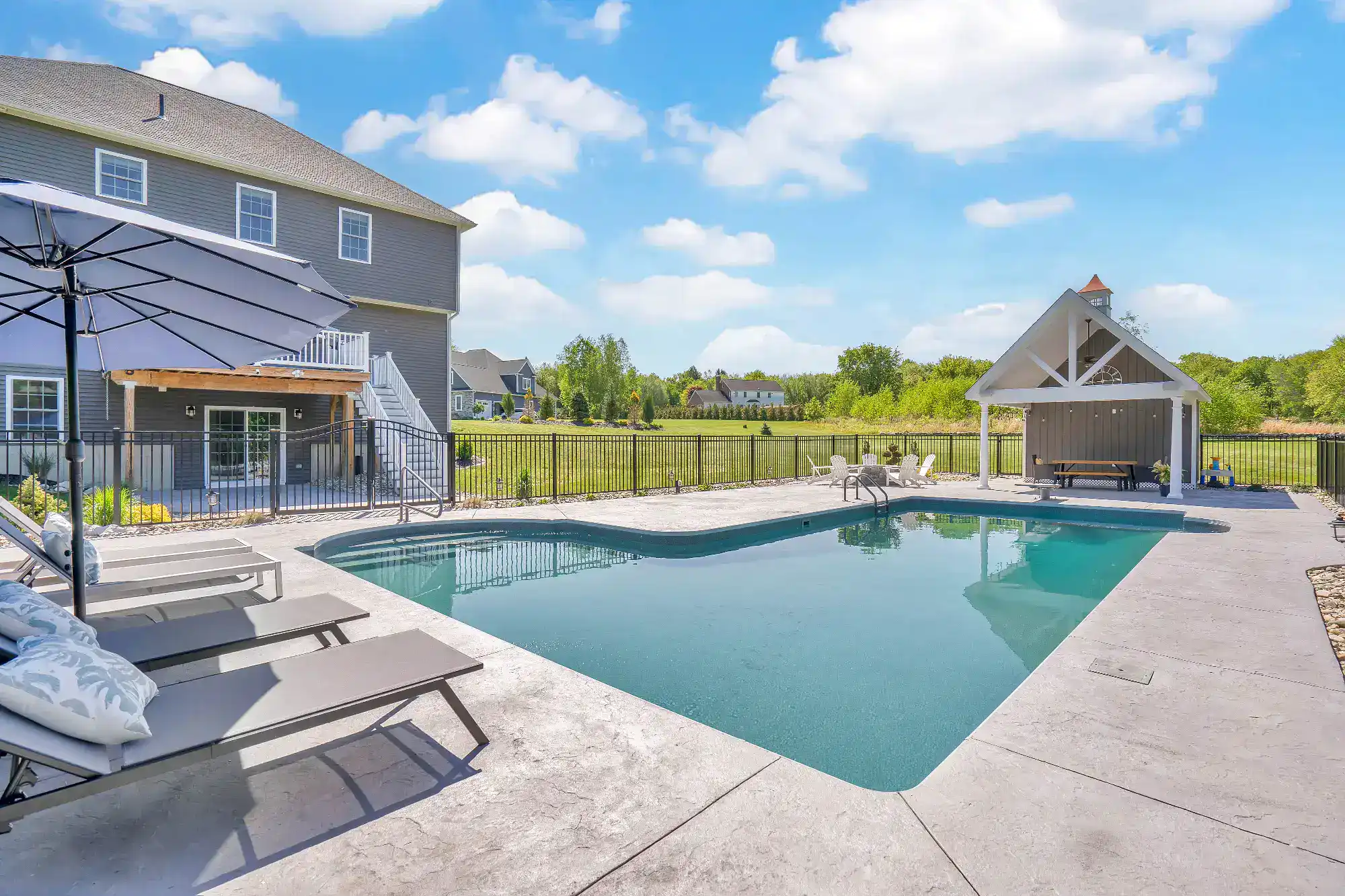
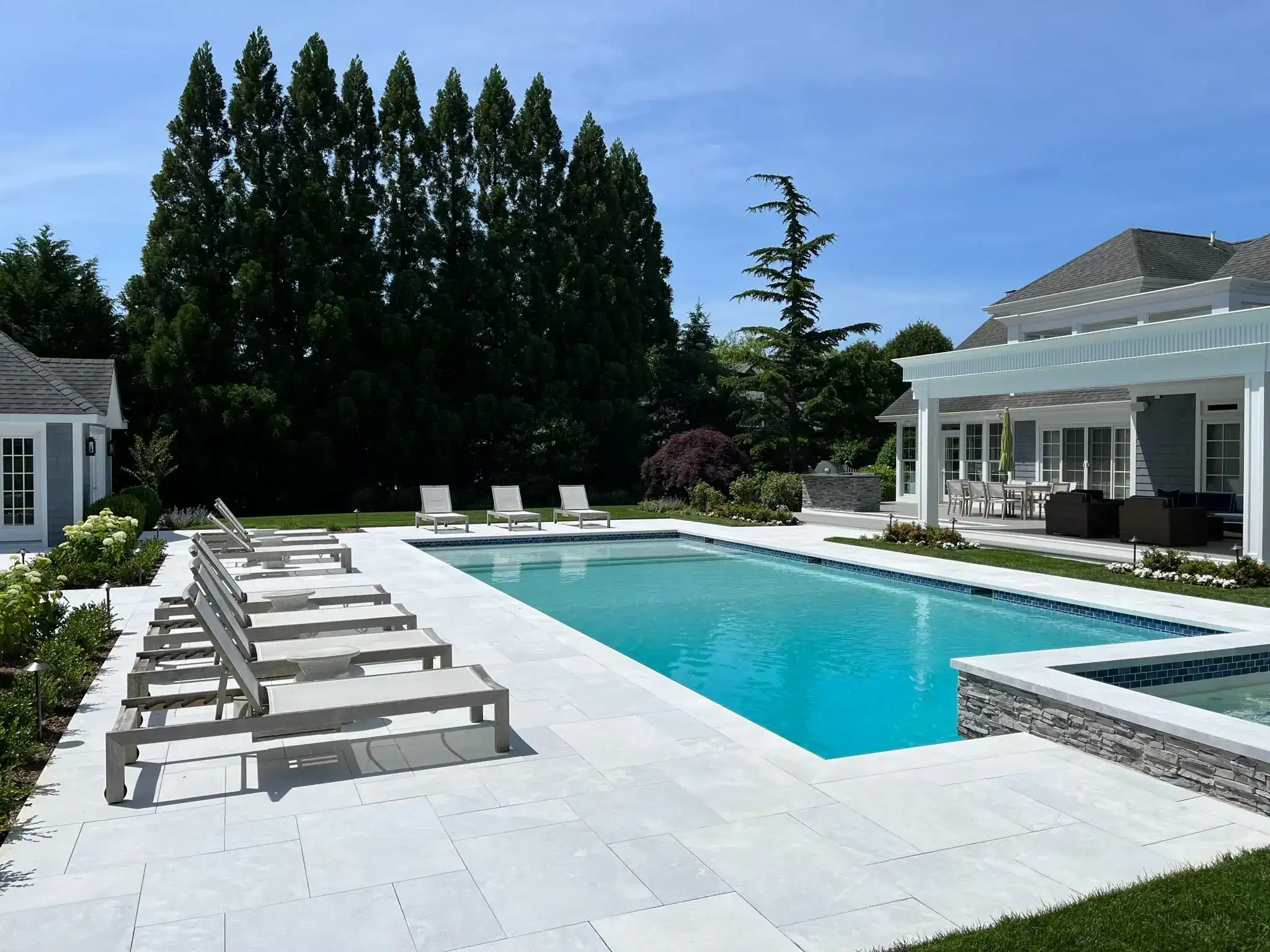
Your pool area isn’t just about looks. It’s about creating a safe space that works for pool parties and quiet mornings while standing up to Suffolk County’s weather extremes.
Most pool patios fail because contractors treat them like regular walkways. Your pool area faces unique challenges that require specific solutions. Water constantly splashes out. People walk around barefoot and wet. Our brutal freeze-thaw cycles destroy improperly installed surfaces.
When drainage isn’t perfect, you’re looking at water damage, ice hazards, and structural problems that cost thousands to fix later. We focus on the engineering first, then make it look great.
We’ve been building outdoor living spaces for Bay Shore families since 2000. We understand Long Island weather, local building requirements, and what it takes to create patios that function perfectly for years.
We’ve seen too many beautiful pool areas ruined by shortcuts in foundation work or materials that weren’t designed for this specific application. That’s why every project gets proper excavation, engineered drainage, and materials selected specifically for pool environments and Suffolk County’s climate conditions.
Our licensed crews handle everything from permits to cleanup, so you get consistent quality and direct accountability throughout your project.
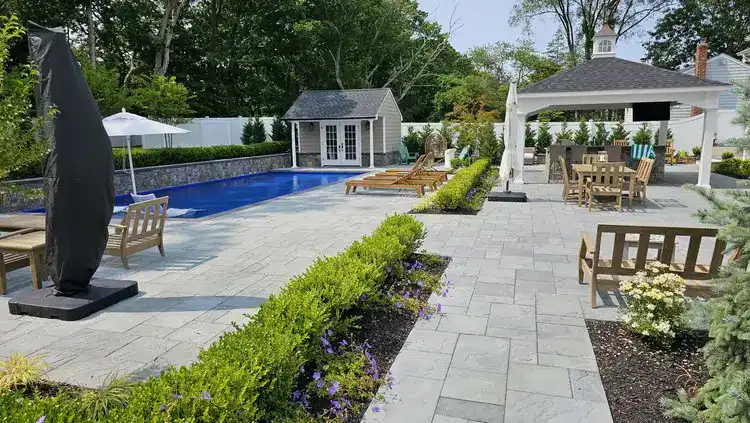
Once you approve the design, we handle permits and start with proper site preparation. This means excavating to the right depth, installing proper base materials, and ensuring drainage flows away from your pool and home. Most patio problems start with poor prep work, so we don’t rush this step.
Then we install your chosen materials using techniques that account for Bay Shore’s soil conditions and weather patterns. Every pool patio includes proper drainage design, because water problems will ruin even the most beautiful patio. We grade everything to direct water away from your pool equipment and home foundation.
We finish with proper sealing and cleanup, leaving you with a patio that’s ready to use and built to last through whatever our climate throws at it. The result is a patio that looks great on day one and still looks great ten years later.
Ready to get started?
For Bay Shore’s climate, we typically recommend concrete pavers, natural stone, or stamped concrete. Each has advantages depending on your budget and style preferences. Concrete pavers are durable and easy to repair if needed. Natural stone like bluestone or travertine offers timeless appeal and stays cooler underfoot.
The key is choosing materials that can handle freeze-thaw cycles and won’t become slippery when wet. You’ll get slip-resistant surfaces that are safe when wet but comfortable for bare feet. We use materials that can handle pool chemicals, salt water if you have it, and the temperature swings that come with our Long Island seasons.
We also plan for the furniture and features you actually want to use. That means thinking through sight lines, traffic flow, and how the patio connects to your house and existing landscape. The goal is creating outdoor space that feels natural and functions the way your family lives.
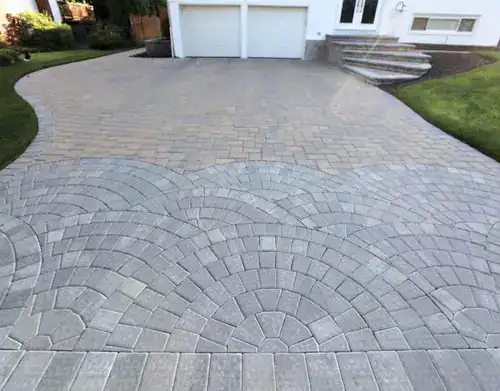
The best material depends on your budget, style preferences, and specific site conditions, but we typically recommend natural stone, stamped concrete, or high-quality pavers designed for freeze-thaw resistance. Natural stone like bluestone or travertine handles Suffolk County’s weather extremely well and provides excellent slip resistance when wet.
Concrete pavers are another excellent option for Bay Shore pool decks. They offer a wide range of colors and styles and can be textured to provide better grip around pools. The key is using materials manufactured to consistent standards, which means predictable performance through our weather patterns.
Whatever material you choose, proper installation matters more than the material itself. We use 4-6 inches of crushed concrete base, compacted properly, followed by fine mason sand for leveling, then proper edge restraints and joint sanding.
Most pool patio projects take 3-7 days depending on size, complexity, and weather conditions. Simple rectangular patios with basic materials can often be completed in 3-4 days. Larger patios with custom designs, multiple materials, or complex drainage requirements may take a full week.
Weather delays can extend the timeline, especially if we get heavy rain during excavation or concrete work. We’ll give you a realistic timeline upfront and keep you updated if anything changes. The key is not rushing the process – proper base preparation and allowing adequate cure time for concrete work is essential.
Bay Shore’s soil conditions also affect timing. Because soil around new pools has been disturbed, we take extra time for proper compaction to prevent settling issues that plague many pool patio installations.
It depends on the size and scope of your project. Simple patio additions often don’t require permits, but larger installations or projects that affect drainage patterns typically do. Bay Shore has specific requirements for construction near pools, and some homeowner associations have their own guidelines.
Generally, if you’re adding significant square footage of hardscaping, changing drainage patterns, or working close to property lines, you’ll need permits. We handle all permit applications and inspections as part of our service because we know the local requirements and have established relationships with the building departments.
Trying to skip permits might save money upfront, but it can create serious problems when you sell your home or if neighbors complain. Insurance companies may also deny claims for unpermitted work. We’ll evaluate your specific project during the consultation and let you know exactly what permits are needed.
Most pool patio problems come from poor base preparation or using inappropriate materials for pool environments. Because it’s a new pool, all the soil around it was disturbed during excavation, causing air pockets and voids that allow dirt to settle over time. You can see signs of this when pavers around pools are lower than the coping.
Proper compaction is crucial but often skipped by contractors trying to save time. We take extra steps to compact disturbed soil in lifts, ensuring a stable foundation. We also pour concrete base around pools rather than just using aggregate, because the constant moisture and chemical exposure requires a more robust foundation.
Another common issue is inadequate drainage design. Water that doesn’t flow away properly will eventually cause foundation problems, ice damage, and structural issues. Every pool patio we build includes engineered drainage that directs water away from your pool equipment and home foundation.
Pool patio costs vary widely based on size, materials, complexity, and site conditions. Simple concrete paver patios might start around $15-20 per square foot, while natural stone or complex designs can run $25-40 per square foot or more. The total project cost depends on square footage, material choices, drainage requirements, and any special features.
What matters more than the initial cost is the long-term value. Cheap installations often require expensive repairs within a few years due to settling, drainage problems, or weather damage. We focus on building patios that look great and function properly for decades, which actually saves money over time.
We provide detailed written estimates that break down all costs upfront, so there are no surprises. The estimate includes all permits, materials, labor, and cleanup. We also handle financing options if you need payment flexibility for your pool patio project.
Pool patios face unique challenges that regular patios don’t encounter. Water constantly splashes out of pools, people walk around barefoot and wet, and pool chemicals can damage inappropriate materials. Pool patios also need to be pitched away from both the home AND the pool to prevent debris from washing into the water.
The foundation requirements are different too. Pool patios typically need concrete sub-bases rather than just aggregate, because the constant moisture and chemical exposure requires a more robust foundation. The materials must be slip-resistant when wet but still comfortable for bare feet.
Drainage design is also more complex for pool patios. We need to manage not just rainwater but also splash-out, backwash water, and any overflow. This requires careful grading and often additional drainage infrastructure that regular patios don’t need. The goal is creating a space that’s safe, functional, and beautiful while handling all the unique stresses of a pool environment.