Paver Driveways Suffolk County NY

No More Cracks Every Spring
Your driveway should handle Suffolk County winters without crumbling. Paver driveways flex with freeze-thaw cycles, drain water instead of trapping it, and last 25+ years with almost zero maintenance—no sealcoating, no patching, no replacing.
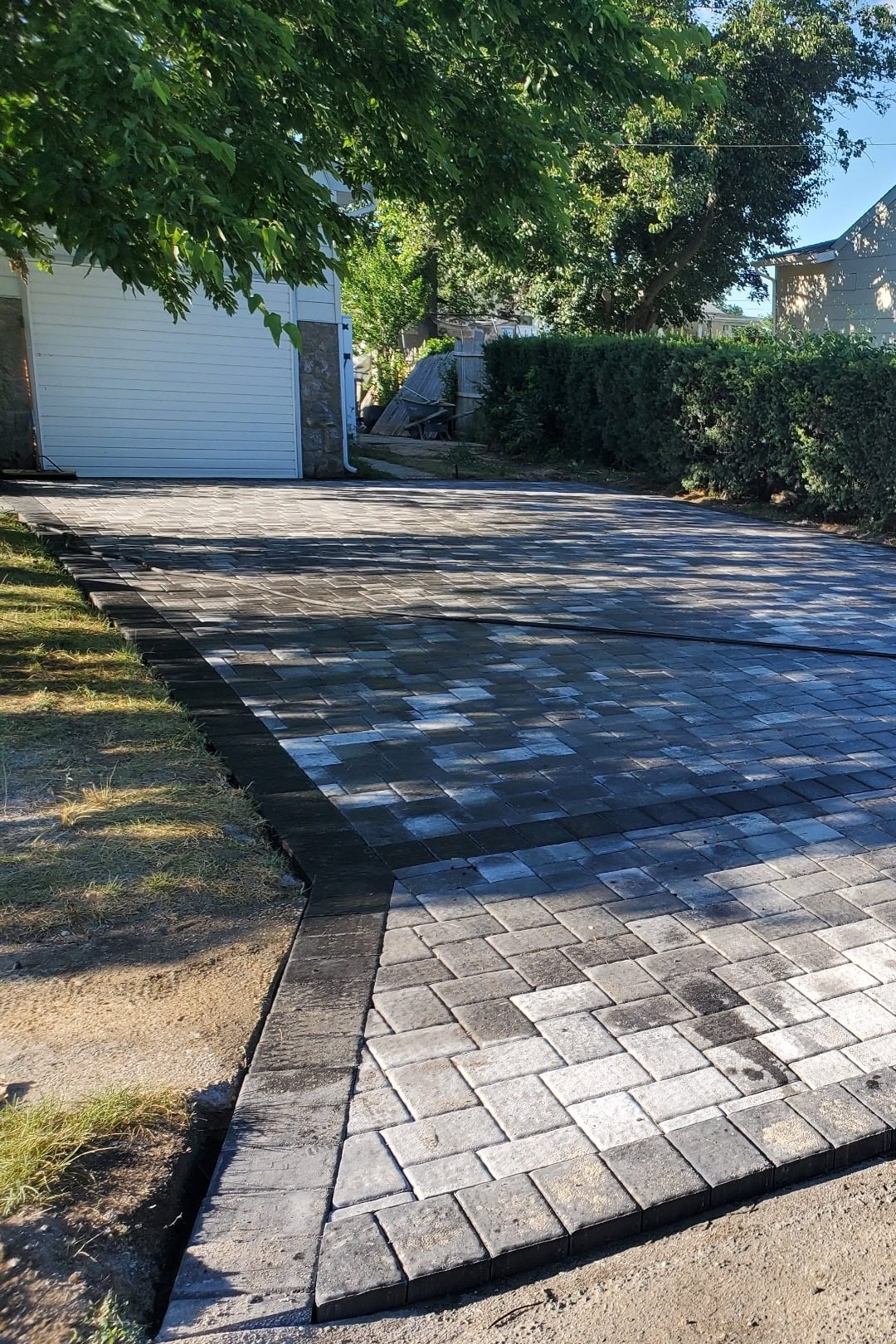
A driveway made of clean, gray rectangular pavers leads up to a white garage, bordered by grass and hedges, shaded by leafy green trees in bright NY sunlight—perfect inspiration from a top home remodeler Suffolk County.

Licensed In-House Crews Only

Every installer works directly for us. No subcontractors means consistent quality, direct accountability, and zero surprises on your project.

Fixed Pricing No Hidden Fees

The price we quote is the price you pay. We break down every cost upfront so you know exactly what you're investing in.

Clean Organized Job Sites

You're still living here during construction. We keep work areas contained, clean up daily, and respect your property like it's our own.

Over 20 Years Experience

Since 2000, we've handled Suffolk County's freeze-thaw cycles, clay soil, and coastal weather. We know what works here and what doesn't.
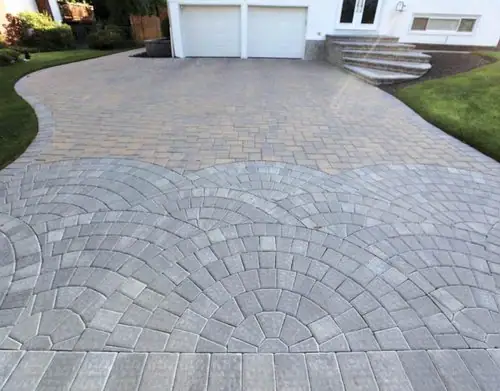
A driveway by a home remodeler in Suffolk County, NY, featuring interlocking pavers with geometric patterns—lighter gray pavers form circular waves near the front, while tan pavers are arranged in a grid near the house and steps.

Paver Driveway Installation Suffolk County

Why Pavers Outlast Everything Else Here

Suffolk County driveways take a beating. Freeze-thaw cycles crack concrete. Summer heat softens asphalt. Heavy rain pools on surfaces that can’t drain. Paver driveways handle all of it because they’re designed differently—individual interlocking stones that flex with ground movement instead of fighting it. When one paver gets damaged, you replace that one paver. Not the whole section. Not a visible patch that never matches. The interlocking design distributes weight across multiple stones, and the joints between them let water drain through instead of sitting on top causing damage. You get a driveway that works with Long Island’s climate instead of against it.

Hear from Our Customers

Benefits of Paver Driveways

What You Actually Get

This isn’t about making your driveway prettier—though it will be. It’s about ending the cycle of repairs, drainage headaches, and wondering how many more winters your current driveway can handle.

You'll stop worrying about cracks spreading every time temperatures drop below freezing and water expands in the surface.

Water drains through permeable joints instead of pooling in the same spots after every storm, preventing erosion and ice buildup.

Repairs become invisible because individual pavers lift out and get replaced in minutes without disturbing anything around them.

Your driveway stays usable the moment we finish installation—no waiting three to seven days for concrete to cure.

Winter salt and de-icers won't eat through the surface or cause the spalling and pitting you see on concrete driveways.

You'll add measurable value to your home with a premium feature that delivers roughly 69% return on investment at resale.

A bold white number 1 centered inside a solid black circle, on a plain white background—ideal for showcasing your home remodeler Suffolk County, NY brand with modern simplicity.

Share project details

Call us or get a free online quote to help us identify your project needs.

A bold white number 2 centered inside a solid black circle on a plain background, ideal for NY home remodeler Suffolk County branding.

We'll follow up

If you requested an online quote, you can expect a callback within 24-48 hours of your request.

A bold white number 3 centered inside a solid black circle on a white background, perfect for any home remodeler Suffolk County, NY seeking striking design elements.

The floor is yours

Connect with an expert and share all project specifics.

A large white number 4 centered inside a solid black circle, resembling a bold logo often used by top home remodelers in Suffolk County, NY, with no other markings or background elements.

Plan your project

Like what you hear? We'll provide next steps and expert guidance.
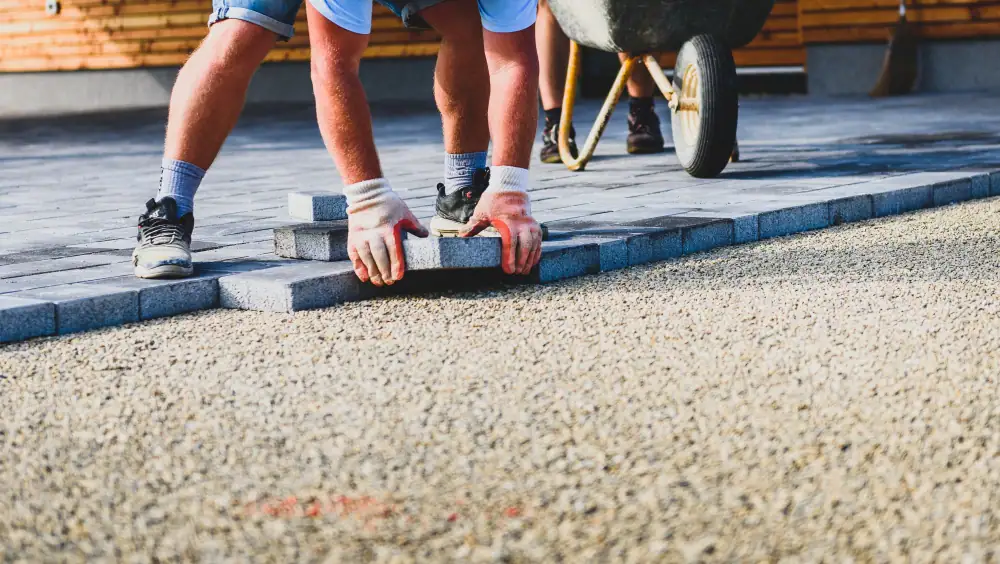
A home remodeler Suffolk County is wearing gloves and shorts while laying gray stone pavers on a gravel surface, working on outdoor pavement construction. A wheelbarrow sits nearby in NY.

Interlocking Driveway Stone Options

Design It Your Way

Paver driveways give you design options asphalt and concrete can’t touch. Different colors, patterns, textures. Decorative driveway borders that frame the main field. Cobblestone looks without the cobblestone cost. Herringbone patterns that add visual interest. Soldier course edges that create clean, defined lines. Want a two-tone design that complements your home’s brick or siding? Done. Prefer a classic look with a contrasting border? We can do that. Looking for permeable pavers that manage stormwater runoff and reduce flooding? Those exist too, and they’re especially useful for Suffolk County properties dealing with clay soil and drainage issues. The installation matters as much as the materials. We excavate to proper depth based on your soil conditions, build a compacted base that won’t shift under vehicle weight, install edge restraints that keep everything locked in place, and use polymeric sand in the joints to prevent weed growth and paver movement. Every step is about creating a foundation that lasts decades, not just years.

Driveway Paver Design Suffolk County

What Goes Into a Proper Installation

A paver driveway is only as good as what’s underneath it. We start with excavation—removing existing material and digging deep enough to accommodate the base layers. For driveways, that’s typically 10-12 inches of compacted crushed stone. This base does the heavy lifting, distributing vehicle weight and allowing proper drainage so water doesn’t pool or cause settling. Next comes the bedding layer—about an inch of sand that creates a level surface for pavers to sit on. Then we install the pavers themselves in your chosen pattern, cutting edge pieces to fit perfectly around curves, borders, or obstacles. Edge restraints go in to prevent the field from spreading over time. Finally, polymeric sand gets swept into joints and activated with water, creating a hardened bond that locks everything together while still allowing drainage. The whole process takes into account Suffolk County’s clay soil, drainage patterns around your property, and how water needs to move away from your foundation. It’s not just about laying stones—it’s about engineering a driveway masonry system that performs in this specific climate with these specific challenges.
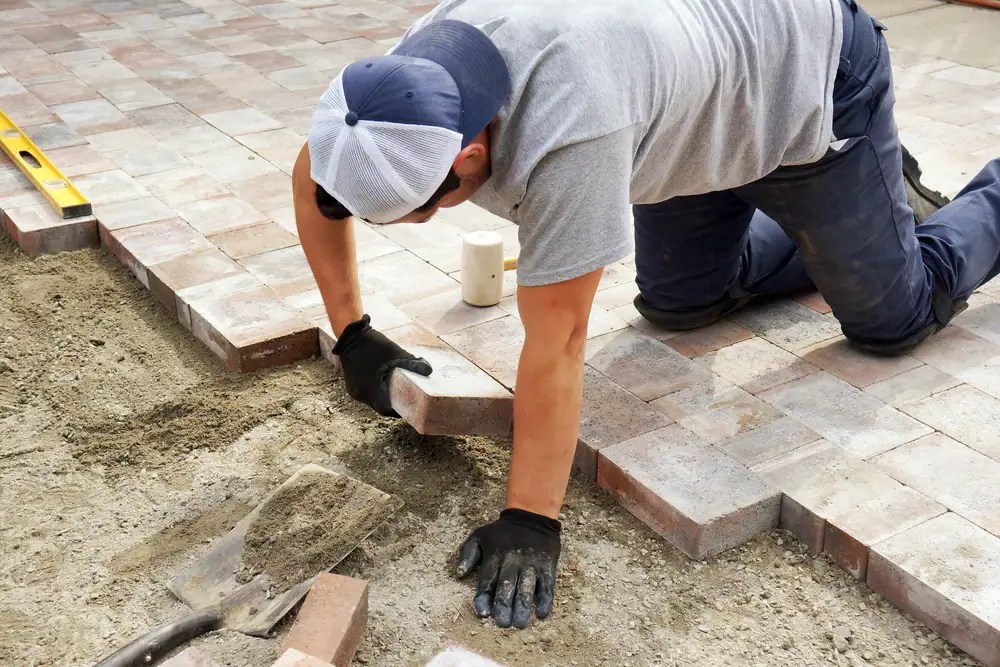
A home remodeler in Suffolk County, NY, wearing a cap, t-shirt, and gloves, kneels to carefully align brick pavers on the ground. Construction tools and sand are visible nearby.
Paver Driveways FAQs

Common Questions About Our Service

Properly installed paver driveways last 25 to 30 years or longer here, significantly outlasting asphalt and concrete. The key is in how they handle our freeze-thaw cycles. Unlike solid concrete that cracks when it can't flex, individual pavers move slightly with ground expansion and contraction, then settle back into place. The joints between pavers release pressure instead of transferring stress to the surface. We install them on 10-12 inches of compacted base material specifically to handle the ground movement that happens every winter. If a paver does crack—which is rare—you replace that one stone. The rest of your driveway stays intact. Regular maintenance is minimal: occasional joint sand refilling and cleaning. No annual sealcoating. No crack filling. No patching that never matches.
True cobblestone uses natural stone—usually granite—that's rounded and irregular. It's beautiful but expensive to install, often running $40-$75 per square foot because each stone has to be individually set and leveled. Modern concrete pavers that replicate the cobblestone look give you that old-world aesthetic at a fraction of the cost, typically $18-$25 per square foot. They're manufactured to mimic cobblestone's texture and appearance but with uniform dimensions that make installation faster and more affordable. You get the same visual appeal with better performance—concrete pavers are engineered to specific strength ratings and designed to interlock for stability. They're also easier to replace if one gets damaged. Most homeowners choose cobblestone-look concrete pavers because they deliver the style they want without the premium price tag or installation complexity of real stone.
Yes, especially if you choose permeable pavers. Standard paver driveways already drain better than solid concrete or asphalt because water can flow through the joints between stones instead of sitting on an impermeable surface. Permeable pavers take this further—they're designed with wider joints filled with gravel that let water pass straight through into the base layers below. This is huge for Suffolk County properties that deal with heavy rain and clay soil that holds water. Water that would normally pool on your driveway or run off into your yard instead filters down through the paver system and into the ground. This reduces flooding, prevents erosion around your foundation, and keeps water from collecting against your home. During installation, we grade everything to direct water away from your house and create proper slope—usually about a quarter inch per foot. If you have persistent drainage issues, permeable pavers combined with correct base preparation can solve problems that have plagued your property for years.
Absolutely. Paver driveways handle snowplows and snowblowers without damage when they're installed correctly with proper edge restraints and a well-compacted base. We install heavy-duty edge restraints—usually metal or composite—that keep pavers from shifting when a plow blade scrapes across them. The interlocking design and polymeric sand in the joints create a solid surface that doesn't dislodge under pressure. In fact, pavers often perform better than asphalt in winter because plow edges can catch and tear soft asphalt, especially during warm spells when asphalt gets pliable. Pavers stay firm regardless of temperature. Just make sure your plow operator sets the blade slightly higher than they would on asphalt—not because pavers can't handle it, but to avoid catching edges on individual stones. Salt and de-icing products won't harm pavers the way they cause spalling and pitting in concrete. The color runs through the entire paver, so surface wear doesn't show.
Paver driveways cost more upfront—typically $18-$25 per square foot installed versus $10-$15 for asphalt or concrete. For an average two-car driveway around 600 square feet, you're looking at $12,000-$18,000 for pavers compared to $5,000-$9,000 for asphalt. But here's what changes the math: asphalt needs sealcoating every 2-3 years at $500-$800 per application. It needs crack filling and patching. After 10-15 years, you're replacing it entirely. Concrete lasts longer but cracks are permanent and expensive to fix, often requiring full slab replacement. Pavers last 25-30+ years with minimal maintenance—no sealcoating, easy repairs, and they don't need replacement. When you calculate total cost of ownership over 20 years, pavers often cost less than repeatedly maintaining and replacing cheaper materials. Plus they add more to your home's resale value—studies show roughly 69% return on investment. The initial investment is higher, but the long-term value is better.
Very little, especially compared to asphalt or concrete. You'll want to sweep or blow off debris regularly—same as any driveway. Every few years, check the joint sand and add more if needed, though polymeric sand lasts much longer than regular sand. Some homeowners apply a sealer every 3-5 years to enhance color and protect against oil stains, but it's optional, not required like asphalt sealcoating. If weeds pop up in joints, pull them or use a targeted weed killer—proper polymeric sand installation prevents most weed growth. If a paver cracks or stains badly, you can pop it out with a flat pry bar and replace it in minutes without calling a contractor. That's it. No annual sealcoating. No crack filling. No patching. Pressure washing once a year keeps everything looking fresh. Most homeowners spend maybe an hour or two per year on maintenance beyond normal cleaning. The whole point of pavers is durability with minimal upkeep, which is why they make sense for homeowners who are tired of constant driveway maintenance.
A bold white number 1 centered inside a solid black circle, on a plain white background—ideal for showcasing your home remodeler Suffolk County, NY brand with modern simplicity.

Site Evaluation and Design

We assess your property's drainage, soil conditions, and slope. Then we discuss design options, patterns, and colors that match your home and budget.

A bold white number 2 centered inside a solid black circle on a plain background, ideal for NY home remodeler Suffolk County branding.

Base Preparation and Grading

We excavate, build a properly compacted base, and ensure correct drainage slope. This foundation work determines how your driveway performs long-term.

A bold white number 3 centered inside a solid black circle on a white background, perfect for any home remodeler Suffolk County, NY seeking striking design elements.

Paver Installation and Finishing

We install pavers in your chosen pattern, add edge restraints, fill joints with polymeric sand, and compact everything into a solid, stable surface.